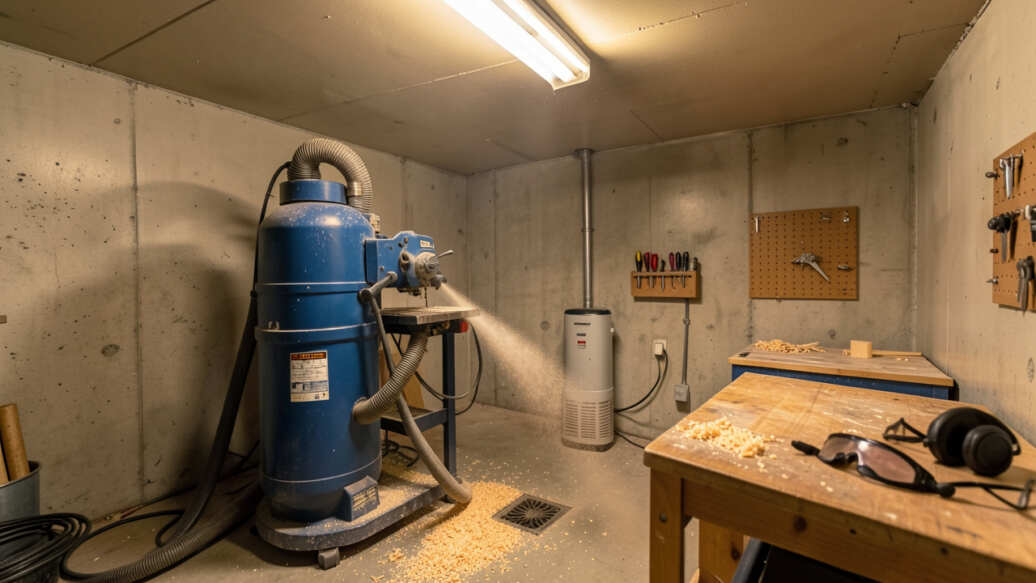

Using a shop vacuum in a basement workshop is generally safe and effective for dry debris, but it requires careful moisture management and proper filtration to avoid performance loss and hazards. Fine dust particles can clog filters quickly and pose a combustion risk if not handled with a high-efficiency filter, while damp basement conditions increase electrical shock and short-circuit dangers. To maintain safe operation, always use an appropriate filter, ensure proper ventilation, and follow electrical safety practices such as plugging into a GFCI outlet.
Using a shop vacuum in a basement workshop can handle sawdust, debris, and even minor liquid spills, but it comes with risks you need to know about. This post covers what happens when you run a shop vac in a basement, including performance issues, safety hazards, and best practices for getting the most out of your setup.
Simply put, using a shop vacuum in a basement workshop is generally safe and effective if you manage moisture, maintain proper airflow, and use the right filters. The main concerns are dust collection efficiency, fire risk from fine particles, and electrical safety in a potentially damp environment.
Key Takeaways
- Shop vacuum in a basement workshop works well for dry debris but needs careful moisture management and proper filtration.
- Fine dust particles can clog filters quickly and pose a combustion hazard if not handled with the right filter type.
- Electrical safety is critical — basement dampness increases the risk of shock, short circuits, and equipment damage.
- Using a HEPA filter and the correct accessories dramatically improves performance and reduces airborne particles.
- Regular filter cleaning and adequate ventilation extend the life of your shop vacuum and keep your workspace safer.
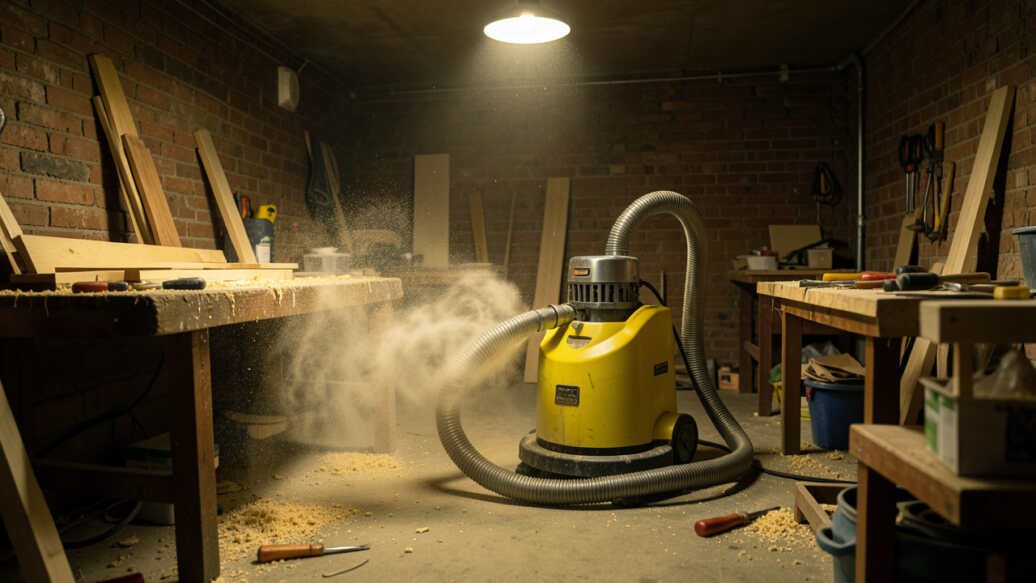
What Does a Shop Vacuum Do in a Basement Workshop?
A shop vacuum in a basement workshop performs the same core tasks as in any other workspace — it picks up sawdust, wood chips, drywall dust, metal shavings, and even liquids if you have a wet/dry model. The difference lies in the environment. Basements tend to have higher humidity, less natural ventilation, and limited floor space, which affects how the vacuum operates and how well it captures fine particles.
Most shop vacuums use a cyclone or direct-suction design to pull debris into a collection drum. Air passes through a filter before exiting the unit. In a basement workshop, that exhaust air recirculates into a smaller, often enclosed area.
This means any dust that bypasses the filter stays in the room and can settle on tools, surfaces, and into your lungs.
Here are the main functions a shop vac handles in a basement workshop:
- Collecting dry debris like sawdust, wood chips, and sanding dust from tools
- Picking up wet spills from leaks, condensation, or cleaning tasks
- Cleaning out drill shavings, metal filings, and plastic scraps from fabrication work
- Attaching to power tools like table saws, planers, and sanders for direct dust collection
- Vacuuming floors, shelves, and tool surfaces to keep the workspace tidy
- Removing fine particulate matter from corners and crevices after major projects
- Handling mixed debris when switching between woodworking, painting, and general cleanup
Tip: Keep your shop vacuum’s collection drum no more than two-thirds full when working with heavy debris. A full drum reduces suction power and forces the motor to work harder, especially in a basement where airflow is already limited.
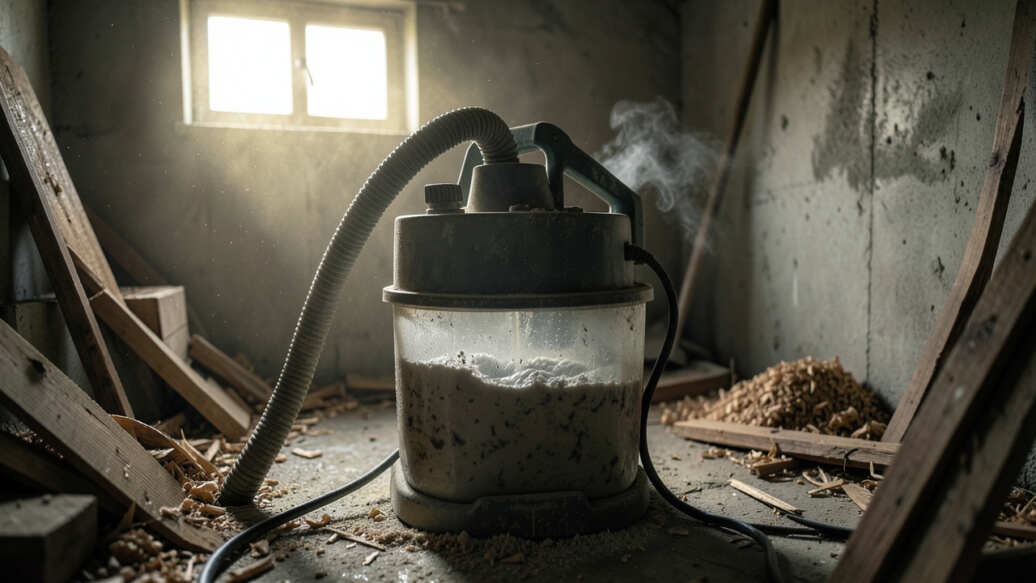
How Moisture and Dust Impact Shop Vacuum Performance
Basements are naturally more humid than above-ground rooms. According to the American Society of Home Inspectors, basement relative humidity often ranges between 50% and 70%, sometimes higher in summer months. This moisture affects how your shop vacuum performs in several ways.
Dust particles become stickier in humid air, causing them to clump inside the filter and reduce airflow. A clogged filter forces the motor to run hotter and longer, which shortens its lifespan.
If you use a dry-only shop vacuum in a damp basement, you risk damaging the motor when moisture gets pulled into the system. Wet/dry models handle this better because they have sealed electrical components and drain ports. But even with a wet/dry unit, leaving damp debris sitting in the drum promotes mold growth inside the vacuum and releases spores into your workshop air.
Consider these performance effects of moisture on your shop vacuum:
- Filter clogging happens 2–3 times faster in high humidity compared to dry conditions
- Moisture causes wood dust to cake onto filter pleats, reducing suction efficiency
- Damp debris in the drum can develop mold within 24–48 hours depending on temperature
- Electrical contacts and switches may corrode faster in a basement environment
- Rubber seals and gaskets can degrade more quickly with constant exposure to humidity
| Condition | Filter Life | Motor Stress | Mold Risk |
|---|---|---|---|
| Low humidity (below 40%) | Long | Low | Low |
| Moderate humidity (40–60%) | Moderate | Moderate | Moderate |
| High humidity (above 60%) | Short | High | High |
As the table shows, humidity directly impacts filter life and motor health. If your basement workshop stays above 60% humidity, you will need to change filters more often and watch for mold growth inside the drum. A dehumidifier in the workshop space can reduce these issues significantly.
What Are the Fire and Electrical Risks in a Basement Workshop?
Using a shop vacuum in a basement workshop introduces real fire and electrical hazards that many DIYers overlook. The combination of combustible dust, limited ventilation, and potential moisture creates a risk triangle. Fine wood dust and drywall particles can become airborne and accumulate inside the vacuum.
If a spark occurs — from static electricity, a motor brush, or a faulty switch — that dust cloud can ignite.
The National Fire Protection Association reports that dust explosions in industrial settings cause an average of 50 injuries per year in the United States. While residential basement workshops are smaller scale, the same physics apply. A shop vacuum motor is not intrinsically safe.
It pulls air containing combustible particles directly past the motor brushes, which can generate sparks. Using a conductive hose and grounding the vacuum reduces static buildup.
- Static electricity discharge — Fine dust moving through a plastic hose at high speed creates static charges that can spark.
- Motor brush sparks — Universal motors common in shop vacuums produce visible sparks during normal operation.
- Overloaded circuits — Running a shop vac and multiple power tools on the same basement circuit can trip breakers or overheat wiring.
- Water contact — Spills or condensation near electrical outlets and vacuum cords create shock hazards.
- Blocked cooling vents — Placing the vacuum against a wall or under a shelf restricts airflow and causes overheating.
Warning: Never use a standard extension cord rated for less than the shop vac’s amperage. A 12-gauge cord is the minimum for most full-size shop vacuums. Undersized cords overheat and can cause electrical fires, especially in confined basement spaces.
To reduce these risks, make sure your basement workshop has GFCI-protected outlets. The National Electrical Code requires GFCI protection for all basement receptacles. These outlets trip instantly if they detect a ground fault, preventing serious shocks.
Also, keep the shop vacuum at least six inches off the floor during wet cleanup to avoid water entering the motor housing from below.
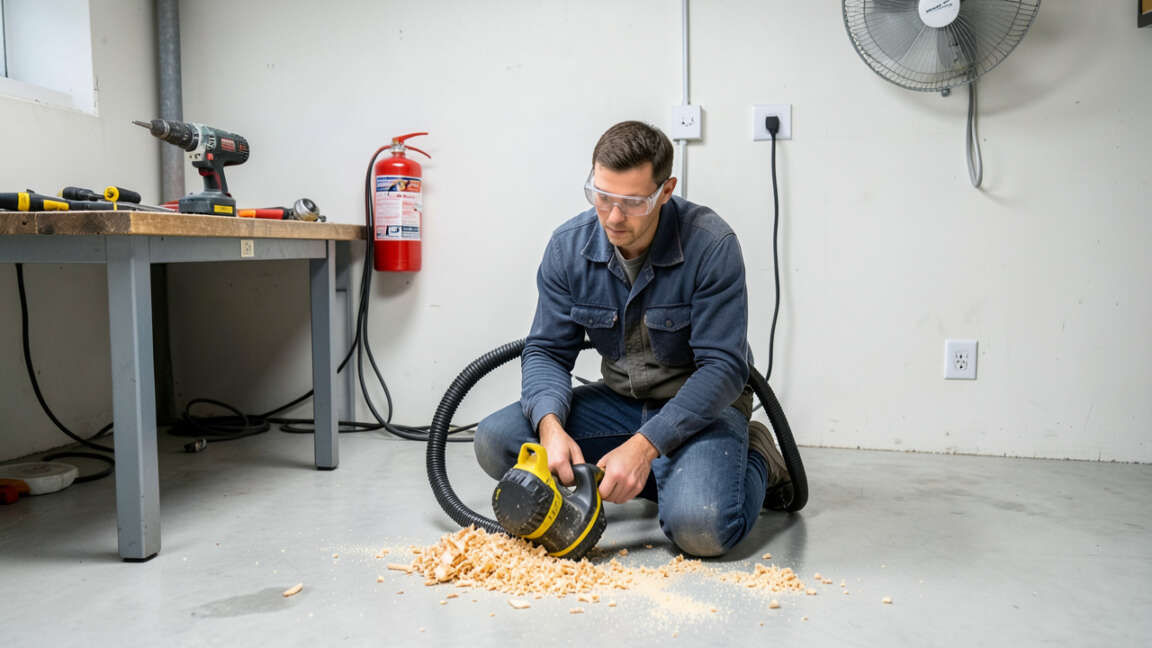
How to Use a Shop Vacuum Safely in a Basement Workshop
Using a shop vacuum in a basement workshop safely comes down to a few key habits. First, always check the filter type before you start. If you collect fine dust from sanding or drywall work, a standard pleated filter lets too many particles pass through.
Switch to a HEPA filter rated for 99.97% capture at 0.3 microns. The Centers for Disease Control and Prevention notes that HEPA filtration significantly reduces respirable dust exposure in workshop environments.
Second, empty the drum after every session — especially if you picked up any damp material. Leaving moist debris inside creates a breeding ground for mold and bacteria. Third, inspect the power cord and plug for damage before each use.
Basement floors are often concrete, which conducts electricity better than wood subfloors. A frayed cord on a damp concrete floor can deliver a lethal shock.
Here is a step-by-step safe usage checklist for your basement workshop:
- Verify the filter is clean and appropriate for the debris type (HEPA for fine dust, standard for coarse chips)
- Check the power cord for cuts, fraying, or exposed wires
- Plug into a GFCI-protected outlet only
- Ensure the collection drum is empty and dry inside
- Connect a grounded anti-static hose if available
- Place the vacuum on a dry, level surface away from water sources
- Start the vacuum before beginning dust-producing work
- Let the vacuum run for 10–15 seconds after you stop working to clear residual dust from the hose
- Turn off and unplug before cleaning or changing the filter
- Empty the drum and wipe out any moisture before storing
Important: If your basement workshop has a sump pump or floor drain, keep the shop vacuum at least three feet away from these water sources. A sudden pump activation or drain backup can splash water onto the vacuum’s electrical components.
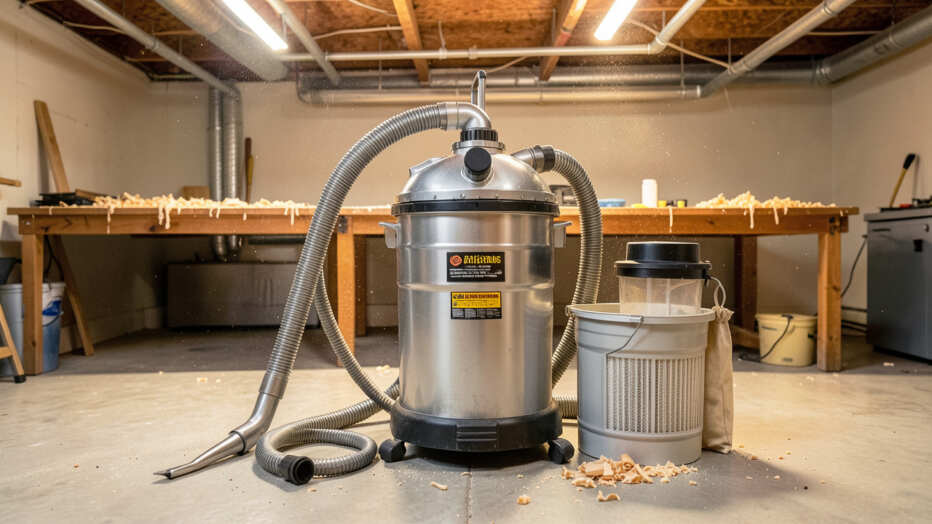
What Accessories Improve Shop Vacuum Performance?
The right accessories transform how your shop vacuum in a basement workshop performs. A standard shop vac comes with a basic hose and a few nozzles, but upgrading specific parts makes a noticeable difference in dust capture, convenience, and safety. Basement workshops often lack the square footage of a garage or dedicated shop, so accessories that help you reach tight spots and reduce dust recirculation are especially valuable.
Consider these accessories to get the most out of your shop vacuum in a basement workshop:
- HEPA filter upgrade — Captures fine particles that standard filters miss, keeping basement air cleaner.
- Anti-static hose — Reduces static buildup that attracts dust and creates shock risk on dry days.
- Cyclone separator — Mounts between the hose and drum to spin out most debris before it hits the filter, extending filter life by 5–10 times.
- Tool-activated switch — Automatically turns the vacuum on when you power up a connected tool, saving energy and reducing noise exposure.
- Crevice tool and brush nozzle — Reach behind workbenches, between shelving units, and into tool drawers common in compact basement layouts.
- Long-reach hose kit (20+ feet) — Move around the basement without dragging the whole vacuum unit across the room.
- Floor nozzle with bristle strip — Glides easily over concrete floors while picking up both coarse chips and fine dust in one pass.
| Accessory | Typical Cost | Benefit |
|---|---|---|
| HEPA filter | $15–$40 | 99.97% particle capture, better air quality |
| Cyclone separator | $30–$80 | Reduces filter cleaning frequency by up to 90% |
| Anti-static hose | $20–$50 | Eliminates static shocks, reduces dust cling |
| Tool-activated switch | $25–$60 | Auto-start/stop, reduces wear and noise |
Investing in a cyclone separator is the single most impactful upgrade for basement workshops. It keeps the filter cleaner longer, maintains strong suction, and reduces the amount of fine dust that blows back into the room during operation. Over a year of regular use, it pays for itself in filter savings alone.
Why Proper Ventilation Matters in a Basement Workshop
Ventilation is often the most neglected factor when operating a shop vacuum in a basement workshop. Unlike an above-ground garage with a garage door you can open, most basements have limited windows and no direct outdoor airflow. Every time you run the vacuum, it exhausts partially filtered air into the same room you are working in.
If your filter is not HEPA-grade, that air contains fine dust particles that stay suspended for hours.
The Occupational Safety and Health Administration recommends that indoor workshops maintain at least 0.5 air changes per hour for general work, and more for dust-producing activities. A typical basement with no mechanical ventilation falls well below that standard. Running a shop vacuum without opening a window or running an exhaust fan traps dust inside and increases your respiratory exposure over time.
Consider these ventilation strategies for your basement workshop:
- Open a basement window and place a box fan pointing outward to create negative pressure
- Install a ceiling-mounted exhaust fan rated for the cubic footage of your workshop
- Use a portable HEPA air purifier rated for the room size to capture airborne particles
- Keep the basement door open during workshop sessions to allow air exchange with the rest of the house
- Run the shop vacuum with the hose port facing away from your breathing zone
- Wear a N95 or P100 respirator when sanding, grinding, or generating fine dust
- Wait at least 15 minutes after finishing work before entering the workshop without respiratory protection
Tip: A simple smoke test can reveal airflow problems. Light an incense stick near your vacuum’s exhaust port. If smoke hangs in the air or drifts back toward your face, you need better ventilation. Ideally, the smoke should move steadily toward an open window or exhaust fan.
If you finish a workshop session and the basement air feels hazy or smells dusty, your ventilation is inadequate. This is a clear sign that your shop vacuum in a basement workshop is recirculating too many fine particles. Upgrade to a HEPA filter and add mechanical ventilation before your next project.
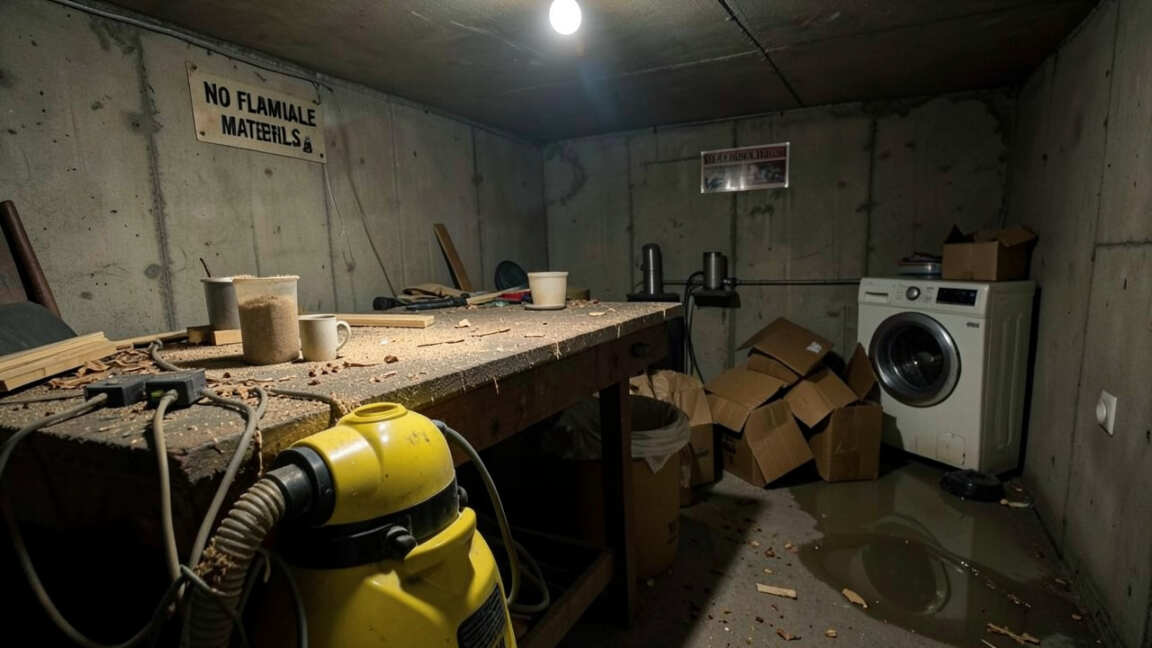
Common Mistakes to Avoid with a Shop Vacuum in a Basement
Even experienced workshop owners make mistakes when using a shop vacuum in a basement workshop. Some of these errors shorten the vacuum’s life, reduce its effectiveness, or create safety hazards. Knowing what to avoid helps you get better performance and keeps your workspace safer over the long term.
Here are the most common mistakes and how to avoid them:
- Using a dry filter for wet pickup — A standard filter soaks up moisture and collapses, ruining the filter and potentially flooding the motor. Always switch to a foam wet filter before vacuuming liquids.
- Forgetting to clean the filter regularly — A clogged filter cuts suction by 50% or more. Clean your filter after every heavy use session. Tap it gently outside or use compressed air to blow out embedded dust.
- Running the vacuum unattended — Basement workshops often have flammable materials like paint thinner, solvents, or sawdust nearby. Never leave a running shop vac unattended in a basement.
- Using a long, thin extension cord — A 50-foot 16-gauge cord starves the vacuum of power, causing the motor to run hot and slow. Use a 25-foot 12-gauge cord or no extension cord at all.
- Storing the vacuum on a damp floor — Concrete floors wick moisture, especially in basements. Moisture seeps into the vacuum’s wheels, base, and motor housing over time. Store the vacuum on a pallet, shelf, or rubber mat.
- Ignoring the exhaust direction — Aiming the exhaust toward your workbench or finished materials blows dust directly onto them. Point the exhaust away from your work area and toward a ventilation source.
Warning: Never vacuum hazardous materials like asbestos, fiberglass insulation fragments, or chemical spills with a standard shop vacuum. These materials require specialized HEPA-rated vacuums rated for hazardous material collection. Using a standard unit releases dangerous particles into your basement air.
Avoiding these mistakes keeps your shop vacuum running at peak performance and prevents costly repairs. A well-maintained shop vacuum in a basement workshop can last 10 years or longer with proper care.
What Maintenance Does a Shop Vacuum Need in a Workshop?
Regular maintenance keeps your shop vacuum in a basement workshop reliable and effective. Basement conditions accelerate wear on filters, seals, and electrical components, so a consistent maintenance schedule matters more here than in a garage or outdoor space. A few minutes of upkeep after each session prevents problems that would otherwise require expensive repairs.
Follow this maintenance checklist to keep your shop vacuum in top shape:
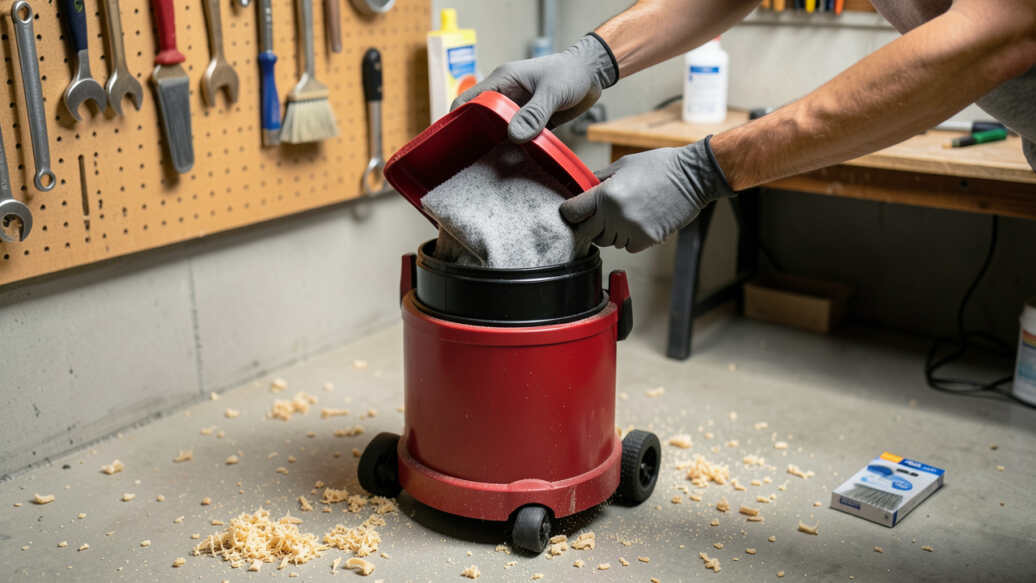
- After every use: Empty the drum completely. Wipe out any moisture or fine dust residue with a dry cloth.
- Weekly: Inspect the filter for clogs, tears, or discoloration. Clean or replace as needed. Check the hose for cracks or blockages.
- Monthly: Examine the power cord for wear at both ends and along the full length. Test the GFCI outlet by pressing the test button. Lubricate the casters and wheels if they squeak or stick.
- Quarterly: Remove the filter and wash it with mild soap and water (if washable) or replace it with a new one. Inspect the rubber seals around the drum lid for cracks or compression loss.
- Annually: Replace the filter regardless of condition — pleated paper filters lose efficiency after 12 months. Check the motor brushes if your vacuum uses brush-type motors. Clean the interior of the hose with a long brush and warm water to remove caked-on dust.
| Maintenance Task | Frequency | Time Required |
|---|---|---|
| Empty drum and check for moisture | Every use | 2 minutes |
| Inspect and clean filter | Weekly | 5 minutes |
| Test GFCI and check cord | Monthly | 3 minutes |
| Deep clean filter and seals | Quarterly | 15 minutes |
| Full inspection and brush check | Annually | 30 minutes |
Sticking to this maintenance schedule prevents the most common failures in basement workshop vacuums: motor burnout from clogged filters, electrical shorts from damaged cords, and mold contamination from sitting moisture. A well-maintained vacuum also holds its resale value if you ever upgrade to a larger unit.
Frequently Asked Questions
Can I leave my shop vacuum plugged in all the time in a basement workshop?
It is not recommended. Even when turned off, a plugged-in shop vacuum draws a small standby current and remains connected to the electrical circuit. In a damp basement, this increases the risk of electrical fault.
Unplug the vacuum after each use and store the cord neatly.
What is the best filter for a shop vacuum in a basement workshop?
A HEPA-rated filter is the best choice for a basement workshop. It captures 99.97% of particles down to 0.3 microns, including fine wood dust, drywall particles, and pollen. Standard pleated filters allow too many fine particles to pass through, which recirculate in the enclosed basement air.
How often should I empty a shop vacuum in a basement workshop?
Empty the drum after every use, even if it is only partially full. Leaving debris sitting in a damp basement environment promotes mold growth and attracts pests. If you picked up any wet material, empty and dry the drum immediately to prevent moisture damage.
Can a shop vacuum cause a fire in a basement workshop?
Yes, under certain conditions. Fine combustible dust accumulating near the motor, static sparks from the hose, or an overheated motor can ignite dust inside the vacuum. Using a grounded anti-static hose, a HEPA filter, and keeping the vacuum clean reduces this risk significantly.
Is it safe to use a shop vacuum for wet messes in a basement?
Only if your shop vacuum is rated for wet pickup and you switch to a foam wet filter. Using a dry filter for wet material ruins the filter and can allow water to reach the motor, causing a short circuit or electric shock hazard. Always check the manual for wet capacity limits.
Final Thoughts
Using a shop vacuum in a basement workshop is practical and effective when you match the equipment to the environment. Prioritize a HEPA filter, manage moisture, maintain proper ventilation, and follow a regular cleaning schedule to keep your vacuum running safely. A small investment in the right accessories and safety habits protects both your equipment and your health for years to come.