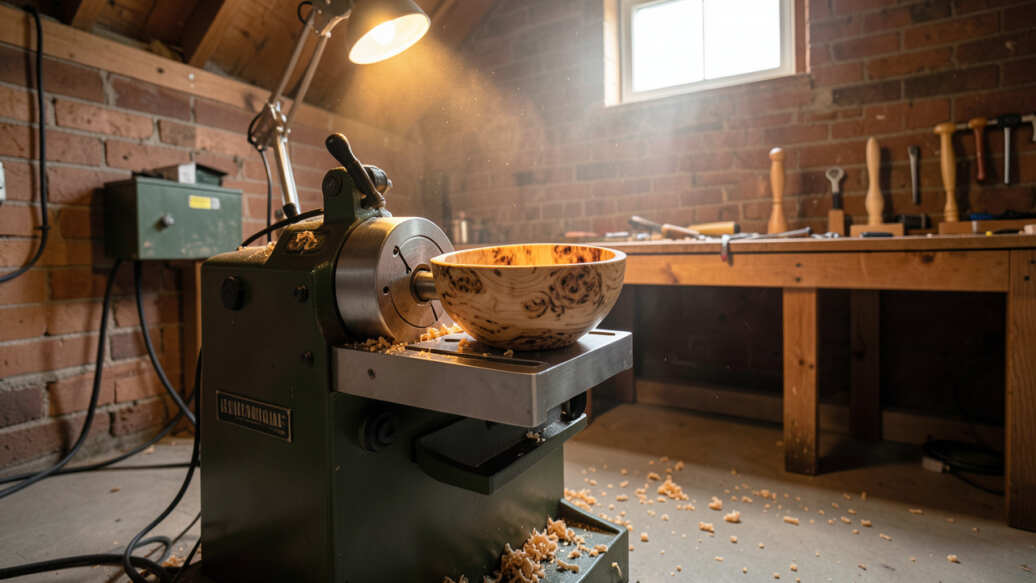

A wood lathe is worth buying for a basement workshop if you have at least 4 by 6 feet of clear floor space, a dust collection strategy, and a moderate budget for a quality midi lathe. Noise levels typically range from 65 to 75 decibels, manageable with ear protection and basic sound dampening. The learning curve is real, but the satisfaction of turning raw wood into finished pieces makes it a smart financial investment for hobbyists who plan to use it regularly.
Buying a wood lathe for a basement workshop is a decision that depends on your space, noise tolerance, and turning goals. This post breaks down the real costs, space requirements, dust challenges, and creative rewards to help you decide if a basement lathe setup makes sense for you.
Simply put, a wood lathe is worth buying for a basement workshop if you have at least 4×6 feet of clear floor space, a dust collection strategy, and a budget for a quality midi lathe. The learning curve is real, but the satisfaction of turning raw wood into finished pieces makes it a smart investment for hobbyists who plan to use it regularly.
Key Takeaways
- Buying a wood lathe for a basement workshop requires at least 4×6 feet of dedicated floor space and a solid dust management plan.
- Noise levels from a midi lathe average 65–75 dB, which is manageable with ear protection and basic sound-dampening measures.
- The total startup cost for a lathe, tools, and safety gear typically falls between $500 and $1,200 for a capable beginner setup.
- Basement wood lathe setups offer year-round turning in a climate-controlled environment, which is a major advantage over garage or outdoor shops.
- Most hobbyists find that a basement lathe pays for itself in project savings and stress relief within the first year.

What Are the Key Benefits of Owning a Wood Lathe in a Basement?
A basement workshop offers some unique advantages for wood turning that you won’t get in a garage or outdoor shed. The consistent temperature and humidity levels in a basement help prevent wood from checking or cracking while you work. You also get the benefit of being indoors during cold winters or hot summers, which means you can turn year-round without weather delays.
Another major benefit is privacy and focus. Basements are naturally separate from the main living areas, so you can concentrate on your turning without household distractions. The American Association of Woodturners reports that over 40% of hobbyist turners now operate their lathes in basements or converted cellars, citing convenience and climate control as top reasons.
- Temperature-stable environment reduces wood movement and cracking during turning
- Year-round usability regardless of outdoor weather conditions
- Natural sound dampening from concrete walls and ceiling
- Lower security risk compared to detached garages or sheds
- Easy access to plumbing and electrical for wet grinding setups
- Ability to leave projects mounted overnight without temperature swings
- Reduced exposure to UV light that can fade or degrade unfinished wood
Tip: Put a small dehumidifier in your basement turning area. Keeping relative humidity between 40% and 50% helps both your lathe and your projects stay in top shape.
The creative freedom of wood turning is also a big draw. You can make bowls, pens, bottle stoppers, spindle work, and even furniture legs right in your own home. The ability to produce custom gifts and household items adds a practical side to the hobby that many woodworkers find rewarding.
How Much Space Does a Wood Lathe Require in a Basement?
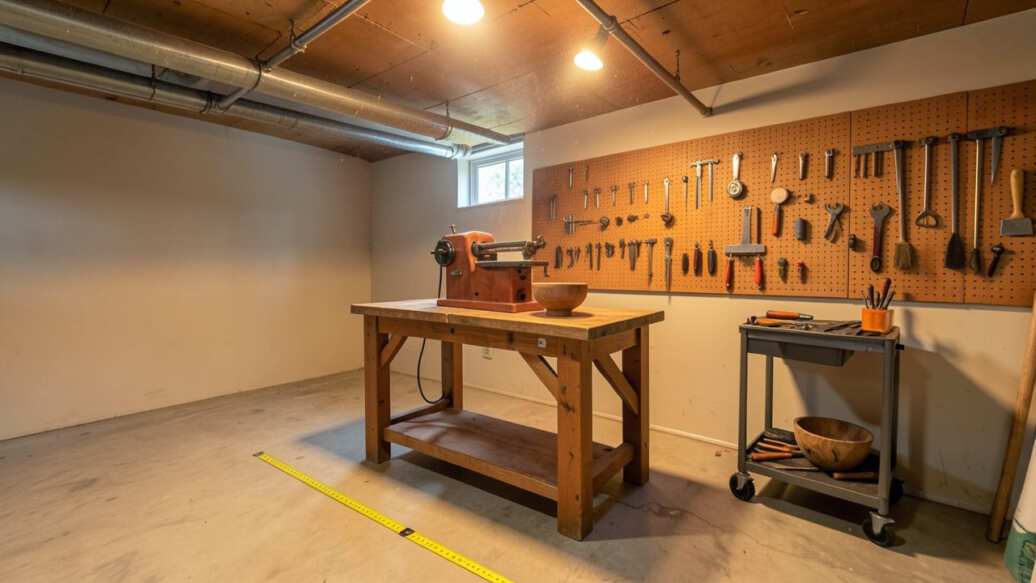
Space is often the biggest concern when considering a basement lathe. A standard midi lathe measures about 36 to 48 inches long and 16 to 20 inches deep. But you need more than just the footprint of the lathe itself.
You also need room for you to stand and move, space for tailstock adjustment, tool rest positioning, and clearance for long spindle work.
A realistic minimum space for a comfortable basement turning setup is 4 feet by 6 feet. That gives you enough room for the lathe, a small workbench or tool cart, and a stool or chair. If you plan to turn longer spindles like table legs or stair balusters, you will need additional length clearance on both sides of the lathe.
| Lathe Type | Min Floor Space | Best For |
|---|---|---|
| Mini Lathe | 3ft × 4ft | Pens, small bowls, bottle stoppers |
| Midi Lathe | 4ft × 6ft | Bowls up to 12″, spindles, small furniture parts |
| Full-Size Lathe | 5ft × 8ft+ | Large bowls, long spindles, production work |
Most basements can accommodate a mini or midi lathe without major renovation. Full-size lathes often require creative positioning or L-shaped layouts. Measure your space carefully and account for walkways and storage before making a purchase.
Important: Always leave at least 2 feet of clearance behind your lathe for tailstock retraction and tool rest positioning. Cramped setups lead to rushed cuts and increased risk of catches or kickbacks.
What Are the Main Challenges of Using a Wood Lathe in a Basement?
Turning wood in a basement comes with real challenges that you need to plan for. The three biggest issues are dust, noise, and humidity. Wood turning produces fine dust particles that can linger in the air and settle on surfaces throughout your home.
Unlike sanding on a bench, a lathe flings dust in a 360-degree pattern around the spinning workpiece.
Noise is another factor. A midi lathe running at 1,000 to 3,000 RPM generates between 65 and 75 decibels. That is roughly the same as a vacuum cleaner or a garbage disposal.
Combined with the sound of cutting tools and exhaust fans, it can be disruptive to family members on the floor above. The National Institute for Occupational Safety and Health recommends limiting exposure to 85 dB to prevent hearing damage over time.
- Fine wood dust penetrates HVAC returns and spreads to other rooms if not filtered
- Vibration from the lathe can travel through floor joists and resonate upstairs
- Basement humidity above 60% can rust lathe beds and chuck components
- Limited headroom below 7 feet restricts turning height for large bowls
- Stair access makes it difficult to bring in heavy full-size lathes or large lumber
- Poor lighting leads to inaccurate cuts and increases the risk of catches
The solution to these challenges is deliberate planning. A dedicated dust collector with a HEPA filter, sound-dampening mats under the lathe, and a good basement dehumidifier will solve most problems. Many turners also install a small window or vent to exchange air with the outside.

How to Choose the Right Wood Lathe for a Basement Workshop
Picking the right lathe for your basement starts with understanding what you want to make. If you plan to turn small items like pens, keychains, and bottle stoppers, a mini lathe with a 10-inch swing is plenty. If you want to make bowls, platters, and spindle work up to 12 inches in diameter, step up to a midi lathe with a 12-inch swing and variable speed.
Variable speed is a must-have feature for basement use. It lets you adjust RPM without changing belts, which is critical when switching between roughing out a blank and doing fine finishing cuts. Electronic variable speed motors also run quieter than mechanical step-pulley systems, which matters in a basement setting.
- Measure your ceiling height and floor space before buying any lathe
- Choose a lathe with at least 1 HP motor for consistent torque at low speeds
- Look for a removable tailstock for easier bowl turning on a faceplate
- Check that the lathe has standard 1-inch by 8 TPI threads for chucks and accessories
- Consider the weight of the lathe — heavier lathes vibrate less and reduce noise transfer
| Feature | Why It Matters for Basement |
|---|---|
| Variable speed | Quieter operation, no belt changes, better finish control |
| Cast iron bed | Absorbs vibration, reduces noise transmitted to floor joists |
| Electronic brake | Stops spindle quickly, safer in tight spaces |
| Outboard turning | Handles larger bowls without extra floor space |
| Spindle lock | Makes chuck and faceplate changes easier in cramped areas |
Brands like Jet, Laguna, Nova, and Rikon offer reliable midi lathes that work well in basements. A good rule is to spend your budget on the heaviest lathe with the most robust motor you can afford. Cutting corners on weight leads to vibration problems that worsen in a basement environment.
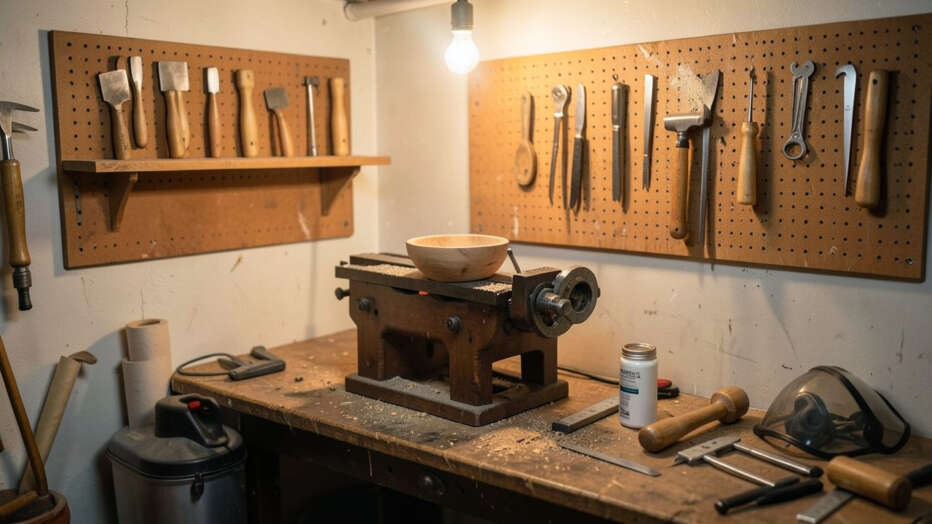
What Tools and Accessories Do You Need for Wood Turning?
A lathe alone won’t get you far. You need a starter set of turning tools, a chuck system, sharpening equipment, and safety gear. The good news is that you do not need to buy everything at once.
Start with the essentials and add tools as your projects grow more complex.
A basic turning tool set includes a roughing gouge, a spindle gouge, a bowl gouge, a parting tool, and a skew chisel. These five tools cover 90% of beginner projects. You will also need a four-jaw chuck, which lets you hold bowls and faceplate work securely without screws or glue blocks.
- Roughing gouge: for rounding square blanks and initial shaping
- Spindle gouge: for detail cuts, beads, and coves on spindle work
- Bowl gouge: for shaping the inside and outside of bowls
- Parting tool: for cutting tenons and separating finished pieces
- Skew chisel: for smooth finishing cuts and planing surfaces
- Four-jaw chuck: for holding bowls, platters, and irregular shapes
- Sharpening system: a slow-speed grinder with a Wolverine jig is the standard
Warning: Never use dull tools on a lathe. Dull tools increase cutting pressure and cause catches that can throw a workpiece or pull your hands into the spinning wood. Sharpen every 10 to 15 minutes of turning time.
Safety gear is non-negotiable. You must have a full-face shield, a dust mask or respirator, hearing protection, and a turning smock or apron. Loose sleeves and dangling jewelry are dangerous around a spinning lathe.
Wear snug-fitting clothing and tie back long hair before you start the motor.
How to Manage Dust and Noise When Turning Wood in a Basement
Dust management is the single most important factor in whether a basement lathe setup succeeds or fails. The fine dust generated by turning and sanding is small enough to stay airborne for hours and can travel through your home’s HVAC system. The Wood Dust Exposure Study by the National Institute for Occupational Safety and Health found that wood dust exposure above 5 mg per cubic meter increases the risk of respiratory issues over time.
A good dust collection strategy combines capture at the source, air filtration, and ventilation. Position a dust collection hose with a hood within 4 inches of the tool rest to catch chips and dust as they are thrown. Add a ceiling-mounted air filtration unit to capture fine particles that escape the primary collection.
- Install a 1.5 HP or larger dust collector with a HEPA filter bag
- Use a dedicated dust collection hood mounted near the tool rest
- Run an air filtration unit in the room for at least 30 minutes after turning
- Seal basement doors with weatherstripping to prevent dust migration
- Wear a P100 respirator for all sanding operations, even with collection running
For noise control, place rubber anti-vibration pads under the lathe feet to reduce floor-borne sound. Adding acoustic panels to the ceiling directly above the lathe area can cut transmitted noise to the floor above. A simple 2×4 frame with fiberglass insulation panels wrapped in fabric works well and costs under $100 for a 4×4 foot section.
Tip: Turn your lathe on and walk upstairs while a helper stands in the basement. This gives you a realistic idea of how much sound is transferring into your living space and where to focus your dampening efforts.

Common Mistakes Beginners Make with Basement Wood Lathes
Every beginner makes mistakes, but knowing the most common ones ahead of time saves you frustration and money. One of the biggest errors is underestimating the dust problem. Many new turners buy a lathe first and think about dust collection later.
That usually leads to dust-covered basement floors and complaints from family members upstairs.
Another common mistake is starting with a cheap lathe. Budget lathes under $300 often have plastic components, weak motors, and poor speed control. They vibrate excessively at low speeds, which makes bowl turning almost impossible.
The vibration also transfers through the floor and amplifies noise in the rest of the house.
- Skipping the sharpening system and trying to turn with dull tools
- Mounting the lathe directly on a concrete floor without vibration pads
- Using a standard shop vacuum instead of a proper dust collector
- Buying cheap HSS tools that dull quickly and require constant sharpening
- Forgetting to seal basement walls which can lead to moisture issues
- Attempting large projects (over 12-inch bowl blanks) on an underpowered lathe
- Not wearing a full-face shield and getting hit in the face with a catch
The practical solution is to plan your workshop before buying equipment. Budget at least 30% of your total spend for dust collection, safety gear, and sharpening gear. A $400 lathe with a $200 dust collector and $100 sharpening system will serve you better than an $800 lathe with no dust control.
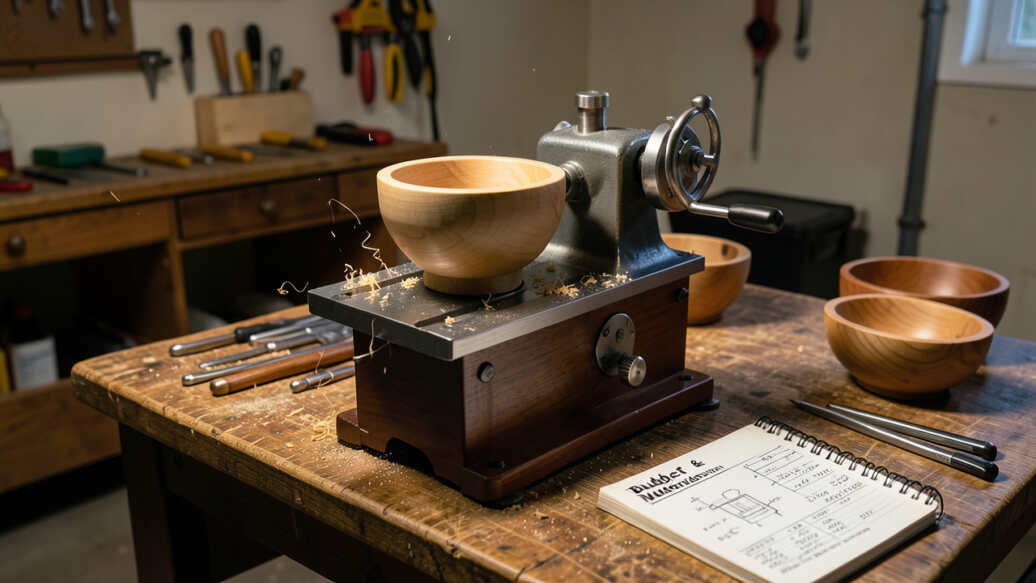
Is a Wood Lathe a Smart Financial Investment for Your Basement?
The cost of getting started with a basement wood lathe ranges from $500 to $1,200 for a capable beginner kit. That price includes the lathe, a four-jaw chuck, a basic set of turning tools, a sharpening system, and safety gear. Dust collection and air filtration add another $200 to $500 depending on the system you choose.
Compared to other woodworking machinery, a lathe is one of the more affordable entry points. A good table saw costs $800 to $2,000, and a planer or jointer runs similar. A lathe setup fits a smaller budget while still offering a wide range of creative output.
Finished bowls sell locally for $40 to $120 each, custom pens for $25 to $60, and turned bottle stoppers for $10 to $25. Many hobbyists find that selling a few pieces covers the cost of the lathe within the first year.
- Beginner lathe (mini/midi): $250–$600
- Four-jaw chuck: $80–$150
- Turning tool set (6-piece): $60–$120
- Slow-speed grinder with jig: $100–$200
- Dust collector + HEPA: $150–$400
- Full-face shield + respirator: $30–$60
- Total beginner investment: $670–$1,530
The long-term value also comes from the ability to repair and customize your own furniture. Instead of buying a $400 solid wood table, you can turn your own legs for $20 in materials. Instead of spending $50 on a wooden bowl, you can make one from scrap wood you already have.
Over time, the lathe pays for itself in project savings and creative satisfaction.
Frequently Asked Questions
Can you put a wood lathe on a concrete basement floor?
Yes, a concrete floor is actually a great surface for a wood lathe. It is flat, level, and strong enough to handle the weight and vibration. Use rubber vibration-dampening pads under the lathe feet to reduce noise transfer and prevent the lathe from walking during operation.
How loud is a wood lathe in a basement?
A typical midi wood lathe running at 2,000 RPM produces about 65 to 75 decibels, which is similar to a vacuum cleaner. The noise level drops significantly with vibration pads and acoustic ceiling panels. Most homeowners find it manageable, but you should still wear hearing protection.
Do you need a dust collector for basement wood turning?
Yes, a dust collector is strongly recommended for basement wood turning. Fine wood dust can spread through your entire home via HVAC returns. A dedicated dust collector with a HEPA filter captures chips and dust at the source, protecting your lungs and keeping your basement clean.
What size wood lathe is best for a basement?
A midi lathe with a 12-inch swing and 36-inch bed length is the best size for most basements. It handles bowls up to 10 inches and spindle work up to 30 inches while fitting in a 4×6 foot space. Mini lathes work if you only want pens and small items.
Can wood turning in a basement cause mold or moisture problems?
It can if your basement has high humidity or poor ventilation. Keep a dehumidifier running to maintain 40–50% relative humidity. The green wood shavings from turning can also hold moisture, so dispose of them promptly or store them in sealed bins away from the lathe area.
Final Thoughts
Buying a wood lathe for a basement workshop is worth it if you have adequate space, a dust management plan, and realistic expectations. The compact footprint and year-round usability make basements ideal for turning, but noise and dust require intentional solutions. Start with a midi lathe, invest in good sharpening and dust collection, and you will find that a basement wood lathe opens up a rewarding and productive hobby.