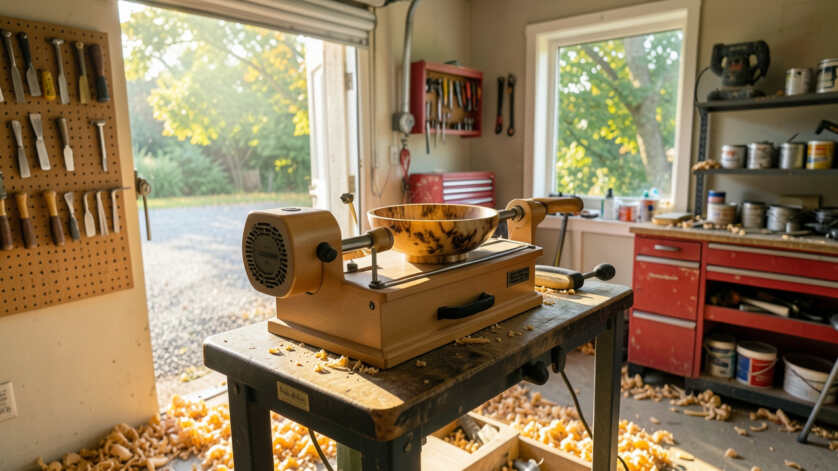

Putting a wood lathe in a garage workshop is a viable option provided you have at least eight by eight feet of dedicated floor space, a reliable dust collection system, and good ventilation. Dust and noise are the primary challenges, requiring investment in a dust collector and secure lathe mounting to manage mess and safety. For most hobbyists, the convenience of home access outweighs these issues, making a garage setup a practical choice for serious woodturning.
Adding a wood lathe in a garage workshop is a decision that many hobbyists and serious woodturners face when space runs tight indoors. This post breaks down the real space requirements, noise levels, dust issues, and practical benefits so you can decide whether a garage setup works for you. We help you weigh the pros and cons with honest, experience-based advice.
Simply put, putting a wood lathe in your garage is a viable option if you have at least 8×8 feet of dedicated floor space, a reliable dust collection system, and good ventilation. For most hobbyists, the convenience of a home workshop outweighs the challenges of dust and noise. Just be prepared to manage the mess and secure the lathe properly.
Key Takeaways
- Putting a wood lathe in a garage workshop requires a minimum of 8×8 feet of space to operate safely and comfortably.
- Dust and noise are the two biggest challenges—invest in a dust collector and hearing protection from day one.
- A garage offers excellent natural ventilation and sturdy concrete floors that absorb vibration well.
- Always secure the lathe to the floor or a heavy stand to prevent tipping during operation.
- Garage workshops are ideal for small to medium-sized turning projects like bowls, pens, and spindle work.
1. What Does It Take to Set Up a Wood Lathe in a Garage?
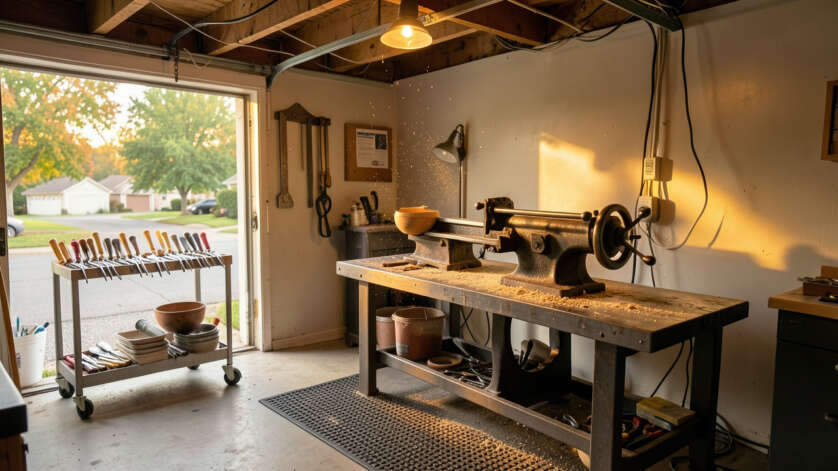
Setting up a wood lathe in a garage isn’t as simple as rolling it into a corner and plugging it in. You need to think about floor space, power requirements, lighting, and dust management. Most garages already have concrete floors, which are excellent for absorbing lathe vibration and keeping the machine stable.
Before you buy anything, measure your garage carefully. Account for the lathe itself, the space needed on both sides for tool rests and tailstock movement, and room to stand comfortably while turning. You also need storage for chisels, faceplates, and workpieces.
- A mini lathe (10×18 inches) needs about 4×6 feet of floor space.
- A mid-size lathe (12×36 inches) requires roughly 5×8 feet.
- A full-size lathe (16×48 inches or larger) needs 7×10 feet minimum.
- Add 3 feet of clearance on the tailstock end for moving the quill.
- Leave at least 2 feet on the headstock side for accessing the pulley system.
- Plan for a 20-amp dedicated circuit if the lathe motor exceeds 1 HP.
- Install bright overhead LED lighting to see grain and tool marks clearly.
Important: Check your local building codes before installing a wood lathe in a garage. Some municipalities require a permit for workshop equipment that draws significant power or creates fire hazards from wood dust accumulation.
The key takeaway is that putting a wood lathe in a garage workshop works best when you plan the layout before purchasing the lathe. Measure twice, buy once.
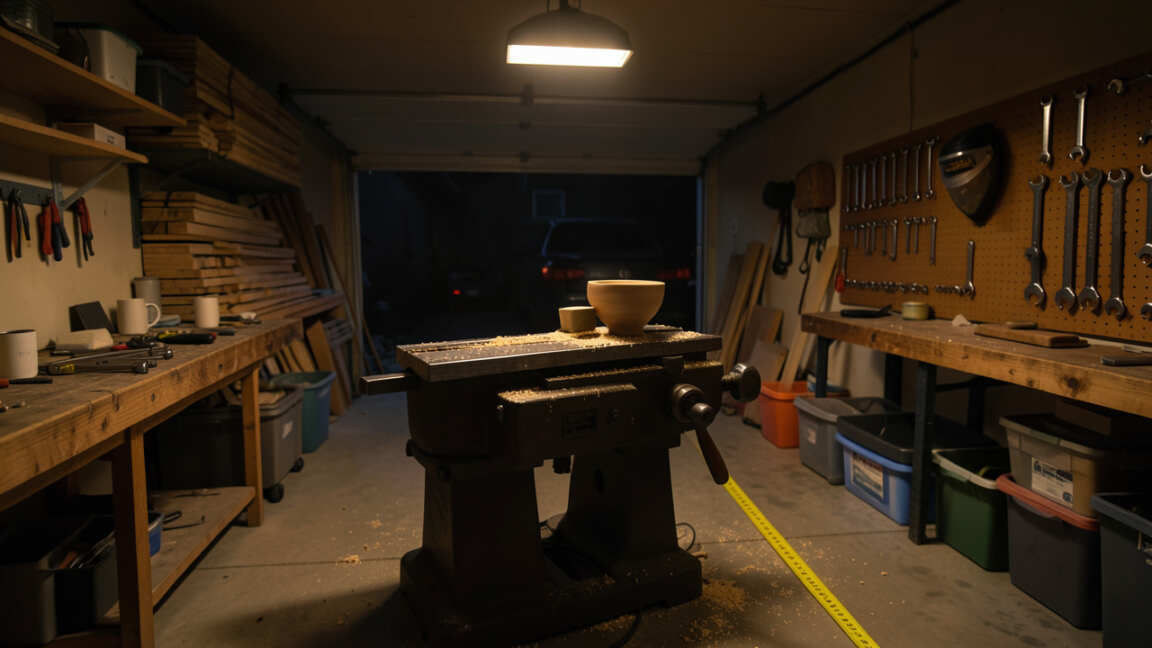
2. How Much Space Does a Wood Lathe Really Need in a Garage?
Space is the most common dealbreaker when deciding whether to put a wood lathe in your garage. Many garages are already filled with cars, storage boxes, lawn equipment, and other household overflow. But a lathe doesn’t need a massive footprint if you plan efficiently.
For a typical mid-size lathe (12×36 inches), you need about 8×8 feet of clear floor area. That includes the lathe footprint, operator space, and room to move around. If your garage is already crammed, consider a wall-mounted or foldable mini lathe instead.
| Lathe Size | Recommended Clear Floor Space | Best For |
|---|---|---|
| Mini (10×18 in) | 4 ft x 6 ft | Pens, small bowls, bottle stoppers |
| Mid-size (12×36 in) | 5 ft x 8 ft | Bowls, platters, spindles, small furniture parts |
| Full-size (16×48 in) | 7 ft x 10 ft | Large bowls, table legs, hollow forms |
If you have a two-car garage, you can easily dedicate one bay to your workshop with the lathe as the centerpiece. For a single-car garage, opt for a compact lathe and use mobile bases to move equipment when you need the space for parking.
Tip: Use a mobile base with locking casters under your lathe stand. That way you can roll the lathe against the wall when you need to park a car or reclaim floor space for other projects.
3. Key Challenges of Running a Wood Lathe in a Garage
Let’s be honest—putting a wood lathe in a garage workshop brings real challenges that can frustrate even experienced turners. Dust, noise, temperature swings, and moisture are the top four issues. Ignoring them can ruin your tools and your enjoyment of the hobby.
Wood dust is a fine, airborne particulate that settles on everything in your garage. Without a dust collector, it coats tools, car surfaces, stored boxes, and can even get into your home if the garage shares an interior wall. The American Lung Association reports that wood dust exposure can cause respiratory issues over time, so proper ventilation is non-negotiable.
- Fine wood dust travels up to 20 feet from the lathe without collection.
- Noise levels from a lathe and dust collector can reach 85-95 dB—hearing protection is essential.
- Garages without climate control experience extreme temperatures that affect wood movement and glue curing.
- High humidity (above 60%) causes rust on lathe beds, chucks, and tool rests.
- Condensation on metal parts happens quickly when a cold garage warms up.
- Rodents and insects can nest in stored wood blanks and shavings.
- Limited natural light makes it harder to see grain patterns and detect tool catches early.
Warning: Never run a wood lathe in a garage without adequate dust collection. Accumulated fine wood dust is a serious fire hazard. The U.S. Consumer Product Safety Commission notes that wood dust can ignite from a spark or even static electricity.
These challenges aren’t dealbreakers—they just require proactive management. A good dust collector, a dehumidifier, and a portable heater or fan can solve most of them.
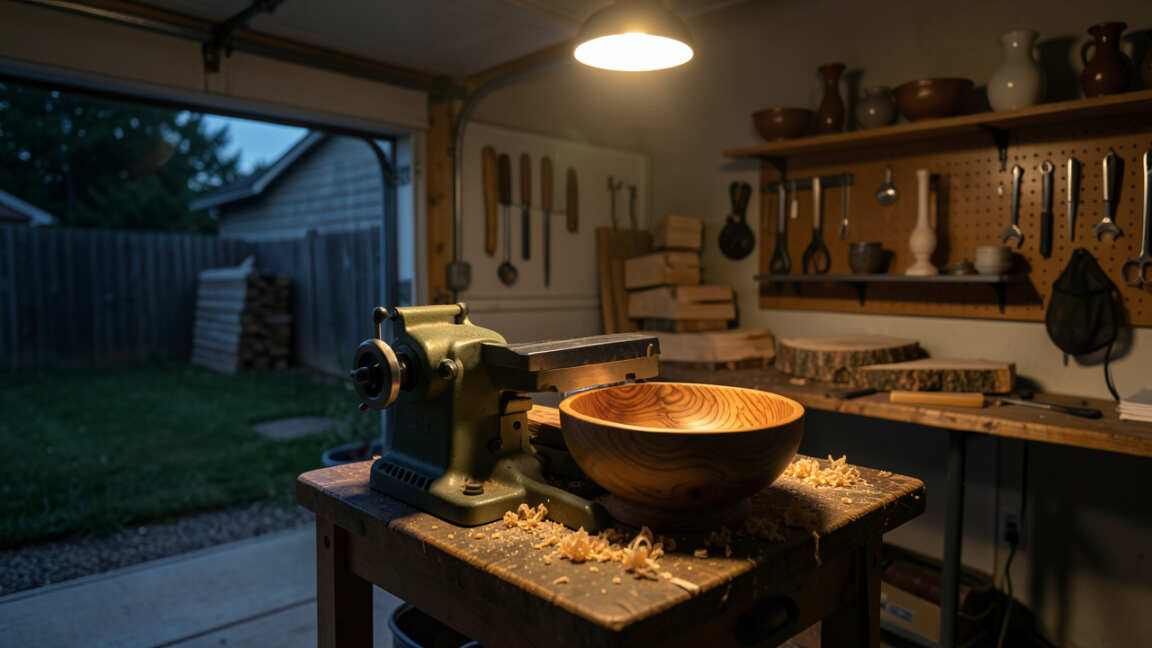
4. What Are the Benefits of Having a Wood Lathe in Your Garage?
Despite the challenges, there are compelling reasons to put a wood lathe in your garage. For many woodturners, the garage offers the best balance of convenience, space, and cost compared to building a dedicated workshop or renting studio space.
The number one benefit is accessibility. You can walk into your garage anytime and start turning without driving to a shop or shared studio. That immediate access dramatically increases how often you practice and improve your skills.
According to the American Association of Woodturners, hobbyists with home-based workshops turn an average of three times more often than those who travel to a shared space.
- Concrete floors absorb lathe vibration better than wooden subfloors in basements or upstairs rooms.
- Garages have existing power—usually 15-20 amp circuits—and can be upgraded easily.
- You can leave dust and shavings overnight without worrying about tracking them through the house.
- Natural garage ventilation (garage door openings) helps clear dust when weather permits.
- Garage space is often underutilized and can be repurposed affordably.
- You control the schedule—turn at 6 AM or midnight without bothering housemates (noise permitting).
- Storage for wood blanks, finishes, and tools can be integrated into garage shelving systems.
| Factor | Garage | Basement | Dedicated Shed |
|---|---|---|---|
| Vibration absorption | Excellent | Good | Poor (wood floor) |
| Dust containment | Moderate | Good | Excellent |
| Climate control cost | High | Low | Very high |
| Convenience | High | Medium | Low (walk outside) |
| Resale value impact | Neutral | Positive | Positive |
For most turners, the convenience of having a lathe steps from the kitchen or living room outweighs the need to manage dust and temperature. Putting a wood lathe in a garage workshop gives you a practical, low-cost path to regular turning practice.
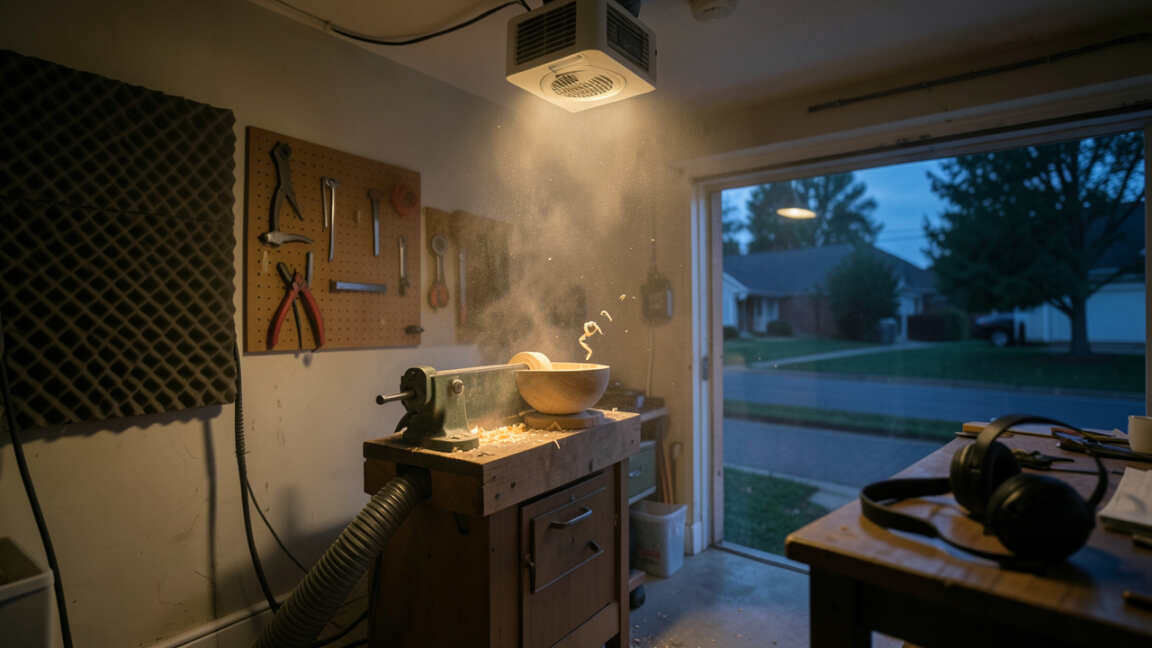
5. How to Manage Dust and Noise from a Wood Lathe in a Garage
Dust and noise are the two biggest reasons people hesitate to put a wood lathe in a garage. But both are manageable with the right equipment and habits. A dust collector rated for fine wood dust (1 micron or better) is your best investment.
The Occupational Safety and Health Administration (OSHA) recommends keeping airborne wood dust below 1 mg per cubic meter over an 8-hour shift. Even in a home garage, you should aim for that standard. A 1-2 HP dust collector with a pleated filter can capture 99% of lathe dust when attached directly to the tool rest with a hose.
- Use a dust collector with at least 1,000 CFM airflow for mid-size lathes.
- Attach a 4-inch hose to the lathe’s tool rest base for direct capture.
- Wear a N95 or P100 respirator even with dust collection running.
- Add a ceiling-mounted air filter to catch airborne dust the collector misses.
- Use hearing protection rated for at least 25 dB noise reduction (NRR 25+).
- Place the dust collector outside the garage or in a soundproof box to reduce noise.
- Run the air filter for 30 minutes after turning to clear remaining particles.
Tip: Build a simple plywood enclosure around your dust collector and line it with acoustic foam. That cuts the noise from 90 dB to about 70 dB—quiet enough for a conversation while you turn.
For noise, the lathe itself is usually quieter than the dust collector. A mini lathe runs at 60-70 dB, while a full-size lathe with a 2 HP motor can hit 80 dB. Add the dust collector at 85-90 dB, and you’re well into the danger zone for hearing loss without protection.
Always wear earplugs or earmuffs.
Regular cleaning also helps. Sweep or vacuum shavings daily to prevent them from getting ground into dust underfoot. A shop vacuum with a HEPA filter is ideal for cleanup after turning sessions.
6. What Tools and Accessories Do You Need for a Garage Wood Lathe?
Beyond the lathe itself, putting a wood lathe in a garage workshop requires a handful of essential tools and accessories to turn safely and effectively. Skimping on these will frustrate you and potentially ruin your workpieces.
Start with a quality set of carbide or HSS turning chisels (gouge, skew, parting tool, scraper) and a sharpening system. Dull tools are dangerous—they require more force and increase the chance of catches. Also invest in a good chuck system, faceplates, and drive centers for mounting wood securely.
- Variable-speed lathe (preferably electronic) to adjust RPM for different wood sizes.
- Set of 4-6 turning chisels (spindle gouge, bowl gouge, skew chisel, parting tool, round nose scraper, square scraper).
- 4-jaw chuck with multiple jaw sizes for holding bowls and spindles.
- Sharpening system (low-speed grinder with CBN wheel or diamond sharpener).
- Face shield (full-face, impact-rated) for safety during turning.
- Dust collector with 1-micron filter and 4-inch hose attachment.
- Digital calipers for measuring diameters and depths accurately.
| Accessory | Estimated Cost | Priority |
|---|---|---|
| 4-jaw chuck | $100-$250 | Essential |
| Sharpening grinder | $80-$200 | Essential |
| Face shield | $30-$60 | Essential |
| Dust collector | $200-$600 | Highly recommended |
| Digital calipers | $20-$50 | Nice to have |
Some accessories like a bed extension or outboard turning attachment can wait until you tackle larger projects. Start with the basics and add as your skills grow. The American Association of Woodturners recommends beginners invest 20-30% of their lathe budget in accessories and safety equipment.

7. What Types of Projects Can You Do with a Garage Wood Lathe?
The range of projects you can tackle with a wood lathe in your garage is surprisingly wide. From small, quick-turn items to large furniture components, a garage workshop can handle most turning tasks except the very largest architectural pieces.
Mini and mid-size lathes are perfect for popular projects like pens, bowls, and spindles. Full-size lathes open up possibilities for table legs, porch posts, and even hollow forms. The garage environment actually works well for these because the concrete floor can take the weight of heavy workpieces without flexing.
- Writing pens and mechanical pencils (great for gifts and selling at craft fairs).
- Small bowls and platters (diameter up to 12 inches on a mid-size lathe).
- Spindle projects like candlesticks, rolling pins, and chair legs.
- Bottle stoppers and wine bottle openers (quick, fun projects).
- Holiday ornaments and tree toppers (seasonal sellers).
- Lamp bases and small table legs (functional home decor).
- Boxes with fitted lids (good for practicing precision).
- Natural edge bowls (challenging but rewarding for advanced turners).
Tip: Start with spindle projects (pens, candlesticks) before moving to faceplate work (bowls). Spindle turning teaches you tool control and bevel rubbing fundamentals that transfer to every other type of turning.
According to a 2023 survey by Woodturner Magazine, 67% of hobbyist woodturners list bowls and platters as their primary project type, followed by pens (45%) and spindle work (38%). All of these are easily done in a wood lathe in a garage workshop setup.
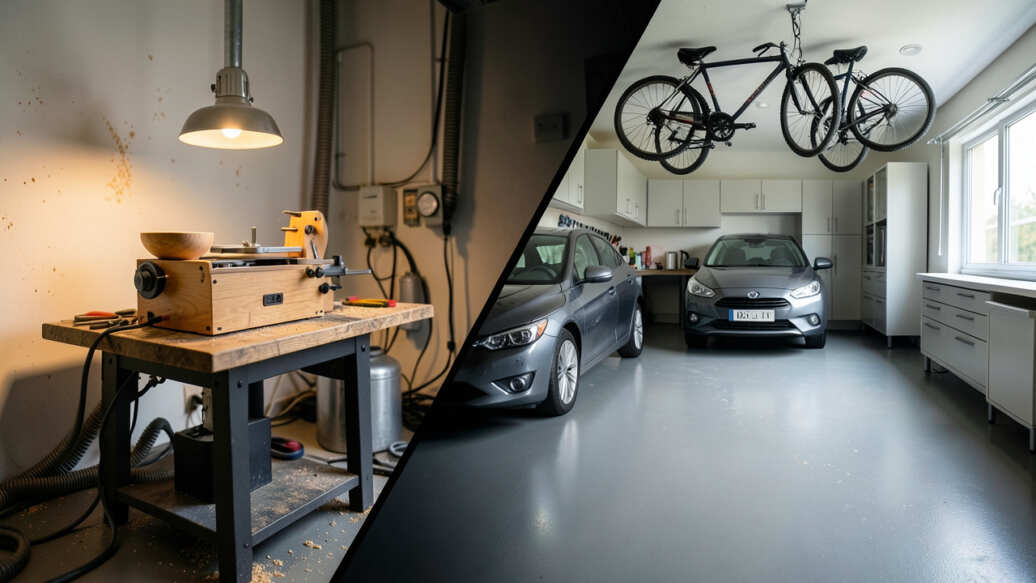
8. How Do You Decide Whether to Put a Wood Lathe in Your Garage?
Making the final call depends on your specific situation. Putting a wood lathe in a garage workshop is an excellent choice for many, but it’s not right for everyone. Here’s a quick decision framework to help you evaluate your own circumstances.
First, assess your available space. If you can dedicate a 8×8 foot area that doesn’t interfere with parking or storage, you’re in good shape. Next, evaluate your tolerance for dust and noise.
If you want a pristine, quiet workspace, a garage lathe will frustrate you. If you’re okay with regular cleanup and wearing hearing protection, it’s fine.
- Do you have at least 8×8 feet of clear floor space you can dedicate to the lathe?
- Are you willing to invest $400-$800 in a dust collector and hearing protection?
- Can you run a dedicated 20-amp circuit if needed?
- Do you have a way to control garage temperature (heater in winter, fan in summer)?
- Is your garage secure enough to protect expensive tools?
- Are you comfortable with regular cleaning and maintenance?
- Will your household members tolerate the noise and occasional dust?
| Situation | Verdict | Why |
|---|---|---|
| Two-car garage, not used for parking | Yes | Ample space, easy to zone |
| Single-car garage, daily parking needed | Maybe | Mobile base required, constant setup/breakdown |
| Garage attached to home, shared wall | Yes with soundproofing | Noise travels; add insulation and seal gaps |
| Garage used for storage only | Yes | Clear one wall or corner for the lathe |
| Rental property, no modifications allowed | No | Cannot install circuits or secure lathe to floor |
If you answered yes to at least five of the seven questions above, a garage wood lathe setup is very likely to work for you. If you answered no to three or more, consider a mini lathe on a mobile stand or look into shared workshop spaces in your area.
Frequently Asked Questions
Is a garage safe for a wood lathe?
Yes, a garage is generally safe for a wood lathe as long as you secure the lathe to the floor or a heavy stand, use proper dust collection, and keep the area clean to prevent fire hazards. Ensure your garage has adequate ventilation and a fire extinguisher nearby.
How much does it cost to set up a wood lathe in a garage?
A basic setup with a mid-size lathe, essential tools, dust collector, and safety gear costs between $1,200 and $2,500. Professional-grade equipment can push that to $5,000 or more. Plan to spend about 30% of your budget on accessories and dust management.
Do I need a dust collector for a wood lathe in a garage?
Yes, a dust collector is highly recommended. Wood dust is a respiratory hazard and can accumulate in garage spaces, creating a fire risk. A 1-2 HP dust collector with a 1-micron filter captures most airborne particles and keeps your workspace safe.
Can I park my car in the garage if I have a wood lathe?
Yes, but it requires planning. Use a mobile base with locking casters so you can roll the lathe against the wall when you need the space. You’ll also need to dust-proof your car by covering it or running the dust collector every time you turn.
What size wood lathe fits best in a typical garage?
A mid-size lathe (12×36 inches) is the most popular choice for garage workshops. It fits comfortably in an 8×8 foot area, handles most project types, and offers a good balance of capability and space efficiency. Mini lathes work well for very tight spaces.
Final Thoughts
Putting a wood lathe in your garage is a practical, affordable way to enjoy woodturning at home. The concrete floor absorbs vibration well, and you control the schedule completely. Just invest in proper dust management, hearing protection, and a stable stand.
With the right setup, your garage can become a rewarding workshop for years of turning projects.