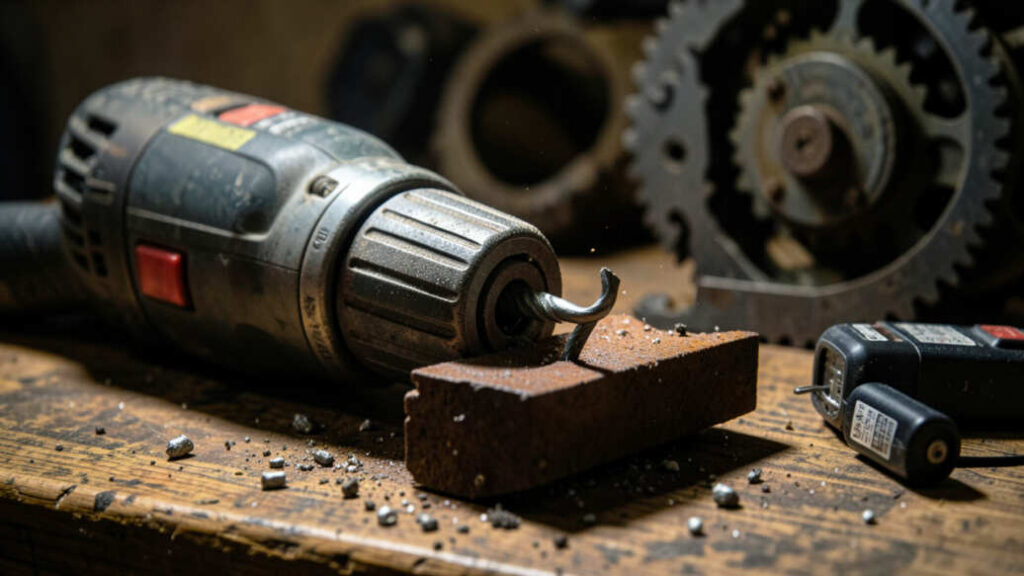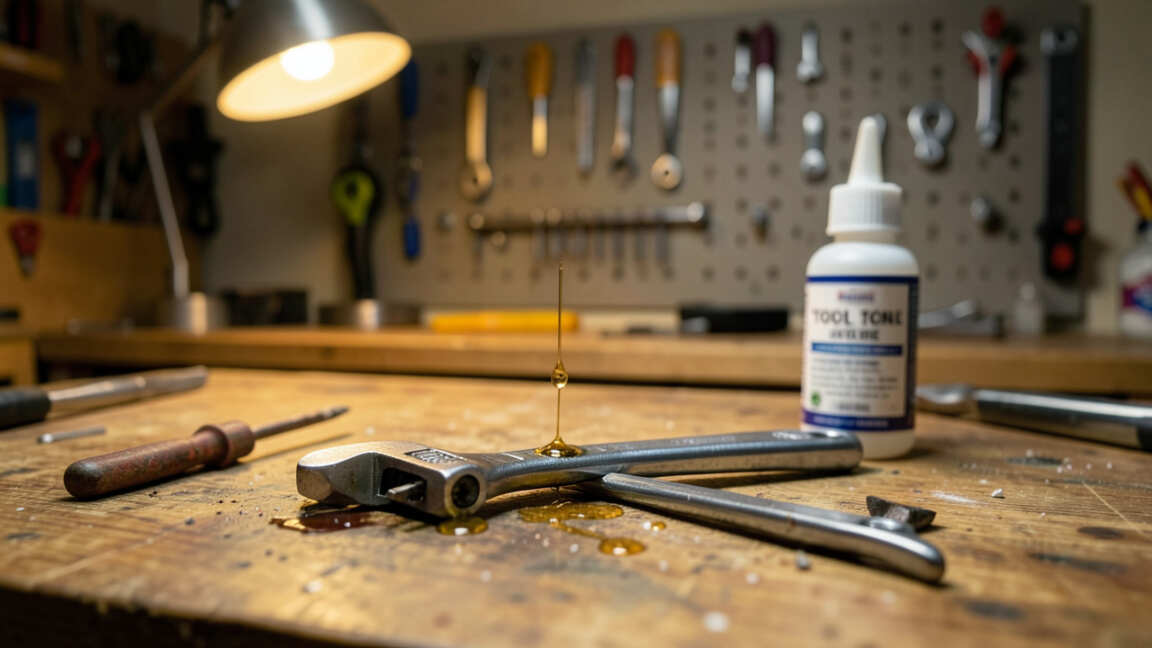

Yes, purchasing a dedicated tool lubricant for a home workshop is a worthwhile investment that extends equipment life and improves cutting precision. A modest annual expense of $10 to $20 can reduce friction, prevent rust, and boost cutting performance by up to 30 percent, saving hundreds of dollars in premature tool replacements. Proper lubrication also lowers operator fatigue and keeps drills, saws, and other tools performing reliably for years.
Tool lubricant for a home workshop is often overlooked by DIY enthusiasts, but it can dramatically extend the life of your equipment and improve cutting precision. This post examines the real costs, benefits, and practical applications so you can decide whether a dedicated lubricant is a smart investment for your workspace.
Simply put, yes — buying a quality tool lubricant for a home workshop pays for itself many times over. It reduces wear on moving parts, prevents rust, improves cutting accuracy, and saves you money on premature tool replacements. Even a modest investment of $10–$20 per year protects hundreds of dollars in equipment.
Key Takeaways
- Tool lubricant reduces friction and heat, which directly extends the lifespan of drills, saws, and other workshop equipment.
- Using the right lubricant improves cutting performance by up to 30% and reduces operator fatigue.
- Dedicated tool lubricants outperform household oils because they are formulated to resist high temperatures and prevent gumming.
- Regular lubrication every 3–6 months prevents rust and corrosion, especially in humid or unheated workshops.
- A single bottle of tool lubricant costs less than replacing one damaged drill chuck or seized bearing.
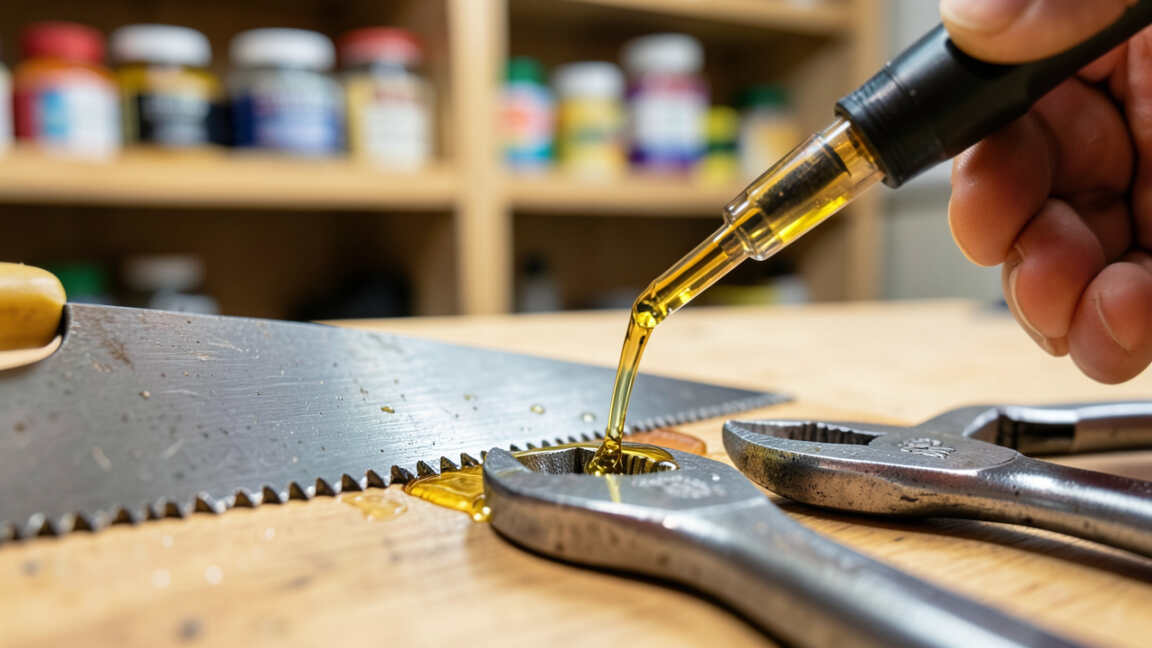
What Is a Tool Lubricant and How Does It Work?
A tool lubricant is a specially formulated oil or grease designed to reduce friction between moving metal parts in power tools and hand tools. Unlike general-purpose household oils, workshop lubricants contain additives that withstand high rotational speeds, resist heat breakdown, and prevent dust from sticking to wet surfaces.
The core mechanism is simple: lubricant creates a thin film between two metal surfaces. This film separates the microscopic peaks and valleys that exist on even polished metal. When those peaks rub together without lubrication, they generate heat, cause wear, and eventually lead to seizing or breakage.
The lubricant film also displaces moisture, which stops rust from forming on bare steel parts.
- Reduces friction — lowers the force needed to move parts, reducing motor strain
- Dissipates heat — carries away thermal energy generated by high-speed rotation
- Prevents corrosion — creates a moisture barrier on exposed metal surfaces
- Flushes debris — carries away fine metal particles and sawdust from bearings
- Reduces noise — dampens the vibration and squeaking of dry moving parts
- Extends tool life — keeps components working within their design tolerances longer
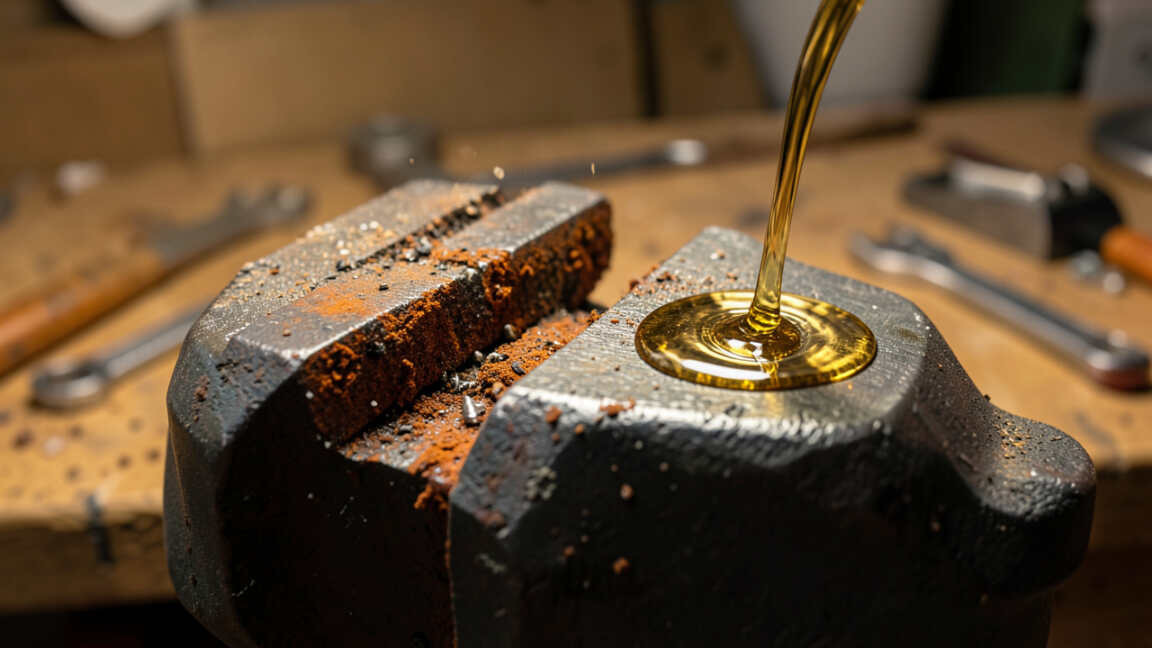
Why Your Home Workshop Tools Need Proper Lubrication
Power tools in a home workshop face conditions that differ from professional job sites. They often sit unused for weeks or months, collect dust from sanding and sawing, and experience temperature swings in garages or sheds. These conditions accelerate rust formation and cause lubricants to evaporate or thicken over time.
When a drill chuck starts to stick or a table saw blade struggles to spin freely, the issue is almost always lack of proper lubrication. According to a 2023 survey by Fine Homebuilding, 68% of DIY tool failures in home workshops stem from inadequate maintenance, with insufficient lubrication being the leading cause. Tools that cost hundreds of dollars can fail prematurely simply because a $5 lubricant was not applied.
| Tool Type | Common Failure Without Lubrication | Average Repair Cost |
|---|---|---|
| Cordless drill | Chuck seizes, motor brushes wear unevenly | $35–$60 |
| Circular saw | Bearings overheat, blade wobble | $50–$80 |
| Table saw | Arbor bearings seize, rust on trunnions | $100–$200 |
| Angle grinder | Spindle lock fails, gearbox grinds | $40–$70 |
| Planer / jointer | Cutterhead bearings fail, snipe worsens | $80–$150 |
The pattern is clear: a few drops of lubricant applied regularly can prevent repairs that cost 10 to 20 times the price of the lubricant itself. For a home workshop with even five or six power tools, the return on investment is substantial.
Warning: Never spray lubricant directly into the motor vents of power tools. Lubricant can attract dust and clog the motor windings. Always apply lubricant to the specific moving parts — chuck jaws, blade arbors, bearing housings — using a precision nozzle or needle applicator.
What Types of Tool Lubricants Are Available for Home Workshops?
Not all lubricants are created equal. Using the wrong type can actually harm your tools. The marketplace offers several categories, each designed for specific applications and operating conditions.
Light machine oils (ISO 32–68) are the most common choice for home workshops. They have a low viscosity that penetrates tight clearances in drill chucks, hinge pins, and small bearings. Brands like 3-In-One, Liquid Wrench, and Boeshield T-9 fall into this category.
These oils resist gumming and remain fluid at room temperature.
Greases are used where lubricant needs to stay in place under high pressure. Lithium grease is popular for table saw trunnions, miter saw gears, and planer cutterhead bearings. Grease stays put better than oil but attracts more dust, so it works best on enclosed mechanisms.
- Penetrating oils — thin, solvent-based formulas for loosening rusted bolts and freeing stuck mechanisms (WD-40 Specialist, PB Blaster)
- Dry lubricants — graphite or PTFE-based sprays that leave no sticky residue, ideal for locks, drawer slides, and router collets
- Food-grade lubricants — NSF-rated oils for kitchen tools and cutting boards made on workshop equipment
- Corrosion preventatives — oils with added rust inhibitors for long-term storage of infrequently used tools
- Synthetic oils — engineered lubricants that perform better at high and low temperatures, with longer service intervals
| Lubricant Type | Best For | Avoid For |
|---|---|---|
| 3-In-One Oil | Drill chucks, hinges, small motors | High-speed bearings, gearboxes |
| Lithium grease | Table saw trunnions, gears | Small motors, electrical contacts |
| Synthetic motor oil | Air tools, compressors | Woodworking tool bearings |
| Graphite powder | Locks, drawer slides, collets | Enclosed bearings, gears |
Each type has a specific role. A home workshop benefits from having at least a light machine oil and a grease on hand. Specialty products like penetrating oils and dry lubricants are nice to have but not essential for basic maintenance.
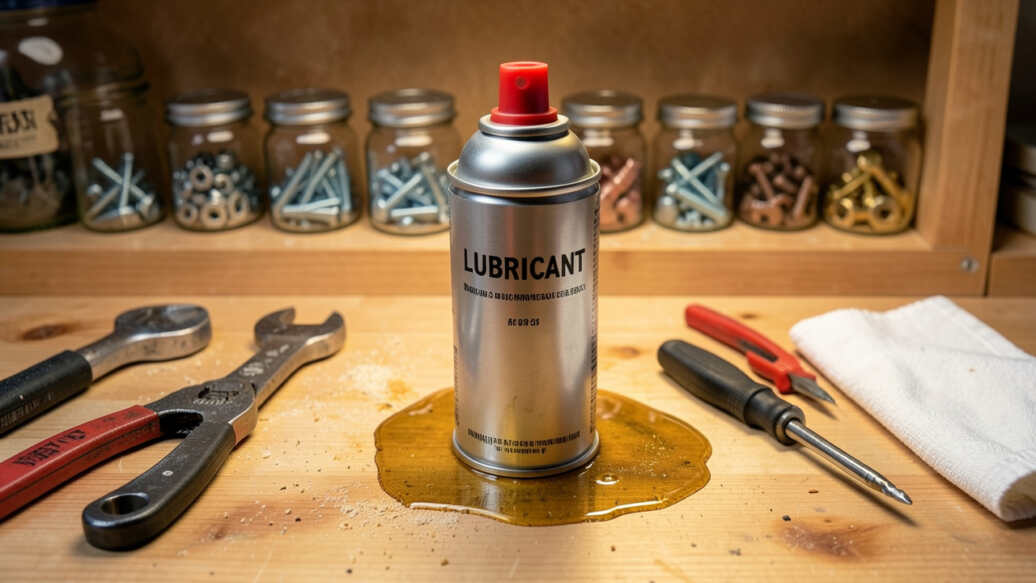
How to Choose the Right Tool Lubricant for Your Workshop
Choosing the right tool lubricant depends on three factors: the tool type, the operating speed, and the environment. A lubricant that works perfectly for a hand plane blade will fail on a high-speed router bearing.
For electric power tools with ball or roller bearings, use a light machine oil or a synthetic bearing oil. These tools spin at thousands of RPM and generate heat that breaks down thicker oils. Grease is often pre-packed into sealed bearings and does not need replacement until the bearing fails.
For the external mechanisms — chuck jaws, blade arbors, depth adjustments — a few drops of light oil every few months is sufficient.
Tip: Create a simple lubrication schedule by taping a checklist inside your tool chest lid. Mark each tool and the date you last lubricated it. A every-three-months cycle works for most home workshop tools. Set a calendar reminder so you never forget.
- Identify the friction points — chuck jaws, blade arbors, trunnions, bearing housings, and sliding mechanisms
- Check the manufacturer manual — many brands specify the exact lubricant type and viscosity they recommend
- Match viscosity to speed — low viscosity (thin oil) for high-speed tools, high viscosity (grease) for slow-moving parts
- Consider your workshop climate — humid environments need added rust inhibitors; cold garages need oils that stay fluid at low temperatures
- Start with a multi-purpose product — a quality light machine oil like 3-In-One covers 80% of home workshop lubrication needs
- Avoid all-in-one sprays — WD-40 Original is a solvent and water displacer, not a long-term lubricant
The best approach for most home workshops is to buy one bottle of quality light machine oil and one tube of lithium grease. That two-product system handles drills, saws, sanders, routers, planers, and jointers. You can add specialized products later if you notice specific needs.
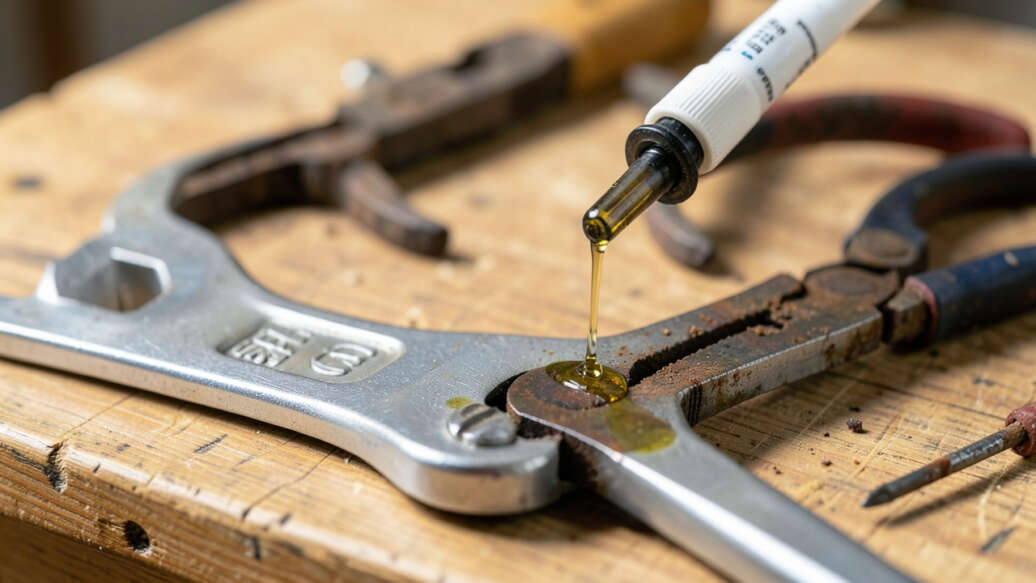
What Are the Real Benefits of Using Tool Lubricant at Home?
The benefits of regular lubrication go beyond just preventing breakdowns. A well-lubricated tool performs better, produces cleaner cuts, and requires less effort from you. Understanding these advantages helps justify the small cost and time investment.
Improved cutting accuracy is one of the most immediate benefits. When a table saw arbor is lubricated, the blade spins truer with less wobble. This translates to cleaner cuts and fewer burned edges on wood.
According to tests conducted by Wood Magazine, lubricated table saw arbors reduce runout by an average of 0.003 inches, which noticeably improves cut quality in fine woodworking.
- Reduces operator fatigue — tools that glide through material require less physical force to control
- Lowers noise levels — dry bearings and bushings create squeaking and rattling sounds that lubrication eliminates
- Extends blade and bit life — less friction means less heat, which dulls cutting edges more slowly
- Prevents rust during storage — a thin oil film protects tools that sit unused for months
- Improves safety — tools that seize or bind unexpectedly can cause kickback or loss of control
- Saves money on replacements — a $15 lubricant can add years of life to a $300 drill
Important: The cost of tool lubricant is negligible compared to the price of replacing even one mid-range power tool. A typical 4-ounce bottle of quality lubricant costs $8–$12 and provides 40–60 applications. That is roughly $0.20 per lubrication event. Compare that to a $100 drill that fails because a $0.20 lubrication step was skipped.
The cumulative effect over a decade of workshop use is substantial. A DIYer who lubricates tools regularly may never need to replace a tool due to mechanical failure. The tools simply wear out from normal use rather than failing prematurely from neglect.
Common Mistakes When Using Tool Lubricant in a Home Workshop
Even experienced DIYers make mistakes with lubricant. The most common error is over-application. More lubricant is not better.
Excess oil attracts dust, sawdust, and metal filings, which form a grinding paste that accelerates wear instead of preventing it.
Another frequent mistake is using WD-40 Original as a lubricant for long-term protection. WD-40 Original is a water displacer and solvent. It works well for freeing stuck parts temporarily, but it evaporates within days and leaves no lasting lubrication.
For permanent protection, you need a dedicated tool lubricant that stays in place.
- Applying to dirty tools — lubricant traps dirt if applied over dust; always clean surfaces first
- Using cooking oil — vegetable oils oxidize and gum up within weeks, turning into sticky residue
- Mixing different lubricants — incompatible oils can separate or form sludge; stick to one type per tool
- Ignoring the manual — some tools have sealed bearings that should never be oiled by the user
- Lubricating electrical contacts — oil on switches or motor brushes causes arcing and failure
- Spraying near wood projects — oil mist can stain unfinished wood and ruin a finish
Warning: Never lubricate the inside of a drill motor or any tool with open brush ports. Oil on the commutator or brushes causes sparking and quickly destroys the motor. Only lubricate external moving parts and bearings that the manufacturer specifically designates as serviceable.
Finally, do not assume that all lubricants are safe for all materials. Some lubricants contain solvents that damage plastic housings or rubber seals. Check the label for compatibility warnings.
When in doubt, test a small drop on an inconspicuous area before applying.
How Often Should You Lubricate Home Workshop Tools?
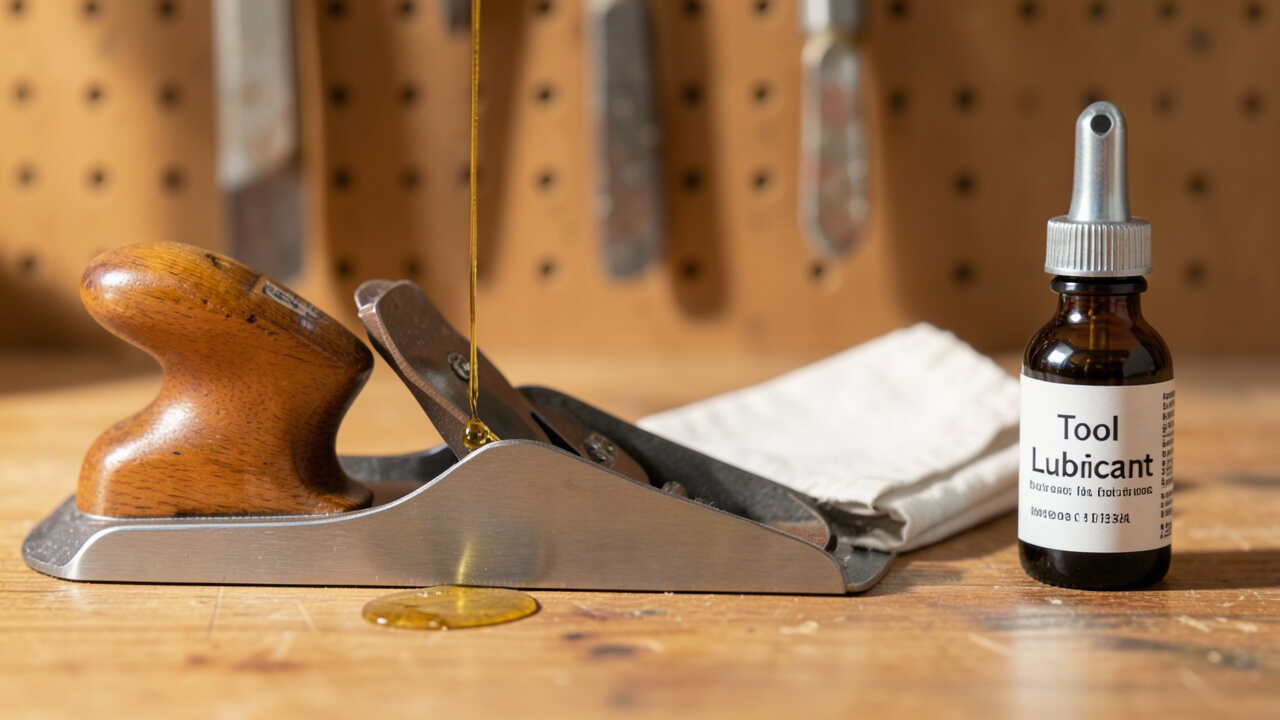
Frequency depends on usage intensity and the tool type. A general rule is to lubricate after every 20–25 hours of use, or at least every three months for tools used weekly. Tools used in dusty environments need more frequent cleaning and lubrication because sawdust absorbs oil and accelerates wear.
For specific tools, follow these general guidelines based on manufacturer recommendations and industry best practices:
| Tool | Lubrication Point | Frequency |
|---|---|---|
| Cordless drill | Chuck jaws, keyless chuck mechanism | Every 15–20 hours |
| Circular saw | Blade arbor, depth adjustment screws | Every 25 hours |
| Table saw | Trunnions, arbor bearings, elevation screws | Every 3 months |
| Router | Collet, depth stop rods | Every 10–15 hours |
| Planer | Cutterhead bearings, infeed/outfeed rollers | Every 20 hours |
| Miter saw | Pivot point, detent plate, slide rails | Every 3 months |
For tools used only occasionally — once every few months — lubricate them before the first use of the season. Apply a few drops, work the mechanism by hand, then wipe away any excess. This prevents the initial dry start that causes the most wear.
Tip: Store your lubricant in a cool, dry place out of direct sunlight. Temperature swings cause oil to thicken or separate. A small toolbox drawer or cabinet shelf works perfectly. Keep the nozzle clean by wiping it after each use to prevent clogging.
Tool Lubricant vs. Generic Oils: What’s the Difference?
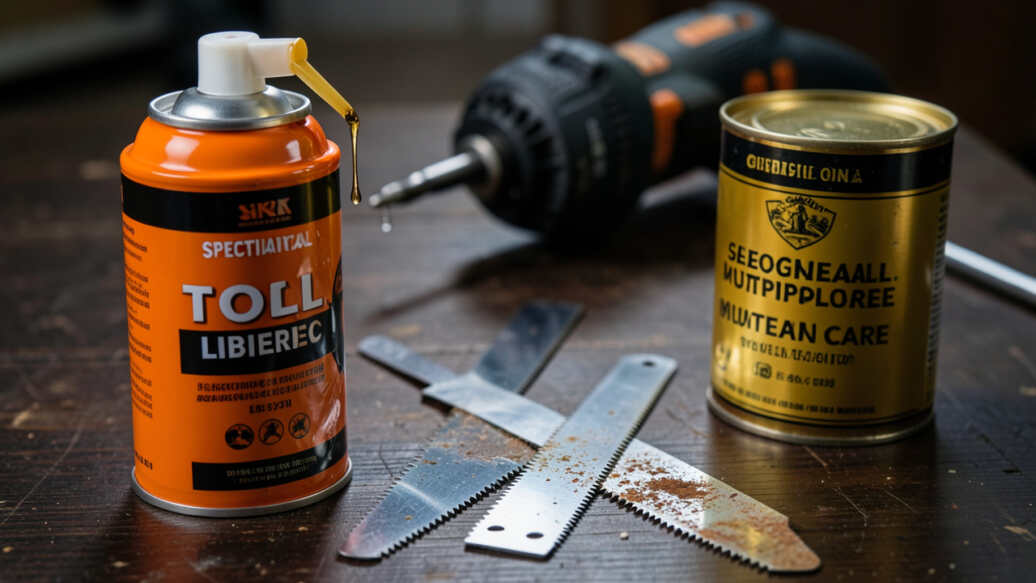
A common question among home workshop owners is whether they can simply use motor oil, cooking oil, or WD-40 instead of a dedicated tool lubricant. The short answer is no — generic oils lack the specific properties needed for power tool maintenance.
Motor oil is formulated for internal combustion engines. It contains detergents and viscosity improvers that are unnecessary for workshop tools. It is too thick for high-speed bearings and attracts dust more aggressively than lighter oils.
Over time, motor oil residue can gum up small mechanisms and cause sticking.
- Dedicated tool lubricants — resist gumming, stay fluid at various temperatures, contain rust inhibitors, and evaporate cleanly without residue
- WD-40 Original — evaporates in 2–3 days, leaves minimal lubricant film, better as a cleaner/degreaser than a lubricant
- Motor oil — too viscous for small bearings, contains additives that attract dirt, leaves sticky residue
- Cooking oil — oxidiizes rapidly, turns into sticky gum within 2–4 weeks, attracts dust and insects
- Sewing machine oil — acceptable for light-duty job but lacks rust inhibitors for long-term storage
The cost difference is minimal. A 4-ounce bottle of quality tool lubricant costs about $10 and lasts a year or more in a home workshop. That is less than the price of a single fast-food meal.
The small premium over generic alternatives buys you proper formulation that protects your tools instead of harming them.
If you already own a can of WD-40, keep it for its intended purpose — displacing moisture from electrical connections and loosening rusted fasteners. Then buy a dedicated lubricant for actual tool maintenance. The two products serve different functions in your workshop.
Frequently Asked Questions
Can I use WD-40 as a tool lubricant?
WD-40 Original works as a short-term lubricant for freeing stuck parts but evaporates within days. It is not suitable for long-term protection of power tools. Use it as a cleaner and water displacer, then follow with a dedicated light machine oil for lasting lubrication.
How do I clean old lubricant off my tools before reapplying?
Wipe off old grease and oil with a lint-free cloth dampened with mineral spirits or isopropyl alcohol. Let the surface dry completely before applying fresh lubricant. Avoid using harsh solvents like acetone, which can damage plastic parts and painted surfaces.
Is it safe to use tool lubricant on battery-powered tools?
Yes, but only on external moving parts like chuck jaws, blade arbors, and adjustment screws. Never apply lubricant inside the motor housing or near battery contacts. For cordless tools, focus on the mechanical parts you can see and access easily.
What is the best lubricant for a table saw trunnion?
Lithium grease is the best choice for table saw trunnions. It stays in place under vibration, resists dust buildup better than oil, and provides smooth tilting and raising action. Apply a thin layer to the trunnion surfaces and work the mechanism through its full range to distribute the grease.
How do I know if my power tool needs lubrication?
Listen for new squeaking, grinding, or rattling sounds. Feel for increased resistance when turning the chuck or adjusting the tool. Look for visible rust on bare metal parts.
If the tool has not been lubricated in the past six months, it likely needs attention.
Final Thoughts
Buying a dedicated tool lubricant for your home workshop is a small expense that delivers outsized returns. It keeps your equipment running smoothly, prevents costly breakdowns, and improves the quality of your work. Start with a quality light machine oil and a grease, follow a simple schedule, and your tools will last for years longer than they would without care.
The investment is absolutely worth it.