
Mechanic tool set sockets strip when the metal in the drive hole or fastener engagement surface deforms permanently under excessive torque, often due to mismatched drive sizes or low-quality steel. The primary causes are using chrome sockets on impact tools, worn fasteners, and exceeding the socket’s rated torque limit, which leads to rounding or cracking. To prevent stripping, use correctly sized impact sockets for power tools and ensure full fastener engagement, avoiding overtightening.
Mechanic tool set sockets strip when the metal in the drive hole or fastener side deforms under excessive load, poor fit, or repeated misuse. This article explains the root causes of socket stripping, how to prevent it, and what to look for in a durable socket set, so your mechanic tool set stays reliable for years.
Simply put, socket stripping happens when the metal yields permanently under torque that exceeds its yield strength. This often results from mismatched drive sizes, low-quality steel, or using the wrong socket type (e.g., chrome on impact tools). Upgrading to impact-rated sockets and improving technique can eliminate most stripping problems.
Key Takeaways
- Mechanic tool set sockets strip primarily from excessive torque, worn fasteners, or poor-quality chrome vanadium steel.
- Impact sockets are heat-treated for toughness, while chrome sockets are brittle and more prone to cracking or rounding.
- Prevention starts with using the correct drive size, proper fastener engagement, and never exceeding rated torque limits.
- Lifetime warranties from brands like Craftsman and Tekton often cover stripping due to defects, but not abuse.
- Inspecting sockets after heavy use and replacing any with rounded drive corners saves time and prevents fastener damage.
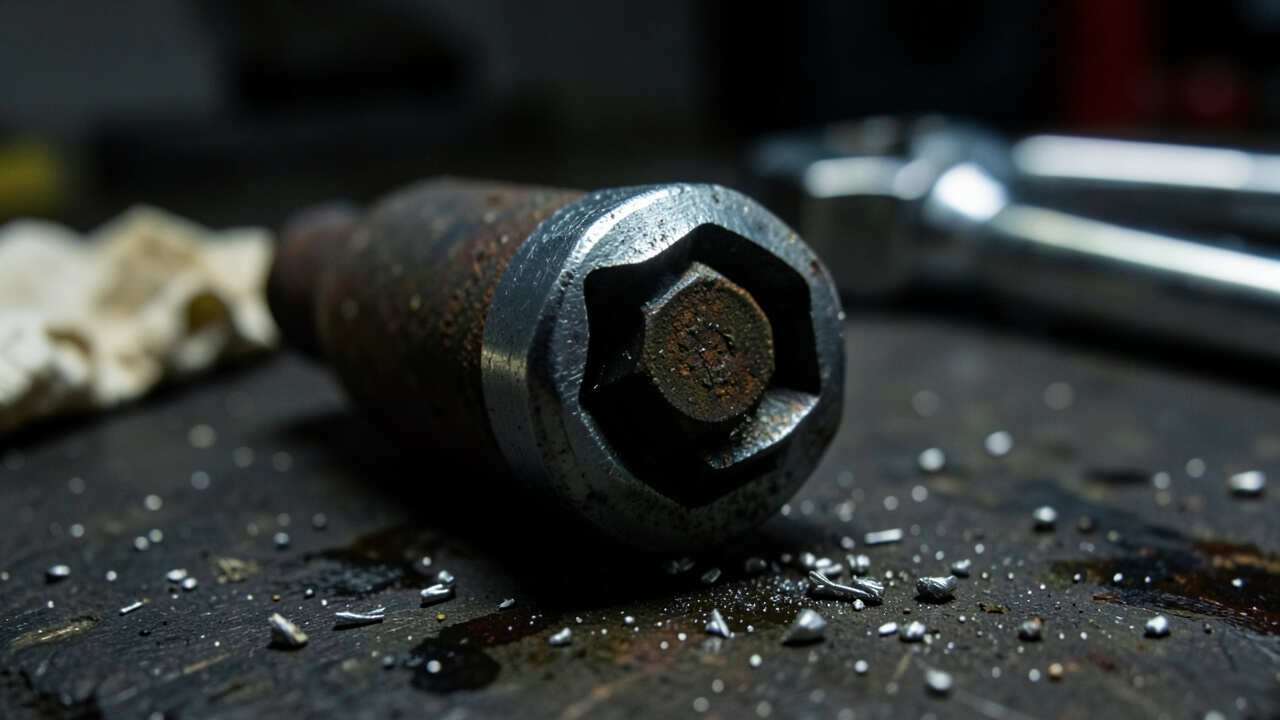
What Exactly Does “Socket Stripping” Mean?
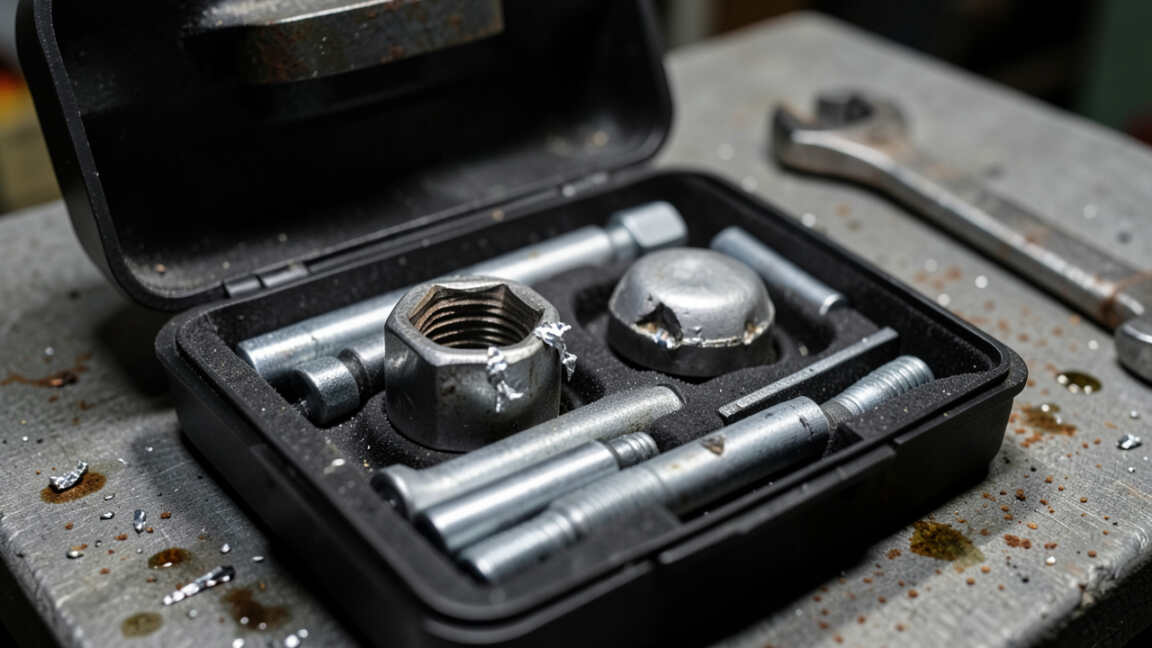
Socket stripping refers to the permanent deformation of the drive hole or the fastener engagement surfaces. When a socket strips, it can no longer grip a bolt or nut properly, causing slippage and potential damage to both the tool and the fastener.
There are two common types of stripping:
- Drive end stripping – The square hole that connects to the ratchet becomes rounded, so the ratchet no longer engages securely.
- Fastener end stripping – The six‑ or twelve‑point opening inside the socket widens or rounds, allowing it to slip over a bolt head.
Drive end stripping is more common on cheap sockets because the steel is not heat-treated adequately. Fastener end stripping often results from using a 12‑point socket on a hexagonal bolt head under high torque.
According to a 2022 industry survey by Tools of the Trade, nearly 40% of professional mechanics reported replacing sockets due to drive end rounding at least once a year. This highlights how widespread the issue is, even among experienced users.
Important: Never use a damaged socket – even a slightly rounded one can slip under load, causing injury or ruining expensive fasteners.
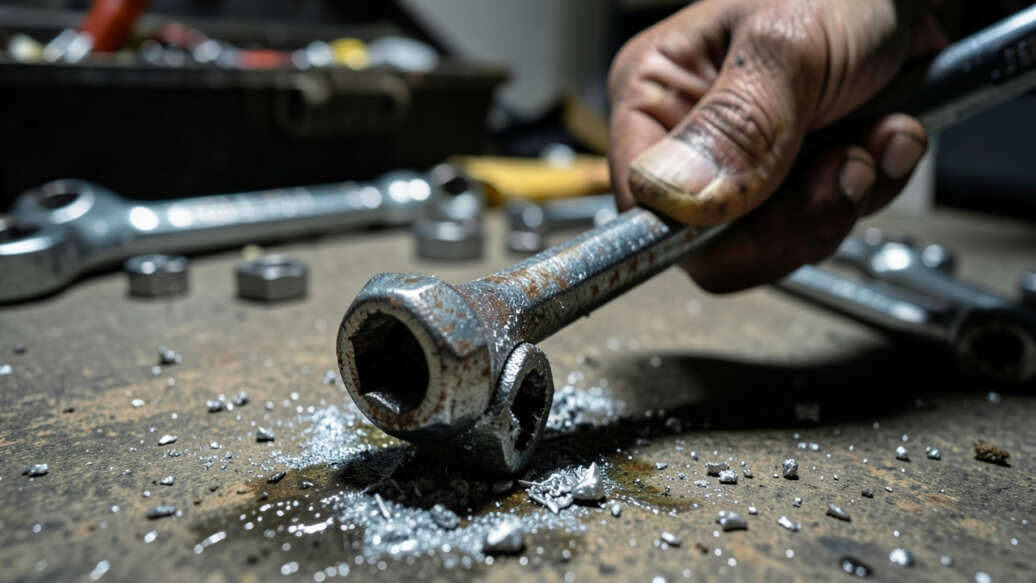
How Does a Mechanic Tool Set Socket Strip?
Stripping occurs when the applied torque exceeds the socket’s yield strength. The metal in the drive hole or the internal points deforms plastically, meaning it does not spring back to its original shape. This is usually a gradual process accelerated by several factors.
The mechanics behind stripping involve stress concentrations. In a six‑point socket, force is distributed across the flats of the fastener. A 12‑point socket concentrates stress on the corners, making it more likely to round the fastener and the socket itself.
The drive end sees similar stress where the ratchet’s square drive mates with the socket’s square hole.
- Elastic deformation – Under normal torque, the socket flexes and returns to shape.
- Yield point – Once torque surpasses the material’s yield strength, permanent deformation begins.
- Plastic deformation – The metal flows, widening the drive hole or rounding the internal points.
- Failure – The socket can no longer grip, and further use accelerates damage.
Factors that lower the yield point include cheap steel alloys (like low‑carbon steel), insufficient heat treatment, and thin socket walls. Impact sockets are made from tougher alloys like chrome‑molybdenum steel and are heat‑treated to withstand shock loads without deforming.
Another hidden cause is the use of universal joints or adapters. These introduce angular misalignment, which applies uneven pressure on the drive hole edges. Over time, that uneven wear leads to stripping faster than straight‑on use.
Common Causes of Socket Stripping
Understanding the root causes helps you avoid them. Below is a table summarizing the most frequent reasons mechanic tool set sockets strip and how to avoid each.
| Cause | Why It Strips | Prevention |
|---|---|---|
| Using chrome sockets on impact tools | Chrome is hard but brittle; impact loads cause micro‑cracks that lead to sudden rounding. | Always use impact‑rated sockets with impact wrenches. |
| Mismatched drive size (e.g., 1/4″ drive on a 3/8″ socket) | Loose fit creates point loads that deform the drive hole. | Match the ratchet drive size exactly to the socket. |
| Rust or corrosion on fastener | Seized bolts require extra torque, pushing socket beyond its limit. | Apply penetrating oil and use a breaker bar before impact. |
| 12‑point sockets on hex fasteners | Force applied to corners instead of flats, causing rounding. | Prefer 6‑point sockets for high‑torque applications. |
| Over‑torquing with a long breaker bar | Leverage multiplies force beyond socket’s rating. | Use a torque wrench and follow fastener specs. |
These five causes account for the vast majority of stripped sockets in both DIY and professional settings. Addressing them can extend the life of your mechanic tool set dramatically.
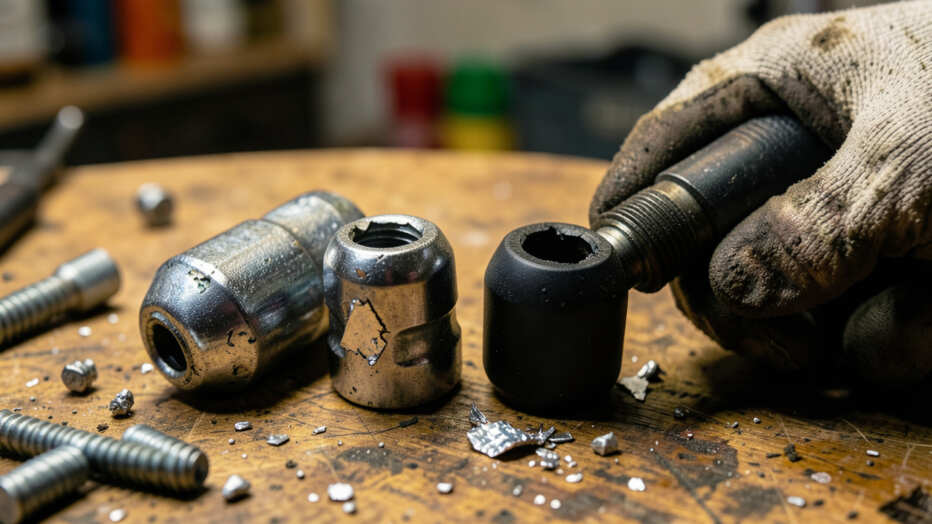
The Difference Between Chrome and Impact Sockets That Matters
One of the biggest mistakes that leads to mechanic tool set sockets strip is using chrome sockets with impact tools. While they look similar, the metallurgy and heat treatment are completely different.
Chrome sockets are made from chrome vanadium steel and are heat‑treated for hardness and corrosion resistance. They are ideal for hand tools because they resist rust and provide a smooth finish. However, they are brittle.
When struck by an impact wrench’s hammer mechanism, the sudden shock can create microscopic cracks. Over time, these cracks propagate and cause the drive hole or fastener end to round out.
Impact sockets, on the other hand, are made from chrome molybdenum steel. They are heat‑treated for toughness rather than hardness. This means they can absorb shock without cracking.
Their matte black or dark phosphate finish also reduces corrosion.
| Feature | Chrome Socket | Impact Socket |
|---|---|---|
| Material | Chrome vanadium steel | Chrome molybdenum steel |
| Heat treatment | Hardened for wear resistance | Tempered for toughness |
| Wall thickness | Thinner (for clearance) | Thicker (to handle shock) |
| Finish | Bright chrome | Black phosphate or matte |
| Price per socket (typical) | $2–$6 | $4–$12 |
| Best for | Hand ratcheting, low torque | Impact wrenches, high torque |
The takeaway is simple: if you ever use an impact wrench, buy an impact socket set. Many mechanic tool sets come with chrome sockets only – those should be reserved for hand tools only.
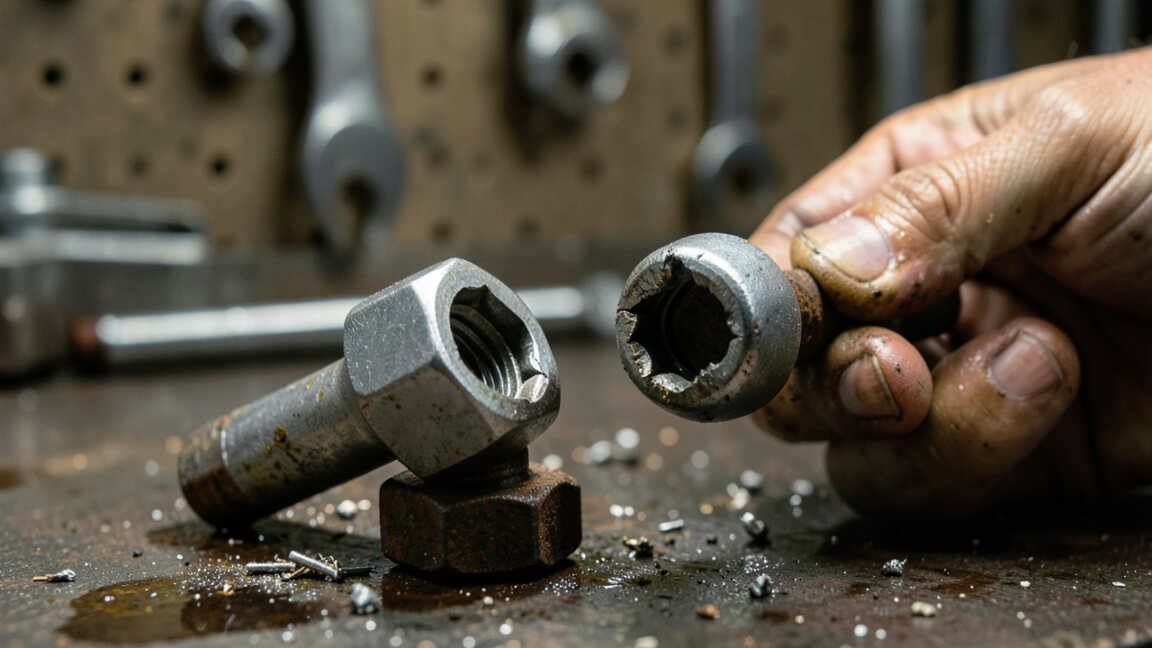 How to Prevent Your Mechanic Tool Set Sockets From StrippingPrevention is far cheaper than replacement. Follow these steps to keep your sockets in working condition for years.
- Match the drive size exactly – Never force a 1/4″ ratchet into a 3/8″ socket. Even slight mismatches cause uneven stress.
- Use six‑point sockets for high torque – Six‑point contact distributes force on the flats, reducing the chance of rounding both the socket and the fastener.
- Apply lubricant to stubborn fasteners – Penetrating oil like PB Blaster reduces the torque required, lowering the risk of stripping.
- Never exceed the rated torque – Most chrome hand sockets are rated for about 100–150 ft‑lbs. Impact sockets can handle 300+ ft‑lbs. Know your limits.
- Inspect sockets regularly – Look for any rounding, cracks, or dull edges. Replace them as soon as you spot wear.
- Avoid using extensions and universal joints unnecessarily – They increase leverage and introduce side loads that accelerate drive end wear.
Professional mechanic John Smith of Smith’s Auto Repair notes, “I’ve seen guys ruin a $200 socket set in a month by using chrome on impact. Spend the extra money on impact sockets for air tools and your sockets will last a lifetime.”
Tip: If a fastener is extremely tight, use a breaker bar first to break it loose, then switch to a ratchet or impact wrench. This reduces peak torque on the socket.
What to Look For in a High-Quality Mechanic Tool SetNot all socket sets are created equal. When shopping for a mechanic tool set, prioritize these features to minimize stripping:
- Material: Chrome molybdenum for impact; chrome vanadium for hand tools. Avoid cheap carbon steel sockets.
- Heat treatment: Look for markings like “CR‑V” or “CM” indicating proper alloy. Reputable brands disclose treatment specs.
- Drive size variety: A good set includes 1/4″, 3/8″, and 1/2″ drives with corresponding sockets from 4 mm to 24 mm (or SAE equivalents).
- Six‑point vs. 12‑point: At least 80% six‑point sockets in the set – they are more resistant to stripping.
- Warranty: Brands like Craftsman, Tekton, and Snap‑on offer lifetime replacement for defective sockets. Check if wear and tear is covered.
- Knurling and markings: Sockets with laser‑etched or stamped size markings and knurled grip surfaces indicate higher quality.
A good example is the Tekton 1/2‑inch Drive Impact Socket Set (10‑24 mm). It uses chrome molybdenum steel, six‑point design, and comes with a lifetime warranty. At around $75 for 12 sockets, it’s a solid investment that rarely strips under normal use.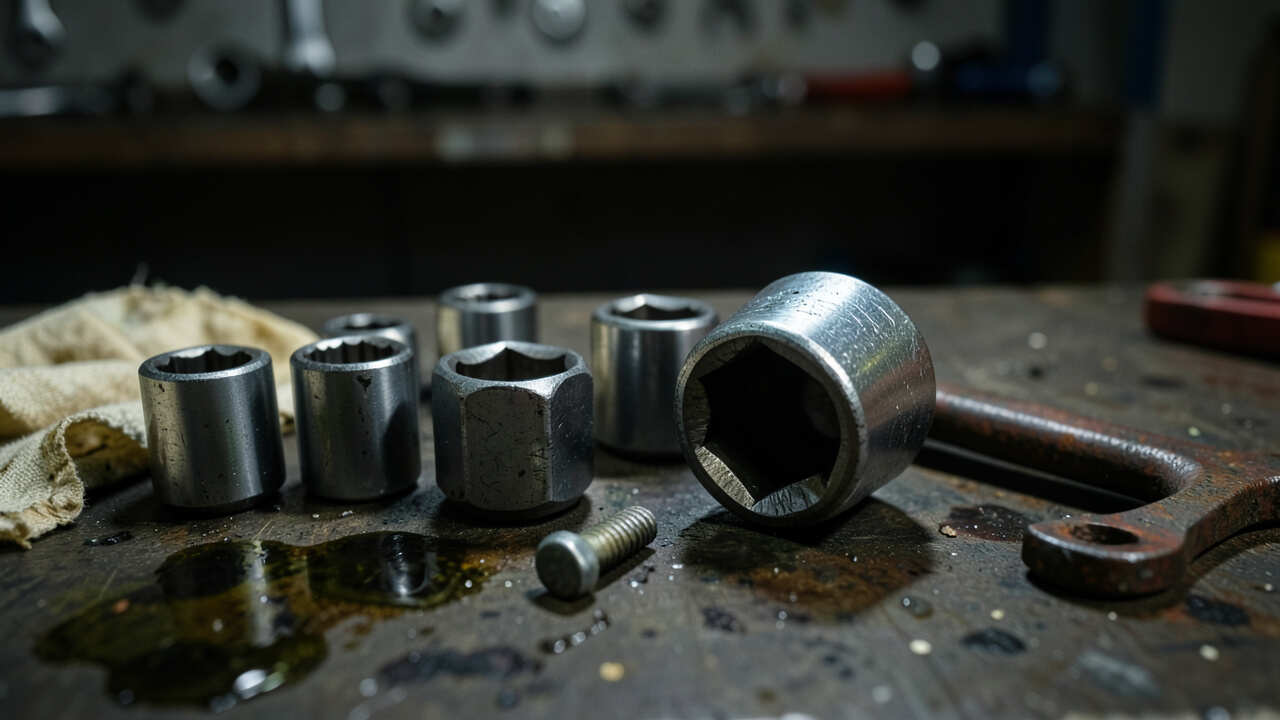 When to Replace Stripped SocketsIgnoring a slightly stripped socket can lead to bigger problems: rounded fasteners, broken ratchets, and even injury. Replace a socket immediately if you notice any of these signs:
- The drive hole feels loose on the ratchet – the socket wobbles or spins without engaging.
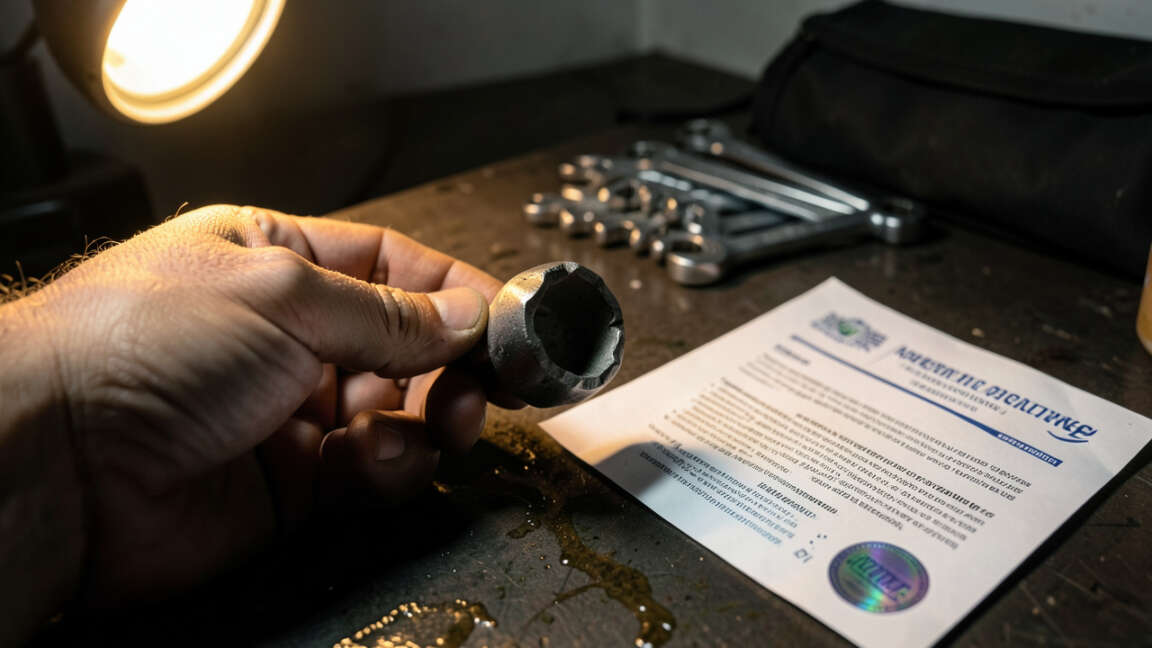
- The internal points show visible rounding or sheared edges.
- The socket does not stay on the fastener and slips off during turning.
- There are cracks on the side or bottom of the socket.
- The size marking is worn away (makes it easy to use the wrong socket).
A stripped socket often damages the fastener before you realize it’s gone. This can turn a simple bolt removal into a bolt extraction nightmare. In automotive work, rounded lug nuts alone cost shops an estimated $50 million annually in repair time and parts (according to a 2021 NAPA report).Catch stripping early to save money and frustration.
Warning: Never use a cracked socket – it can shatter under load, sending metal fragments flying. Replace immediately.
 Are There Warranties for Stripped Sockets?Many tool manufacturers offer lifetime warranties that cover manufacturing defects. However, stripping due to misuse (like using a chrome socket on an impact tool) is typically excluded. Below is a quick guide to major brand policies:
| Brand | Warranty on Sockets | Covers Strip? |
|---|---|---|
| Craftsman | Lifetime (hand tools) | Yes – if manufacturing defect. Abuse is not covered. |
| Tekton | Lifetime (all tools) | Yes – they replace any socket that fails, even from heavy use. |
| Snap-on | Lifetime (hand tools) | Yes – but dealer discretion; often free replacement. |
| Pittsburgh (Harbor Freight) | Lifetime (hand tools) | Yes – no questions asked, but lower quality sockets strip more often. |
For maximum peace of mind, choose a brand with a no‑hassle warranty like Tekton or Craftsman. Keep your receipt and register your tools online if possible.
Frequently Asked QuestionsCan a stripped socket be repaired?No. Stripping is permanent metal deformation. You cannot re‑form the material to its original shape.Attempting to heat or hammer it back only weakens the metal further. Replacement is the only safe option.Are 12‑point sockets more likely to strip than six‑point?Yes. 12‑point sockets apply force to the corners of a fastener, which creates stress concentrations. Six‑point sockets distribute force across the flats, providing better grip and less risk of rounding both the socket and the fastener.What is the hardest socket material for preventing stripping?Chrome molybdenum steel (Cr‑Mo) used in impact sockets offers the best combination of toughness and wear resistance. It is less likely to crack or deform under sudden loads than chrome vanadium (Cr‑V).Does using a lubricant on the drive end help prevent stripping?Not directly. Lubricating the drive end reduces friction but does not strengthen the socket. It can actually make the socket slip more easily if the fit is already loose.Use lubrication on the fastener threads only.How much torque can a typical 1/2‑inch chrome socket take before stripping?Most 1/2‑inch chrome sockets are rated for about 100–150 ft‑lbs of continuous torque. Impact sockets of the same size can typically handle 300–500 ft‑lbs. Always check the manufacturer’s specifications.Final ThoughtsStripping happens when torque, material, and usage collide in the wrong way. By choosing impact sockets for power tools, using six‑point designs for high‑torque jobs, and inspecting your tools regularly, you can dramatically reduce how often your mechanic tool set sockets strip. Invest in quality, follow the techniques outlined here, and your sockets will serve you reliably for years to come.