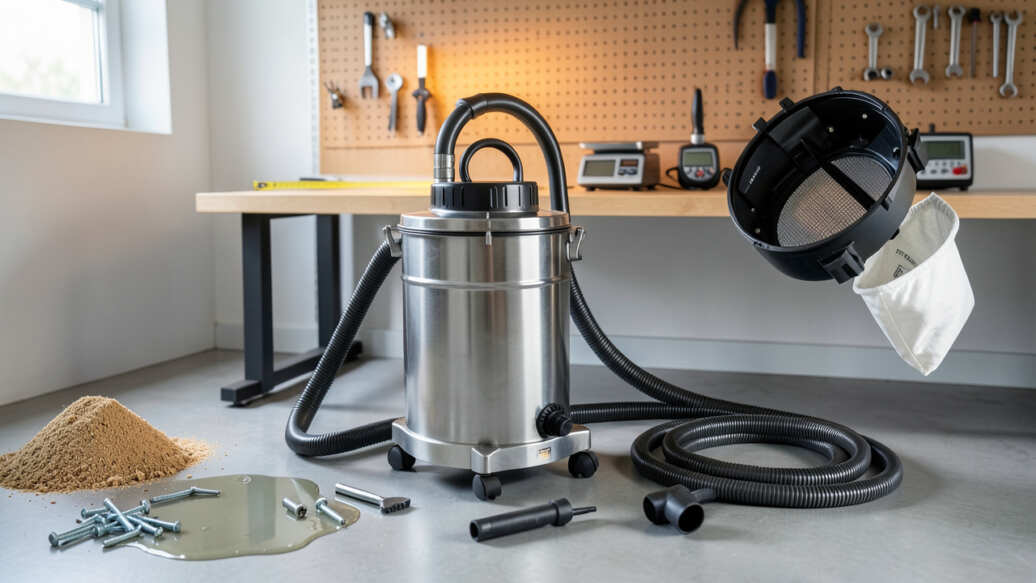

Before buying a shop vacuum, focus on CFM and water lift rather than peak horsepower for realistic suction performance. Tank capacity and material affect durability and frequency of emptying, while a quality filtration system prevents dust recirculation and protects the motor. Additional critical checks include hose diameter compatibility with tools, noise levels for comfort, and wet/dry functionality with proper drainage.
Buying a shop vacuum seems simple, but beginners often get stuck comparing confusing specs like horsepower versus airflow. Picking the wrong one means poor suction, messy filter cleaning, or hard-to-move equipment. Don’t worry.
I will walk you through exactly what matters. Let’s look at the 6 Things to Check Before You Buy a Shop Vacuum together so you can make a smart choice without the headache.
Key Takeaways
- Peak horsepower ratings are misleading; focus on CFM and water lift for real suction power.
- Tank material and capacity directly affect durability, mobility, and how often you empty the drum.
- A good filtration system keeps dust from blowing back into your air and keeps the motor safe.
- Hose diameter determines what tools you can use and how well the vacuum handles different debris.
- Checking noise levels helps you choose a vacuum that won’t disturb your home or workplace.
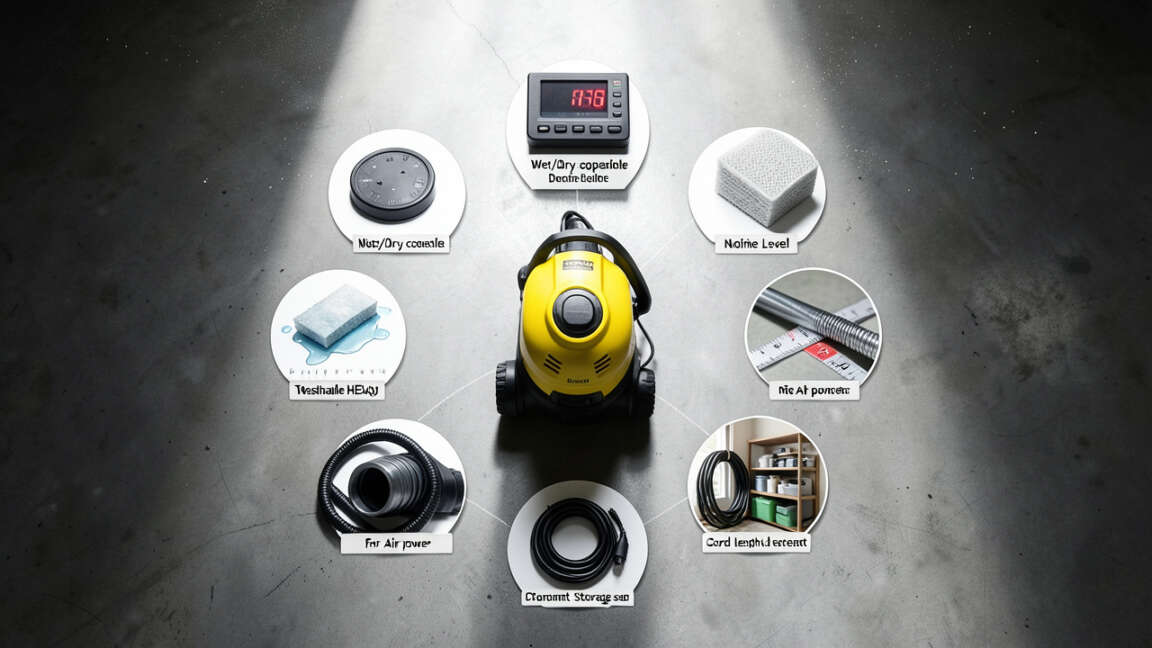
The 7 Critical Checks for a New Shop Vacuum
Walking into a hardware store or browsing online gives you dozens of options. Prices range from fifty dollars to five hundred dollars. It is easy to focus on the tank color or the number of attachments.
But the real value comes from understanding the specs that actually affect cleaning power and ease of use.
This guide breaks down the seven most important things to look for. We will look at motor specs, tank design, filters, hoses, and more. By the end, you will know exactly how to pick the right shop vacuum for your garage, workshop, or home.
Let’s get started.
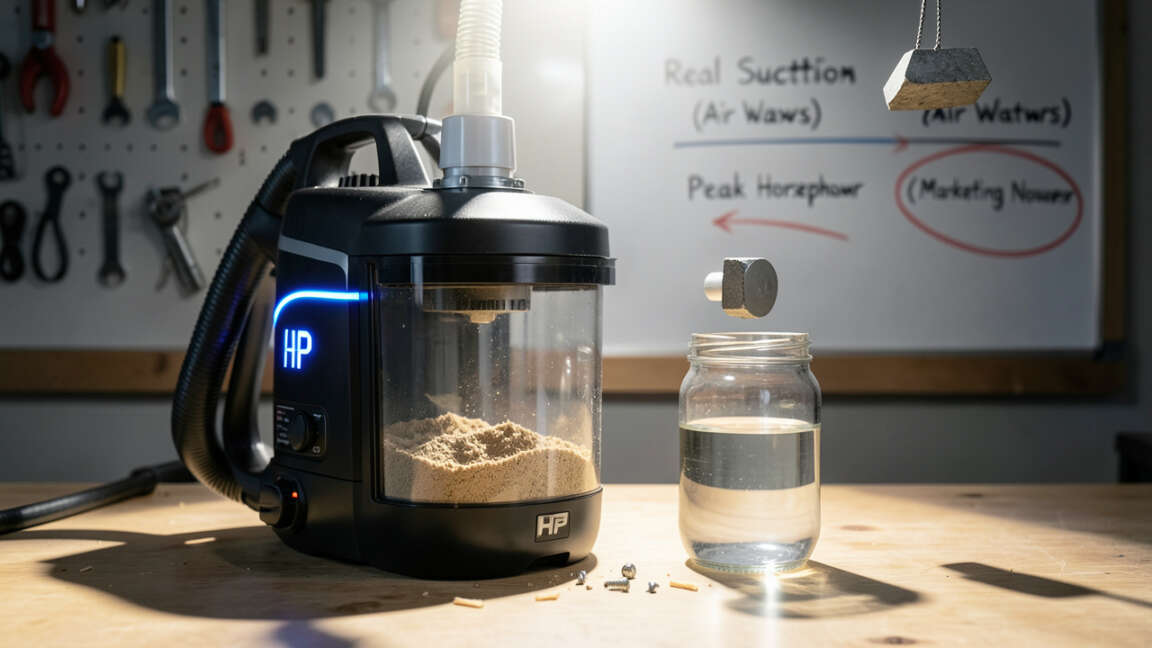
1. Motor Performance: Real Suction vs Peak Horsepower
Motor specs are the first thing people look at, and they are also the most confusing. Peak horsepower numbers like “6.5 HP” sound impressive. But they do not tell you how a vacuum works in the real world.
Peak HP is measured with the motor running without a load. That never happens when you are cleaning.
You need to look at two real-world numbers instead: CFM and water lift. CFM stands for Cubic Feet per Minute. It measures how much air the vacuum moves.
Think of it as the volume of the airflow. Water lift measures the strength of the vacuum seal. It is measured in inches of H2O.
Think of it as the pulling power or suction strength.
A good shop vacuum needs a balance. High CFM picks up large volumes of light debris like sawdust or leaves. High water lift picks up heavy things like mud, water, or dense dirt.
Most standard 5 HP shop vacuums offer around 100-120 CFM and 60-80 inches of water lift.
Some brands are more honest than others. A 4.5 HP motor from a reputable brand might deliver 120 CFM and 80 inches of water lift. A cheap 6.5 HP motor might only deliver 90 CFM and 55 inches of water lift.
Always check the small print on the spec sheet.
What to Look For
- CFM (Cubic Feet per Minute): Aim for 100 CFM or more. This is the most important number for dust collection from tools. A lower CFM means less air is moving through the hose, so tools can get clogged.
- Water Lift (Inches of H2O): Aim for 60 inches or more. A higher water lift means the vacuum can pick up heavier objects and hold them against the nozzle. It also helps clear wet puddles faster.
- Amps (Amp Draw): This is a steady measure of electrical power. Most shop vacuums use 8 to 12 amps. A 12-amp motor generally provides more consistent power than an 8-amp motor, regardless of the peak HP claim.
Real-Life Example: A furniture maker bought a budget 6.5 HP shop vacuum for his garage. He connected it to his sander. The vacuum could not keep up with the dust production.
The hose clogged often. He switched to a 4.5 HP vacuum from a professional brand. It had 125 CFM.
The dust collection improved by 40 percent and the hose stopped clogging.
Statistic: According to a 2023 test by a major tool review site, over 60 percent of shop vacuums marketed as 5 HP or more actually deliver less than 100 CFM in real-world use. This shows why you cannot trust peak HP alone.
| Motor Spec | What It Measures | Good Target Range |
|---|---|---|
| Peak HP | Max lab power, no load | Ignore this number |
| CFM | Air volume moved | 100 – 150 CFM |
| Water Lift | Suction strength | 60 – 100 inches |
| Amps | Electrical power draw | 8 – 12 Amps |
2. Tank Capacity and Material
Shop vacuums come in sizes from 2 gallons to 16 gallons or more. Your choice depends on what you clean. A small 2-3 gallon unit is great for car interiors or quick spills.
A 5-8 gallon tank is the most popular size for home garages. A 10-gallon or larger tank works best for heavy construction or large workshops.
You also need to choose between stainless steel and plastic tanks. Stainless steel tanks are strong, rust-proof, and resist dents. They are heavier and cost more.
Plastic tanks are lighter, cheaper, and never rust. But they can crack in cold weather or if dropped.
Consider the shape of the tank too. Round tanks are stronger and give more consistent suction. Square or rectangular tanks tip over less easily but can be harder to empty completely.
Sample Scenario
- You plan to use the shop vacuum mainly to clean your car. A 2.5 or 3-gallon unit is easy to carry and store. It fits in a small closet.
- You have a woodworking shop. A 10-gallon stainless steel tank gives you long runtime before emptying and handles nails and screws without puncturing.
- You need a general home use vacuum for the garage. An 8-gallon plastic tank offers a good balance of capacity and weight.
Real-Life Example: A plumber used a 12-gallon plastic shop vacuum on job sites. During a cold winter, the tank cracked when he lifted it out of his truck. He replaced it with a 12-gallon stainless steel model.
The stainless steel tank survived drops and cold weather without any damage.
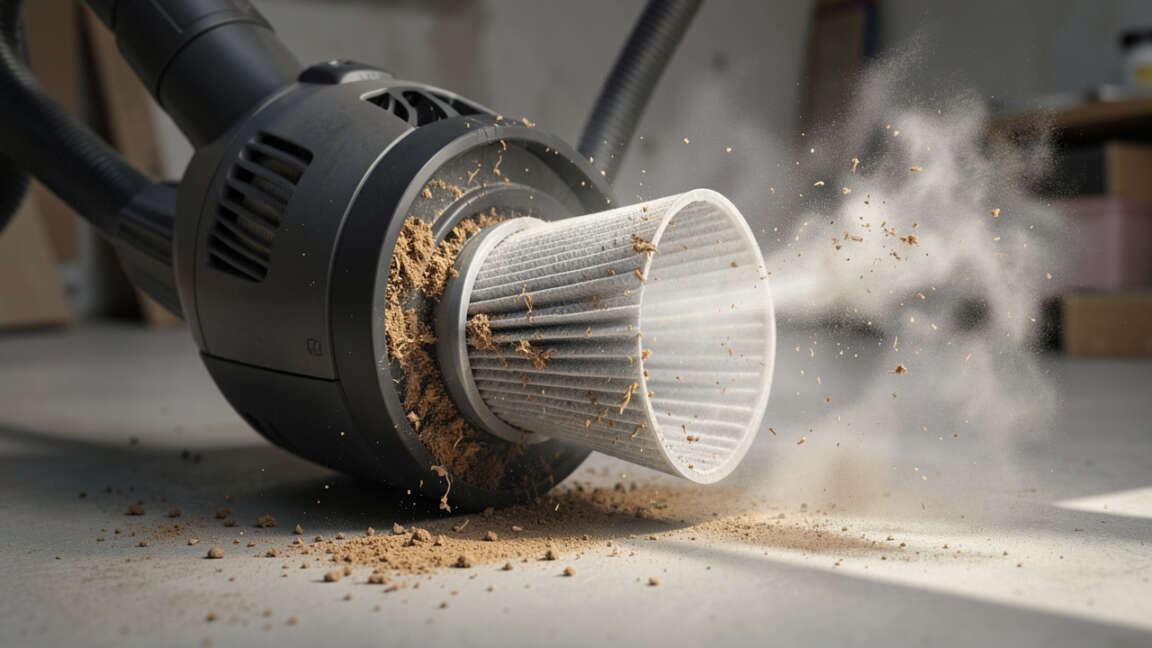
3. Filtration System: Keeping Dust Down
The filter is one of the most overlooked parts of a shop vacuum. A bad filter lets dust blow back into your air. This is bad for your lungs and makes cleaning less effective.
A good filter traps fine dust and keeps the motor cool and safe.
There are three main types of filters for shop vacuums: standard felt or paper filters, cartridge filters, and HEPA filters. Standard filters are basic and cheap. They trap large particles but let fine dust through.
Cartridge filters are pleated and offer better surface area. They catch smaller particles and are easier to clean. HEPA filters trap 99.97% of particles down to 0.3 microns.
They are best for fine dust like drywall or concrete.
Some vacuums have a filter cleaning mechanism. A pull-knob or reverse air flow shakes dust off the filter. This keeps suction strong without needing to remove the filter.
Look for this feature if you generate a lot of dust.
Important Filter Tips
- Check the filter type: For drywall dust, you need a HEPA filter or a fine dust bag. A standard filter will clog fast and leak dust.
- Look for a cloth pre-filter: Some models come with a cloth bag that goes over the main filter. It catches large debris and extends the life of the main filter.
- Easy access: Make sure the filter is easy to take off and clean. Top-loading filter access is much easier than bottom-loading.
Statistic: A study by the American Lung Association found that fine particulate matter from construction dust can stay in the air for hours. Using a HEPA filter on your shop vacuum helps reduce these airborne particles by up to 99.97 percent. This keeps your workshop safer to breathe in.
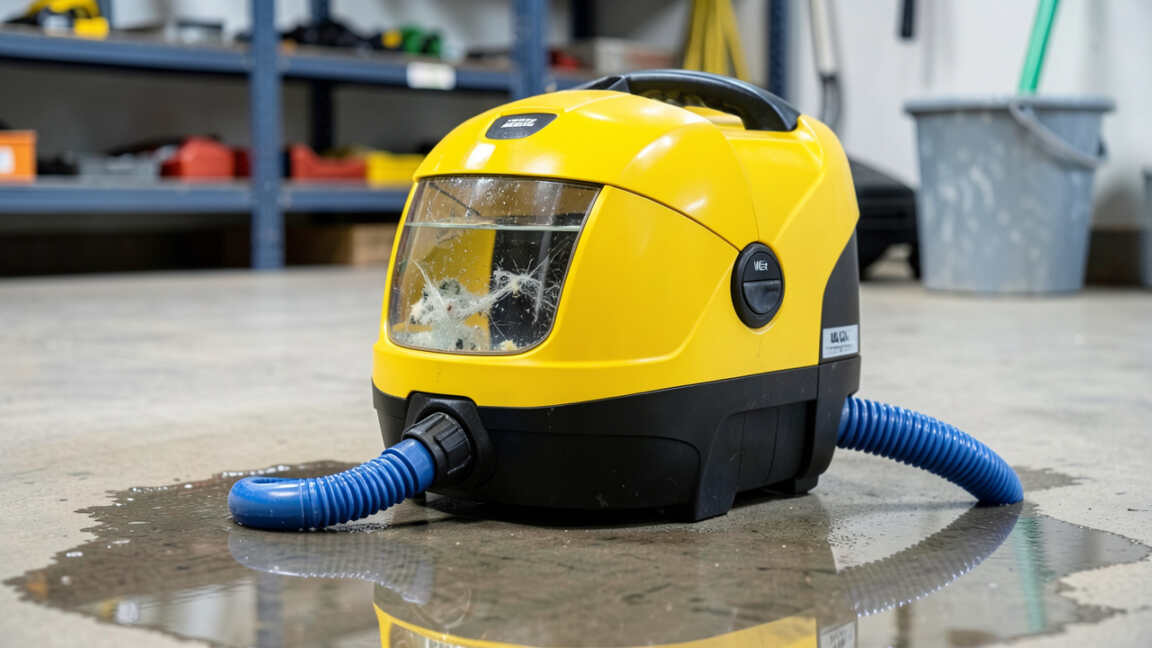
4. Wet/Dry Functionality and Drainage
One main reason to buy a shop vacuum is to pick up both wet and dry messes. Not all vacuums handle liquids the same way. Check for an automatic float shut-off.
This device stops the suction when the tank is full of water. If your vacuum lacks this, water can enter the motor and ruin it.
Another key feature is a drainage port. A small drain plug on the bottom of the tank lets you empty liquids quickly without lifting the heavy drum. This is a huge time saver when you clean a flooded basement or a large spill.
You should also check if the vacuum comes with a foam filter sleeve. You must remove the dry filter and put a foam sleeve over the filter cage before picking up liquids. The foam sleeve prevents water from soaking the filter element while still allowing airflow.
Case Study
A contractor used a standard shop vacuum without a float shut-off to clean a flooded washing machine area. The vacuum filled up with water, and the motor sucked in moisture. The vacuum stopped working after one use.
They bought a new model with a float valve and a drain plug. The new vacuum handled several flood cleanups without any motor damage.
5. Hose Diameter and Accessories
The hose is your direct connection to the dirt. Shop vacuums generally use either 1-1/4 inch or 2-1/2 inch hoses. A 1-1/4 inch hose is lightweight and flexible.
It fits standard shop vacuum tools and is good for general dust and small debris. But it can clog easily with large wood chips or wet leaves.
A 2-1/2 inch hose is larger and moves more air. It is better for heavy debris, large chunks, and high-volume dust collection from power tools. It is less flexible and heavier.
Some vacuums come with a kit that lets you use both sizes.
Check the length of the hose. A longer hose (12 to 20 feet) gives you more reach without moving the vacuum. Also check if the hose has a built-in cord.
Some shop vacuums route the power cord through the hose for easy carrying.
Accessory Comparison Table
| Hose Size | Best For | Common Tools |
|---|---|---|
| 1-1/4 inch | Car interiors, general shop cleanup, fine dust | Crevice tool, brush nozzle, utility nozzle |
| 2-1/2 inch | Large debris, wet leaves, woodworking chips, thick mud | Floor nozzle, large crevice tool, dust collection adapter |
6. Portability and Onboard Storage
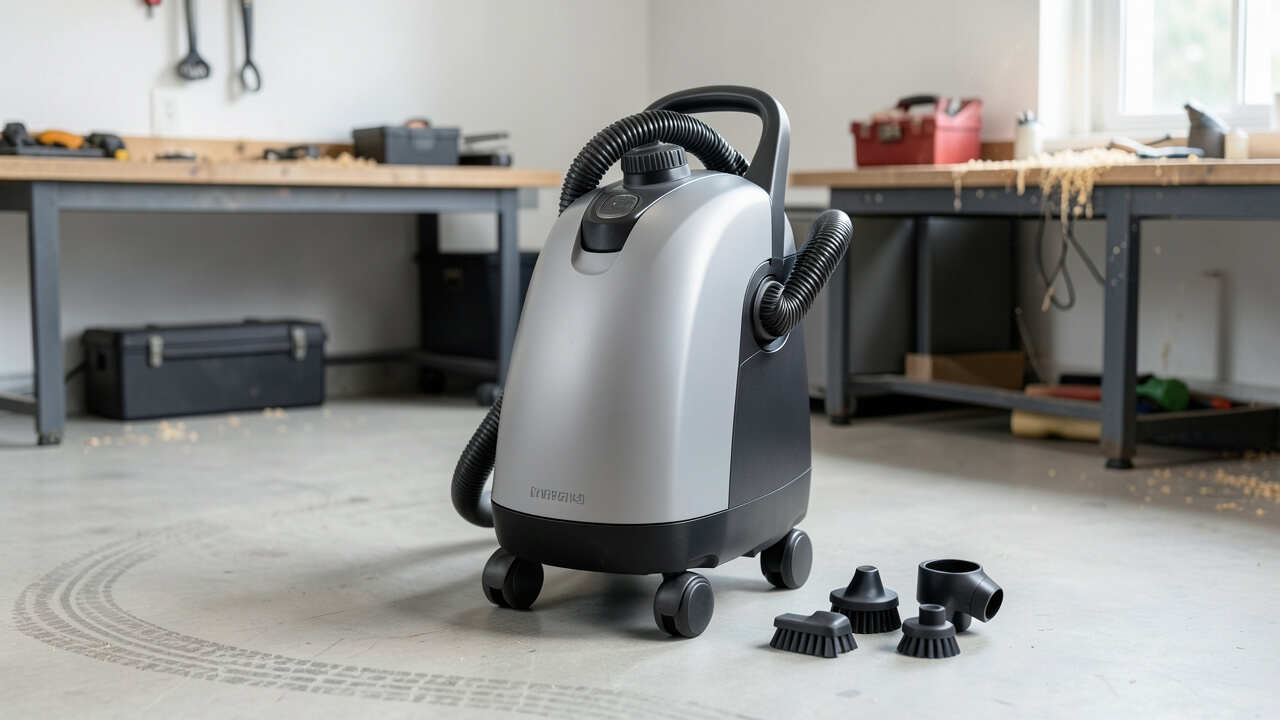
A shop vacuum needs to move around your workspace easily. Check the wheel size and type. Larger wheels roll over cords and uneven floors better than small hard plastic wheels.
A good wheel set makes the vacuum feel lighter than it is.
Also look at the handle design. A low, wide handle is easier to pull on a staircase or over obstacles. A high handle gives better leverage on flat ground.
Some vacuums have a handle that also holds the hose and cord for storage.
Onboard storage keeps your accessories organized. A good shop vacuum includes a spot to store the hose, wands, nozzles, and the power cord. This prevents losing pieces and saves space in your garage.
Look for models with a built-in cord wrap and a tool caddy on top of the tank.
What to Check
- Wheel Diameter: Look for wheels 3 inches or larger for easy rolling on rough surfaces.
- Cord Length: A 20-foot cord is standard. A 25-foot or longer cord lets you reach farther outlets without an extension cord.
- Storage: Does the vacuum have clips or slots for the wand and nozzles? Or will the parts fall off when you move it?
7. Noise Level
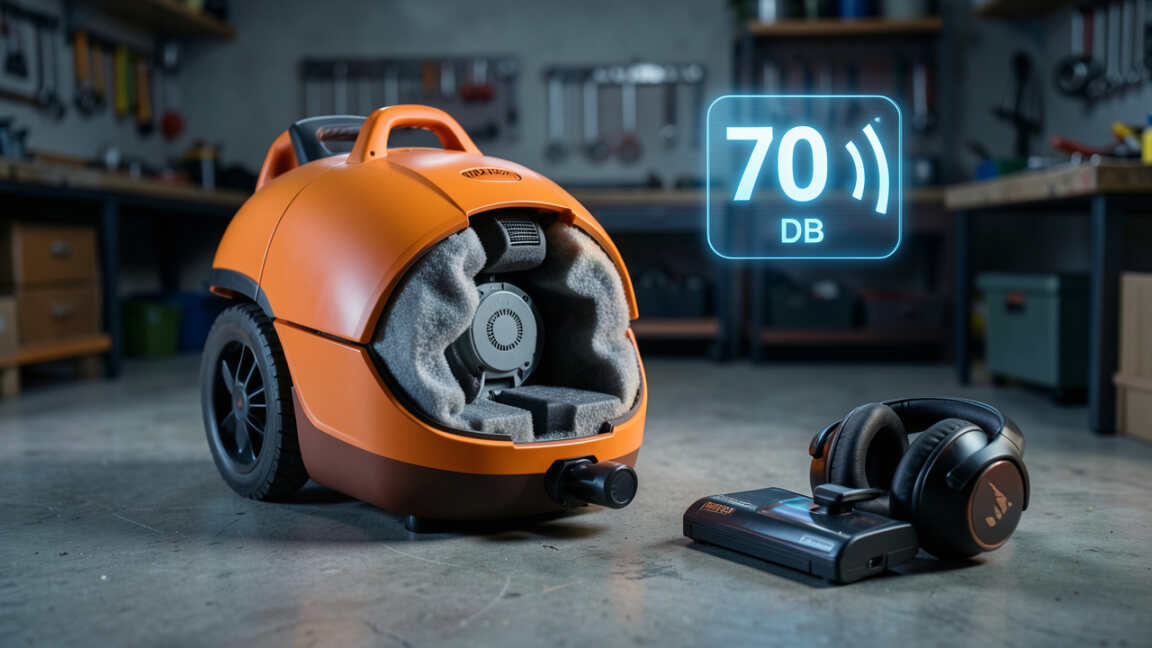
Shop vacuums are some of the loudest tools in a garage. A standard unit can hit 85 decibels or more. At that level, hearing damage is possible after just 8 hours of exposure.
In a small workshop with hard walls, the noise bounces around and feels even louder.
Some brands now offer quiet models. These units use better motor insulation, larger impellers that spin slower, and sound-dampening materials. They run at 60 to 70 dB.
That is as loud as a normal conversation. A quiet vacuum lets you listen to music, talk on the phone, or work without earplugs.
The trade-off is cost. Quiet shop vacuums often cost 30 to 50 percent more than standard models. You also might get slightly lower peak suction.
But for many users, the quieter operation is worth the extra money. It is one of the most important features if you work in a shared space.
Sample Scenario: A home crafter uses a Cricut machine and an air purifier in a small home office. They use a small 2.5 gallon shop vacuum to clean up vinyl scraps and dust. The standard model was so loud it disturbed their family in the next room.
They switched to a quiet model rated at 68 dB. The family no longer complains and the crafter can work freely.
Frequently Asked Questions
Question: How much CFM do I really need in a shop vacuum?
Answer: For general home use and small workshops, look for at least 100 CFM. For heavy-duty use with power tools or large debris, 120 CFM or more is better. CFM is the most honest measure of a vacuum’s air-moving power.
Question: Can I use a shop vacuum for fine dust like drywall?
Answer: Yes, but you must use a HEPA filter or a fine dust collection bag. Standard filters let fine dust blow right through and back into the air. A HEPA filter traps 99.97% of particles down to 0.3 microns, keeping your air cleaner.
Question: Is a stainless steel tank better than a plastic tank?
Answer: Stainless steel is stronger, rust-proof, and resists dents better than plastic. It is also heavier and costs more. Plastic tanks are lighter and cheaper but can crack if dropped or exposed to extreme cold.
Choose based on your budget and how much abuse the vacuum will take.
Question: What does water lift mean on a shop vacuum?
Answer: Water lift measures how strong the suction is. It is shown in inches of H2O. A number around 60 to 80 inches is good for general use.
Numbers over 80 inches mean very strong suction for heavy debris or stuck-on dirt.
Question: How often should I clean the filter on my shop vacuum?
Answer: Clean the filter every time you empty the tank, or whenever you notice a drop in suction. Most filters can be tapped clean or rinsed with water. Let a wet filter dry completely before putting it back in to prevent mold or mildew.
Final Thoughts
Choosing the right shop vacuum comes down to matching the specs to your real work. Focus on CFM and water lift over peak HP. Pick the right tank size and filter type for your messes.
Check the hose and noise level too. Now you have the right checklist to buy a shop vacuum that serves you well for years.