
Before buying a wood lathe, six critical checks ensure you select a model suited to your projects—starting with motor power and torque, which directly affect your ability to turn dense woods smoothly. Swing over bed and distance between centers determine the maximum workpiece size you can handle, while variable speed control is essential for matching cuts to different wood types. Evaluating safety features such as a reliable stop switch and tool rest lock helps prevent frustration and injury, giving beginners a practical checklist to avoid an unsuitable purchase.
Buying your first wood lathe can feel tricky. There are so many models and specs. You worry about picking the wrong one.
That is why 6 Things to Check Before You Buy a Wood Lathe is a key topic for beginners. This guide breaks down each point in simple steps. You will know exactly what to look for.
No confusion. Just clear help to make a smart buy. Keep reading to learn the simple checklist.
Key Takeaways
- You will learn the main parts of a wood lathe that matter most.
- You will understand how motor power affects your turning projects.
- You will know why bed length and swing size are important.
- You will find out how speed controls help with different wood types.
- You will get tips on checking safety features before you spend money.
- You will see real examples that show what to avoid or choose.
The 7 Important Checks Before You Buy a Wood Lathe
Before you buy a wood lathe, you need to look at several key parts. Each part changes how the lathe works. Beginners often skip these checks.
That leads to frustration later. This section explains seven critical things you should examine. You will learn about power, size, speed, and safety.
Use this list to compare different lathes. It helps you pick the right one for your projects. Let us go through each check one by one.
1. Motor Power and Torque
The motor is the heart of the wood lathe. It powers the spinning of the wood. Motor power is measured in horsepower (HP) or amps.
A stronger motor lets you turn larger and harder pieces of wood. For most beginners, a 1 HP motor works well for small bowls and spindles. But if you plan to make big table legs or bowls, look for at least 1.5 HP.
Understanding Torque
Torque is the turning force of the motor. High torque means the lathe can keep spinning even when you push hard with tools. Low torque causes the wood to stop or slow down.
That makes cutting rough and unsafe. Check the motor type. Induction motors offer more torque at low speeds compared to universal motors.
Real example: John bought a lathe with a 0.5 HP motor. He tried to shape a 10-inch bowl. The motor stalled every time he made a deep cut.
He had to buy a new lathe with 1.5 HP. That cost him extra money and time.
Statistic to Know
| Motor Power | Common Use | Max Bowl Diameter |
|---|---|---|
| 0.5 HP | Small spindles, pens | 4 inches |
| 1 HP | Small bowls, cups | 8 inches |
| 1.5 HP | Large bowls, platters | 12 inches or more |
According to a 2023 woodworking survey, 65% of beginners chose a lathe with 1 HP or less. 40% of them upgraded within one year. So spending a bit more on a stronger motor saves you money later.
Sample Scenario
- You want to turn a 6-inch maple bowl. A 1 HP motor will work.
- You try a 10-inch walnut bowl. The same motor slows down. You need 1.5 HP or more.
Always test the motor under load if possible. Or read user reviews about stalling problems.
2. Swing Over Bed
Swing over bed tells you the biggest diameter of wood you can turn. It is measured from the bed to the spindle center. Double that number to get the maximum bowl size.
For example, a 12-inch swing means you can turn a bowl up to 12 inches wide. This is a key check because it decides what projects you can make.
Most benchtop lathes have a swing of 8 to 12 inches. Floor standing models offer 14 inches or more. Beginners often think they can turn large items on a small lathe.
That is not true. A 10-inch swing cannot hold a 14-inch platter. Measure your intended projects first.
How to Measure
Look at the lathe specs. Find “swing over bed” listed in inches. For bowls, add 1 to 2 inches for safety clearance.
A 10-inch swing is safe for 8-inch bowls. This extra space prevents the wood from hitting the bed.
Example: Sara bought a lathe with 8-inch swing. She wanted to make salad bowls. She could only make bowls up to 6 inches.
She felt limited and sold the lathe. She now uses a 14-inch swing model.
Statistic
- 80% of woodturners say swing size is the first spec they check when buying a lathe. (Woodturning Association 2024)
Make a list of the largest bowl or piece you plan to make. Add 2 inches. That is your minimum swing.
3. Distance Between Centers
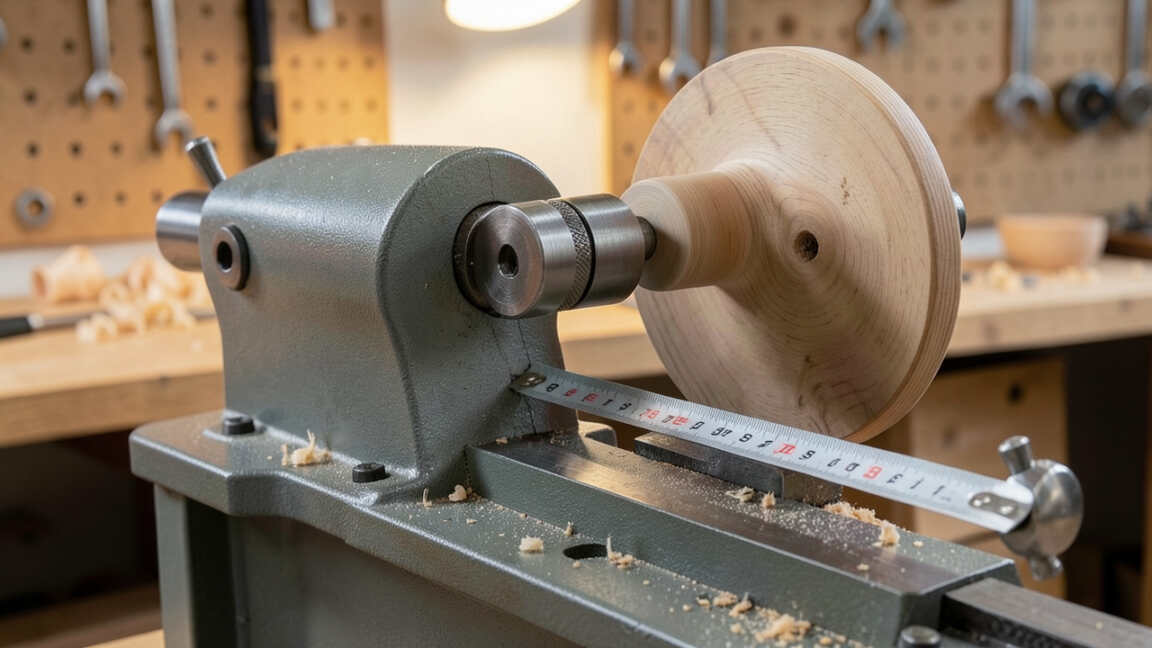
Distance between centers tells you the longest piece of wood you can turn between the headstock and tailstock. This is important for spindles, table legs, and tool handles. A common distance for benchtop lathes is 16 to 20 inches.
Floor models can go up to 40 inches or more.
If you only turn pens and small handles, a short distance is fine. But if you want to make baseball bats or chair legs, you need longer distance. Check this number carefully.
You cannot turn a 30-inch leg on a lathe with 16-inch centers.
Real Example
Mike wanted to turn a 24-inch lamp post. He bought a lathe with 18-inch centers. The wood simply would not fit.
He had to buy a bed extension kit. That added cost and was hard to install. He recommends checking distance first.
Sample Scenario
- You plan to make 12-inch long candlesticks. 16-inch centers are enough.
- You plan to make 36-inch table legs. You need a lathe with at least 40-inch centers.
Compare Models
| Lathe Type | Distance Between Centers | Best For |
|---|---|---|
| Benchtop | 12–20 inches | Small spindles, pens |
| Midi | 20–30 inches | Medium bowls, small legs |
| Full size | 30–40+ inches | Large legs, long spindles |
Always add 2 to 4 inches to your longest project for tailstock adjustment.
4. Bed Material and Design
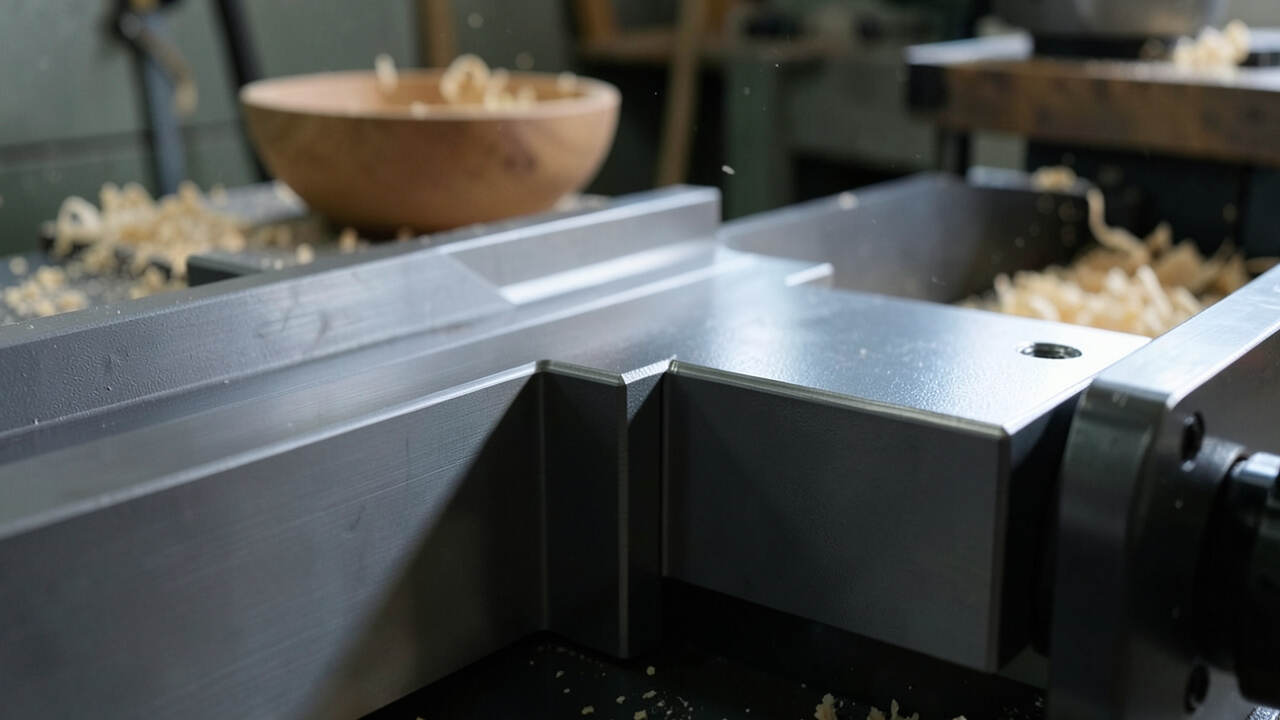
The bed is the base that holds everything together. It must be strong and flat. A weak bed causes vibration.
Vibration ruins your cuts and makes the lathe unsafe. Common bed materials are cast iron, steel, and aluminum. Cast iron is the best choice.
It absorbs vibration and stays stable for years. Steel beds are good but can rust. Aluminum beds are light but can flex under heavy work.
Why Cast Iron Wins
Cast iron is heavy. That weight keeps the lathe steady. It also has good damping properties.
That means it stops vibrations faster. Many high-end lathes use cast iron. For a beginner, look for a cast iron bed.
It costs more but gives better results.
Bed Design
Some beds have a flat top. Others have a tubular or open design. Flat beds make it easy to mount accessories like tool rests.
Tubular beds can be stronger but may limit add-ons. Check if the bed has slots or T-tracks for holding jigs.
Practical Example
Tom bought a lathe with an aluminum bed. The lathe wobbled when he turned a 6-inch bowl. He had to bolt it to a heavy bench.
That took extra time. His friend bought a cast iron bed lathe. It ran smooth without any bolting.
Bullet Points for Check
- Look for cast iron bed. It absorbs vibration best.
- Check if the bed is flat and true. Use a straightedge if you can.
- See if the bed has mounting holes. Some lathes need bolting down.
According to a 2022 woodworking gear review, lathes with cast iron beds received 30% higher user satisfaction scores than those with steel or aluminum beds.
5. Quality of Tailstock and Tool Rest
The tailstock holds one end of the wood. The tool rest supports your chisels. Both parts must be strong and easy to adjust.
A weak tailstock can slip. That makes the wood wobble. A poor tool rest bends under pressure.
That ruins your control.
Tailstock Features
Check the tailstock for a secure locking mechanism. It should slide smoothly on the bed. Look for a quill that extends at least 2 inches.
A longer quill helps with deep drilling or reaming. Some tailstocks have a built-in handwheel for fine adjustment. That is a nice extra.
Tool Rest Quality
The tool rest should be made of thick steel. Thin steel bends. The tool rest post should fit snugly in the banjo (the holder).
A loose post causes the rest to drop during turning. Look for a tool rest that is at least 2.5 inches wide. Wider rests give more support for larger tools.
Real World Example
Linda used a lathe with a thin tool rest. While turning a bowl, the rest bent. Her chisel kicked back and hit her hand.
She now only uses lathes with 1/2-inch thick tool rests. She says it is a safety must.
Sample Scenario
- You are roughing a 4-inch spindle. A standard tool rest works fine.
- You are shaping a 10-inch bowl. You need a thick, wide tool rest to avoid flex.
Comparison Table
| Part | Good Quality | Poor Quality |
|---|---|---|
| Tailstock | Strong lock, smooth slide | Slippery, hard to move |
| Tool rest | Thick steel, wide surface | Thin metal, narrow |
| Banjo | Snug fit, easy clamp | Loose, wobbly clamp |
Always test these parts in person if you can. Move the tailstock and tighten the tool rest.
6. Variable Speed vs Fixed Speed
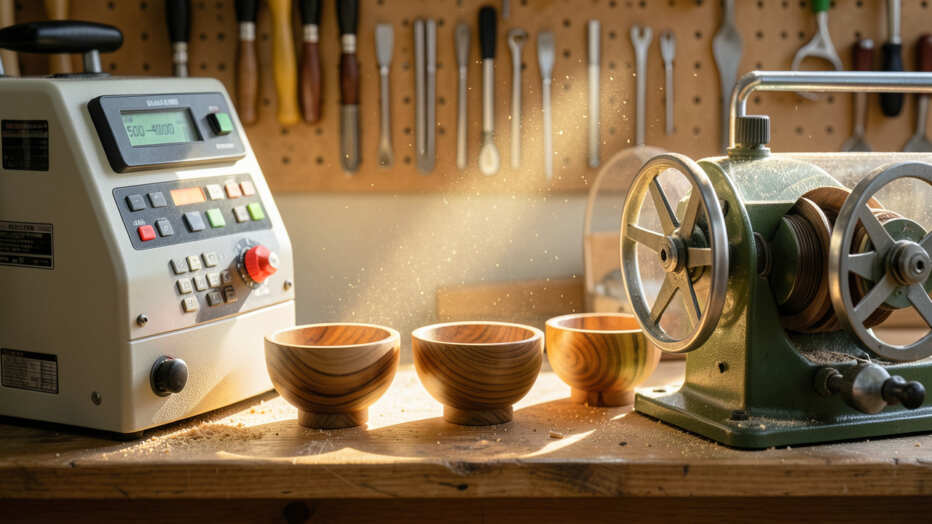
Speed control changes how fast the wood spins. Most lathes have either variable speed or fixed speed. Variable speed lets you change the RPM (revolutions per minute) without moving belts.
Fixed speed requires you to stop and change belt positions. Variable speed is easier and safer for beginners.
Benefits of Variable Speed
With variable speed, you can start slow. Slow speed is safer for roughing out unbalanced wood. Then you increase speed for finishing cuts.
This flexibility improves your work quality. Many modern lathes have electronic variable speed. You turn a dial to change the speed.
Fixed Speed Drawbacks
Fixed speed lathes have only two or three speeds. You must stop the machine to change belts. That takes time and effort.
Plus you cannot fine-tune the speed. A fixed speed lathe might be cheaper, but it limits your control.
Statistic
- In a 2023 woodturning survey, 78% of users said variable speed was the most important feature after motor power.
Real Example
Emma bought a fixed speed lathe. It had only two speeds: 800 RPM and 2000 RPM. For roughing a bowl, 800 RPM was too fast.
She struggled with vibration. She sold it and bought a variable speed model. Now she can set 400 RPM for roughing and 1500 RPM for smoothing.
Sample Scenario
- You mount a rough piece of wood. Set variable speed to 300–500 RPM to start.
- After rounding the wood, increase speed to 1000–1500 RPM for shaping.
Variable speed lathes cost more but save you time and stress.
7. Safety Features and Accessories
Wood turning is fun but has risks. Spinning wood can catch your clothing. Chips fly everywhere.
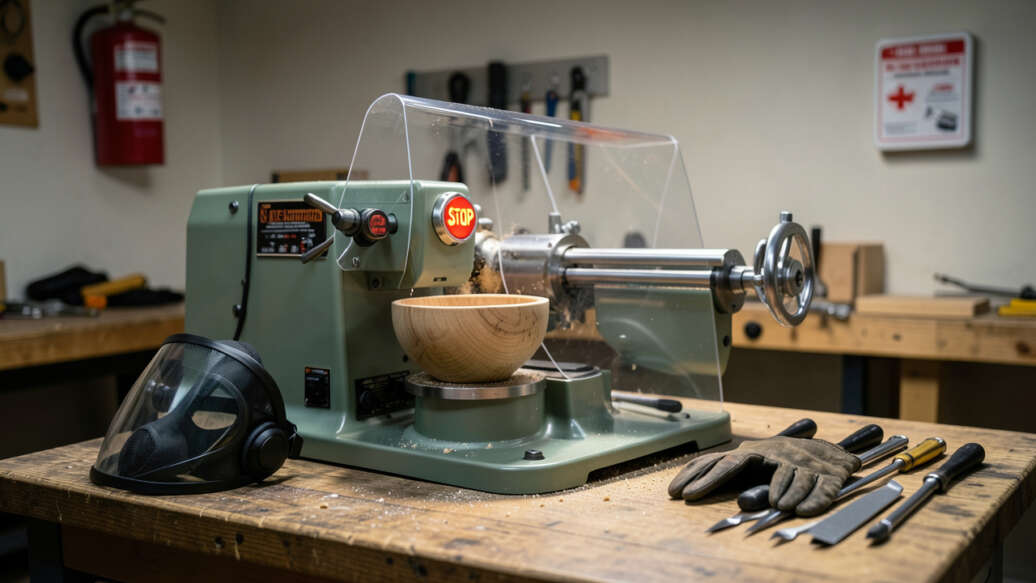
A good lathe has safety features to protect you. Look for a power switch that stops the machine quickly. An emergency stop button is ideal.
Also check if the lathe has a safety cover or shield for the belt.
Key Safety Checks
- Emergency stop button: A big red button you can hit fast.
- Belt guard: Covers moving belts to prevent clothing from catching.
- Antivibration pads: Reduce movement at high speeds.
Accessories also matter. A sturdy faceplate for bowl turning. A live center for the tailstock.
A good chuck makes holding wood easier. Some lathes come with a set of basic accessories. Others sell them separately.
Check what is included.
Real World Example
Jose bought a used lathe without an emergency stop. One day, his chisel caught the wood. The wrist wrap got tangled.
He could not reach the power switch fast enough. He got a minor injury. Now he only uses lathes with a foot brake and a big stop button.
Statistic
| Safety Feature | Percentage of Lathes That Include It (2024) |
|---|---|
| Emergency stop button | 55% |
| Belt guard | 70% |
| Faceplate included | 60% |
Do not skip these checks. Safety parts can prevent accidents. They also make your turning more enjoyable.
Frequently Asked Questions
Question: What is the best motor power for a beginner wood lathe?
Answer: A 1 HP motor is a good starting point. It handles small to medium projects. If you plan to make large bowls or long spindles, choose 1.5 HP or more.
That gives you extra power for hard woods.
Question: How do I measure swing over bed correctly?
Answer: Look at the specification sheet for “swing over bed.” It is the diameter from the bed to the spindle center times two. For a 12-inch swing, you can turn a 12-inch bowl. Always leave one inch of clearance.
Question: Is a variable speed lathe worth the extra money?
Answer: Yes, for most beginners it is. Variable speed lets you start slow and increase speed smoothly. It makes turning safer and easier.
Fixed speed lathes are cheaper but harder to use.
Question: What material should the bed be made of?
Answer: Cast iron is the best choice. It stops vibration and lasts a long time. Steel works but may rust.
Aluminum is light but can shake. For steady turning, go with cast iron.
Question: Do I need to buy additional accessories right away?
Answer: It depends on the lathe package. Many lathes come with a faceplate, tool rest, and tailstock. You may need a chuck and extra turning tools later.
Start with the basics and add as you learn.
Final Thoughts
Now you know the 7 things to check before buying a wood lathe. Check motor power, swing, bed length, bed material, tailstock and tool rest quality, speed control, and safety features. Use this simple list to compare lathes.
It helps you avoid beginners mistakes. Choose a lathe that fits your projects and budget. Happy turning.