
Temperature reading problems arise from seven identifiable causes, including incorrect sensor placement, environmental factors, calibration issues, equipment malfunction, thermometer type, electronic interference, and user error. Proper sensor positioning and regular calibration are essential for minimizing these errors and achieving accurate measurements. Understanding and mitigating these factors enables reliable temperature data for critical applications in cooking, healthcare, and industry.
Reading temperatures can sometimes be tricky, especially when you’re just starting out. You might wonder why your thermometer isn’t showing what you expect. There are a few common reasons for this, and we’ve broken them down.
Don’t worry, we’ll walk you through each one simply. Getting accurate readings is easier than you think, and we’ll show you how to fix common issues. Let’s look at the 7 Causes of Temperature Reading Problems and how to solve them.
Key Takeaways
- Learn about common mistakes that lead to inaccurate temperature readings.
- Discover how sensor placement affects temperature measurements.
- Understand the impact of environmental factors on temperature data.
- Find out how calibration issues can cause wrong numbers.
- See why faulty equipment can give you bad results.
- Get tips on how to ensure reliable temperature readings.
Understanding Temperature Reading Problems
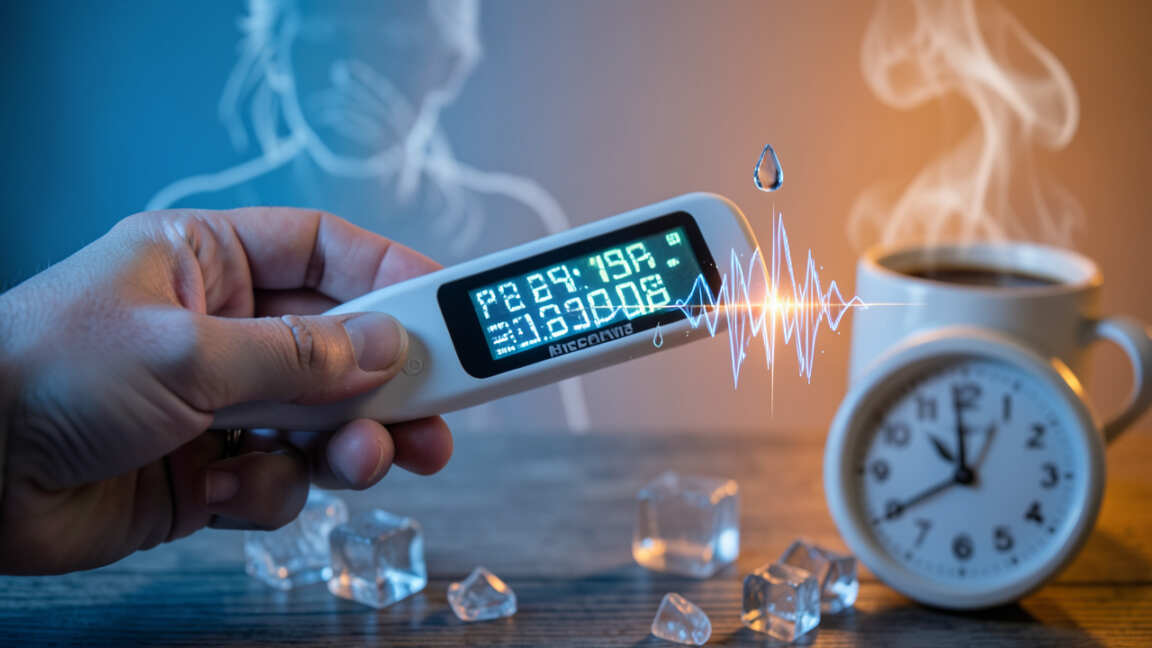
Getting the right temperature reading is important for many things. Whether you’re checking the weather, cooking food, or using scientific equipment, accuracy matters. Sometimes, the number you see isn’t quite right, and that can be confusing.
This often happens because of a few simple things that people new to the process might not think about.
For the most reliable results, take multiple temperature readings from different locations and average them rather than relying on a single measurement.
Always calibrate your thermometer regularly to ensure accurate readings, especially when cooking or conducting scientific experiments.
Why It Matters to Get It Right
When temperatures are off, it can cause problems. In cooking, an incorrect temperature might mean your food is undercooked or burned. For weather, it could lead to bad decisions about what to wear or how to prepare for conditions.
In science, inaccurate readings can mess up experiments and research. So, knowing why readings go wrong helps you trust your measurements.
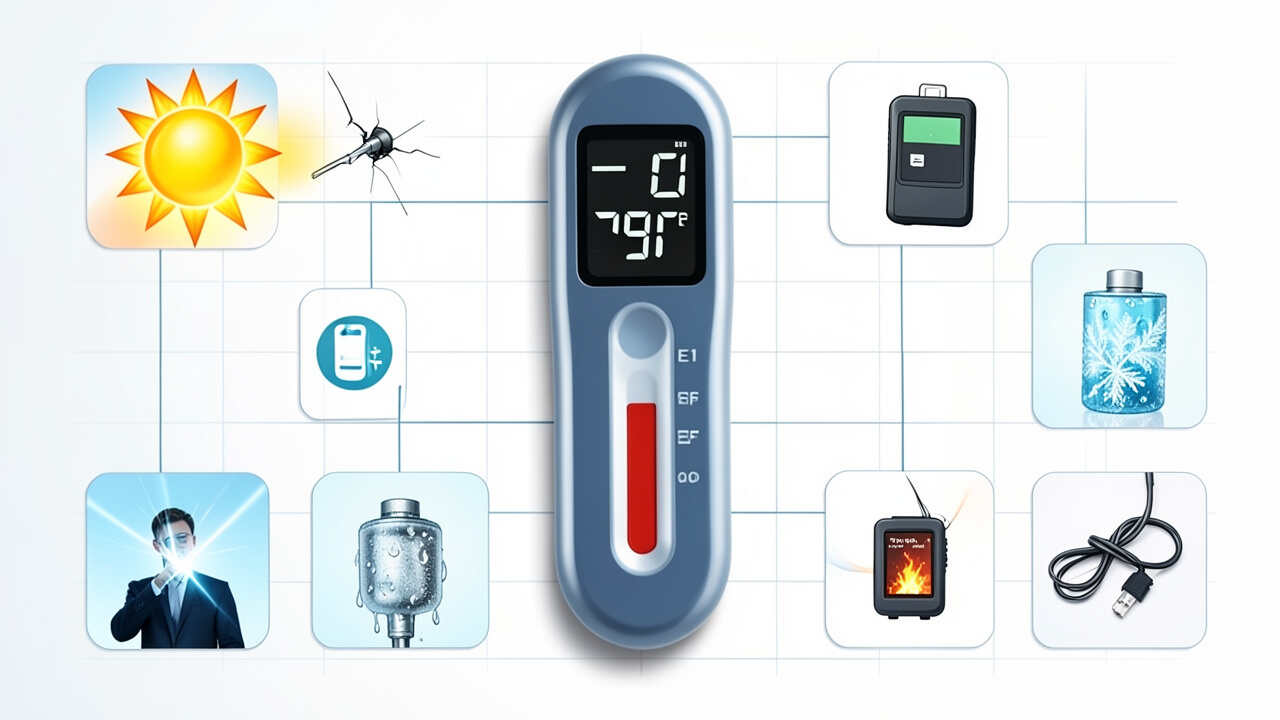
The 7 Causes of Temperature Reading Problems
Let’s explore the common issues that can make your temperature readings seem off. We’ll cover each one so you can spot the problem and fix it.
1. Incorrect Sensor Placement
Where you put your thermometer or sensor is very important. If it’s not in the right spot, it won’t measure the true temperature of what you want to know.
Direct Sunlight vs. Shade
Putting a thermometer in direct sunlight will make it read much hotter than the actual air temperature. Sunlight heats up the sensor itself. Always try to place sensors in shaded areas for accurate air temperature readings.
For objects, you want the sensor touching the object itself, not just near it.
Airflow and Drafts
Airflow can also play a role. A draft can make a reading lower than it should be, especially if the air is cooler. If you’re measuring the temperature inside an oven, make sure the sensor isn’t directly in the path of a fan that circulates hot air.
Consistent airflow is good for even heating, but strong drafts can skew readings.
Depth and Contact
When measuring the temperature of liquids or solids, the depth of the sensor matters. For instance, when checking the temperature of meat for cooking, the probe needs to be in the thickest part, away from bone. For liquids, you want the sensor submerged to the correct level, not just touching the surface.
2. Environmental Factors
The world around your thermometer can really change the numbers you see.
Humidity’s Influence
High humidity can sometimes affect certain types of temperature sensors. It might make them seem a bit cooler than they really are, especially older or less sophisticated models. For most common thermometers, this effect is small, but it’s good to be aware of.
Sudden Temperature Changes
If the temperature changes very quickly, some thermometers might take a moment to catch up. This lag means the reading you see might be a bit behind the actual temperature. This is more common with basic thermometers.
Physical Obstructions
Anything blocking the sensor can also cause issues. If dust or dirt covers the sensor, it can prevent it from accurately sensing the temperature. For infrared thermometers, a dirty lens will give wrong readings.
3. Calibration Issues
Just like any tool, thermometers need to be accurate. If yours isn’t calibrated right, it will give you wrong numbers.
What Calibration Means
Calibration is the process of checking and adjusting a thermometer to make sure it’s giving accurate readings. It’s compared to a known, accurate standard. If it’s off, it gets adjusted.
When to Recalibrate
Thermometers can lose their calibration over time, especially if they’ve been dropped or stored improperly. If you suspect your readings are off, or if the thermometer is old, it might be time to recalibrate or get a new one. Many digital thermometers can be recalibrated by the user, while others need professional service.
4. Equipment Malfunction or Damage
Sometimes, the thermometer itself is the problem. It might be broken or not working as it should.
Physical Damage
If a thermometer has been dropped, hit, or exposed to extreme conditions it wasn’t designed for, it could be damaged. This damage might not always be visible, but it can affect the internal parts that measure temperature.
Battery Issues
For digital thermometers, low batteries are a common cause of incorrect readings or no readings at all. Always check your batteries and replace them when needed. A weak battery can cause all sorts of weird behavior in electronic devices.
Aging Components
Like all electronic devices, thermometers can wear out. Older sensors or internal components might become less accurate over time, leading to readings that are consistently a bit off.
5. Type of Thermometer Used
Different types of thermometers measure temperature in different ways, and some are better suited for certain tasks than others.
Infrared vs. Contact Thermometers
Infrared thermometers measure the heat a surface gives off from a distance. They are fast but can be affected by the surface’s emissivity (how well it radiates heat) and reflections. Contact thermometers, like probe thermometers, measure temperature by touching the object directly.
They are generally more accurate for direct contact measurements but take longer to stabilize.
Thermometer Range and Accuracy
Every thermometer has a specific range of temperatures it can measure and a level of accuracy. Using a thermometer outside its designed range, or one that isn’t accurate enough for your needs, will lead to problems. A meat thermometer might not be suitable for measuring extremely cold freezer temperatures, for example.
6. Interference from Other Devices
In some high-tech environments, other electronic devices can sometimes create electromagnetic interference. This interference can, in rare cases, affect sensitive temperature sensors, especially if they are not properly shielded.
Electromagnetic Interference (EMI)
Powerful electrical equipment, radio transmitters, or even faulty power supplies can emit electromagnetic waves. If a temperature sensor is very close to such a source, these waves can sometimes disrupt its normal operation, leading to inaccurate readings. This is usually a concern in industrial or laboratory settings.
7. User Error or Misinterpretation
Sometimes, the problem isn’t with the thermometer but with how it’s being used or how the results are interpreted.
Reading the Display Correctly
Ensure you are reading the display correctly. Are you looking at Celsius or Fahrenheit? Is the unit clear?
With analog thermometers, parallax error (reading from an angle) can also cause small inaccuracies.
Not Allowing Enough Stabilization Time
As mentioned earlier, thermometers need time to adjust to the temperature they are measuring. If you take a reading too quickly, it won’t be accurate. For digital thermometers, many have a stable icon to show when the reading is ready.
Assuming a Single Reading is Always Perfect
For critical measurements, taking multiple readings and averaging them can give you a more reliable result. This helps to smooth out any minor fluctuations or temporary errors.
Frequently Asked Questions
Question: How often should I calibrate my thermometer?
Answer: It depends on how you use it and the type of thermometer. For home use, checking a few times a year might be enough. For critical applications, you might need to calibrate monthly or even weekly.
Always follow the manufacturer’s recommendations.
Question: My thermometer is in the sun, but I need to measure room temperature. What should I do?
Answer: Move the thermometer out of direct sunlight. Place it in a location where it can measure the air temperature without being heated by the sun. Shaded areas are best for ambient temperature readings.
Question: Can the weather affect my indoor thermometer?
Answer: Extreme outdoor weather can sometimes indirectly affect indoor temperatures, especially if your home isn’t well insulated. However, the thermometer itself is usually shielded from direct weather effects if it’s inside. If you’re measuring the temperature of something near a window, outside weather conditions might have a slight influence.
Question: My digital thermometer shows different readings each time I use it. Is it broken?
Answer: It might be. First, check the batteries. If the batteries are good, try letting the thermometer stabilize for a longer period before taking a reading.
If the readings are still wildly different, the sensor might be faulty, or it may need recalibration.
Question: What’s the difference between a probe thermometer and an infrared thermometer?
Answer: A probe thermometer has a metal probe that you insert into food or liquid to measure its temperature directly. An infrared thermometer measures temperature from a distance by detecting the heat radiated by an object. Probe thermometers are usually better for precise internal temperatures, while infrared is good for quick surface checks.
Final Thoughts
Getting accurate temperature readings is important. We looked at common issues like where you place the sensor, environmental factors, and equipment problems. We also talked about calibration and how different thermometer types work.
By paying attention to these 7 Causes of Temperature Reading Problems, you can make sure your measurements are correct. Simple checks and careful use will help you get reliable numbers every time you need them.