
Overwatering, underwatering, improper light levels, wrong pot size and soil, inadequate humidity, lack of nutrients, and pest infestations are seven critical mistakes that disrupt indoor plant health. These errors cause root rot, leaf burn, nutrient deficiencies, and stress responses that stunt growth and cause wilting or yellowing. Correcting watering frequency, light placement, container choices, and monitoring humidity and pests directly improves plant vitality.
Lots of folks want happy plants at home, but sometimes they just don’t do as well as we hope. It’s easy to make simple mistakes that can really hurt your green friends. You might be wondering why your lovely plant looks a bit sad.
Don’t worry, it’s not your fault! We’ll go over 7 Mistakes That Affect Plant Growth Indoors. After that, we’ll show you exactly what to do, step by step, to help your plants thrive.
Get ready to see your plants get much better!
Key Takeaways
- You will learn about watering mistakes and how they hurt plants.
- We will explain why too much or too little light causes problems.
- You will find out how the right pot and soil make a big difference.
- We will cover how temperature and humidity affect plant health.
- You will discover why not feeding your plants can be a mistake.
- We will show you how to spot and fix common pest issues.
Watering Woes: Too Much or Too Little
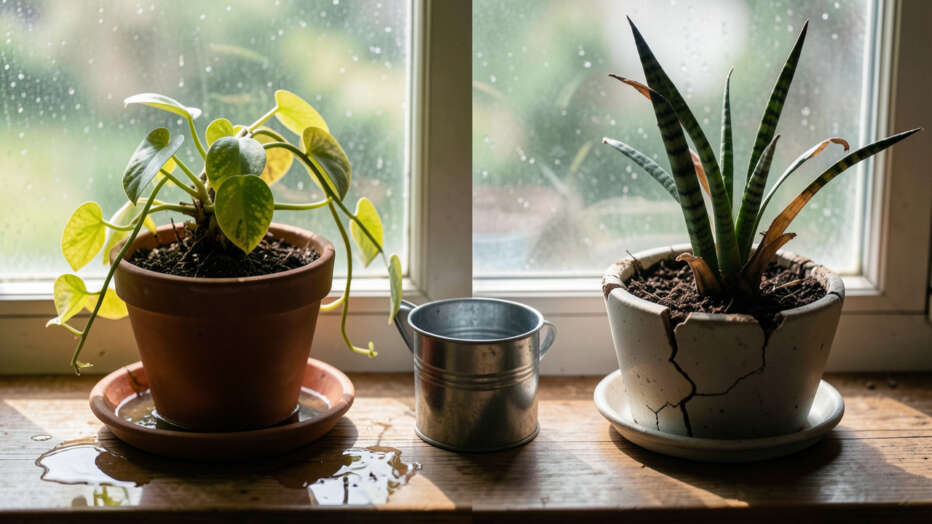
Water is life for plants, but getting it wrong is a super common problem. Many people either drown their plants or forget to water them enough. Both can be bad.
Overwatering
When you give a plant too much water, its roots can’t get air. They start to rot, and the plant can’t take up food or water anymore. This leads to yellow leaves that might feel mushy.
The soil will stay wet for a long time, and you might even see mold on top.
Check soil moisture by sticking your finger an inch deep. If it feels dry, water; if damp, wait a day or two.
Underwatering
On the other hand, if a plant doesn’t get enough water, it starts to dry out. Its leaves will turn brown and crispy, and they might droop. The soil will look dry and pull away from the sides of the pot.
The Right Way to Water
The best way to water is to check the soil first. Stick your finger about an inch or two into the soil. If it feels dry, it’s time to water.
If it’s still moist, wait a bit longer. Always let extra water drain out of the pot. Don’t let your plant sit in a saucer full of water.
Light Lessons: Too Bright, Too Dark, or Just Wrong
Plants need light to make their food. But the amount and type of light they need can be tricky. Putting a sun-loving plant in a dark corner or a shade-loving plant in direct sun will cause issues.
Not Enough Light
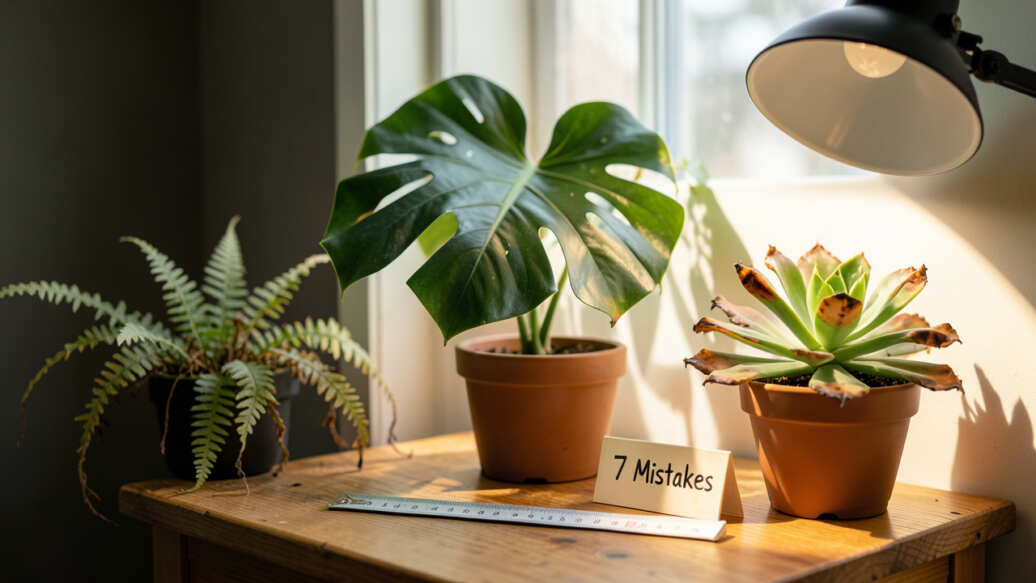
If your plant isn’t getting enough light, it will start to look weak. Its leaves might turn pale green or even yellow. The plant might stretch out trying to reach a light source, making it look leggy.
It might not grow new leaves or flowers.
Too Much Light
Some plants can get sunburned! Too much direct sun can scorch the leaves, making them turn brown or white in spots. This is especially true for plants that prefer shade.
Plants that prefer shade should never get direct sun, as leaves can burn and curl up to protect themselves.
The leaves might also curl up to try and protect themselves.
Finding the Perfect Spot
Every plant is different. Some love bright, direct sun. Others prefer gentle, indirect light.
A good rule of thumb is to look at where the plant grows in nature. If you can’t do that, a sunny window that gets morning sun but is shaded in the hot afternoon is often good for many plants. If your plant is getting leggy, it needs more light.
If its leaves are scorched, it needs less.
Potting Problems: The Wrong Size or Soil
The pot and the soil are like a plant’s home and its pantry. If the home is too small or the food source is bad, the plant won’t be happy.
Pot Size Matters
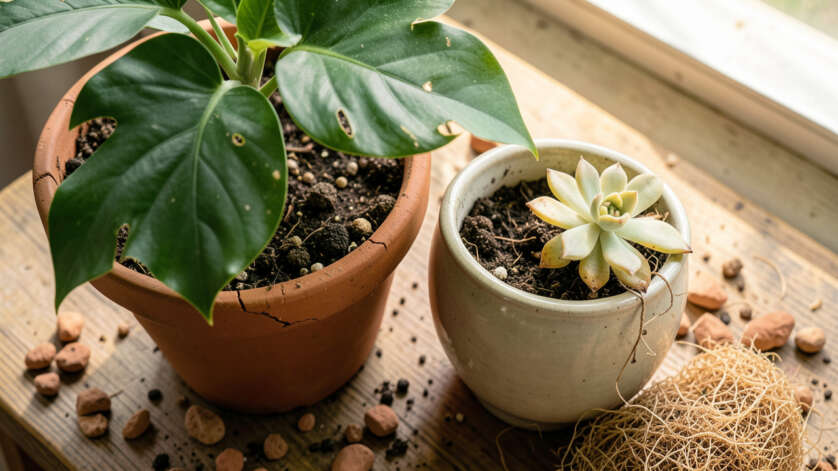
A pot that is too big can hold too much moisture, leading to root rot. A pot that is too small stunts the plant’s growth because its roots don’t have room to spread. It can also dry out too quickly.
Signs of a pot being too small include roots growing out of the drainage holes or the plant drying out very fast.
A pot that is too small forces roots to circle the bottom, stunting growth and causing the plant to dry out too quickly.
Soil Selection
Not all soil is the same. Some soil holds too much water and doesn’t drain well. This can suffocate the roots.
Other soils are too sandy and dry out too fast. Most houseplants do well in a good quality potting mix that drains well. You can find special mixes for different types of plants, like cacti or orchids.
Repotting Wisely
When it’s time to repot, choose a pot that is only about 1-2 inches wider than the current pot. Use fresh potting mix that is right for your plant. Gently loosen the roots before placing the plant in its new home.
Water it well after repotting.
Temperature and Humidity Hiccups
Plants also have preferred living conditions when it comes to heat and moisture in the air. Drafts and dry air can cause stress.
Temperature Swings
Most houseplants like a steady temperature, usually between 65 and 75 degrees Fahrenheit (18-24 degrees Celsius). Sudden drops in temperature, like from a cold window, or extreme heat can shock a plant. Keep them away from heating vents or open doors in winter.
Boost humidity around tropical plants by placing them on a pebble tray with water or running a humidifier nearby.
Humidity Needs
Many popular houseplants come from tropical places where the air is very humid. Dry indoor air, especially in winter when heating systems run, can cause problems. Leaves might turn brown at the tips or edges.
You can increase humidity by misting your plants, using a pebble tray with water, or placing them near a humidifier.
Feeding Fumbles: Not Enough or Too Much Fertilizer
Fertilizer gives plants the extra food they need to grow strong. But like watering, there’s a right and wrong way to feed them.
Under-Fertilizing
If you never fertilize your plant, it might not get all the nutrients it needs. This can lead to slow growth, pale leaves, and fewer flowers. The plant might look generally unhealthy.
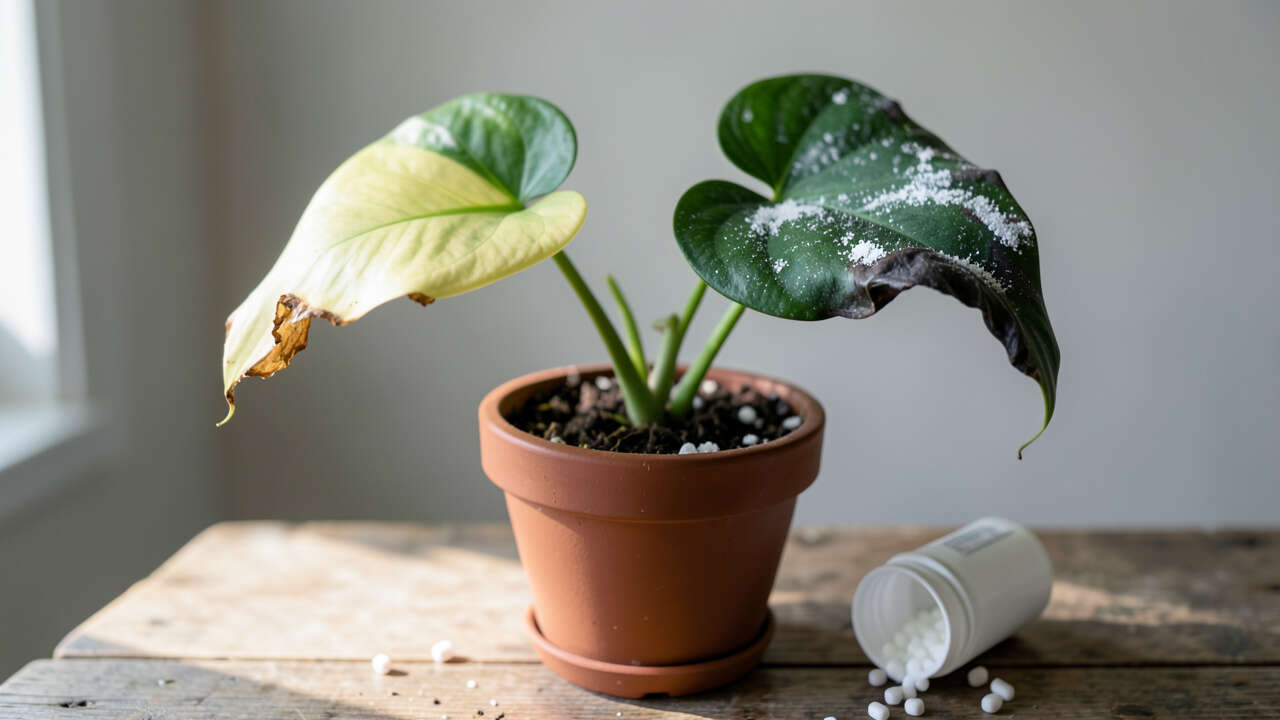
Never fertilize houseplants during fall and winter when they are resting, as this can burn roots and cause leaf damage.
Over-Fertilizing
Giving a plant too much fertilizer can burn its roots. This can cause leaves to turn brown and crispy, often with a white crust forming on the soil surface. It can be worse than not feeding at all.
Fertilizing Smartly
Most houseplants benefit from feeding during their growing season, which is usually spring and summer. Use a balanced liquid fertilizer diluted to half strength. Follow the instructions on the fertilizer package.
Avoid fertilizing in the fall and winter when most plants are resting.
Pest Predicaments: Unwelcome Guests
Pests are small bugs that can damage your plants. Finding them early is key to getting rid of them.
Common Pests
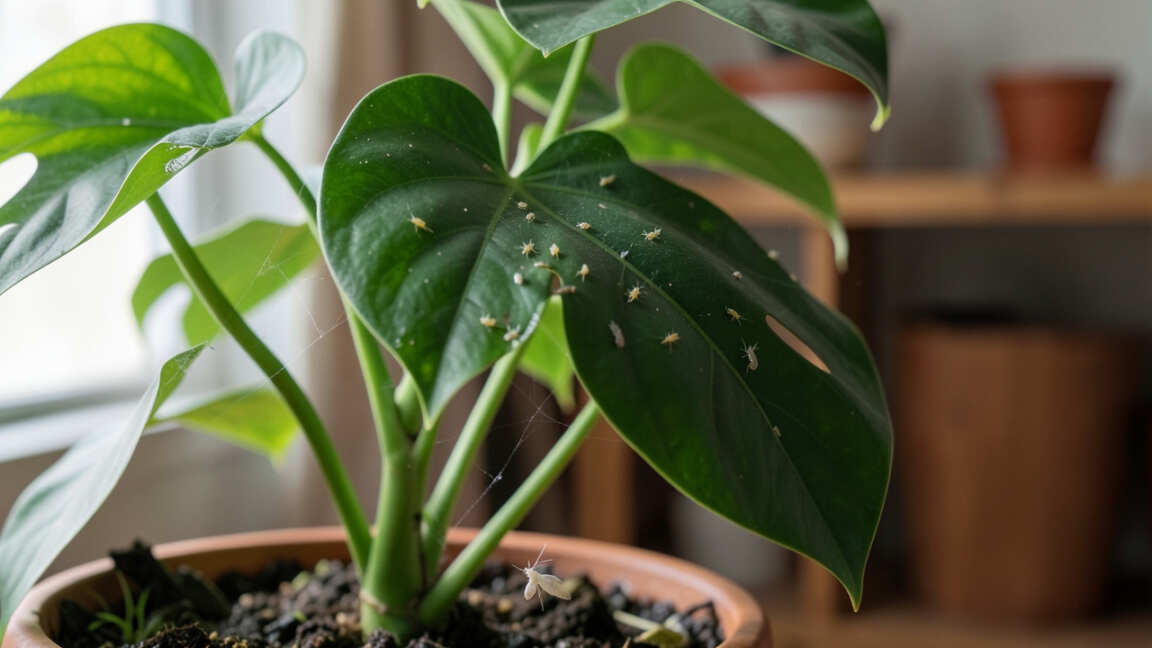
Look out for small, often slow-moving insects. Common ones include spider mites (look for tiny webs), aphids (small, green or black bugs), mealybugs (white, fluffy-looking bugs), and fungus gnats (tiny flies around the soil). They can suck the sap from plants, weakening them.
Isolate any infested plant immediately to prevent pests from spreading to your other houseplants.
Dealing with Pests
Often, you can wipe or wash pests off with a damp cloth. For bigger problems, insecticidal soap or neem oil can help. Make sure to isolate infested plants so they don’t spread pests to other plants.
Regular checks can catch problems before they get bad.
Airflow and Action: Not Enough Fresh Air
Just like us, plants need fresh air. Stagnant air can encourage diseases and pests.
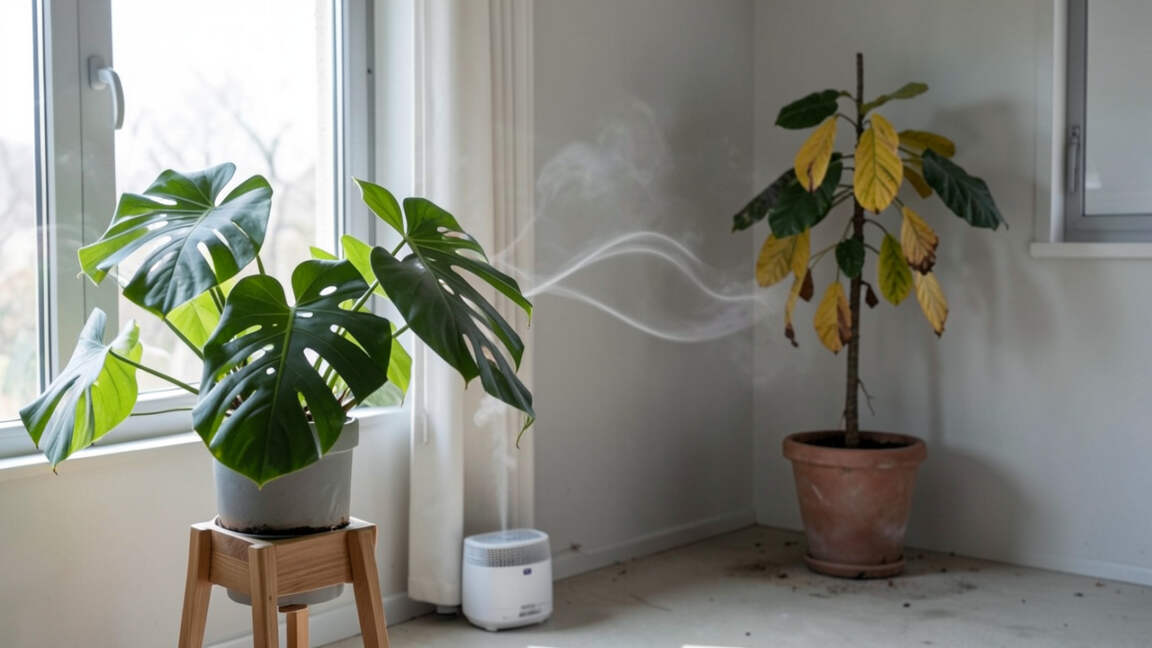
Stagnant air encourages mold and fungal infections, so occasional ventilation or a low fan keeps plants healthier.
Poor Air Circulation
If your plant is in a very closed-off room, the air might not move much. This can lead to problems like mold or fungal infections. It also means the plant isn’t getting the fresh carbon dioxide it needs for photosynthesis.
Encouraging Airflow
Open windows occasionally to let fresh air in. You can also use a small fan on a low setting to gently move air around your plants. This helps prevent issues and keeps your plants healthier.
Frequently Asked Questions
Question: What are the most common signs of overwatering?
Answer: Overwatering often shows up as yellow leaves that might feel soft or mushy, soil that stays wet for a long time, and sometimes a musty smell or mold on the soil surface.
Question: How do I know if my plant needs more light?
Answer: If your plant’s leaves are turning pale or yellow, or if the stems are getting long and stretched out with few leaves, it probably needs more light.
Question: Can I use regular garden soil for my houseplants?
Answer: It’s best not to. Garden soil is often too dense and doesn’t drain well enough for pots. It can compact and suffocate plant roots.
Use a good quality potting mix made for containers.
Question: When is the best time to fertilize my plants?
Answer: The best time to fertilize is during the plant’s active growing season, which is typically spring and summer. Avoid fertilizing in fall and winter when plants are resting.
Question: How often should I check my plants for pests?
Answer: It’s a good idea to check your plants for pests at least once a week, especially when watering. Early detection makes it much easier to get rid of them.
Final Thoughts
Fixing issues with your plants is not hard. You just need to know what to look for. By watching how you water, where you put your plants for light, and what kind of pot and soil you use, you can help them grow.
Pay attention to the temperature and air around them. Feed them the right amount at the right time. Keep an eye out for tiny bugs.
These simple steps will make your plants much happier and healthier. You’ve got this!