
Plants experience six main lighting issues: insufficient light, excessive brightness, unidirectional light, incorrect spectrum, inconsistent exposure, and improper intensity or distance. These problems disrupt photosynthesis, causing symptoms like yellowing leaves or leggy growth that indicate the plant's light environment needs adjustment. Recognizing and correcting these specific issues—by relocating plants, using grow lights, or modifying window treatments—is essential for maintaining healthy, vigorous houseplants.
Many plant lovers find it tricky to get the lighting just right. You want your leafy friends to grow strong and healthy, but sometimes they just don’t seem happy. This can be confusing when you’re starting out.
Don’t worry, though! We’ll walk through 6 Lighting Issues That Affect Plants, step by simple step, so you can figure out what your plants need. Let’s start by looking at the common problems and how to fix them.
Key Takeaways
- Plants need light to make their food, and too much or too little can cause problems.
- Different plants need different amounts of light, from bright direct sun to soft shade.
- Signs like yellowing leaves or leggy stems tell you about light issues.
- You can help your plants by moving them, using grow lights, or adjusting your curtains.
- Understanding light needs helps your plants grow better and look healthier.
Why Light Matters for Plants
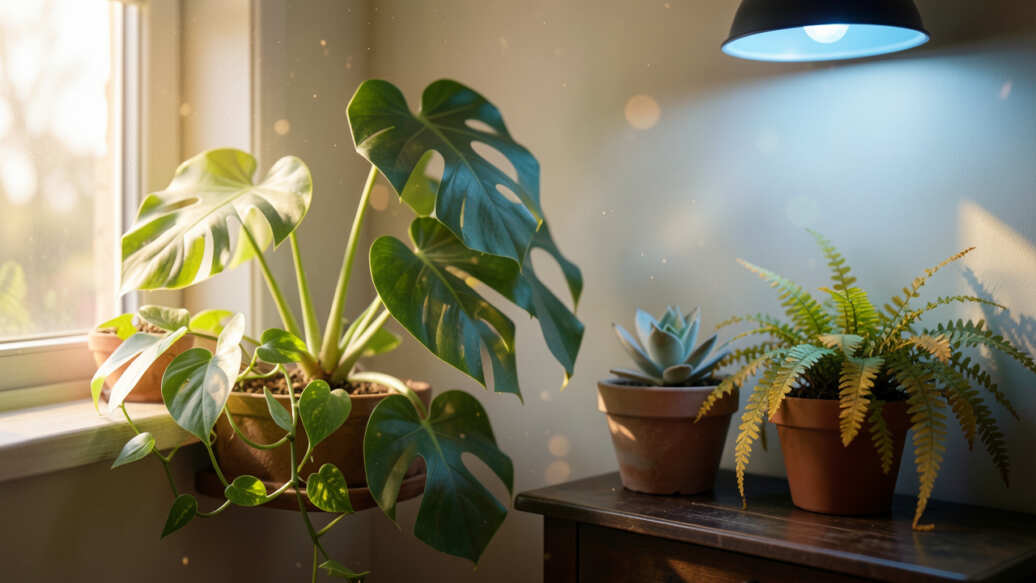
Plants are amazing. They use sunlight, water, and air to make their own food. This process is called photosynthesis.
Matching a plant's light requirements to its natural habitat is critical; a desert cactus and a forest fern have very different needs.
Photosynthesis is the process plants use to turn light into energy for growth, so providing the right light is essential for them to thrive.
It’s how they get the energy to grow tall, make flowers, and produce fruits. Without enough light, plants can’t make enough food. They might become weak and stop growing.
Too much light can also be bad. It can burn their leaves and stress them out.
The 6 Lighting Issues That Affect Plants
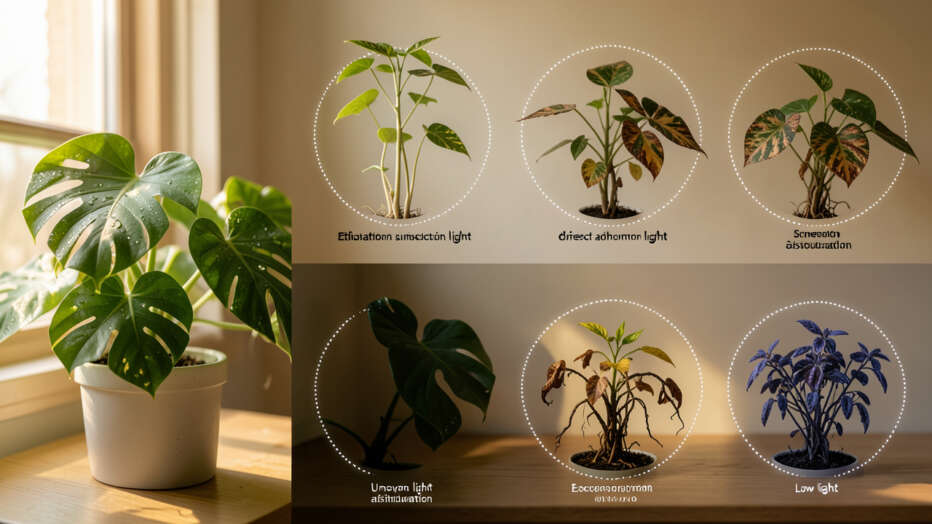
Let’s explore the common problems plants face because of their lighting. Knowing these issues will help you spot them in your own home and fix them quickly.
1. Not Enough Light (Too Dim)
This is one of the most common problems, especially for indoor plants. When a plant doesn’t get enough light, it’s like a person not getting enough to eat. It starts to slow down.
Signs Your Plant Isn’t Getting Enough Light:
- Leggy Growth: The stems get long and thin, with large gaps between the leaves. The plant is stretching to reach for more light.
- Small or Pale Leaves: New leaves might be smaller than usual, and the overall color of the plant could be lighter green or even yellowish.
- Drooping: The plant may start to look sad and droop, even if the soil is moist.
- No Flowers or Fruit: If your plant is supposed to bloom or produce, it won’t do so without enough energy from light.
- Leaning: The entire plant will lean towards the nearest window, desperately seeking more light.
Plants that need low light, like snake plants or ZZ plants, can still suffer if they are in a dark corner with absolutely no light source nearby. Even these plants need some ambient light to survive.
2. Too Much Light (Too Bright)
On the flip side, too much direct sunlight can be harmful. Think of it like getting a sunburn. Many plants, especially those that naturally grow in the shade of larger trees, can’t handle intense, direct sun.
Signs Your Plant is Getting Too Much Light:
- Scorched Leaves: You’ll see brown or crispy patches on the leaves, especially where the sun hits them the most. These are like sunburns.
- Wilting: The plant might droop or wilt during the hottest part of the day, even if it’s watered. The heat and light are too much.
- Fading Color: The vibrant green color might fade, and leaves can look bleached out.
- Leaf Drop: In severe cases, the plant might shed its leaves to try and save itself.
It’s important to know what kind of light your specific plant needs. A succulent that loves full sun will be happy on a sunny windowsill, but a fern from a shady forest floor will get burnt.
3. Light from Only One Direction
If your plant is always getting light from the same side, it will start to grow crooked. The parts of the plant facing the light will grow faster, while the shaded side will lag behind.
Signs of One-Sided Lighting:
- Leaning: The plant will visibly lean towards the light source.
- Uneven Growth: One side of the plant will be fuller and lusher than the other.
- Stretched Stems: Stems on the shaded side might become weak and stretched as they try to reach the light.
This is an easy fix! Regularly rotating your plant can solve this problem. A quarter turn every week or so will ensure all sides get a fair share of light.
Low-light plants like Snake Plants and ZZ Plants can thrive in a north-facing window or a dim corner, making them ideal for challenging indoor spaces.
4. Incorrect Light Spectrum
Light isn’t just about brightness; it’s also about the colors within the light. Plants use different colors of light for different things. Blue light helps with leafy growth, and red light helps with flowering.
Natural sunlight contains all the colors plants need.
Signs of Wrong Light Spectrum:
- Poor Flowering: If a flowering plant isn’t getting enough red light, it won’t produce many blooms.
- Stunted Growth: Without the right mix of colors, overall growth can be slow or weak.
- Unusual Leaf Color: While less common, some plants might show odd color changes if the spectrum is severely off.
This issue is more common when using artificial grow lights. Cheaper or older types of lights might not provide the full spectrum that plants need. High-quality LED grow lights are designed to offer the correct balance of colors.
5. Inconsistent Light Exposure
Plants like a steady environment. If a plant is moved around a lot, or if its light source changes dramatically throughout the day or week, it can get stressed.
Signs of Inconsistent Light:
- Stress Symptoms: This can include wilting, yellowing leaves, or even leaf drop. The plant is reacting to the changes.
- Slowed Growth: When plants are stressed, they often stop growing until they feel stable again.
For example, a plant that spends its mornings in bright sun and its afternoons in deep shade might struggle. Keeping plants in a consistent spot with predictable light levels helps them thrive.
6. Light Intensity Too Close or Too Far
This relates to both too much and too little light. If a grow light is too close to the plant, it can burn the leaves. If it’s too far away, the light won’t be strong enough for the plant to use effectively.
Signs of Incorrect Distance:
- Too Close: Leaf tips might turn brown and crispy, or leaves might look bleached right under the light.
- Too Far: Plants will show signs of not getting enough light, like legginess and pale leaves, even if the light is on.
The best distance depends on the type of light and the plant. Follow the manufacturer’s recommendations for grow lights, and observe your plant for signs of stress. For natural light, it’s about placing the plant in the right spot relative to a window.
Common Plant Light Needs
Different plants have very different light requirements. What works for one might harm another. Here’s a simple guide:
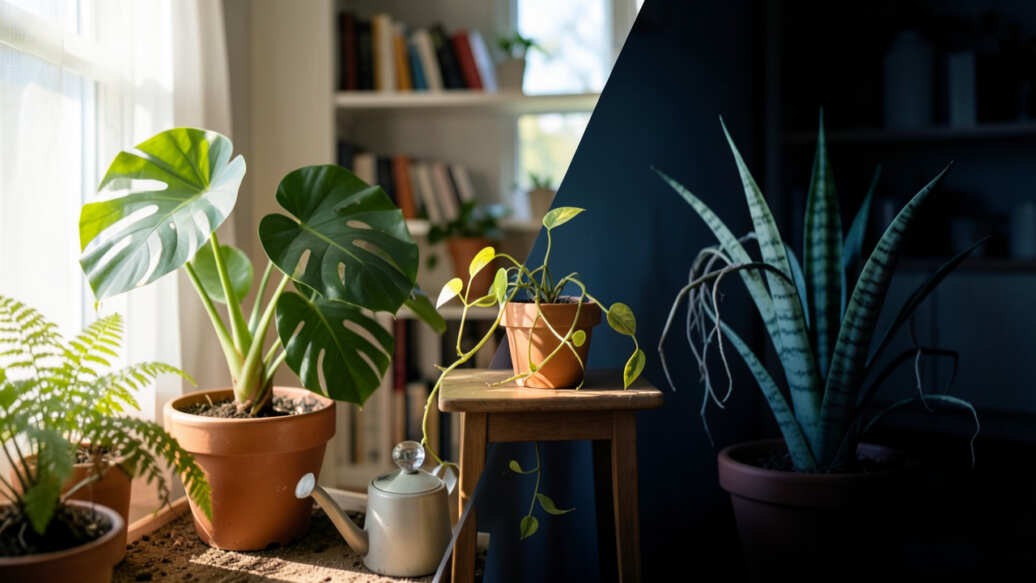
High Light Plants
These plants love direct sunlight for at least 6 hours a day. Think of plants that grow in deserts or open fields. Examples include many succulents, cacti, and some flowering plants like geraniums and hibiscus.
They often need a south-facing window.
Medium Light Plants
These plants prefer bright, indirect light. This means they need a lot of light, but not direct sunbeams, which can scorch their leaves. Many common houseplants fall into this category, like Pothos, Philodendrons, and Spider Plants.
Regularly observe your plant for signs like leggy growth or leaf burn to catch lighting problems early and adjust its position.
An east-facing window is often ideal, or a spot a few feet back from a south or west window.
Low Light Plants
These plants can tolerate dimmer conditions. They are often found growing under trees in their natural habitat. Examples include Snake Plants, ZZ Plants, and Cast Iron Plants.
They can do well in a north-facing window or in corners far from windows. However, “low light” doesn’t mean “no light”; they still need some ambient light to survive.
Tips for Better Plant Lighting
Now that you know the common issues, here are some practical tips to help your plants get the light they need:
- Observe Your Plant: Your plant will tell you if something is wrong through its appearance. Look for the signs we discussed.
- Know Your Plant’s Needs: Before you buy a plant, research its light requirements.
- Rotate Your Plants: Turn your plants regularly so all sides grow evenly.
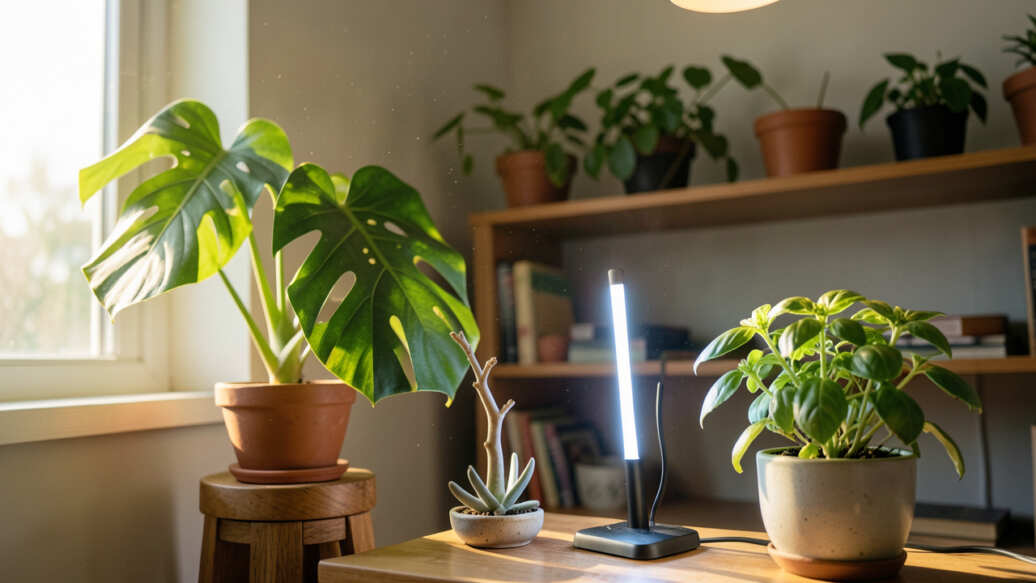
- Use Grow Lights: If you don’t have enough natural light, consider using LED grow lights. They are energy-efficient and provide the full spectrum of light plants need.
- Adjust Curtains: Use sheer curtains to diffuse bright sunlight and protect plants that prefer indirect light.
- Clean Your Windows: Dirty windows can block a surprising amount of light.
- Consider Placement: Think about where the sun hits your home throughout the day and place plants accordingly.
Frequently Asked Questions
Question: How do I know if my plant needs more light?
Answer: Look for signs like leggy stems with large gaps between leaves, pale or yellowish leaves, and the plant leaning heavily towards a window. These all suggest the plant is reaching for more light.
Question: Can my plant get too much light from a grow light?
Answer: Yes, even grow lights can be too intense or too close. This can cause leaf tips to burn or leaves to look bleached. Adjust the distance according to the grow light’s instructions and your plant’s reaction.
Question: What is “bright, indirect light”?
Answer: This means a location that is very bright but without direct sunbeams hitting the plant’s leaves. Think of a spot near an east-facing window or a few feet away from a south or west-facing window, perhaps with a sheer curtain to soften the light.
Question: My plant’s leaves are turning yellow. Is it a light problem?
Answer: Yellow leaves can be caused by several things, including overwatering, underwatering, or nutrient deficiencies. However, if the yellowing is accompanied by slow growth or legginess, it could be a sign of too little light.
Question: How often should I move my plant to ensure even light exposure?
Answer: Turning your plant about a quarter turn once a week is usually enough. This ensures that all sides of the plant receive adequate light over time and promotes balanced growth.
Final Thoughts
You’ve learned about the 6 Lighting Issues That Affect Plants. Now you know how too little or too much light can hurt your plants. You also know about one-sided light, the wrong light colors, inconsistent light, and lights that are too close or too far.
By watching your plants and making simple changes, you can give them the perfect amount of light. This helps them grow strong and stay healthy, making your home more beautiful.