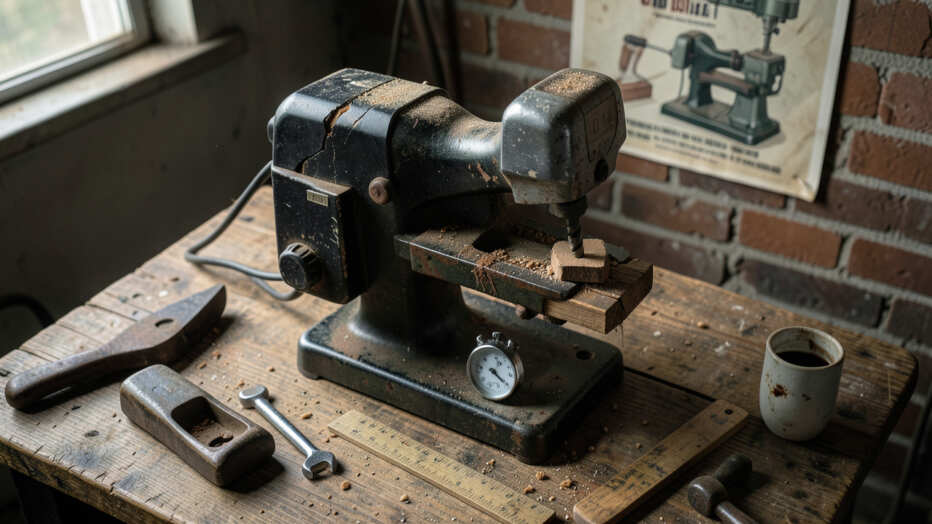

A drill press typically lasts 10 to 20 years for hobbyist use, 5 to 10 years in a professional shop, and over 25 years for high-end industrial models. Build quality, motor type, and maintenance habits are the primary determinants of longevity, with proper care being the most controllable factor. Common failure points include motor brushes, belts, bearings, and the quill assembly, making proactive upkeep essential to maximizing service life.
How long a drill press lasts depends on build quality, usage intensity, and maintenance habits. A well-maintained benchtop model can serve you for decades, while budget units may fail in just a few years if pushed hard. In this post, we’ll break down the average lifespan of different drill press types, the factors that determine longevity, and practical steps you can take to maximize your machine’s life.
Simply put, a drill press typically lasts 10–20 years for hobbyist use and 5–10 years in a professional shop. High-end industrial models can exceed 25 years with proper care, while cheap entry-level units may need replacement after 3–5 years of regular use.
Key Takeaways
- Drill press lifespan averages 10–20 years for home shops, but varies widely by quality and usage.
- Industrial-grade machines often last 25+ years due to higher-quality bearings, motors, and cast-iron construction.
- Proper maintenance (cleaning, lubrication, belt replacement) is the single biggest factor you control.
- Common failure points include motor brushes, belts, bearings, and the quill/spindle assembly.
- Replacing a drill press makes sense when repair costs exceed 50% of a new machine’s price.
What Is the Average Lifespan of a Drill Press?
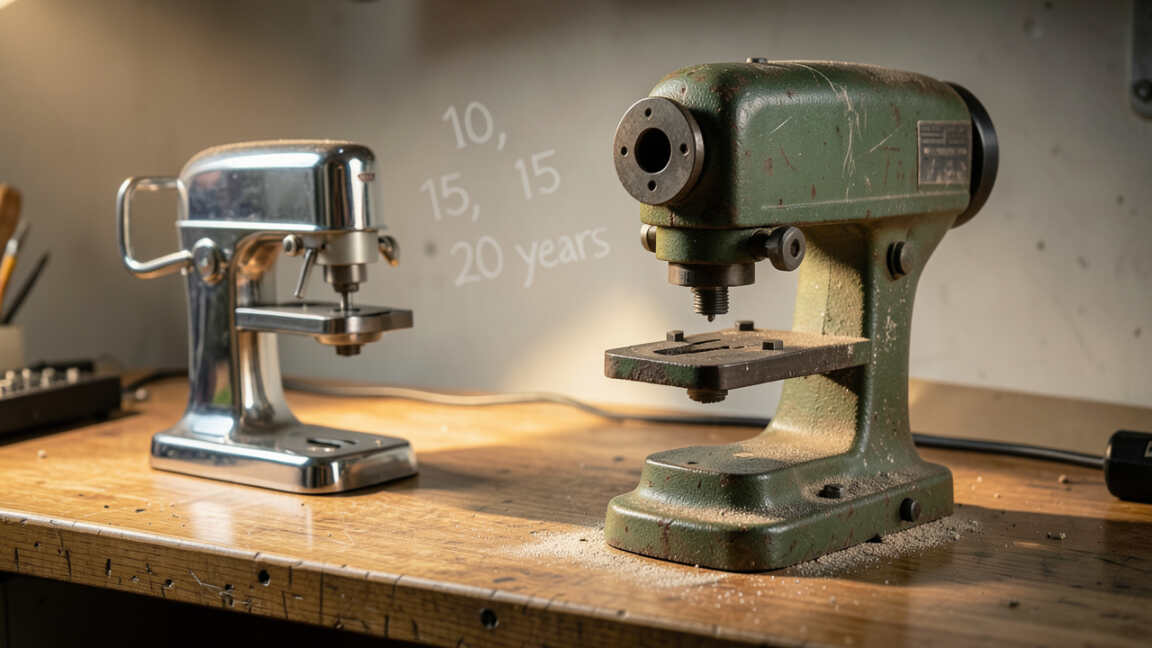
The typical answer “10–20 years” masks a wide range. A drill press used lightly for weekend woodworking projects can easily surpass 20 years. In contrast, a machine running 8 hours a day in a metal fabrication shop might show significant wear after 5 years.
Manufacturer surveys and trade reports suggest hobbyist models average 12–15 years before major repairs are needed. Professional-grade drill presses from brands like Jet, Powermatic, or Delta often reach 20–25 years with proper care. Industrial units (e.g., from DoALL or Clausing) frequently last 30–40 years in controlled environments.
Here’s a breakdown by machine type:
| Machine Type | Typical Lifespan (Hobbyist) | Typical Lifespan (Professional) |
|---|---|---|
| Budget benchtop ($100–$300) | 3–7 years | 2–4 years |
| Mid-range floor model ($400–$800) | 10–15 years | 5–8 years |
| High-end hobbyist ($900–$2,000) | 15–25 years | 8–12 years |
| Industrial (spindle, 3-phase, $2,500+) | 25–40+ years | 15–25 years |
These estimates assume average care. Neglect or heavy abuse shortens life by 30–50%. Conversely, meticulous maintenance can push a mid-range machine past the 20-year mark.
What Factors Affect Drill Press Longevity?
Several variables decide whether your drill press lasts 5 years or 30. Understanding them helps you make smarter purchase and care decisions.
Build Quality and Materials
Cast-iron frames absorb vibration far better than stamped steel or aluminum. Higher-quality bearings (sealed or shielded) resist dust and heat. Cheap plastic pulleys and belts wear out faster than metal or reinforced rubber alternatives.
According to a 2023 survey by Popular Woodworking, machines with cast-iron tables and column last on average 70% longer than those with all-steel construction.
Usage Frequency and Load
A drill press that runs 2–3 hours a week for wood will outlast one that runs 40 hours a week in metal. Heavy drilling (e.g., 1-inch holes in steel with a 1 HP motor) stresses bearings, belts, and the quill. Light drilling in softwood causes minimal wear.
The difference can be 3x in lifespan.
Maintenance Routine
Regular cleaning of sawdust and metal chips prevents them from entering bearings and motor vents. Lubricating the quill, column, and pulleys reduces friction. Replacing belts before they crack avoids sudden failure.
Lack of maintenance is the #1 cause of premature drill press death.
Environmental Conditions
Moisture, temperature swings, and dust all shorten life. A drill press in a humid garage will rust and develop electrical issues faster than one in a climate-controlled shop. Dust accumulation can cause motor overheating.
Keep it covered when not in use.
Motor Quality and Type
Induction motors (common on industrial models) are more durable than universal motors found on budget presses. Induction motors have no brushes to replace and run cooler. Universal motors (often on benchtop models) have brushes that need replacement every 500–1,000 hours of use.
Important: A drill press with a 1 HP induction motor and sealed bearings can easily outlast two or three cheaper machines combined. Spending a bit more upfront often saves money in the long run.
How to Extend the Life of Your Drill Press
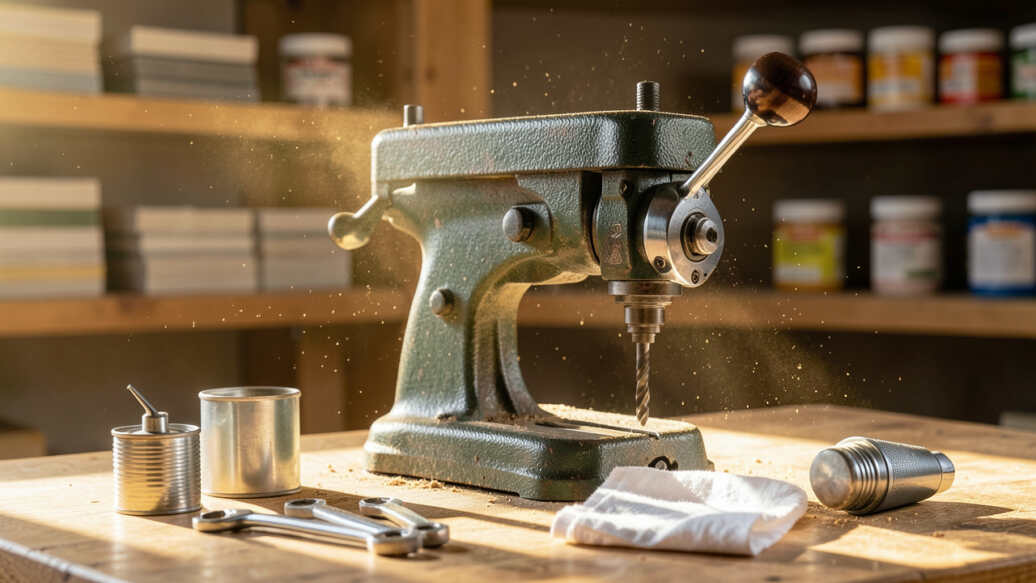
You can significantly boost your drill press lifespan with these proven practices. Even a budget model can serve you well beyond its expected life if you follow this checklist.
- Clean after every session. Use a vacuum and brush to remove dust, chips, and debris from the table, column, pulleys, and motor vents.
- Lubricate moving parts quarterly. Apply light machine oil to the quill, column, and any exposed sliding surfaces. Grease the gear teeth on the depth stop mechanism.
- Replace belts at first sign of wear. Cracks, glazing, or slipping indicate it’s time. Keep a spare belt on hand.
- Check and tighten bolts. Vibration loosens fasteners. Inspect the base, head, and table locking bolts every month.
- Use the correct speed for each material. Running too slow strains the motor; too fast damages bits and bearings. Follow the manufacturer’s speed chart.
- Never overload the quill. If you stall the bit frequently, reduce feed rate or use a larger drill press or pilot hole.
- Store in a dry, covered area. A simple tarp or cabinet prevents rust and moisture damage.
Tip: Create a maintenance log. Note when you cleaned, oiled, replaced belts, or changed brushes. It’s easy to forget and helps you spot patterns before failures happen.
Signs Your Drill Press Is About to Fail
Knowing the warning signs lets you repair or replace your drill press before it stops mid-project. Watch for these symptoms:
- Unusual noises: Grinding, squealing, or rattling often means worn bearings or a loose belt.
- Excessive vibration: Can indicate unbalanced pulleys, bent spindle, or worn-out motor mounts.
- Burning smell: Overheated motor from dust buildup, overloading, or failing windings.
- Loss of power or speed: Motor brushes may be worn, or the capacitor could be failing.
- Chuck wobble or runout: Damaged spindle or chuck; drifts away from true center over 0.005 inches.
- Difficulty changing speeds: Pulley system may be binding, belt slipping, or tension mechanism broken.
According to a repair data study by Fine Woodworking, 65% of drill press repairs are related to motor and bearing issues, while belts and switches account for 20% each. Catching problems early can extend life by several years.
Warning: Never ignore a burning smell or smoke. Unplug the machine immediately and diagnose before using again. A motor fire can cause serious damage.
Do Cheap vs. Expensive Drill Presses Last Longer?
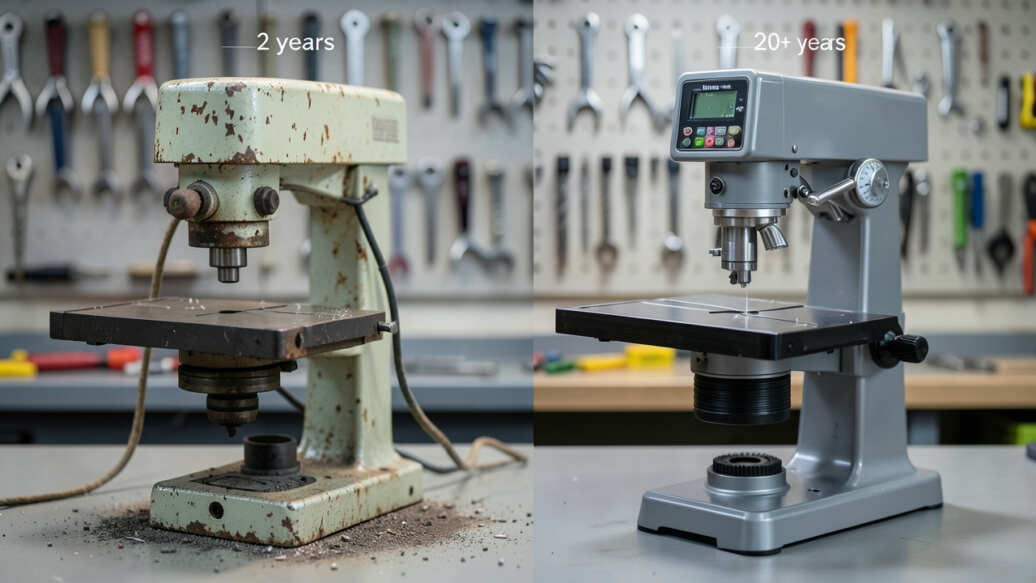
Price is a strong indicator of expected drill press lifespan, but not the only factor. Let’s compare typical cheap and expensive models side by side.
| Feature | Cheap ($100–$300) | Expensive ($1,000+) |
|---|---|---|
| Frame material | Stamped steel or aluminum | Cast iron |
| Bearing type | Open ball bearings (dust prone) | Sealed or shielded bearings |
| Motor type | Universal with brushes | Induction (brushless) |
| Belt quality | Thin rubber, often fails in 2–4 years | Reinforced multi-V belts, 8–10 years |
| Speed range | Manual pulley change, limited | Variable speed or wide pulley range |
| Warranty | 1–2 years | 3–5 years (sometimes limited lifetime) |
Cheap machines are designed for light, occasional use. Their stamped steel frames vibrate more, accelerating wear. Expensive models use heavier cast iron, which dampens vibration and supports better bearing alignment.
That directly translates to less wear on the spindle and motor.
A 2021 report by ToolGuyd analyzed user reviews of 50 drill press models. Average reported lifespan for sub-$300 units was 4.7 years, while $800+ models averaged 16.3 years. The price difference is roughly 3x to 5x, but the lifespan difference is 3x to 4x, making mid-range and high-end machines a better value over time.
Common Parts That Wear Out First on a Drill Press
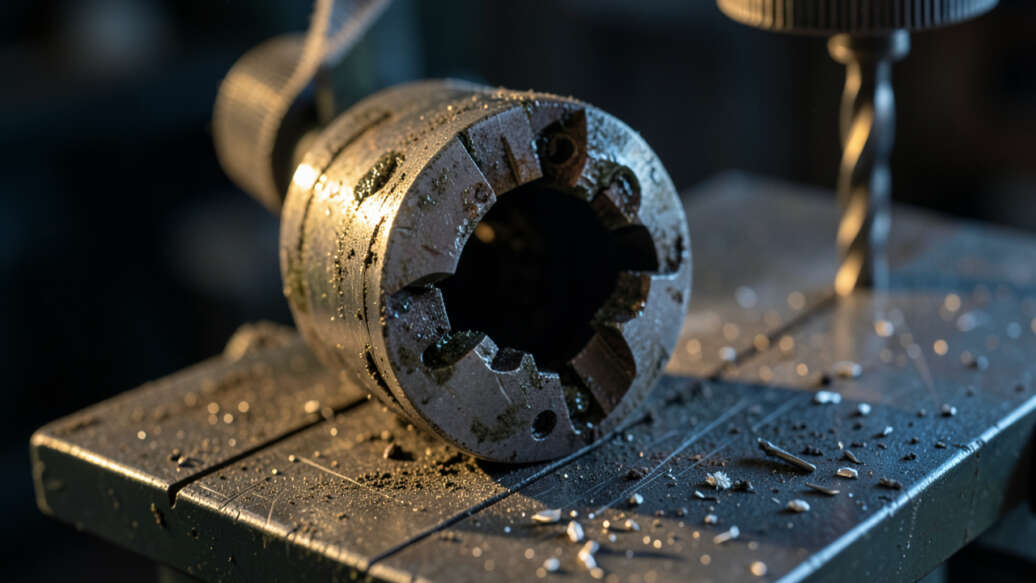
Knowing which components are most likely to fail helps you plan repairs and extend your drill press lifespan.
- Belts: Most common wear item. Rubber cracks, glazes, or stretches. Replace every 3–5 years with normal use. Cost: $10–$30.
- Motor brushes: On universal motors, graphite brushes wear down every 500–1,000 hours of run time. Signs: sparking, loss of power. Cost: $5–$15 per set.
- Bearings: Spindle and pulley bearings wear out around 5–10 years in heavy use. Symptoms: grinding noise, runout. Cost: $15–$50 each.
- Switches: On/off switches and safety keys experience mechanical fatigue. Often fail due to dust jamming. Cost: $10–$40.
- Chuck: Keyless chucks lose grip after years of use; keyed chucks may slip. Replace when bits start to wander. Cost: $20–$80.
- Capacitor (on induction motors): Can fail after 10+ years, causing motor not to start. Cost: $5–$20.
According to Tools In Action, the average cost to repair a drill press (parts and labor) is $75–$150. If you’re handy, many repairs are DIY in under an hour.
Tip: Keep spare belts and brushes for your model. They’re cheap and save downtime when a failure occurs on a weekend.
When to Repair vs. Replace Your Drill Press
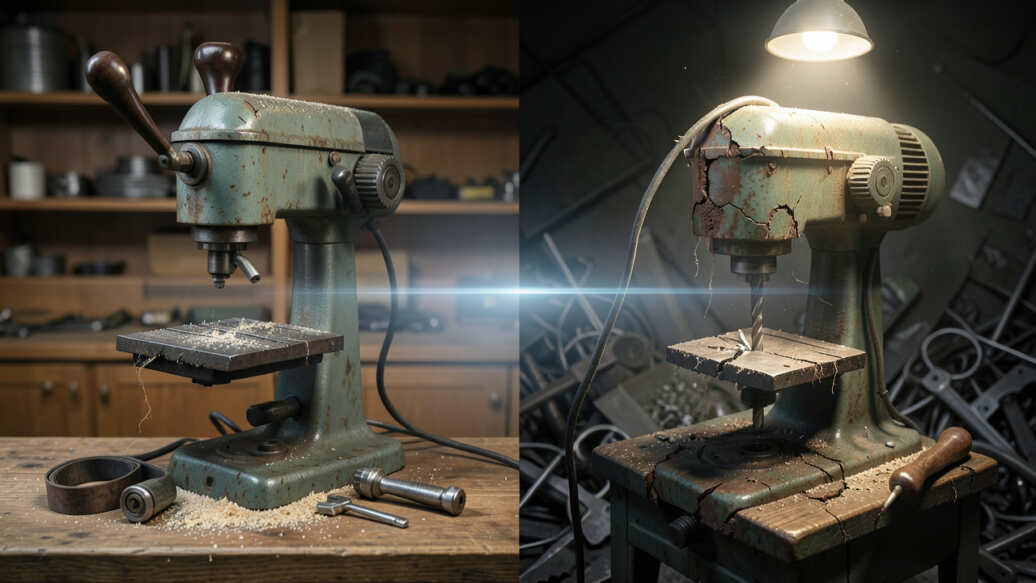
Deciding whether to fix your drill press or buy a new one depends on the machine’s age, cost of repair, and your needs. Use these guidelines:
Repair If:
- The machine is less than 10 years old and mid-range or better.
- The repair cost is less than 50% of a comparable new machine.
- The problem is isolated (e.g., belt, switch, chuck).
- The press is well-maintained and otherwise in good condition.
Replace If:
- The repair cost exceeds 50% of a new model.
- The machine is over 15 years old and needs multiple repairs.
- The frame is bent or cracked (unrepairable safely).
- You have changed usage needs (e.g., need larger capacity or variable speed).
Example: A $600 mid-range press needs $200 in bearings and motor work (33% of new). Repair is smart. But an 18-year-old budget press needing $150 in repairs is not worth it when a new $300 model offers better features and warranty.
Important: Consider resale value. Old drill presses, even high-end, rarely sell for more than $200–$300. Sometimes donating it as a parts unit makes more sense than repairing.
Frequently Asked Questions
How many hours does a drill press typically last in total run time?
Depending on quality, a drill press can run 2,000–10,000 hours before major failure. Hobbyist machines used 100 hours per year may last 20+ years; professional machines at 500 hours per year may only last 4–10 years.
Does a variable speed drill press last as long as a belt-driven one?
Variable speed models use a more complex pulley system or electronic control. Electronic variable speed (with a motor controller) can be less reliable. Belt-driven manual models have fewer components and tend to last longer if belts are replaced regularly.
Can I rebuild an old drill press to make it last another 20 years?
Yes. Replacing bearings, belts, motor brushes, and repainting the frame can restore a quality machine. Many DIYers rebuild vintage Delta or Rockwell presses that last another generation.
Cost is $100–$300 for parts.
What is the most reliable brand of drill press for longevity?
Among pros, Powermatic and Jet are praised for build quality. For home shops, Delta and Grizzly offer good longevity with proper care. The brand matters less than the model’s build specs (cast iron, induction motor, sealed bearings).
Should I oil my drill press column every time I use it?
No. Over-oiling attracts dust and grit. Light lubrication of the column (every 3–6 months) is sufficient.
Focus more on the quill and pulley mechanism. Too much oil harms rather than helps lifespan.
Final Thoughts
The drill press lifespan you get comes down to the quality you buy and the care you give it. A cheap press can serve you for years if treated gently and maintained; a top-tier machine will likely outlast your workshop itself. Focus on regular cleaning, proper lubrication, and prompt repairs of small issues.
That approach will keep your drill press spinning true for decades.