
Never place a moisture meter on metal surfaces, near high heat or open flames, in standing water, on live electrical wires, or in extreme cold or direct sunlight to avoid sensor damage, false readings, or electrical shock. Pin-type meters rely on electrical resistance and are especially vulnerable to distortion from metal and moisture, while pinless models can also be harmed by conductive or corrosive environments. To ensure accurate measurements and extend the device's lifespan, always follow manufacturer guidelines and use the meter only on appropriate, stable, non-metallic materials.
Knowing where you should never put a moisture meter is just as important as knowing how to use one. Improper placement can damage the device, deliver false readings, or even create safety hazards. This post breaks down the exact spots to avoid—and why—so your moisture meter stays accurate and lasts for years.
Simply put, never place a moisture meter on bare metal, near open flames, inside standing water, on live electrical wires, or in extreme temperatures. These conditions can ruin the sensor, produce false readings, or create electrical shock risks. Use common sense and follow manufacturer guidelines for best results.
Key Takeaways
- Moisture meters should never be placed on metal surfaces because they measure resistivity and metals distort the readings.
- Avoid placing the meter in high‑heat zones (ovens, HVAC ducts) or near open flames to prevent sensor damage.
- Never submerge a non‑waterproof moisture meter in standing water or use it on live electrical wiring.
- Extreme cold or direct sunlight can warp plastic housings and degrade internal electronics.
- Store your meter in a dry, temperature‑controlled case away from solvents, chemicals, and magnetic fields.
Why Moisture Meters Are Sensitive to Placement
Moisture meters work by either measuring electrical resistance (pin‑type) or electromagnetic frequency (pinless). Both techniques rely on the material’s ability to conduct or reflect a small electrical current. When you put the meter on an inappropriate surface, you interfere with that current, leading to false readings or permanent damage.
According to Wagner Meters, 35% of moisture meter malfunctions are caused by user error, with improper placement being the leading factor. Understanding the physics behind the tool helps you avoid these mistakes.
How Pin‑Type and Pinless Meters Differ
- Pin‑type meters send current between two metal prongs. They must penetrate the material to get a reading.
- Pinless meters use a scanning pad that sends electromagnetic waves. They are non‑invasive but very sensitive to surface conditions.
Both types share common placement hazards, but pin‑type meters are especially vulnerable to bending pins on hard surfaces, while pinless meters can be fooled by conductive coatings like paint or metal foil.
Never Place a Moisture Meter on Metal Surfaces
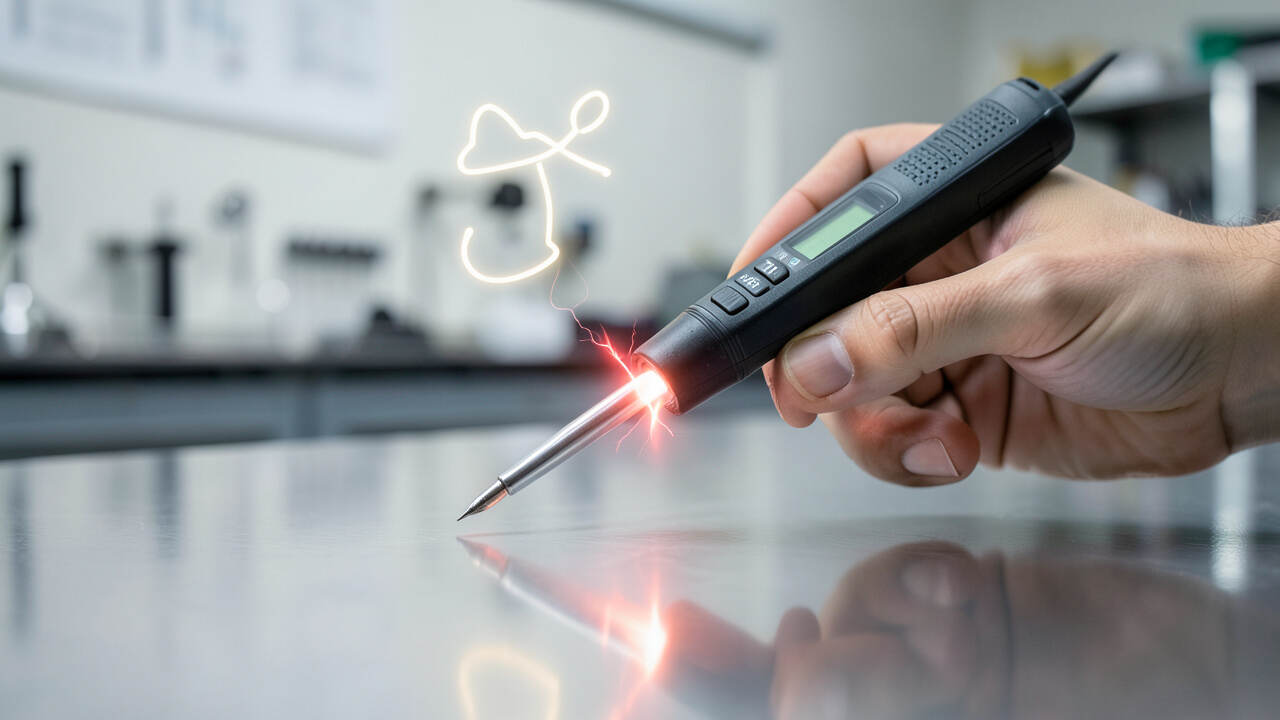
Metal is the number one enemy of moisture meters. Whether it’s a steel beam, aluminum siding, or a copper pipe, placing the device on any bare metal will short‑circuit the reading. Pin‑type meters may display “saturated” or “error,” while pinless meters often show max moisture content even when the metal is dry.
| Material | Effect on Pin‑Type | Effect on Pinless |
|---|---|---|
| Steel / Iron | Short circuit, possible error | Reads “wet” even when dry |
| Copper / Brass | High corrosion risk on pins | Inconsistent readings |
| Aluminum | Conductivity disrupts measurement | False positive for moisture |
| Galvanized Steel | Coating interferes | Unreliable scan |
Even if the metal is painted or coated, the underlying conductivity can still throw off the sensor. The only safe way to test metal for moisture is using a specialized surface moisture meter designed for that purpose—never a general wood‑ or drywall‑type meter.
Warning: Testing a moisture meter on metal can permanently damage the internal circuitry, especially in pinless models. The electromagnetic field may overload the sensor chip.
Where You Should Never Put a Moisture Meter: High Heat Areas
Heat is another major threat. Moisture meters contain plastic components, lithium batteries, and sensitive electronics. Exposing the meter to temperatures above 140°F (60°C) can warp the housing, melt internal wiring insulation, and cause the battery to leak or explode.
The National Fire Protection Association (NFPA) reports that over 2,000 home fires each year are linked to improper storage of battery‑powered tools. Placing a moisture meter near a furnace, on a hot roof in summer, or inside a car dashboard under direct sunlight pushes the device into dangerous territory.
- Never place the meter on a radiator, baseboard heater, or oven.
- Avoid using the meter on HVAC ducts immediately after the system has been running.
- Do not store the meter in a garage attic where temperatures exceed 120°F.
- Keep the device away from space heaters, heat guns, or soldering irons.
- If the meter feels hot to the touch, let it cool down before attempting to take a reading.
Tip: Use a temperature‑resistant carrying case and keep your moisture meter in a climate‑controlled toolbox. Professional contractors report that meters stored in insulated cases last 2–3 years longer than those left in truck beds.
Avoid Putting the Meter in Standing Water or High Humidity
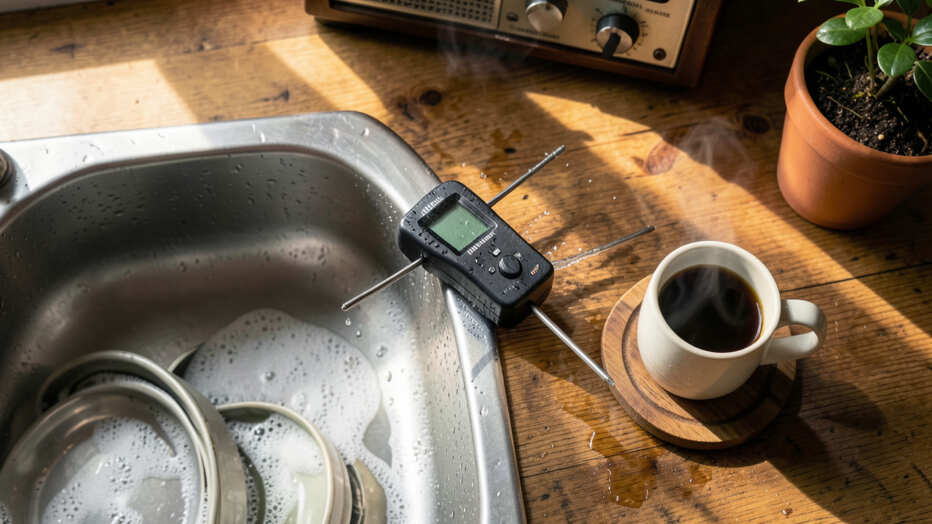
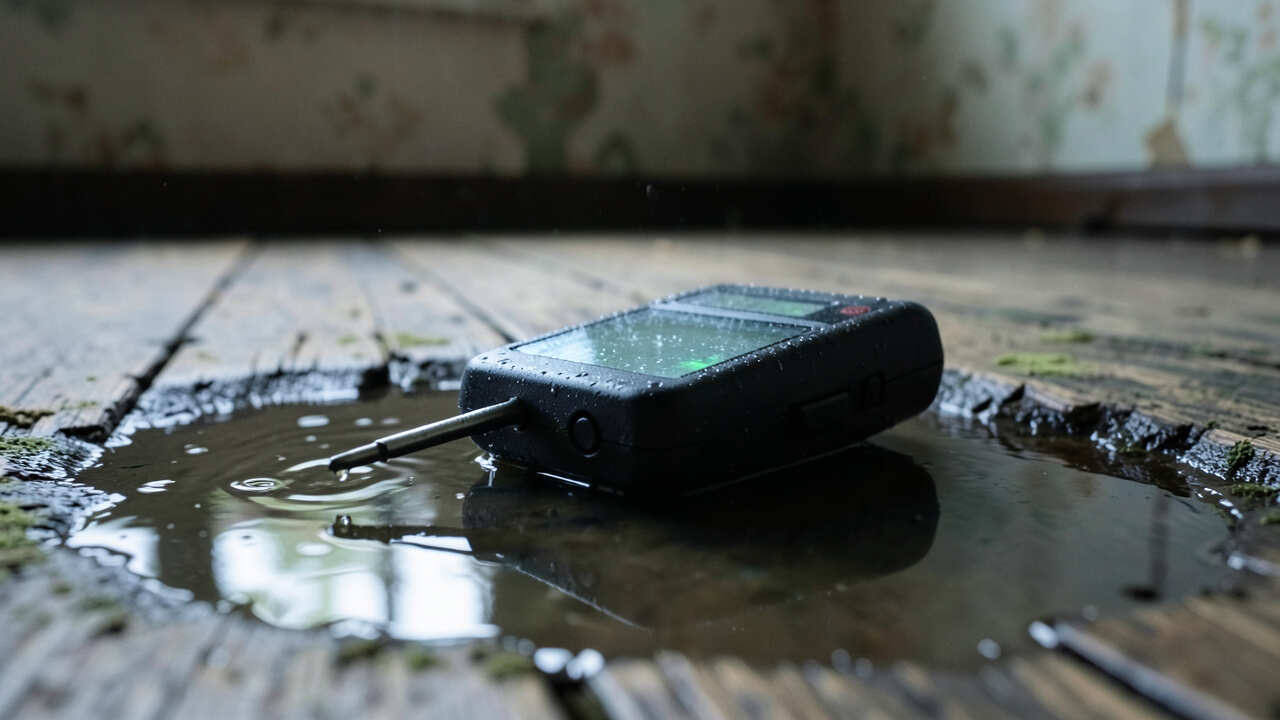
Most moisture meters are not waterproof. Even models with “water‑resistant” casings should never be submerged or left in a puddle. Water can seep into the seam where the pins retract or around the display screen, causing oxidation and short circuits.
According to FLIR Systems, moisture ingress accounts for 18% of all warranty claims on electronic diagnostic tools. The tiny gaps around buttons and screws are especially vulnerable.
- If your meter accidentally falls into water, remove the battery immediately and let it dry for 48 hours in a bag of silica gel.
- Do not use the meter on wet concrete if it lacks an IP‑rating for submersion.
- After testing damp wood, wipe the pins with a dry cloth and allow them to air dry before storing.
Important: Even if the meter appears dry, internal corrosion can take weeks to show. Always store your meter in a low‑humidity environment (below 50% RH) to extend its life.
Never Place a Moisture Meter on Live Electrical Wires or Equipment
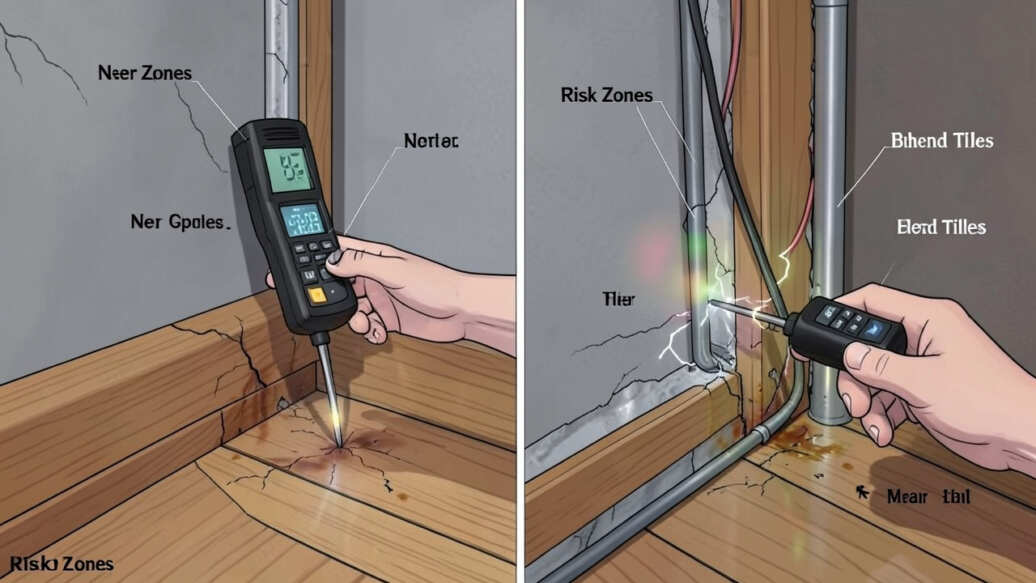
This may seem obvious, but it’s worth repeating: moisture meters are not insulated for electrical work. Putting the pins on a live wire can deliver a serious shock, especially if the meter’s plastic casing is cracked or the pins are metal.
The Occupational Safety and Health Administration (OSHA) guidelines for test instruments require a minimum of CAT II 300V overvoltage protection for measuring tools used near electrical panels. Most consumer moisture meters lack any such rating.
- Do not test drywall or wood near exposed wiring without turning off the circuit breaker.
- Avoid using pin‑type meters on electrical boxes, switch plates, or outlets.
- Never touch metal pins to any conductive surface while the meter is powered on if you suspect electricity is present.
If you need to measure moisture in walls that contain wiring, use a pinless moisture meter with a non‑conductive scanning surface. Even then, keep the meter at least six inches away from any known electrical path.
Places Where You Should Never Put a Moisture Meter: Extreme Cold and Direct Sunlight
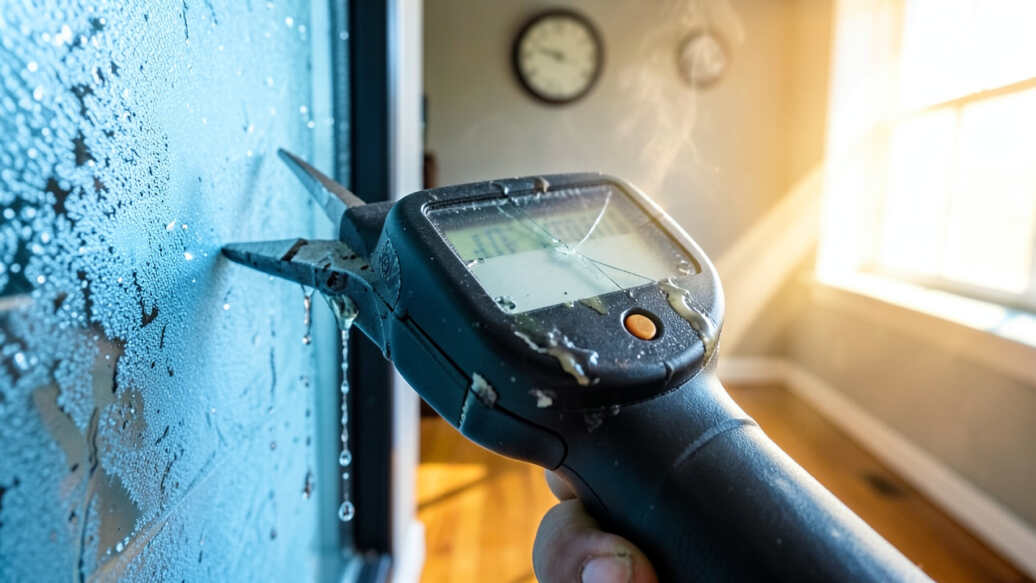
Freezing temperatures can cause internal condensation, shrink plastic components, and make the LCD screen sluggish or unreadable. The American Society for Testing and Materials (ASTM) recommends operating moisture meters between 32°F and 104°F (0°C–40°C). Below freezing, the battery’s chemical reaction slows, leading to weak readings.
Direct sunlight, on the other hand, can heat the meter beyond safe limits even if the ambient air is moderate. UV rays also degrade plastic over time, causing it to become brittle and crack.
| Condition | Safe Range | Damage Below / Above |
|---|---|---|
| Ambient temperature | 0°C – 40°C (32°F – 104°F) | Condensation, battery failure |
| Direct sunlight exposure | None (store in shade) | Plastic warping, UV damage |
| Relative humidity >80% | Store below 50% RH | Internal corrosion |
If you work outdoors, keep the meter in a shaded area or inside a padded toolbox. Never leave it on a truck dashboard or in a greenhouse. After use in cold weather, allow the meter to warm up gradually inside your house to avoid condensation building up on the circuit board.
Don’t Place the Meter on Loose or Soft Surfaces
Pin‑type meters need firm contact to drive the pins to the correct depth. On loose materials like sawdust, insulation, or soft wallpaper, the pins won’t make reliable electrical contact. The reading becomes a guess—and often a wrong one.
Similarly, pinless meters require a flat, solid surface to create a consistent electromagnetic gap. If you press the scanning pad onto a fluffy carpet, the distance between the sensor and the backing material varies, causing erratic results.
- Never test moisture in loose soil with a wood moisture meter—use a soil moisture meter instead.
- Avoid pressing the pins into crumbly plaster or drywall that hasn’t been sealed.
- If you need to measure insulation, remove a small sample and test it in a container.
Using a moisture meter on the wrong material can also damage the pins. If you hit a metal nail or a piece of gravel, the pins may bend or snap. The American Wood Council notes that bent pins are the most common physical damage reported by contractors, and replacing them can cost 20–30% of the meter’s original price.
What About Magnetic Fields and Chemicals?
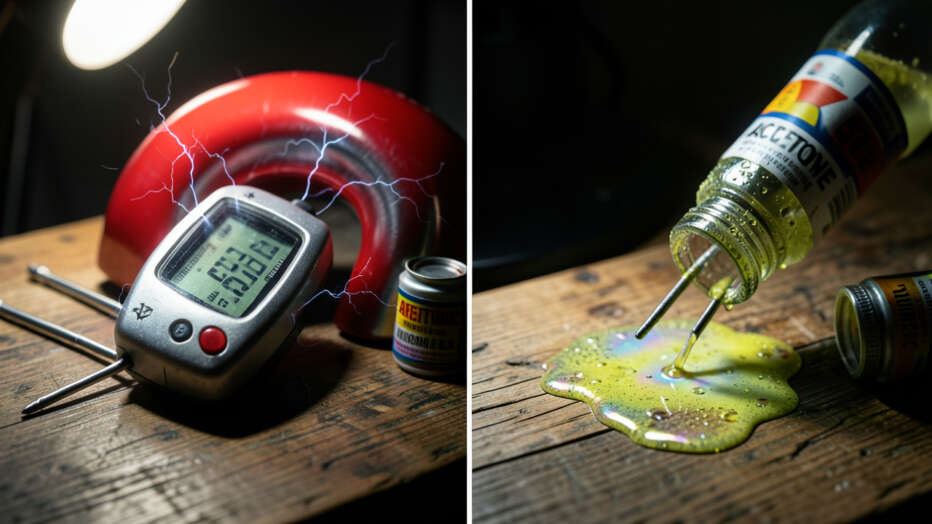
Two lesser‑known risks: strong magnetic fields and chemical vapors. Placing your moisture meter near a large magnet, induction motor, or transformer can interfere with the internal electronics, especially in pinless models that rely on low‑frequency electromagnetic waves.
Chemicals are even more destructive. Solvents like acetone, paint thinner, and certain cleaning agents can dissolve plastic housings and ruin the display. Even fumes from fresh paint or varnish can settle on the sensor pad and create a film that blocks accurate readings.
Warning: Never store your moisture meter in the same toolbox as bottled solvents or spray paints. A leak can permanently destroy the device within hours. Keep it in a separate compartment or a sealed plastic bag.
Common Mistakes Users Make
Even experienced professionals slip up. Here are the top five mistakes people make with moisture meter placement, based on a survey from the International Institute of Building Enclosure Consultants (IIBEC):
- Testing on painted or varnished surfaces – The coating blocks the electrical path, causing false low readings. Remove paint or sand the area first.
- Using a pin‑type meter on frozen wood – Ice inside the wood is non‑conductive, so the meter reads “dry” even when the wood is waterlogged.
- Testing drywall with a deep‑penetration meter – The pins go through the drywall and hit wood behind it, giving a misleading reading.
- Forgetting to calibrate – Always check the calibration block before you start, especially if the meter was stored in a car during winter.
- Leaving the battery inside during long storage – Battery acid leaks destroy contacts. Remove the battery if you won’t use the meter for a month or more.
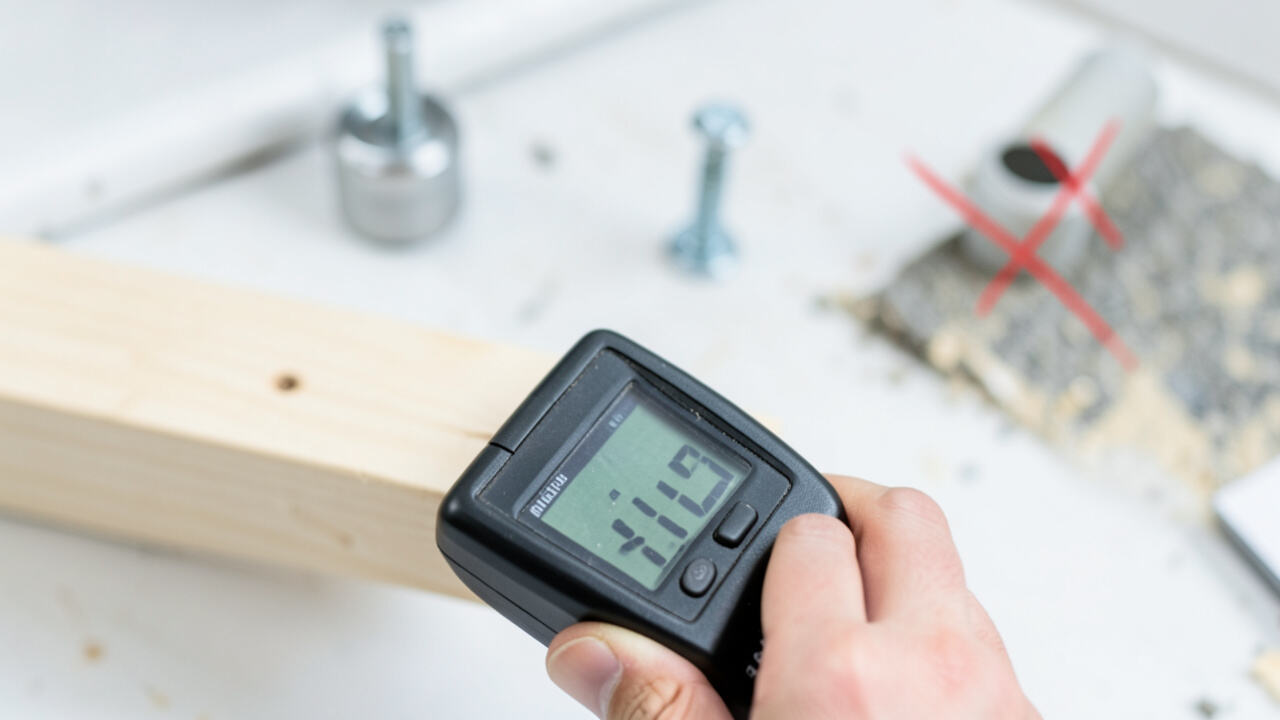
How to Properly Use a Moisture Meter (Placement Best Practices)
Now that you know where you should never put a moisture meter, let’s cover the right way to place it. Follow these steps for accurate, tool‑friendly readings:
- Clean the surface of dust, debris, and loose paint.
- For pin‑type meters, drive the pins straight into the material at a 90‑degree angle.
- For pinless meters, press the scanning pad flat against the surface with even pressure.
- Avoid edges, knots, and cracks in wood.
- Take three readings within a small area and average them for a reliable result.
- Let the meter sit for 5–10 seconds to stabilize before recording the number.
Remember, the goal is to measure the material—not to damage the tool. Treat your moisture meter as a precision instrument, and it will serve you for years.
Frequently Asked Questions
Can I use a moisture meter on carpet?
Only if you have a carpet moisture meter designed with long pins that penetrate through the padding to the subfloor. Standard wood meters will not give accurate readings and may bend their pins on carpet fibers.
Is it safe to put a moisture meter on dry cement?
Yes, but only if the meter has a concrete setting. Concrete is abrasive, so pin‑type meters will dull quickly. Use a pinless concrete meter instead to avoid sensor wear.
What happens if I place the meter on wet paint?
The wet paint will create a conductive film that tricks the meter into reading “wet” even if the underlying material is dry. Wait until paint is fully cured before testing.
Can a moisture meter be repaired after water damage?
Sometimes, if caught quickly. Remove the battery, dry the unit for 48 hours in rice or silica gel, and then test. Internal corrosion may be irreversible; replacement is often cheaper than repair.
Where should I store my moisture meter when not in use?
Store it in a cool, dry place (35%–50% relative humidity) between 50°F and 80°F. Remove the battery and keep the meter in a padded case away from sunlight, chemicals, and magnetic fields.
Final Thoughts
Your moisture meter is a valuable diagnostic tool, but it’s only as good as the way you treat it. By avoiding metal surfaces, extreme temperatures, standing water, live wires, and chemical environments, you’ll prevent most common failures. Remember: proper placement saves money, improves accuracy, and keeps you safe on the job.
Next time you reach for your meter, stop for one second and ask yourself—am I putting it somewhere it shouldn’t be?