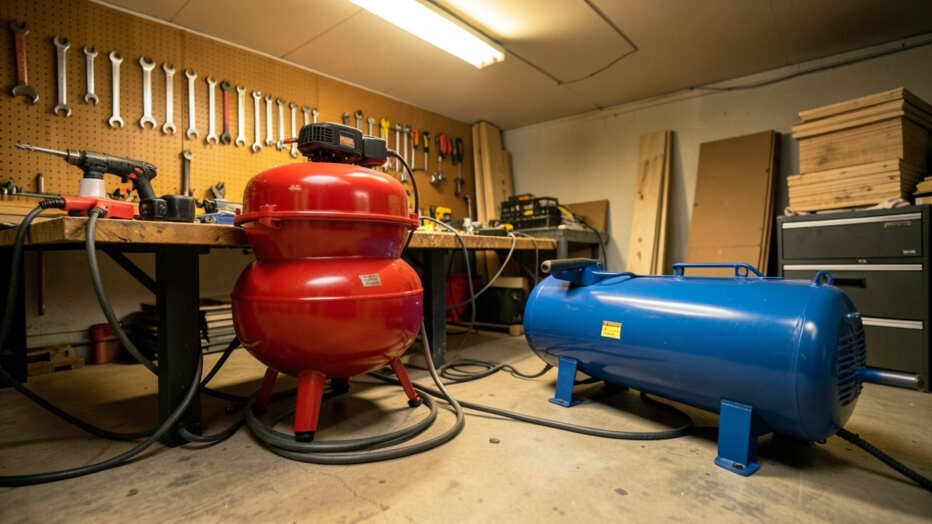

For a basement workshop, the better choice between a pancake and hot dog compressor depends on your priority: the pancake design offers superior stability and compact storage on shelves, while the hot dog compressor delivers higher air output and faster recovery for continuous-use tools like sprayers and impact wrenches. Pancake compressors excel in tight spaces due to their low center of gravity, making them less likely to tip, and they typically cost less upfront. Hot dog compressors, however, provide higher PSI and SCFM ratings to power framing nailers and automotive tools, so select one based on whether space efficiency or tool capacity matters more.
Choosing between a pancake compressor and a hot dog compressor for your basement workshop is a common dilemma for DIY enthusiasts and hobbyists. Both designs offer distinct advantages for home workshops, but your final choice depends heavily on your specific space constraints, noise tolerance, and the types of air tools you plan to run. In this complete comparison guide, we break down every critical factor to help you make an informed purchase.
Simply put, choose a pancake compressor if superior stability and compact storage on shelves are your top priorities. Choose a hot dog compressor if you need higher air output, faster recovery times, and the capacity to power more demanding continuous-use tools like sprayers or impact wrenches.
Key Takeaways
- Pancake compressors provide exceptional stability with a low center of gravity, making them ideal for tight basement shelves and workspaces.
- Hot dog compressors typically offer higher PSI and SCFM ratings, suitable for powering framing nailers, sprayers, and automotive tools.
- Noise levels are comparable between the two in direct-drive models, but belt-drive hot dog compressors are significantly quieter.
- Your final choice should match the air requirements of your most demanding workshop tool, not just the tank size.
1. What Is a Pancake Compressor?
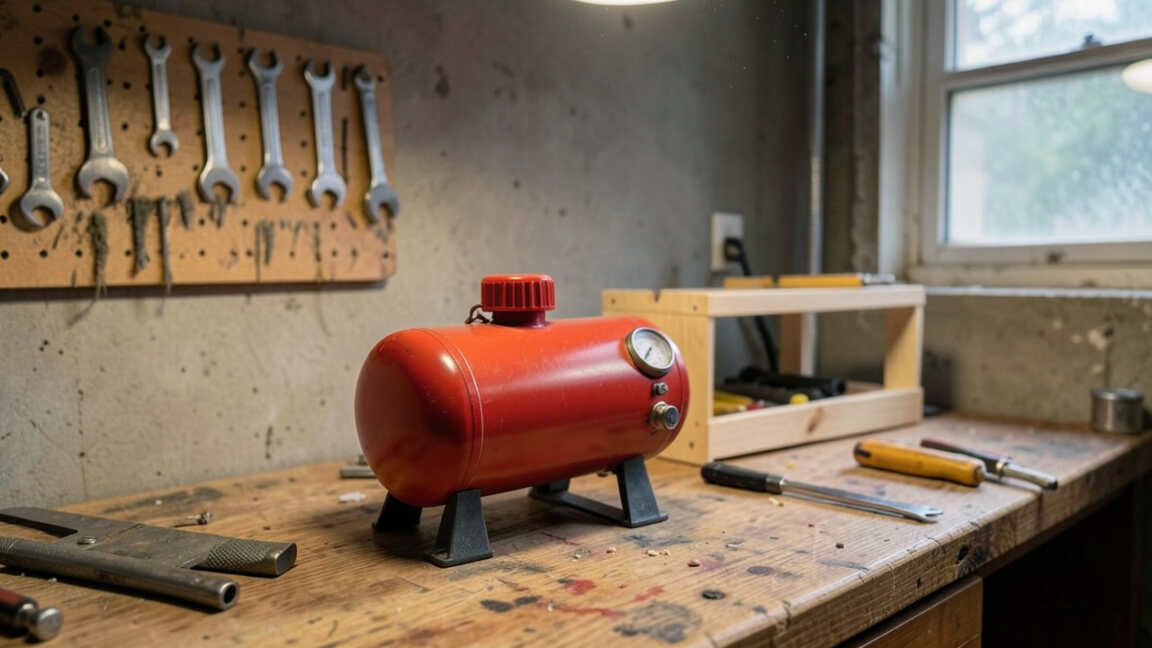
A pancake compressor features a round, flat tank that is only about 6 to 8 inches tall. This design gives it a very wide footprint relative to its height, creating an exceptionally low center of gravity. As a result, these compressors rarely tip over, even when bumped in tight spaces.
These units typically come with a 4- to 8-gallon tank and are powered by direct-drive motors. They usually produce between 0.6 and 1.2 SCFM at 90 PSI. This makes them perfectly suited for intermittent tools like brad nailers, staplers, and tire inflators.
The compact frame often includes a built-in handle for easy carrying around the house.
- Wide, flat circular tank shape (very stable)
- 4 to 8 gallon capacity typically
- Difficult to tip over, safe on uneven floors
- Almost always oil-free pumps (low maintenance)
- Best for intermittent use and finishing tools
- Usually lighter, weighing 30 to 50 pounds
Tip: Brands like Bostitch and Porter-Cable dominate the pancake market. Look for models with a solid rubber feet base to minimize vibration on concrete floors.
2. What Is a Hot Dog Compressor?
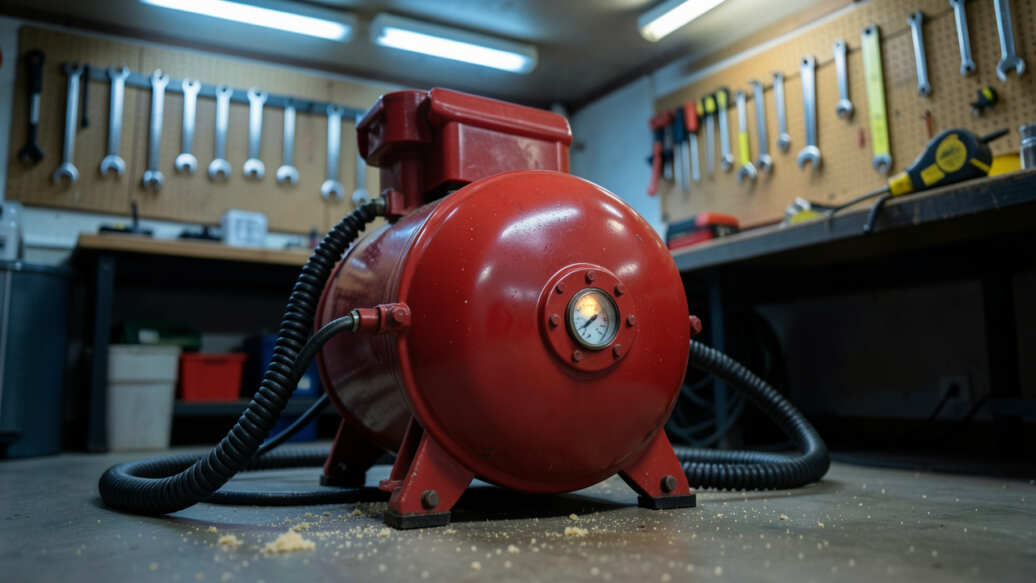
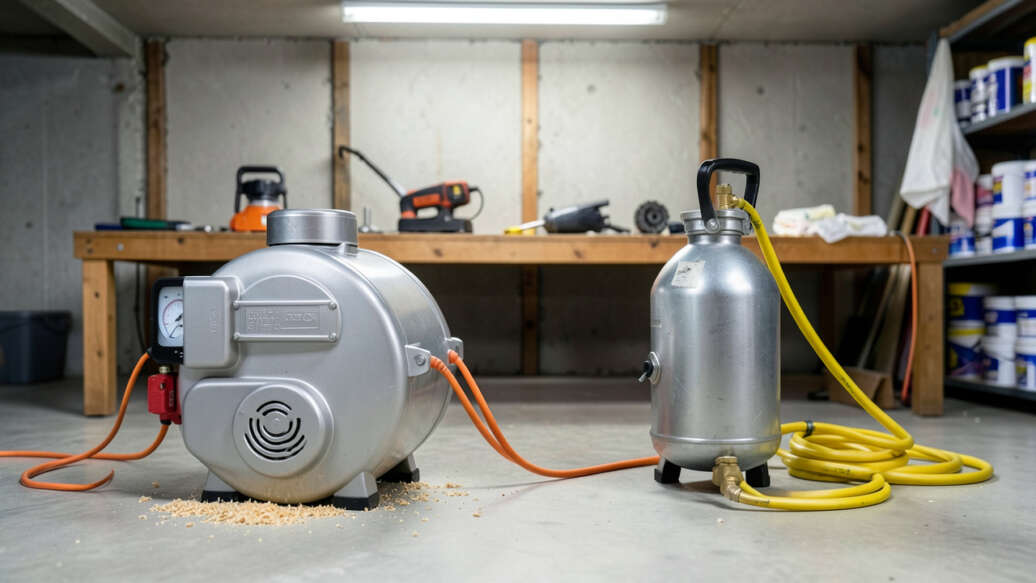
A hot dog compressor gets its name from its cylindrical tank that is long, narrow, and oriented horizontally. This design allows for a larger single-tank volume compared to a pancake, typically ranging from 6 to 12 gallons. The horizontal orientation means it takes up more linear floor space but offers a larger air reserve.
Many hot dog compressors feature belt-drive motors or higher horsepower direct-drive motors. This allows for much higher SCFM output, often between 1.2 and 2.5 SCFM at 90 PSI. They are better suited for running demanding tools like cut-off tools, impact wrenches, or small sanders.
They are generally heavier and require dedicated floor space.
- Long, cylindrical tank (horizontal orientation)
- 6 to 12+ gallon capacity
- Taller and narrower stance (less stable than pancake)
- Available in both oiled (quieter) and oil-free versions
- Better for demanding tools and longer run times
- Heavier, usually 40 to 80+ pounds
Important: Some hot dog models are “dual stack” or “twin stack,” which have two stacked hot dog tanks. These offer a smaller footprint but still provide higher capacity than a standard pancake.
3. Pancake Compressor vs. Hot Dog Compressor: Full Comparison
To truly understand the trade-offs in a basement workshop, let’s look at the specifications side-by-side. This comparison table covers the critical factors you need to evaluate before making a purchase.
| Feature | Pancake Compressor | Hot Dog Compressor |
|---|---|---|
| Tank Shape | Round, flat, wide | Cylindrical, horizontal |
| Stability | Excellent (low center of gravity) | Fair (can tip if bumped) |
| Capacity | 4 – 8 Gallons | 6 – 12+ Gallons |
| Max PSI | 100 – 150 PSI | 125 – 175 PSI |
| SCFM @ 90 PSI | 0.6 – 1.2 | 1.2 – 2.5 |
| Motor Type | Direct-Drive (Oilless) | Direct/ Belt-Drive (Oiled) |
| Noise Level | 70 – 85 dB | 60 – 85 dB (Belt is quieter) |
| Weight | 30 – 50 lbs | 40 – 80+ lbs |
| Price Range | $60 – $150 | $100 – $400+ |
As the table shows, hot dog compressors generally win on raw power and capacity. Pancake compressors win on stability, price, and compact storage. Your specific needs will determine which category holds more weight for your basement workshop.
4. Key Advantages of a Pancake Compressor for Basements
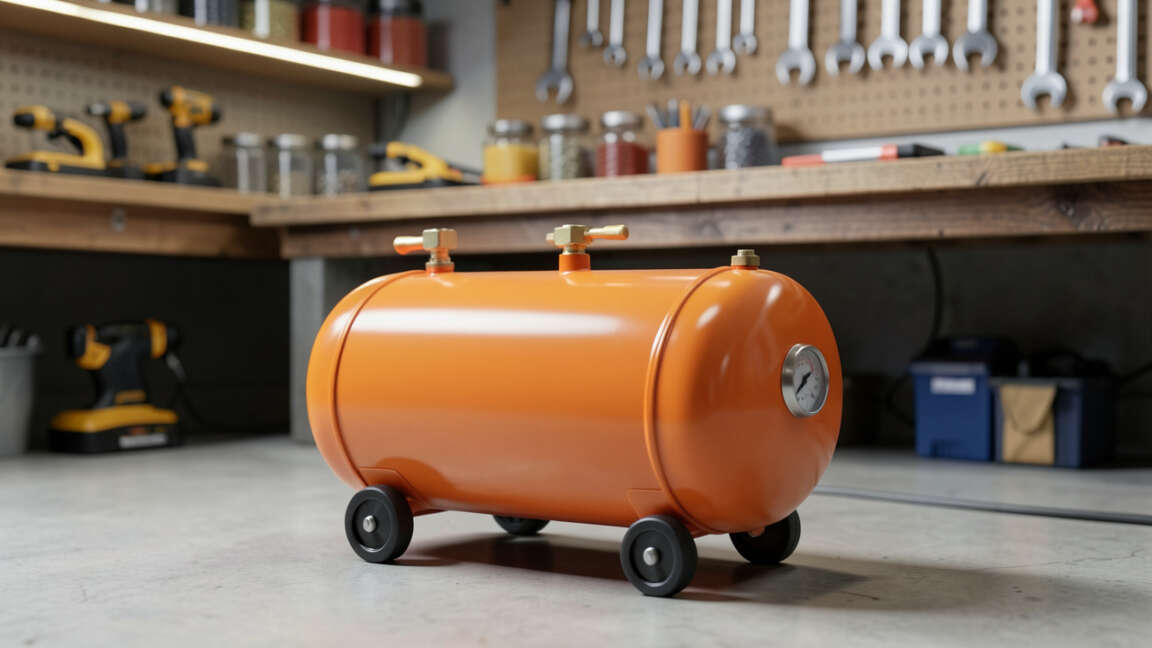
Basement workshops often face challenges like low ceilings, limited square footage, and uneven concrete floors. A pancake compressor feels almost custom-built for these environments. Its wide base prevents tipping, and its low height allows it to slide under standard workbenches.
Space Efficiency and Storage
Because of its low profile, a pancake compressor can be stored on a low shelf, under a miter saw stand, or in a cabinet when not in use. This frees up valuable floor space for larger stationary tools. Its square-like footprint fits neatly into corners that would otherwise be wasted.
Portability for Multi-Purpose Use
Most pancake compressors are significantly lighter than hot dog models. If you need to carry the compressor upstairs for a quick furniture assembly or outside to inflate car tires, the lighter weight and compact handle make transport easy. This is a huge bonus for homeowners who use the same compressor for both shop and home maintenance tasks.
Lower Initial Cost
The simpler design and smaller motor typically translate to a lower purchase price. A quality pancake compressor can often be found for under $100. This makes it an excellent entry point for hobbyists or those just starting to build a workshop without a huge upfront investment.
- Fits on standard 24-inch deep shelves
- Less likely to be knocked over in tight quarters
- Easier on the back when moving between floors
- Lower replacement cost if something goes wrong
- Sufficient power for 80% of homeowner DIY tasks
5. Key Advantages of a Hot Dog Compressor for Basements
For a more serious basement workshop where you are building furniture or working on cars, the hot dog compressor brings significantly better performance. The larger tank means the motor cycles on less often, which reduces noise and extends the life of the pump.
Higher Air Output for Continuous Tools
If you plan on running an air ratchet, a cut-off tool, or a detail sander, you need sustained CFM. A hot dog compressor typically offers 1.5 to 2.5 SCFM at 90 PSI. This allows you to run tools for longer bursts without waiting for the tank to refill, keeping your workflow smooth.
Faster Recovery Time
While the tank is larger, the pump is also typically more powerful. This means that when the compressor kicks in, it refills the tank much faster than a pancake type. A faster recovery reduces the duty cycle strain on the motor and gets you back to work quicker.
Versatility with a Wider Range of Tools
A hot dog compressor can handle framing nailers, roofing nailers, and even some low-CFM die grinders. If you upgrade your workshop later and acquire more demanding air tools, the compressor will not become the bottleneck.
Warning: Check the voltage requirements. Some larger hot dog compressors require a 240V outlet. Standard basement outlets are 120V, so ensure the model you choose is compatible with your existing electrical setup.
| Tool Requirement | Pancake Capable? | Hot Dog Capable? |
|---|---|---|
| Brad Nailer (0.3 SCFM) | Yes | Yes |
| Framing Nailer (2.2 SCFM) | No | Yes |
| HVLP Touch-Up Gun | No | Yes (Basic) |
| Impact Wrench (1.5 SCFM) | No | Yes |
| Tire Inflator | Yes | Yes |
6. Which Compressor Should You Choose for Your Basement Workshop?
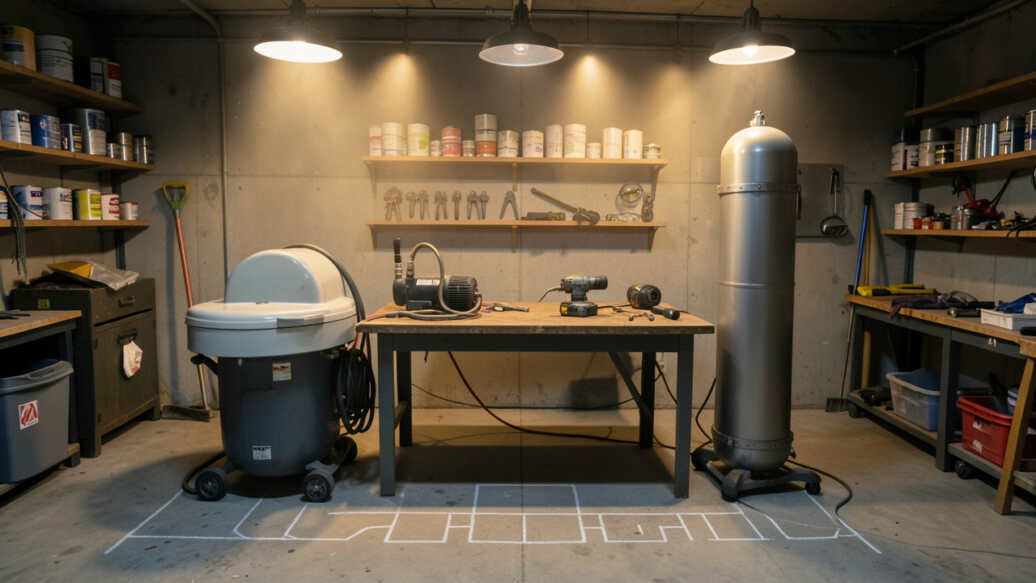
Deciding between a pancake compressor and a hot dog compressor comes down to answering three specific questions about your workshop habits. Let’s walk through a simple decision process.
- What tools do you use most? If you mainly use brad nailers, finish staplers, and tire inflators, a pancake compressor is perfect. If you use framing nailers, cut-off tools, or sanders, go with a hot dog.
- How much dedicated space do you have? Measure your floor area and shelf height. If you need to store it under a workbench, a pancake is the obvious choice.
- What is your budget? Hot dog compressors cost more upfront. Consider the total cost of ownership, including potential maintenance for oiled models.
Choose the Pancake Compressor If:
You value stability and compact storage above all else. You primarily work on smaller projects around the house. You do not plan on running continuous-duty air tools that require high CFM.
You want a simple, plug-and-play solution under $150.
Choose the Hot Dog Compressor If:
You need higher air output for framing, automotive work, or painting. You have a dedicated corner of the basement where the compressor can sit permanently. You plan on expanding your workshop tool collection and want a compressor that can grow with you.
7. Common Mistakes When Buying a Basement Air Compressor
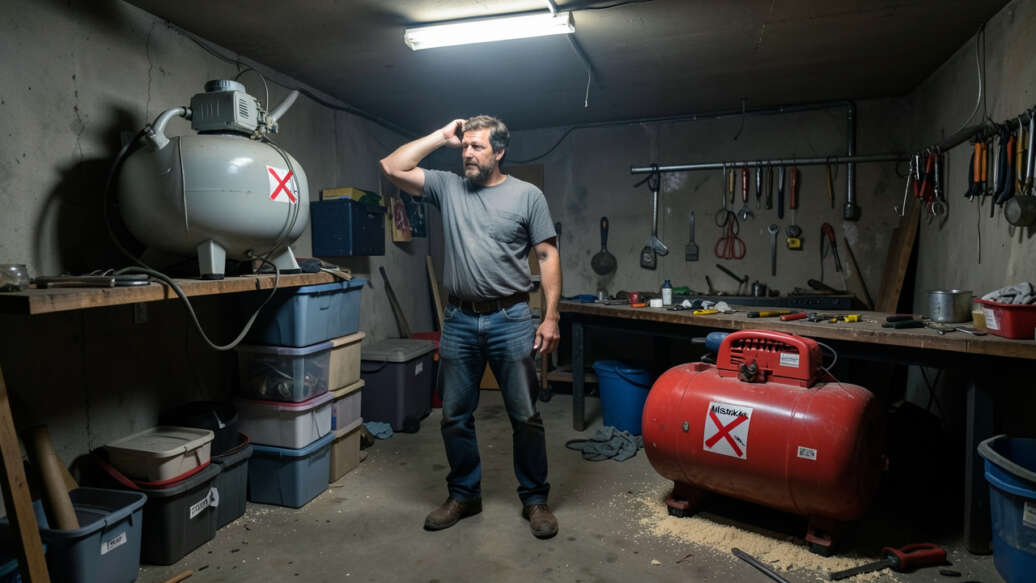
Many DIYers overlook the specific challenges of a basement environment when buying a pancake compressor or hot dog compressor. Humidity, power supply, and noise are major factors that should not be ignored. Avoiding these common pitfalls will save you time and frustration.
Ignoring Humidity and Tank Drainage
Basements are naturally damp. Air compressors generate condensation inside the tank as they run. If you do not drain the water from the tank after every use, it will rust from the inside out.
This applies equally to both pancake and hot dog compressors.
- Always open the drain valve after each session.
- Tilt the compressor to ensure all water escapes.
- Consider adding a water separator to your air line.
Underestimating Noise Levels
A direct-drive compressor running at 85 dB in a small, concrete-walled basement creates a very loud environment. Standard direct-drive models of both styles are loud. If sound is a concern for your family, prioritize a belt-drive hot dog compressor which operates closer to 60 dB.
Buying Based on Tank Size Alone
Many people assume a bigger tank is always better. This is false. The SCFM rating is the true measure of performance.
A high-quality pancake compressor with a high SCFM can outperform a cheap hot dog compressor with a large tank but a weak pump.
| Common Mistake | Why It Matters | How to Avoid |
|---|---|---|
| Ignoring CFM requirements | Tool won’t run properly | Check tool manual for SCFM needs |
| Buying too large a tank | Takes up too much space | Measure your floor space |
| Forgetting electrical needs | Trips breakers | Check amp draw and voltage |
| Not considering noise | Uncomfortable to use | Choose belt-drive if noise is a concern |
Frequently Asked Questions
Which is quieter, a pancake or hot dog compressor?
It depends on the motor type, not just the tank shape. Direct-drive versions of both types are similarly loud (75-85 dB). However, hot dog compressors are more often available in belt-drive configurations, which run much quieter (60-65 dB).
A belt-drive hot dog compressor is the quietest option for a basement workshop.
How much does a good basement compressor cost?
A quality pancake compressor costs between $60 and $150. A good hot dog compressor for a basement workshop ranges from $100 to $400. You generally pay more for higher SCFM ratings, belt-drive motors, and larger tank sizes.
Plan your budget around your tool requirements rather than the tank shape.
What size compressor do I need for nail guns?
For brad nailers and finish nailers, a small 4- to 6-gallon pancake compressor with 0.7 SCFM is sufficient. For framing nailers, you need a larger hot dog compressor with at least 2.0 SCFM at 90 PSI to keep up with the firing rate without long delays.
Can a pancake compressor run a paint sprayer?
Generally, no. Most paint sprayers require a steady flow of 2.0 to 4.0 SCFM. Pancake compressors rarely exceed 1.2 SCFM.
A hot dog compressor with a 6+ gallon tank is the minimum requirement for any significant spray painting project.
Do I need an oil-free compressor for a basement?
Oil-free compressors require less maintenance and will not leak oil on your concrete floor. However, they are louder and have a shorter lifespan. Oiled hot dog compressors are quieter and last longer but require regular oil level checks.
For a finished basement, an oil-free or belt-drive oiled model is ideal to avoid messes.
Final Thoughts
Choosing between a pancake compressor and a hot dog compressor for your basement workshop is a practical decision guided by your tools and available space. The pancake compressor offers unbeatable stability for tight shelves, while the hot dog compressor provides the power needed for serious renovation work. Prioritize your tool list, measure your floor, and invest in the compressor that fits your real needs.