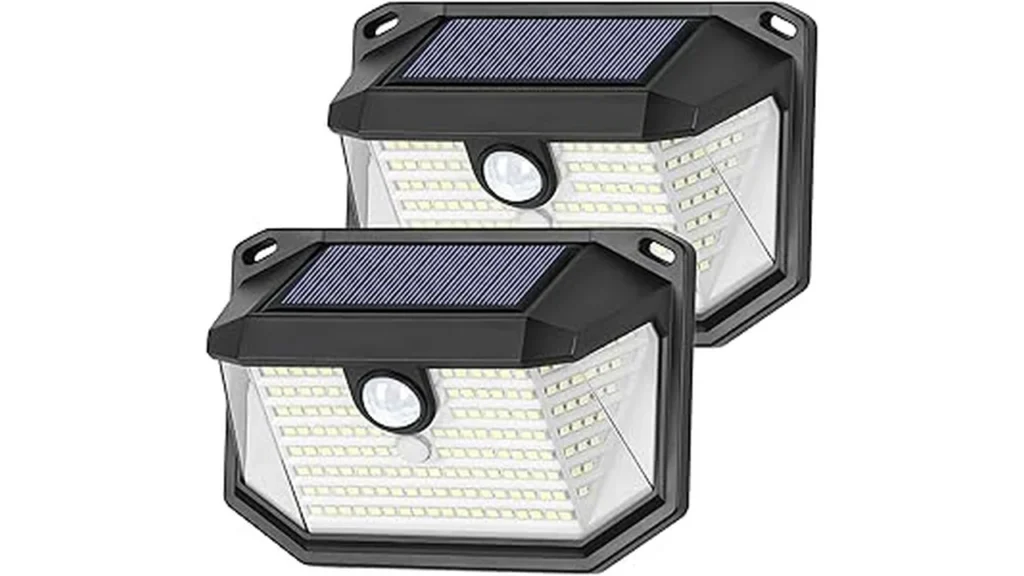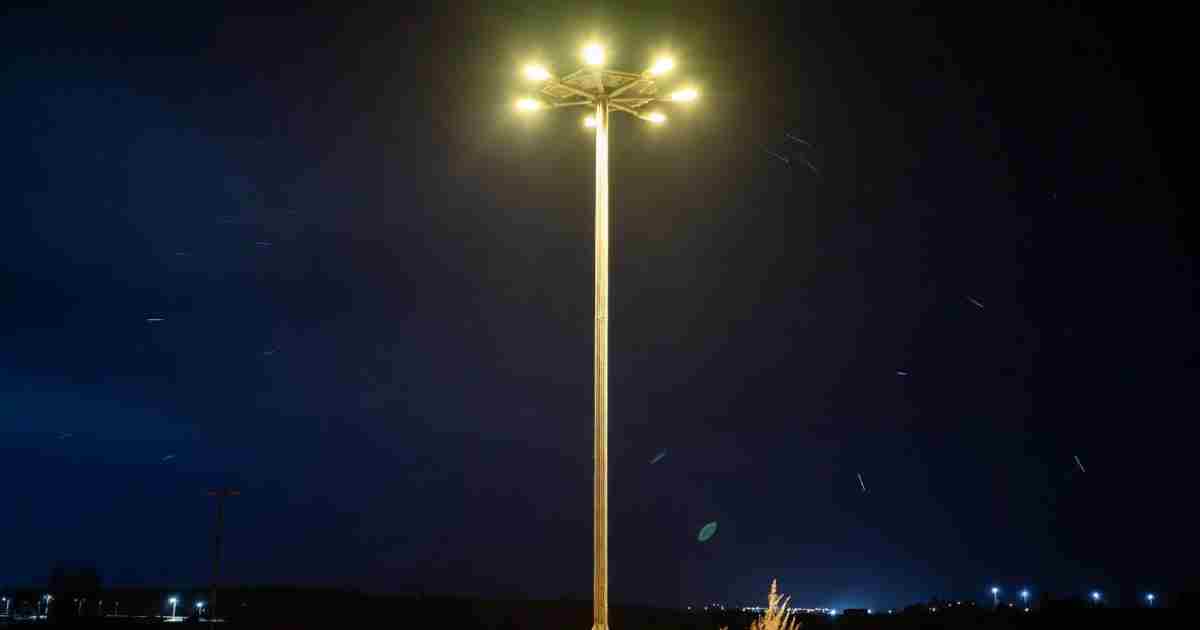

Dim solar lighting is typically caused by seven main factors: dirty solar panels, battery issues, insufficient sunlight exposure, weather conditions, poor quality or aging lights, loose connections, and LED degradation. Addressing these causes—such as cleaning panels, replacing worn batteries, or repositioning lights for maximum sunlight—can restore brightness and extend the life of the fixtures. Understanding these specific factors allows homeowners to troubleshoot effectively without replacing an entire solar lighting system.
Wondering why your solar lights seem a bit dim? It’s a common puzzle for folks just starting out with solar power. Don’t worry, it’s usually something simple to fix.
This guide will walk you through the 7 Causes of Dim Solar Lighting in easy steps. We’ll show you exactly what might be going on and how to get your lights shining bright again, so you can enjoy your yard after dark.
Key Takeaways
- You will learn about common reasons why solar lights don’t shine as bright as they should.
- We’ll explain how dirt and debris can block sunlight from reaching your solar panels.
- You’ll discover how battery health affects your light’s brightness and how to check it.
- We will cover how sunlight access throughout the day is vital for charging.
- You’ll find out how the weather can impact your solar lights‘ performance.
- We will explain how to check for and fix connection issues.
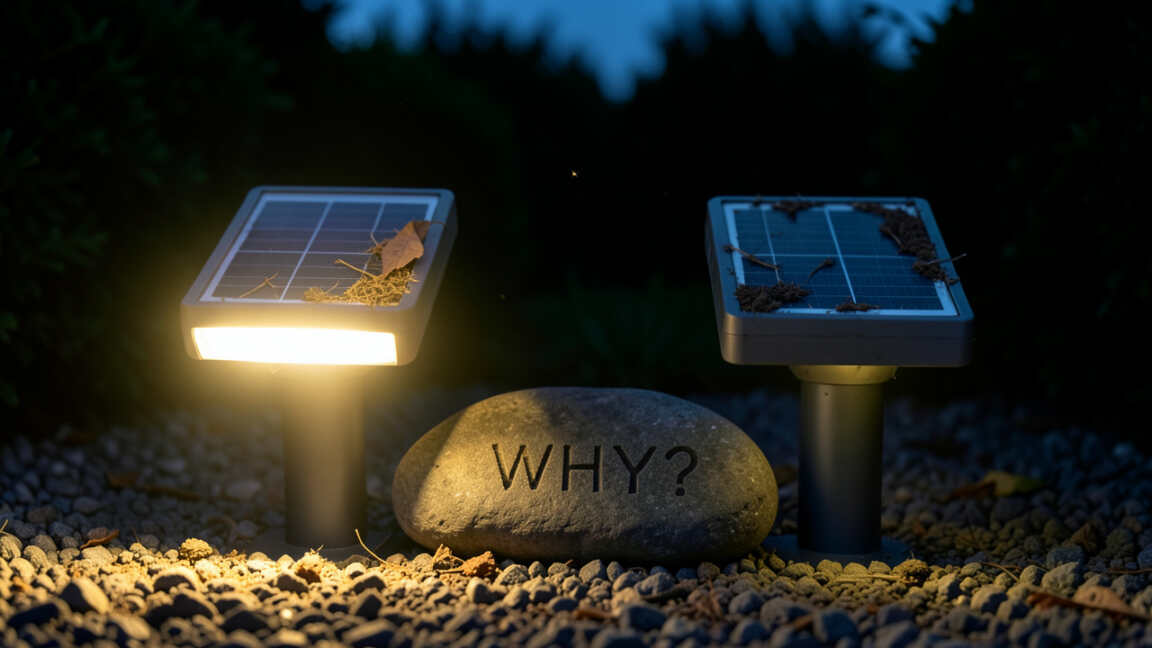
Why Are My Solar Lights Dim?
Solar lights are a great way to light up your outdoor spaces without using electricity. They’re easy to install and good for the planet. But sometimes, they don’t work as well as we hope.
Position your solar lights to receive direct sunlight for at least six hours each day to maintain optimal brightness.
If your solar lights are dim, it can be frustrating. Let’s look at the main reasons this happens.
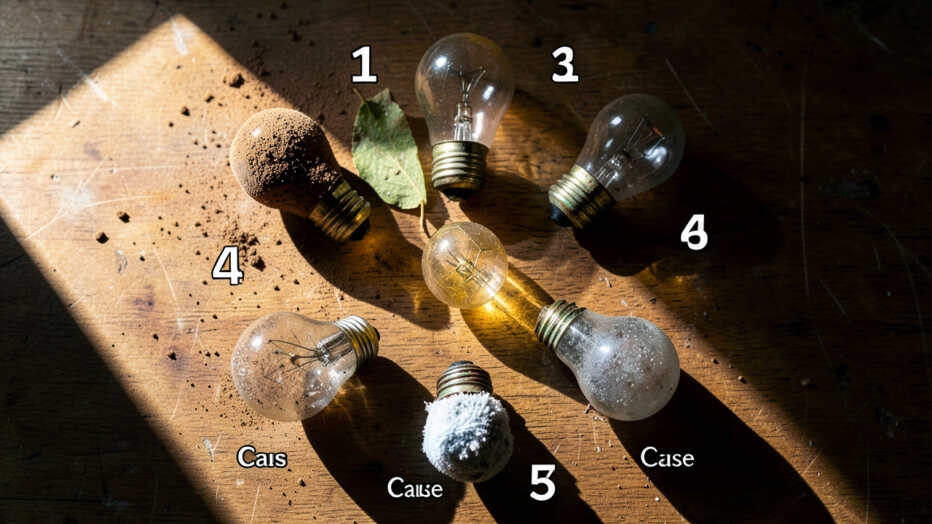
7 Causes of Dim Solar Lighting
1. Dirty Solar Panels
Solar panels need clean surfaces to catch the sun’s rays effectively. Over time, dust, dirt, pollen, and bird droppings can build up on the panel. This layer acts like a blanket, blocking the sunlight from getting to the solar cells.
Even a thin layer can make a big difference in how much power the panel can generate.
Think of it like trying to see through a dirty window. The view is always clearer when the glass is clean. Your solar panel works the same way.
When the panel can’t soak up enough sunlight, it can’t charge the battery as well. This means less power is available for the light at night, making it look dim.
Cleaning your solar panels is usually a simple task. Most of the time, a soft cloth or sponge with some water is all you need. Avoid using harsh chemicals or abrasive materials, as these can scratch the panel surface.
Regularly wiping them down, especially after dusty spells or rainy weather that leaves streaks, will help keep them working their best.
2. Battery Issues
The battery is the heart of your solar light. It stores the energy collected during the day. If the battery isn’t holding a full charge, your light won’t be as bright as it could be.
Batteries can degrade over time, especially if they’re exposed to extreme temperatures.
Most solar lights use rechargeable batteries. These batteries have a limited lifespan, just like the batteries in your phone or laptop. After a year or two, they might not be able to store as much power as they used to.
This means the light will still turn on, but it won’t last as long or be as bright.
You might notice that your lights used to stay bright all night, but now they start to fade after a few hours. This is a common sign that the battery is weakening. Often, you can simply
3. Insufficient Sunlight Exposure
Solar lights need direct sunlight to charge properly. If the panel is shaded for a good part of the day, it won’t be able to collect enough energy. Trees, bushes, fences, or even other structures can cast shadows on the panel.
Even a few hours of shade can significantly reduce the battery’s charge. The panel needs to be in direct sunlight for most of the day, ideally 6-8 hours, to get a full charge. If your lights are in a spot that gets morning sun but is shaded in the afternoon, or vice versa, they might not be getting enough total sun.
Consider the location where your solar lights are placed. Are they getting a clear view of the sky during peak sunlight hours? Sometimes, simply moving the light to a sunnier spot can make a huge difference.
Periods of overcast weather can temporarily reduce solar light brightness, but performance typically recovers once sunny conditions return.
If you can’t move the light, you might need to trim back any plants that are causing shade.
4. Weather Conditions
The weather plays a big role in how well your solar lights work. Cloudy days mean less sunlight reaches the solar panels. Even on a sunny day, if there’s haze or fog, the light intensity is reduced.
Rainy or snowy weather can also impact performance. While rain can help wash away dirt, it also means there’s no direct sunlight for charging. Heavy snow can cover the panels completely, stopping any charging from happening.
If you’ve had a stretch of bad weather, your lights might be dim because the battery hasn’t had a chance to fully recharge.
This is usually a temporary issue. Once the weather clears up and there’s more sunshine, your lights should start performing better again. It’s a good reminder that solar power relies on nature, and sometimes we just have to wait for the sun to come back out.
5. Poor Quality or Old Solar Lights
Not all solar lights are created equal. Some cheaper models might not have the best components, meaning they won’t hold a charge as well or produce as much light. Over time, even good quality lights can wear out.
If your lights are several years old, their efficiency might have naturally decreased. The solar cells themselves can degrade, and the internal parts might not be as effective as they once were. This is a natural part of their lifecycle.
If you’ve tried other solutions and your lights are still dim, it might be time to consider replacing them. Look for lights with good reviews and solid construction. Newer models often have improved technology for better brightness and longer battery life.
6. Loose Connections or Internal Wiring
Sometimes, the problem isn’t with the solar panel or the battery, but with how everything is connected. In some solar lights, there are wires that connect the solar panel to the battery and the light fixture. If these connections become loose or corroded, the flow of power can be interrupted.
This can be a bit trickier to check, especially on sealed units. However, if you notice that the light flickers or is only dim at certain times, it might indicate a loose connection. For lights where you can access the internal components, a visual check for any signs of corrosion or loose wires might be helpful.
Gentle cleaning of the connector points with a small brush or cotton swab dipped in isopropyl alcohol can sometimes help if corrosion is present. Make sure to let everything dry completely before reassembling. If you’re not comfortable with internal checks, it might be time to seek professional help or consider replacing the unit.
7. Light Bulb or LED Degradation
While LEDs are known for their longevity, they can still degrade over a very long time. The LEDs in your solar light are what produce the light. If the LEDs themselves are starting to fail, the light output will naturally decrease.
This is less common than battery issues or dirty panels, especially in lights that are only a few years old. However, for very old solar lights, it’s a possibility. The brightness of an LED can fade gradually over thousands of hours of use.
In most consumer solar lights, the LED is often integrated into the fixture and not meant to be replaced by the user. If you suspect the LED is the issue and all other causes have been ruled out, replacing the entire solar light fixture is usually the most practical solution.
Frequently Asked Questions
Question: How often should I clean my solar panel?
Answer: It’s a good idea to clean your solar panels at least once every few months, or more often if you notice visible dirt or if you live in a dusty area.
Question: How long do solar light batteries usually last?
Answer: Most rechargeable batteries in solar lights last between 1 to 3 years, depending on usage, weather, and battery quality.
Question: Can I use a regular battery in my solar light?
Answer: No, you should only use rechargeable batteries designed for solar lights. Regular batteries are not designed to be recharged by the solar panel and can cause damage.
Question: What’s the best way to test if my solar light is getting enough sun?
Answer: Observe the light’s location throughout the day. If it’s in full sun for at least 6-8 hours with no shade, it’s likely getting enough. You can also test by covering the panel completely for a few hours on a sunny day and then uncovering it to see if the light becomes brighter.
Question: My solar lights only stay on for a short time, even after a sunny day. What could be wrong?
Answer: This often points to a battery that can no longer hold a full charge. Replacing the rechargeable batteries with new ones is usually the first and most effective step to fix this.
Final Thoughts
Keeping your solar lights bright is usually quite straightforward. You’ve learned that dirty panels, weak batteries, and shady spots are the main culprits for dim solar lighting. Simple cleaning and checking your battery health can often solve the problem quickly.
Sometimes, a little bit of patience during cloudy weather is all that’s needed. You’re now equipped to identify and fix the common issues, helping your solar lights shine their best.