
Water leakage issues typically stem from six primary causes: worn-out seals and gaskets, damaged or loose pipes, faulty appliances, roof and gutter problems, foundation and basement leaks, and overflows or clogged drains. These problems often develop gradually and can lead to significant structural damage if not addressed promptly. Inspecting these common areas—such as pipe connections, appliance hoses, and roof gutters—helps homeowners identify leaks early and prevent costly repairs.
Water leaks can be tricky, especially when you’re just starting to fix things around the house. You might wonder why water shows up where it shouldn’t. Don’t worry, figuring out the 6 Causes of Water Leakage Issues doesn’t have to be hard.
We’ll look at these common problems in a simple way. Get ready for easy steps to find and fix them. Let’s see what these issues are and how to handle them.
Key Takeaways- You will learn about the most common reasons water leaks happen.
- Simple ways to spot where a leak might be coming from will be explained.
- You will discover how different parts of your home can lead to leaks.
- Easy tips for checking your home for these problems are included.
- This will help you feel more confident in dealing with water leaks.
Understanding Water Leakage
Water leaks are a common problem in many homes.
Regularly inspecting seals and gaskets in faucets and toilets can prevent leaks; these rubber parts wear out over time and are easy to replace.
Check your walls and floors regularly for signs of water damage, as catching a leak early can save you from costly repairs.
They can cause damage to your walls, floors, and even your belongings. Finding the source of a leak can sometimes feel like a mystery. But once you know the common culprits, it becomes much easier to fix.
We are going to explore six main reasons why water leaks happen. This will help you become more aware of potential issues in your own home. Knowing these causes helps you act fast to prevent bigger problems.
6 Causes of Water Leakage Issues
1. Worn-Out Seals and Gaskets
Think about faucets, toilets, and washing machines. They all have rubber or silicone parts called seals and gaskets. These parts keep water where it should be.
Over time, these seals can become old, cracked, or lose their shape. When this happens, water can start to seep out. A leaky faucet is often caused by a bad seal inside the handle.
The same goes for a toilet that keeps running; a faulty seal in the tank is usually the culprit. Checking these areas regularly can save you a lot of trouble.
These small parts do a big job. They are under constant pressure from water. Heat and cold can also affect them.
Sometimes, just replacing a worn-out washer or seal can stop a leak completely. It’s a simple fix that often gets overlooked. You can usually find replacement parts at any hardware store.
2. Damaged or Loose Pipes
The pipes that carry water throughout your home can also be a source of leaks. Pipes can get damaged in many ways. They might develop small cracks due to age or corrosion.
Sometimes, a pipe can even burst if it freezes. Loose connections where pipes join together are another common issue. Water pressure can push past a loose joint and start to drip.
You might notice water stains on your ceiling or walls. This is often a sign that a pipe above has a leak. If you have a basement or crawl space, look for wet spots on the floor or around pipes.
A small drip from a pipe might seem minor, but it can lead to significant water damage over time if not addressed. It’s important to inspect visible pipes, especially in areas prone to temperature changes.
3. Problems with Appliances
Many household appliances use water. Dishwashers, washing machines, refrigerators with ice makers, and water heaters are common examples. The hoses that connect these appliances to your water supply can wear out.
They can crack, split, or become loose. The seals around the appliance itself can also fail.
A washing machine hose that leaks can cause a lot of water damage quickly. Similarly, a refrigerator’s water line for the ice maker can develop a small drip. Water heaters can leak from their tanks or fittings.
Regularly inspecting the hoses and connections for these appliances is a good idea. Look for any signs of moisture or drips around them. Replacing old hoses before they fail is a smart preventive measure.
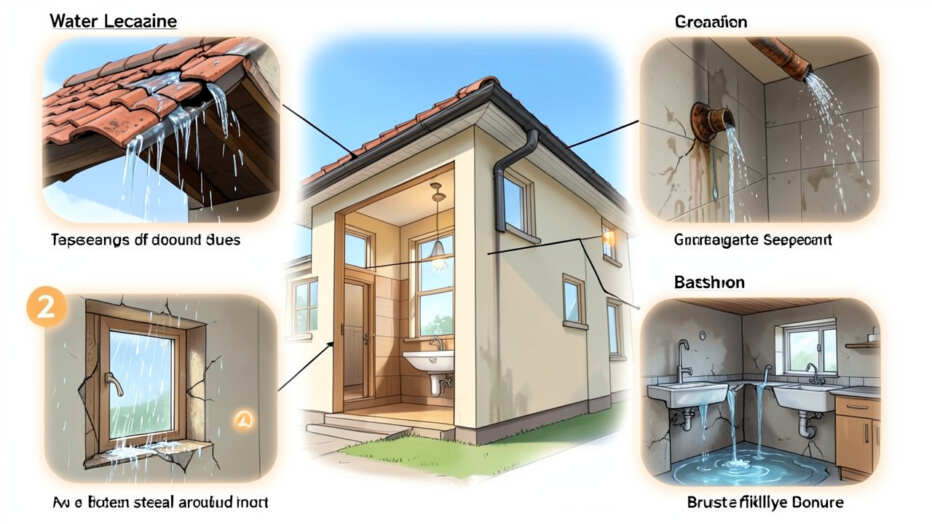
4. Roof and Gutter Issues
Leaks from above are often related to your roof or gutters. If your roof shingles are damaged, missing, or old, rain can get into your attic. Gutters that are clogged with leaves and debris can overflow.
This water can then run down the side of your house and potentially find its way inside. Flashing around chimneys or vents on the roof can also become damaged and allow water to enter.
Water stains on your ceiling, especially after rain, are a strong indicator of a roof leak. It’s important to keep your gutters clean. You should also check your roof periodically, or have it inspected, to ensure it’s in good condition.
Small problems with the roof can turn into big water damage issues if ignored. Ensuring proper drainage away from your home is also key.
5. Foundation and Basement Leaks
Water can also enter your home through cracks in the foundation or basement walls. This often happens when the ground around your house becomes oversaturated with water. Heavy rain or poor drainage can cause water to seep into the soil.
Then, it can find its way through even tiny cracks in the concrete. Leaks can also occur where the walls meet the floor in the basement.
If you notice dampness or puddles in your basement, it’s a sign of a foundation leak. Sometimes, you might see mold or mildew growth. Proper grading of the land around your home is essential.
This helps direct water away from the foundation. Waterproofing the basement walls can also prevent water from entering.
6. Overflows and Clogged Drains
Sometimes, leaks happen because water has nowhere to go. Sinks and bathtubs can overflow if the drain is blocked and the water is left running. Toilets can also back up if the drain line is clogged.
This excess water can then spill onto the floor.
A slow drain is often a sign that a clog is forming. It’s best to clear these clogs before they become a major problem. Using a plunger or a drain snake can often help.
If you have a persistent clog or a sewage smell, it might indicate a more serious issue with your plumbing system.
Frequently Asked Questions
Question: What is the most common cause of a leaky faucet?
Answer: The most common cause of a leaky faucet is a worn-out washer or seal inside the faucet handle or body. These rubber parts degrade over time and can no longer create a watertight seal.
Question: How can I tell if my roof is leaking?
Answer: You can tell if your roof is leaking by looking for water stains on your ceiling or walls, especially after it rains. You might also notice dampness in your attic or see mold growth.
Question: Are old pipes more likely to leak?
Answer: Yes, older pipes are more likely to leak. Over time, pipes can corrode, develop small cracks, or become brittle, making them prone to leaks.
Question: What should I do if I see water around my washing machine?
Answer: If you see water around your washing machine, first turn off the water supply to the machine. Then, inspect the hoses for damage, cracks, or loose connections. If the hoses look worn, it’s best to replace them.
Question: Can a clogged toilet cause a leak?
Answer: Yes, a clogged toilet can cause a leak. If the toilet bowl is full and the clog prevents water from draining, the water can overflow onto the floor. It can also put extra pressure on the tank seals.
Final Thoughts
Knowing these common sources helps you spot leaks early. Worn seals, damaged pipes, appliance issues, roof problems, foundation cracks, and clogs all lead to water where you don’t want it. Keep an eye on faucets, pipes, and appliances.
Clean gutters and check your roof. Look for damp spots in your basement. Address slow drains right away.
These steps help protect your home from water damage.