
Five signs your pergola needs repair are wobbly posts and loose connections, wood rot or rust, damaged or missing fasteners, uneven surfaces or leaning structures, and worn roofing or shade elements. These issues typically arise from weather exposure, age, or improper installation. Identifying and fixing them early is critical to maintaining safety, preventing costly structural damage, and extending the pergola's useful life.
Wondering if your pergola is looking a bit tired? Figuring out when it needs a fix can seem tricky at first. You might see a few things that worry you, but don’t fret!
We’re here to make it super simple. You’ll learn exactly what to look for with our guide on 5 Signs Your Pergola Needs Repair. Stick around, and we’ll walk you through it step-by-step, so you can enjoy your outdoor space safely and beautifully.
First, let’s cover the main points.
Key Takeaways
- You will learn to spot loose or wobbly posts.
- You will understand how to check for rotting wood or rust.
- You will know how to identify damaged or missing fasteners.
- You will learn to notice uneven surfaces or leaning structures.
- You will recognize signs of wear on the roofing or shade elements.
- You will gain confidence in assessing your pergola’s condition.
When to Check Your Pergola
Your pergola is a wonderful part of your yard. It gives you shade and a nice place to relax. But like anything outside, it needs some care.
Wobbly posts indicate that the anchoring system has failed, which compromises the entire structure. Reinforcing the connections promptly can prevent a complete collapse.
Check your pergola after major storms or at the start of each season to catch issues early. This simple habit prevents small problems from turning into costly repairs.
Over time, weather and use can take their toll. It’s smart to know when your pergola is telling you it needs attention. This helps you fix small problems before they become big, expensive ones.
Knowing the 5 Signs Your Pergola Needs Repair means you can act quickly.
Sign 1: Wobbly Posts and Loose Connections
One of the first signs that your pergola needs attention is movement. Gently push on one of the main posts. Does it feel loose or sway more than it should?
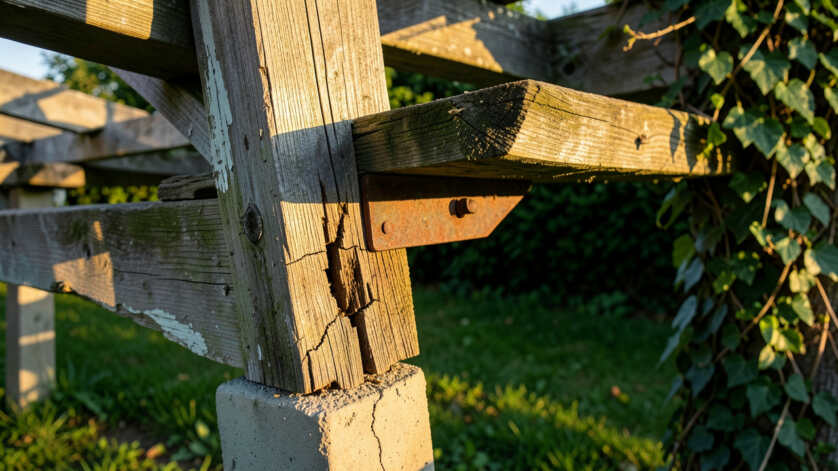
This is a clear signal that the foundation is weakening. The connection between the post and the ground, or the post and the crossbeams, might be failing.
Think about how much stress these posts hold. They support the entire structure, especially the roof beams and any added shade elements. If they are wobbly, it means the anchoring is no longer secure.
This could be due to soil erosion around the base, or the fasteners holding the pieces together are loosening.
You should also check where the horizontal beams connect to the vertical posts. Are the bolts tight? Are the screws still holding strong?
Wood decay is driven by moisture and sun exposure, making regular sealing and drainage checks essential for longevity.
Sometimes, wood can shrink or expand with temperature changes, which can loosen fasteners over time. Even a small amount of play in the posts can lead to bigger issues down the road.
Why This Happens
Soil can shift, especially after heavy rain or freezing temperatures. If your pergola was set in concrete, that concrete might be cracking or breaking away. If it was set on deck blocks or directly in the ground, the soil there can easily become unstable.
Wooden posts can also rot at the base, weakening their grip. Metal posts can suffer from corrosion at their base.
What to Do
First, try to tighten any visible bolts or screws. If the posts are still wobbly, you might need to re-anchor them. This could involve adding more concrete around the base, using specialized post anchors, or even replacing the damaged posts entirely.
For wooden posts, check for rot at the bottom. If it’s bad, the post needs to be replaced.
Sign 2: Wood Rot, Decay, or Rust
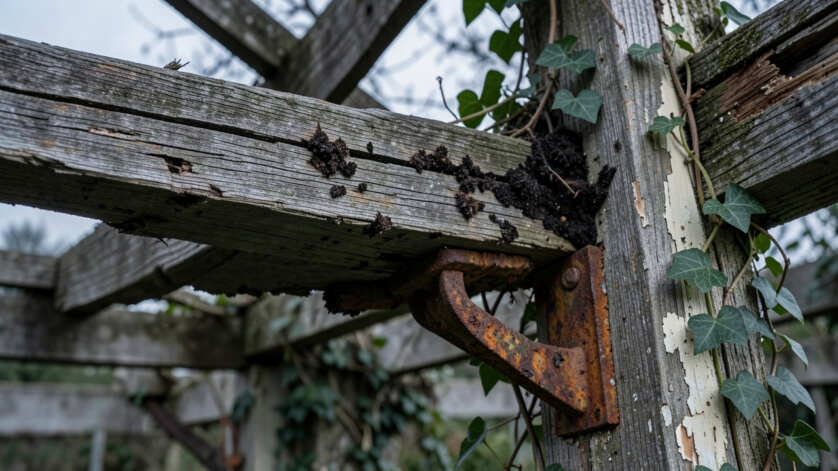
Wood pergolas are beautiful, but wood can degrade over time. Look closely at the wooden parts of your pergola. Do you see any soft spots, dark patches, or areas that crumble when you touch them?
This is a sign of wood rot. Rot is caused by fungus that thrives in damp environments.
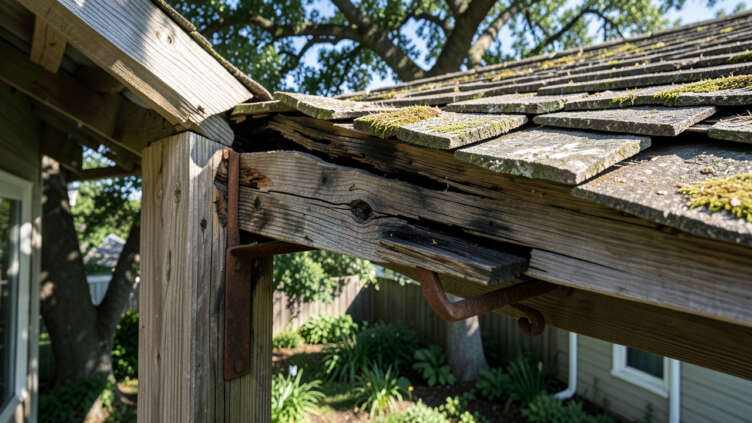
Pay special attention to areas where water might collect. This includes the tops of posts, the joints where beams meet, and any horizontal surfaces. If you have a wooden roof structure, check the beams and rafters for signs of decay.
Small holes or tunnels might also indicate insect damage, which can weaken the wood.
Inspect all bolts and brackets annually, especially where beams meet, and replace any that show rust or stripping. Tightening loose fasteners can restore stability without major work.
If your pergola has metal components, like fasteners, brackets, or decorative elements, check them for rust. Reddish-brown spots are a clear sign of corrosion. Rust can weaken metal over time, making it brittle and less able to support weight.
In severe cases, rusted metal can break.
Why This Happens
Exposure to rain, snow, humidity, and direct sunlight can all contribute to wood degradation. If the wood wasn’t properly treated when installed, it’s more susceptible. For metal, moisture is the main culprit for rust.
If protective coatings have worn off, the metal is exposed.
What to Do
For minor wood rot, you might be able to clean out the affected area and then fill it with a wood filler or epoxy. For larger areas of rot, or if the structural integrity is compromised, you’ll need to replace the damaged wood sections. This could mean replacing a beam, a rafter, or even an entire post.
For rust, you can try to clean it off with a wire brush. Then, apply a rust-inhibiting primer and a fresh coat of paint or sealant. If the rust is extensive and has weakened the metal, the part may need to be replaced.
Sign 3: Damaged or Missing Fasteners
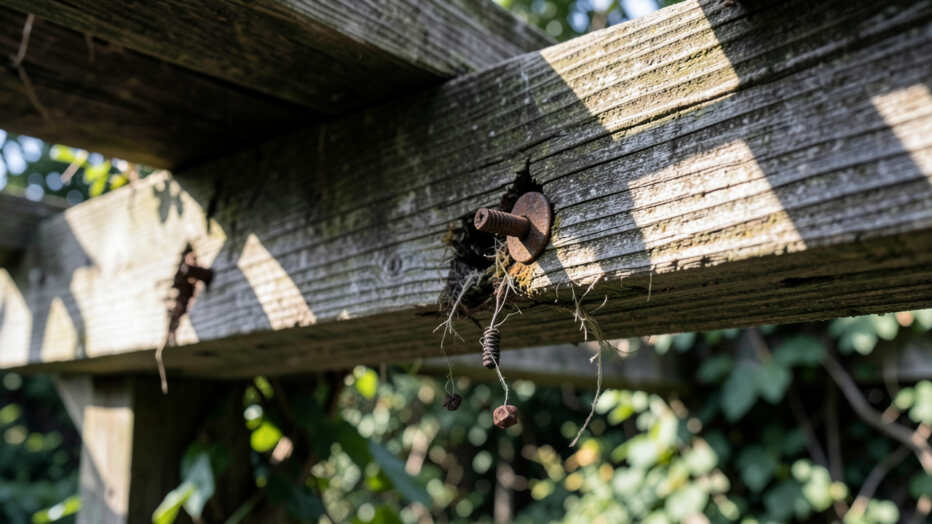
Pergolas are held together by many screws, bolts, and brackets. Over time, these fasteners can loosen, corrode, or even fall out. Take a good look at all the hardware connecting the different parts of your pergola.
Are any screws or bolts missing? Are they rusty or stripped (meaning the head is damaged and you can’t tighten them)? Are any brackets bent or cracked?
If a key fastener is failing, it puts extra stress on the surrounding parts of the pergola. This can lead to sagging or instability.
A sagging beam is a structural red flag that often signals hidden rot or overload. Do not ignore it; a professional evaluation is needed before the problem worsens.
This is especially important for the connections holding up the main beams and the roof structure. These parts bear the most weight. Even one missing or damaged bolt in these critical areas is a serious concern.
It’s easy to overlook these small metal pieces, but they are vital for your pergola’s strength.
Why This Happens
Weather is the primary cause. Rain, sun, and temperature changes can cause metal to expand and contract, leading to loosening. Moisture can also cause screws to rust and become weak or break.
Sometimes, improper installation can lead to fasteners not being fully tightened, making them prone to falling out.
What to Do
Sign 4: Sagging or Uneven Surfaces
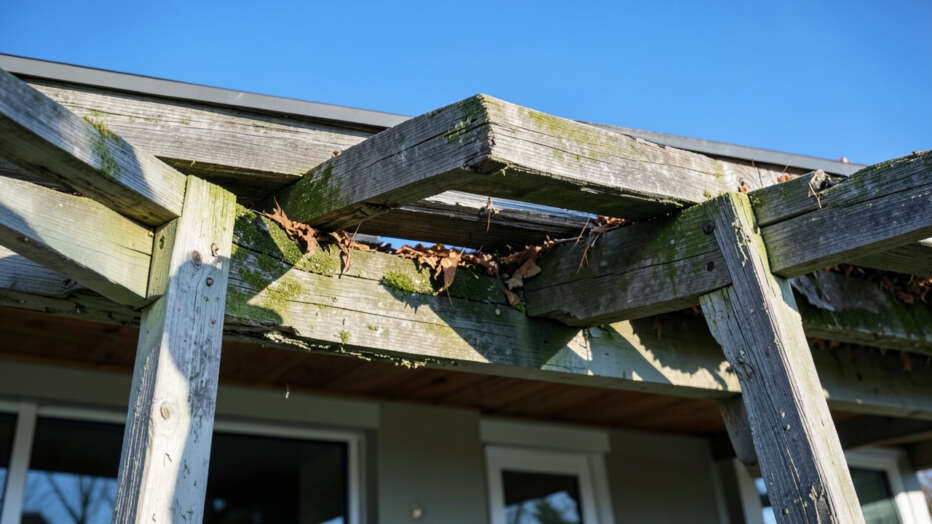
Your pergola’s roof or beam structure should ideally be level and straight. If you notice that the beams are sagging in the middle, or if the entire roof structure seems to be leaning to one side, this is a major warning sign. It indicates that the structure is not as strong as it should be.
A sagging beam can be a sign of wood rot, or it could mean the beam is not strong enough for the load it carries. Maybe it’s not properly supported, or it’s just old and has weakened over time. Similarly, an uneven structure might mean that the foundation posts are sinking or shifting.
Even a slight sag can be a problem. It can lead to water pooling on the roof, which can then cause more wood rot or stress. If the whole structure is leaning, it’s a sign of serious instability.
Roofing and shade components bear the brunt of weather, so replacing worn fabric or rotted wood panels protects both the pergola and the area below.
This can be dangerous, especially if the pergola is in a place where people gather.
Why This Happens
The most common reasons for sagging beams are moisture damage weakening the wood, or the beam not being sized correctly for the span it covers. Over time, the wood can also lose its rigidity. An uneven structure is often caused by uneven settling of the ground or foundation posts.
What to Do
For a sagging beam, you might be able to reinforce it by adding another beam alongside it or by installing additional support posts underneath. If the wood is rotten, it needs to be replaced. If the whole structure is leaning, you’ll need to address the foundation issues first.
This might involve releveling the ground, adding new footings, or reinforcing the existing posts.
Sign 5: Wear on Roofing or Shade Elements
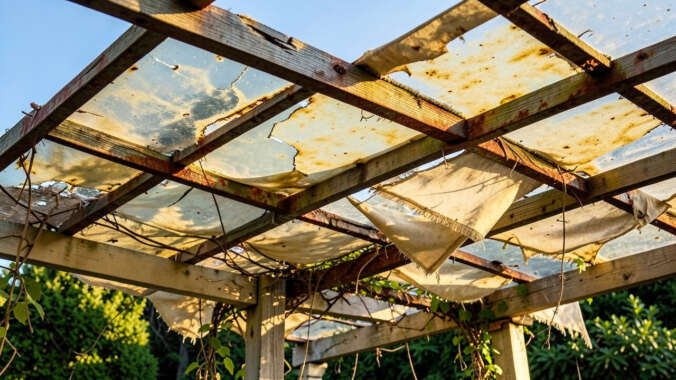
Many pergolas have some form of roofing or shade. This could be solid wood rafters, lattice work, fabric shades, or even retractable awnings. If these elements show signs of significant wear, your pergola might need repairs.
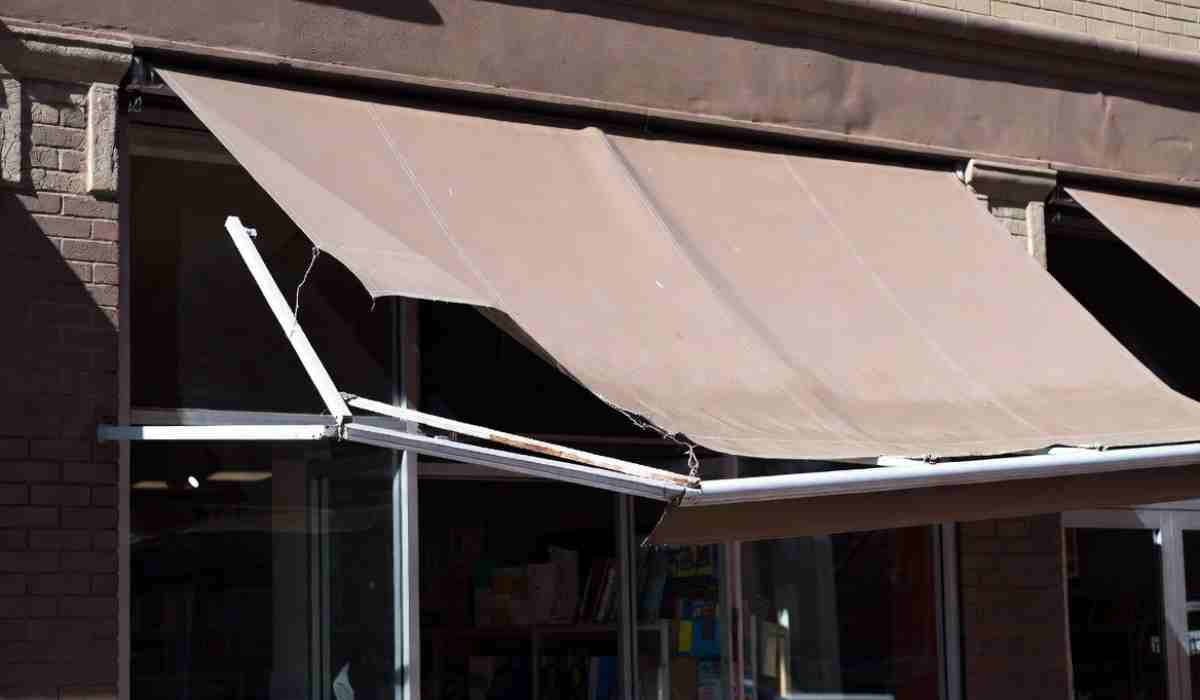
For wooden roofs, check for cracked or splitting planks, loose shingles (if applicable), or areas where water is seeping through. For fabric shades, look for tears, fraying edges, faded colors, or mildew. If you have a retractable awning, make sure the mechanism still works smoothly and that the fabric isn’t ripped or stretched out.
Lattice work can become loose, with individual slats breaking or falling out. This not only looks bad but can also make the shade less effective. Any part of your pergola that is designed to provide shade or cover is also exposed to the elements, so it needs to be in good condition to do its job and keep the structure safe.
Why This Happens
Fabric shades and awnings are directly exposed to sun and rain, which can break down the materials over time. Wood can warp, crack, or rot. Lattice can be damaged by wind or impact.
The mechanisms for retractable elements can wear out from use or lack of lubrication.
What to Do
Minor tears in fabric can sometimes be repaired, but significant damage often means replacement. For wooden roofing, repair or replace individual damaged planks. Ensure any sealants or finishes are reapplied to protect the wood.
For lattice, replace broken pieces. If the mechanism on an awning is failing, it might need professional service or replacement.
Frequently Asked Questions
Question: How often should I inspect my pergola?
Answer: It’s a good idea to do a quick visual check at least twice a year, usually in the spring and fall. A more thorough inspection, looking closely at all the signs mentioned, is recommended once a year.
Question: Can I fix a wobbly post myself?
Answer: Minor wobbling might be fixable by tightening fasteners. However, if the post is significantly loose or rotting, it might require more advanced repair or professional help to ensure it’s done safely.
Question: What if I find a little bit of rot on my wooden pergola?
Answer: Small areas of surface rot can often be cleaned out, treated, and filled with wood filler or epoxy. However, if the rot is deep or affects a major structural part, it’s best to consult with a professional.
Question: How can I prevent rust on my pergola’s metal parts?
Answer: Regularly cleaning metal parts and reapplying a protective coating, such as paint or a sealant designed for metal, can help prevent rust. Ensure any damaged paint is touched up promptly.
Question: My pergola’s roof is sagging a bit. Is it safe to use?
Answer: A sagging roof is a sign of weakness and may not be safe, especially if it’s significant. It’s best to limit use of the area beneath it until you can have it inspected and repaired by a professional.
Final Thoughts
Checking on your pergola’s condition is important. You’ve learned about loose posts, wood rot, broken fasteners, sagging parts, and worn roofing. These are the key signs to watch for.
Taking care of these issues early keeps your pergola strong and safe. It also helps it look its best. Enjoying your outdoor space means having peace of mind that it’s in good shape.