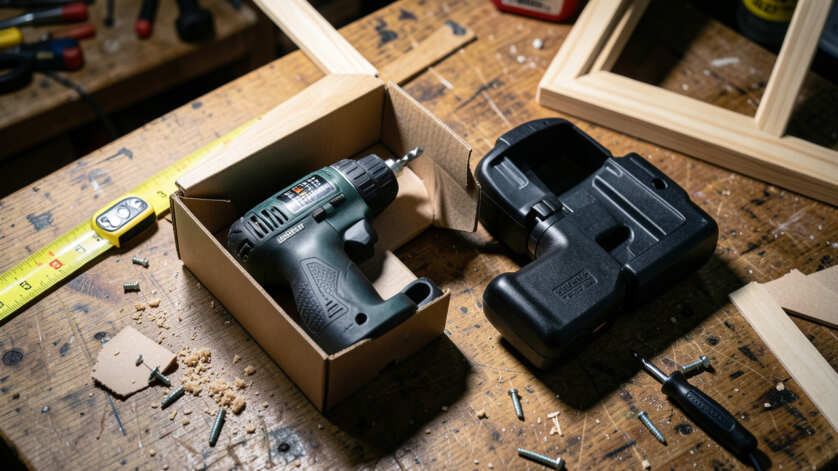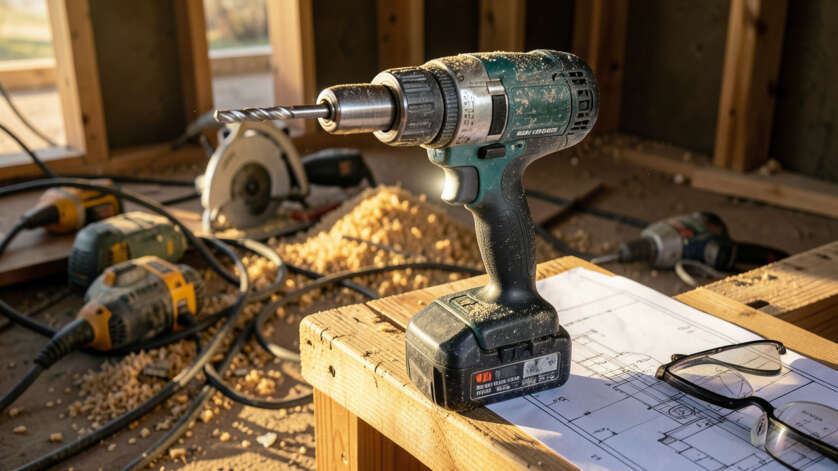

A cordless drill is worth it for a job site when mobility, speed, and safety outweigh the need for raw sustained power. Modern lithium-ion batteries now deliver up to 60% more torque than older models, making cordless drills viable for most framing and finishing tasks. Key considerations include battery system cost, typical workload, and whether a corded backup is still needed for heavy-duty applications.
Buying a cordless drill for a job site can feel like a gamble when you compare price, power, and reliability against a corded model. This article helps you weigh the real-world pros and cons so you can make a confident investment.
Simply put, buying a cordless drill for a job site is worth it if you value mobility, speed, and safety over raw sustained power. Modern battery technology now matches corded drills for most framing and finishing tasks.
Key Takeaways
- Buying a cordless drill for a job site is cost‑effective if you prioritize portability and job‑site versatility.
- Modern lithium‑ion batteries deliver up to 60% more torque than older models, making cordless drills viable for professional use.
- A cordless drill reduces trip hazards and allows work in tight or remote areas without an extension cord.
- Consider your typical drilling and fastening workload — heavy‑duty applications may still benefit from a corded backup.
- Battery system investment (brand, voltage, amp‑hours) is a major factor in long‑term value.
What Makes a Cordless Drill Right for a Job Site?
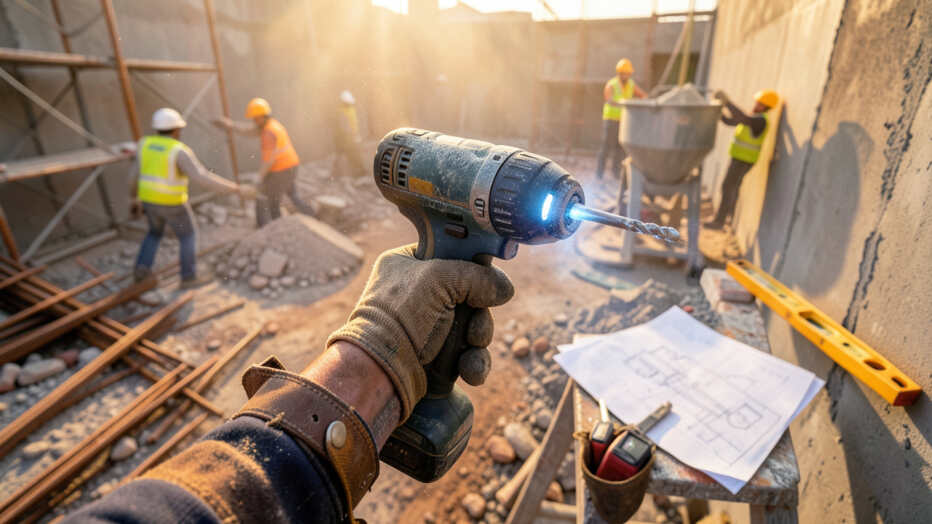
A cordless drill’s appeal on a job site comes down to freedom of movement. You can climb a ladder, work inside a crawlspace, or move between floors without dragging a cord or searching for an outlet. This flexibility directly improves productivity on most residential and commercial projects.
Modern brushless motors and high‑capacity batteries have closed the performance gap with corded drills. In fact, top‑tier cordless models now produce over 1,200 in‑lbs of torque — enough to drive 6‑inch lag bolts into hardwood. The key is choosing a drill from a reputable platform with a robust battery ecosystem.
- Brushless motors increase efficiency by 30–50% compared to brushed motors, extending run time per charge.
- High‑discharge (HD) battery cells allow sustained power without overheating.
- Electronic clutch systems prevent over‑torquing and bit breakage.
- Built‑in LED lights illuminate dark corners and overhead areas.
- Ergonomic rubber grips reduce vibration fatigue during extended use.
The most significant shift in the last five years is battery voltage and capacity. Twelve‑volt drills are now powerful enough for drywall and cabinetry, while 18‑volt (20‑volt max) and 36‑volt (40‑volt max) platforms handle framing and metal drilling with ease.
| Voltage Class | Typical Torque (in‑lbs) | Best For |
|---|---|---|
| 12V | 300–500 | Drywall, cabinets, light assembly |
| 18V / 20V Max | 800–1,500 | Framing, decking, metal drilling |
| 36V / 40V Max | 1,500–2,500 | Heavy concrete drilling, large diameter holes |
As this table shows, you can match voltage to your specific job‑site tasks without overpaying for power you don’t need. Most professionals find an 18V or 20V Max drill covers 90% of daily work.
Cordless vs. Corded Drills on a Job Site
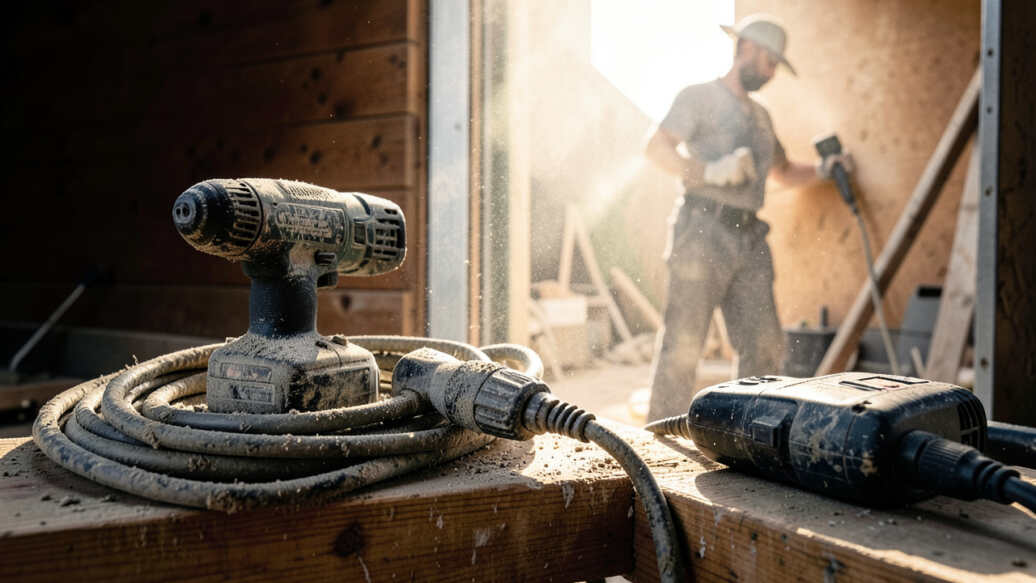
Deciding between cordless and corded depends on where and how you work. Cordless drills offer unmatched mobility, while corded tools provide infinite run time and consistent torque. The real cost of a corded drill isn’t the tool itself — it’s the time spent managing power cords and the safety risks they create.
According to the Occupational Safety and Health Administration (OSHA), trip hazards from extension cords account for nearly 30% of job‑site injuries. Using a cordless drill eliminates that risk entirely. Additionally, the convenience of changing bits and making quick moves reduces non‑productive time by an average of 15 minutes per day per worker, as reported by the Construction Industry Institute.
Tip: Keep one spare battery charging while you work with the other. A 5.0 Ah battery typically provides 45–60 minutes of continuous drilling — enough for a full morning of framing.
On the downside, cordless drills require an upfront investment in batteries and chargers. A quality cordless drill kit with two batteries and a charger can cost $200–$500, compared to $100–$200 for a comparable corded drill. Over the life of the tool (3–5 years), replacement batteries add another $100–$200.
However, the productivity gains and safety improvements often justify the premium.
- Cordless: + mobility, – limited run time, + lower injury risk
- Corded: + unlimited run time, – trip hazards, – less mobility
- Best practice: Use cordless for most tasks, keep a corded drill for repetitive heavy‑duty holes
Key Factors to Consider Before Buying a Cordless Drill for Your Job Site
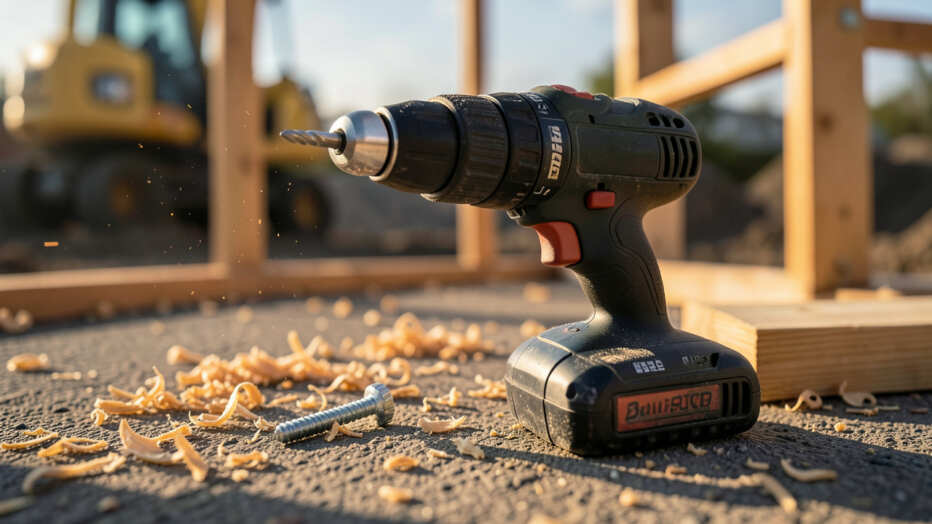
Not all cordless drills are created equal for professional use. The most important factor is the battery platform — investing in a system from a brand like Milwaukee, DeWalt, Makita, or Bosch ensures you can expand your cordless tool collection over time. These manufacturers offer over 200 cordless tools on a single battery system.
Another critical consideration is chuck size and type. A 1/2‑inch metal ratcheting chuck provides the strongest bit retention for heavy‑duty work. For added convenience, some drills now offer quick‑release chucks that allow one‑handed bit changes — a huge time saver when working on ladders or in tight spaces.
- Battery platform: Choose a brand with a wide range of tools you may need later (saws, impact drivers, nailers).
- Torque output: Look for at least 1,000 in‑lbs for framing; 500 in‑lbs is fine for finish work.
- Speed settings: Dual ranges (0–600 / 0–2,000 RPM) allow control over materials.
- Weight and balance: A drill under 4.0 lbs with the battery reduces fatigue.
- Dust and water resistance: IP rating of IP54 or higher protects against job‑site debris.
Important: Always check the drill’s “full load” amp‑hour rating. A 5.0 Ah battery on a brushless motor can drill up to 150 holes in 2×4 lumber before needing a recharge.
Don’t overlook the ergonomics. A drill with a soft‑grip handle and an anti‑kickback feature protects your wrist during high‑torque applications. Many professional drills also include a belt clip or a built‑in bit holder for quick access.
Battery Technology and Run Time: What You Need to Know
The heart of any cordless drill is its battery. Lithium‑ion (Li‑ion) cells have replaced nickel‑cadmium (NiCd) in nearly all professional tools because they offer higher energy density, no memory effect, and lighter weight. Most job‑site drills use 18V or 20V Max batteries, but the real performance metric is watt‑hours (Wh) — voltage × amp‑hours.
A 5.0 Ah battery at 18V provides 90 Wh of energy. That translates to roughly 45 minutes of continuous drilling at high load, or up to 2 hours of intermittent use. The National Association of Home Builders (NAHB) notes that a typical framer uses a drill for about 20 minutes per hour of active work — so a single 5.0 Ah battery can last a half‑day under normal conditions.
| Battery Rating | Wh (18V) | Approx. Continuous Run Time |
|---|---|---|
| 2.0 Ah | 36 Wh | 15–20 min |
| 4.0 Ah | 72 Wh | 30–40 min |
| 5.0 Ah | 90 Wh | 45–60 min |
| 8.0 Ah | 144 Wh | 75–90 min |
Charging technology has also improved. A rapid charger can replenish a 5.0 Ah battery in 45–60 minutes. That means two batteries can keep you working all day: one in the drill, one on the charger.
For larger job sites, consider buying a third battery to avoid dead time.

When a Cordless Drill Is a Smart Investment for Your Job Site
A cordless drill becomes a worthwhile purchase when your work demands mobility, speed, and reduced setup time. If you frequently move between workstations, work in attics or basements, or need to drill in outdoor areas away from outlets, cordless is the clear winner. The U.S.
Bureau of Labor Statistics reports that construction workers spend an average of 1.5 hours per week managing cords — that’s 78 hours per year lost to untangling, plugging, and moving extension cords.
Additionally, cordless drills are ideal for team environments. With a multi‑battery system, you can share batteries across multiple tools (circular saws, reciprocating saws, angle grinders). This reduces the total number of tools you need to buy and simplifies charging logistics on site.
- Residential framing and roofing: Cordless drills eliminate the need to drag cords across roofs and trusses.
- Finish carpentry and cabinetry: Quick bit changes and light weight allow precise control.
- Electrical and plumbing: Drill holes in studs and joists without running an extension cord.
- Outdoor deck and fence construction: No need for generators or long cords in open yards.
- Remodeling and demolition: Move from room to room without power interruptions.
Warning: Avoid using a cordless drill for driving hundreds of large screws into dense timber without a spare battery. The heat buildup can trigger battery protection circuits, requiring a 10‑minute cool‑down.
If your work is primarily in a fixed shop setting with easy access to outlets, a corded drill might still be more cost‑effective. But for job‑site professionals who value time and safety, a cordless drill is almost always the better investment.

Common Misconceptions About Cordless Drills on Job Sites
Many tradespeople still believe cordless drills lack the power or reliability of corded models. In reality, a modern brushless 18V cordless drill can drive a 6‑inch screw into hardwood with ease — a feat that would have required a corded tool five years ago. Another myth is that batteries die quickly in cold weather.
While lithium‑ion performance does drop below 20°F, storing batteries close to your body or using insulated battery sleeves mitigates this issue.
Some also worry about battery disposal and environmental impact. Most major manufacturers now run battery recycling programs. According to the Battery Council International, over 95% of lead‑acid and lithium‑ion battery materials are recyclable.
This makes cordless tools a greener choice compared to corded tools paired with disposable extension cords that often end up in landfills.
- Myth: Cordless drills are only for light work. Truth: Top models deliver 1,500+ in‑lbs of torque.
- Myth: Batteries wear out after one year. Truth: Quality Li‑ion batteries last 500–1,000 charge cycles.
- Myth: You need a separate charger for each drill. Truth: Most manufacturers use a single charger for multiple battery sizes.
- Myth: Cordless drills are less durable. Truth: Professional models are built to withstand drops and dust (IP54+).
Understanding these facts helps you make a confident decision. The cordless drill market has matured to the point where it dominates new tool purchases — research firm MarketsandMarkets estimates the global cordless drill market will grow at 7.8% CAGR through 2030, driven by job‑site demand.
How to Choose the Right Cordless Drill for Your Job Site
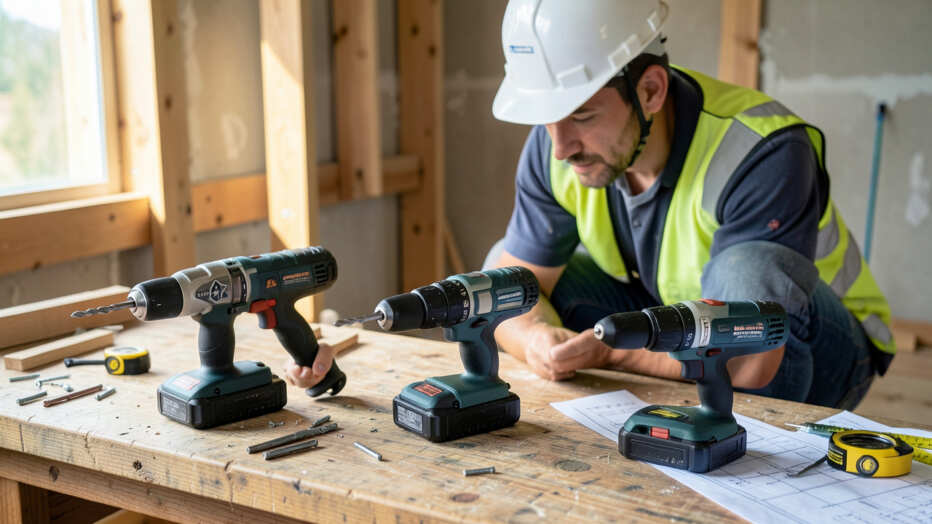
Start by identifying your primary tasks. If you mostly drive 3‑inch screws into studs for drywall or decking, an 18V brushless drill with 1,000–1,200 in‑lbs of torque will suffice. For larger structural work — like drilling 1‑inch holes through steel beams — consider a 36V hammer drill or a corded unit.
Next, evaluate the battery ecosystem. Stick with a single brand so you can share batteries across tools. This is especially important if you plan to add a cordless circular saw or impact driver later.
Read reviews from professional users on job‑site forums like ContractorTalk or Reddit’s r/Construction — real‑world experiences reveal battery longevity and charger reliability better than specs alone.
- Identify voltage needed (12V for light, 18V for general, 36V for heavy).
- Choose brushless motor for better efficiency and longer tool life.
- Prefer a 1/2‑inch metal chuck over plastic chucks.
- Look for LED lights, belt clip, and side handle (for high‑torque models).
- Buy kits with at least two batteries and a rapid charger.
Tip: Test the drill’s weight with a battery attached in the store. A top‑heavy drill causes wrist fatigue — a balanced design makes a huge difference over an 8‑hour shift.
Finally, consider the warranty. Most premium brands offer a 3‑year warranty on the drill and a 2‑year warranty on batteries. Combined with good care (avoiding deep discharge, storing at room temperature), a cordless drill can last 5–7 years before the battery performance noticeably degrades.
Frequently Asked Questions
Can a cordless drill replace a corded drill on a job site?
For most applications, yes. Modern brushless cordless drills provide enough torque and run time to handle framing, drywall, and even light masonry work with a hammer drill attachment. However, for continuous heavy‑duty drilling (e.g., drilling 100+ holes in concrete), a corded drill is more economical.
How long do cordless drill batteries last per charge?
A 5.0 Ah battery typically delivers 45–60 minutes of continuous drilling or 2–3 hours of intermittent use. Actual run time depends on load, speed setting, and material density. Carrying two batteries ensures all‑day operation.
Is it worth spending more on a brushless cordless drill?
Yes. Brushless motors are 30–50% more efficient, generate less heat, and last 2–3 times longer than brushed motors. They also provide more torque per watt, meaning you get more power from the same battery.
What is the best voltage for a job‑site cordless drill?
18V (20V Max) is the sweet spot for most professional work. It offers ample power for typical framing and fastening tasks while keeping the weight manageable. Choose 12V for finish work and 36V for heavy concrete or steel drilling.
Can I use automotive‑grade batteries in my job‑site drill?
No. Cordless drills require tool‑grade lithium‑ion cells designed for high discharge rates. Automotive batteries are not compatible and may damage the tool or cause safety hazards.
Always use batteries from the same manufacturer as the drill.
Final Thoughts
Buying a cordless drill for a job site is a smart move for any professional who values efficiency, safety, and flexibility. Modern battery tech has all but eliminated the power gap with corded tools, and the freedom from cords speeds up every task. Invest in a quality kit from a reputable brand, and you’ll see a return in productivity and reduced downtime within the first few weeks.
Make the switch — your wrists and your crew will thank you.