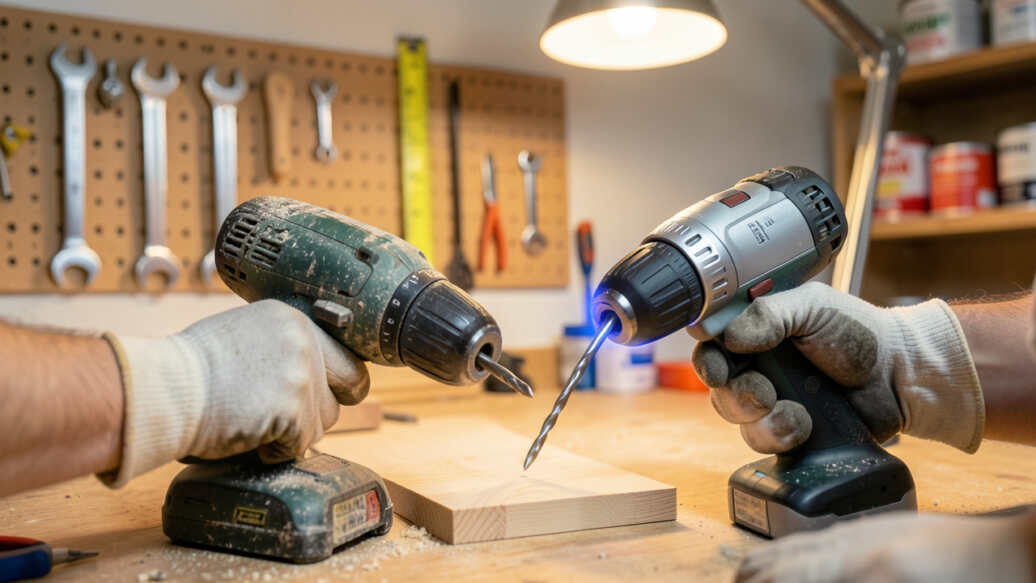

For a home DIY workshop, a brushless motor is almost always the better choice than a brushed motor due to its superior efficiency, longer lifespan, and lower maintenance requirements, though it comes with a higher upfront cost. Brushless tools deliver up to 50 percent more runtime per battery charge and generate less heat, making them ideal for frequent or heavy use. If you only tackle occasional projects on a tight budget, a brushed motor tool remains a viable and more affordable starting point.
Choosing between brushed or brushless motors for your home DIY workshop can feel overwhelming with so many tool options on the market. This guide breaks down the key differences in performance, cost, and durability so you can pick the right motor for your projects.
In short, a brushless motor is almost always better for a home DIY workshop if you can afford the higher upfront cost. Brushless tools deliver more power, run longer on a battery charge, require less maintenance, and last significantly longer than their brushed counterparts.
Key Takeaways
- Brushed or brushless motors differ mainly in efficiency, maintenance needs, and lifespan — brushless wins on all three fronts.
- Brushed tools are cheaper to buy upfront but cost more over time due to brush replacements and lower efficiency.
- Brushless motors provide up to 50% more runtime per battery charge and generate less heat during heavy use.
- For occasional DIY tasks, brushed tools are still a budget-friendly option that gets the job done.
- Your choice between brushed or brushless should match your project frequency, tool budget, and need for precision.
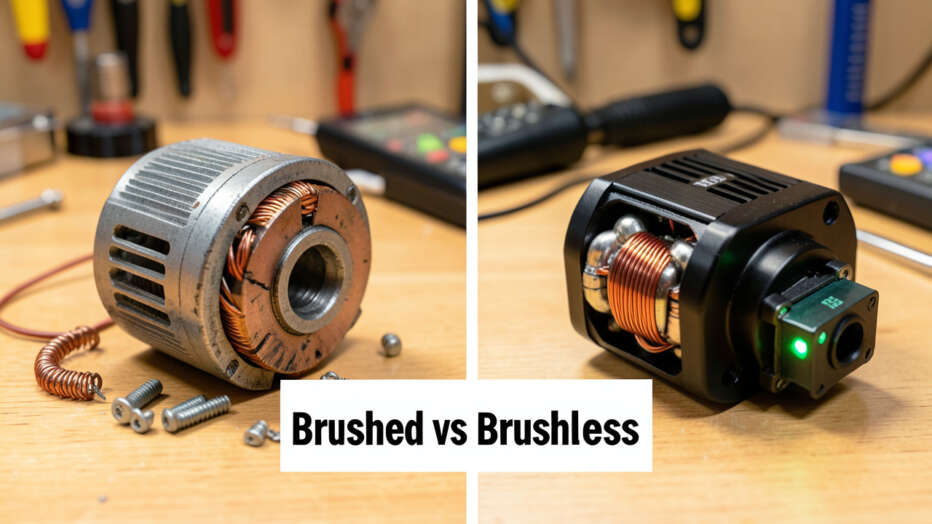
Brushed vs Brushless: Quick Side-by-Side Comparison
Before diving into the details, a direct comparison helps you see the major differences at a glance. Both motor types have their place in a workshop, but they serve different user profiles.
| Feature | Brushed Motor | Brushless Motor |
|---|---|---|
| Upfront cost | Low ($30–$80 for drills) | High ($80–$200+ for drills) |
| Efficiency | 75–80% | 85–90%+ |
| Maintenance | Brush replacement every 50–100 hours | Minimal — no brushes to replace |
| Lifespan | 500–1,000 hours | 2,000–5,000+ hours |
| Torque at low speeds | Weak | Strong and consistent |
| Weight | Heavier | Lighter |
| Noise level | Louder (spark noise from brushes) | Quieter operation |
This table shows that brushless motors outperform brushed ones in nearly every category except upfront price. The real question is whether that price difference matters for your specific workshop needs.
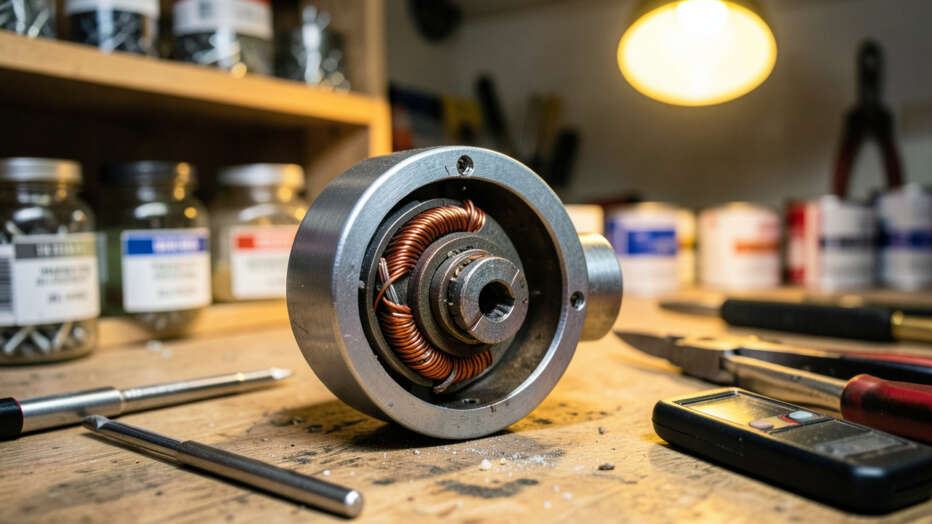
Brushed Motors: The Traditional Workhorse for DIY
Brushed motors have been around for over a century. They use carbon brushes that press against a rotating commutator to deliver electricity to the motor coils. This simple design makes them cheap to manufacture and easy to repair.
For a home DIY workshop, brushed tools offer a low-cost entry point. You can pick up a decent cordless drill or circular saw for a fraction of the price of a brushless equivalent. This makes them attractive for beginners or hobbyists who only use tools a few times a year.
- Lower upfront investment — brushed tools typically cost 30–50% less than brushless models
- Simple repair — replacing brushes is straightforward and costs just a few dollars
- Proven technology — brushed motors have decades of reliable use in consumer and industrial tools
- Wide availability — most hardware stores stock brushed tools and replacement brushes
- Good for intermittent use — if you only drill a few holes per month, brushed tools work just fine
- Compatible with existing batteries — many brushed tools share the same battery platform as brushless ones
Warning: Brushed motors generate more heat and friction than brushless ones. If you push a brushed tool hard for extended periods, you risk overheating and damaging the motor. Always let the tool cool down between heavy cuts.
According to the Power Tool Institute, brushed motors convert only about 75–80% of electrical energy into mechanical power. The rest is lost as heat. This means your battery drains faster, and the tool gets hotter during use.
For short tasks, this is not a big deal. But for full-day projects, the difference adds up quickly.
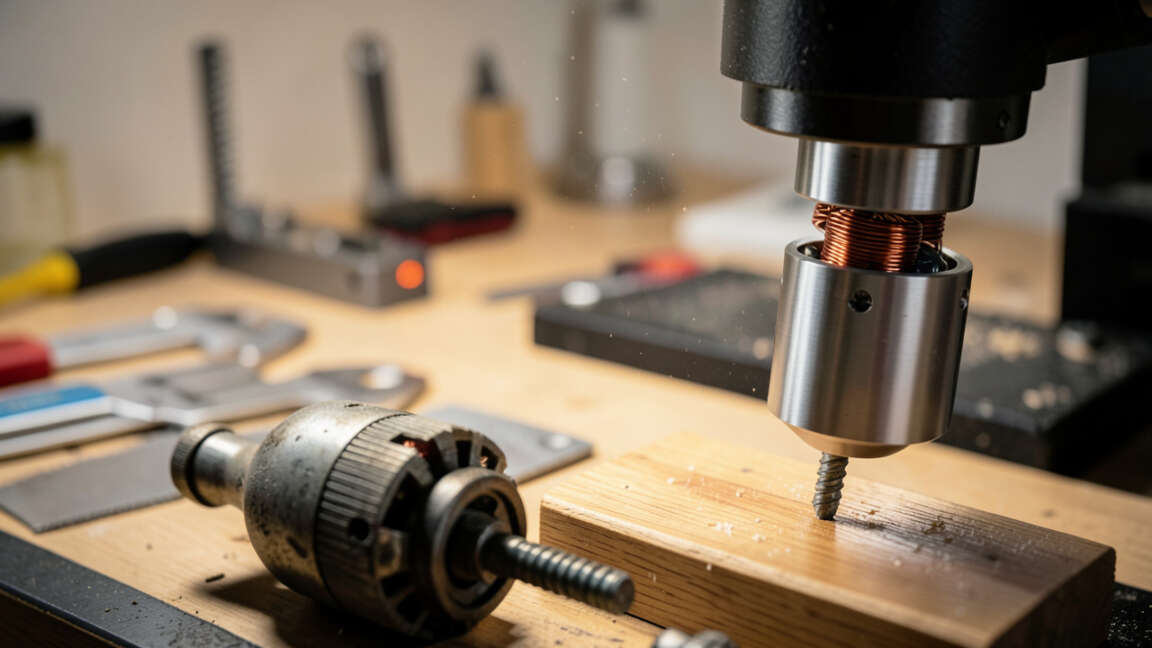
Brushless Motors: Efficiency and Power for Serious Projects
Brushless motors replace the physical brushes with an electronic controller that manages power delivery. This eliminates friction, reduces heat buildup, and improves overall efficiency. The result is a motor that delivers more torque, runs longer, and lasts much longer than a brushed equivalent.
The Department of Energy reports that brushless motors can achieve efficiency ratings of 85–90%, compared to 75–80% for brushed designs. For a DIY workshop, this translates directly to longer battery life and more power on demand.
- Higher efficiency — less energy wasted as heat means more power for your work
- More torque at low speeds — brushless motors deliver consistent torque even at low RPM, perfect for driving screws
- Longer battery runtime — you get up to 50% more cuts or holes per battery charge
- Greater durability — no brushes to wear out means 2,000–5,000+ hours of service life
- Lighter weight — brushless tools are often 10–20% lighter than brushed equivalents
- Quieter operation — no brush spark noise, just the sound of the motor and gearbox
- Better dust resistance — sealed construction keeps debris out of the motor
Tip: If you frequently drill into hardwood, masonry, or metal, a brushless drill will sustain higher torque longer without overheating. The electronic controller also prevents overloading, protecting both the motor and your battery.
Brushless motors also allow manufacturers to pack more power into smaller tool bodies. The electronic controller adjusts power delivery in real time based on the load. When you hit a knot in wood, the motor instantly delivers more torque.
This responsiveness makes brushless tools feel more precise and capable.
Which Motor Type Is Right for Your DIY Workshop?
The answer depends on how often you use your tools and what kind of projects you tackle. There is no single right answer for every workshop. Let’s look at three common user profiles.
| User Profile | Recommended Motor | Why |
|---|---|---|
| Occasional hobbyist (few hours per month) | Brushed | Low cost, good enough for light use, brushes last years |
| Regular DIYer (weekly projects) | Brushless | Better battery life, more power, less maintenance |
| Semi-pro or heavy user (daily use) | Brushless | Max durability, runtime, and performance |
If you are building furniture, renovating rooms, or tackling outdoor projects regularly, brushless tools will save you money over time through fewer battery replacements and less downtime. For light tasks like hanging shelves or assembling furniture, brushed tools are perfectly adequate.
Important: Consider investing in brushless for your most-used tools — drill, impact driver, and circular saw — while sticking with brushed for rarely used tools like a jigsaw or oscillating multi-tool.
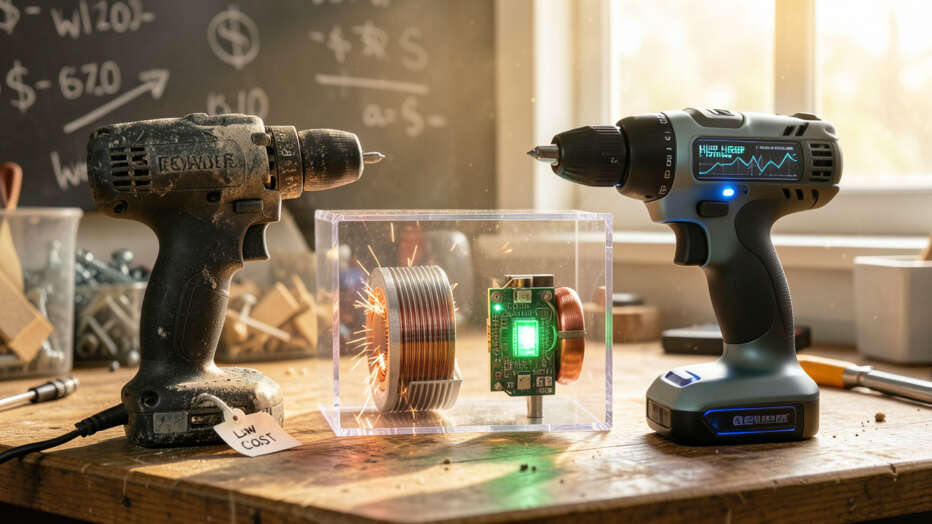
Cost vs Performance: What You Get for Your Money
Upfront cost is the biggest factor pushing DIYers toward brushed tools. A brushed drill can cost as little as $30, while a brushless model from the same brand often starts at $80. But the total cost of ownership tells a different story.
A study by Grand View Research valued the global brushless DC motor market at $17.5 billion in 2023, driven largely by the power tool industry. Manufacturers like DeWalt, Milwaukee, Makita, and Bosch have all shifted their premium lines to brushless technology. This shift means brushless tools now offer better value than ever.
- Brushed drill kit — $30–$60, brush replacement every 6–12 months ($5–$10 per set)
- Brushless drill kit — $80–$150, no brush replacement needed
- Battery life difference — brushless gives 30–50% more runtime per charge
- Resale value — brushless tools hold higher value on the used market
- Battery longevity — brushless tools drain batteries more evenly, extending battery lifespan
Tip: If you already own batteries from a major brand, look at bare tool options (tool only, no battery or charger). Brushless bare tools often cost 30–40% less than full kits, making the upgrade more affordable.
Over a five-year period, a brushless drill typically costs less overall because you replace batteries less often and never buy brushes. For a heavy DIYer, the break-even point is usually around 12–18 months. For occasional users, it may take 3–4 years to recoup the higher upfront cost.
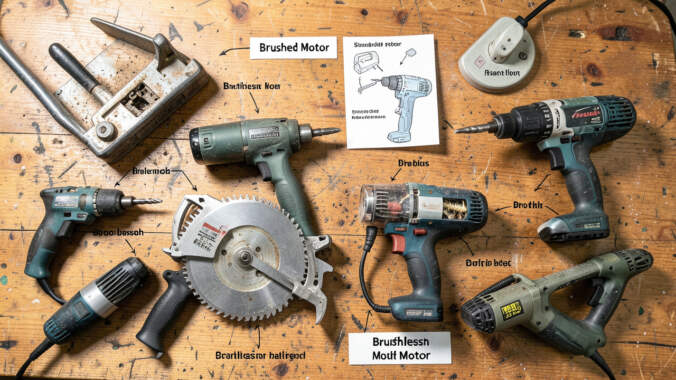
Common DIY Workshop Tools and Their Motor Types
Not every tool benefits equally from a brushless motor. Some tools are used so infrequently that the premium is hard to justify. Others see such heavy use that brushless is almost mandatory.
Here is how the most common workshop tools stack up.
| Tool | Brushed OK? | Brushless Recommended? | Reason |
|---|---|---|---|
| Cordless drill | Yes, for light use | Yes | Most-used tool — brushless saves battery and weight |
| Circular saw | Barely | Strongly | High power draw — brushless prevents bogging down |
| Jigsaw | Yes | Not essential | Intermittent use — brushed is sufficient |
| Angle grinder | Yes, for light work | Yes | Heavy grinding generates heat — brushless runs cooler |
| Oscillating multi-tool | Yes | Not essential | Short bursts — brushed lasts years |
| Impact driver | OK | Recommended | Frequent use — brushless gives better control |
As a rule of thumb, if you use a tool more than once a month, go brushless. For tools that sit in a drawer most of the year, save your money with brushed. This hybrid approach gives you the best balance of performance and cost.
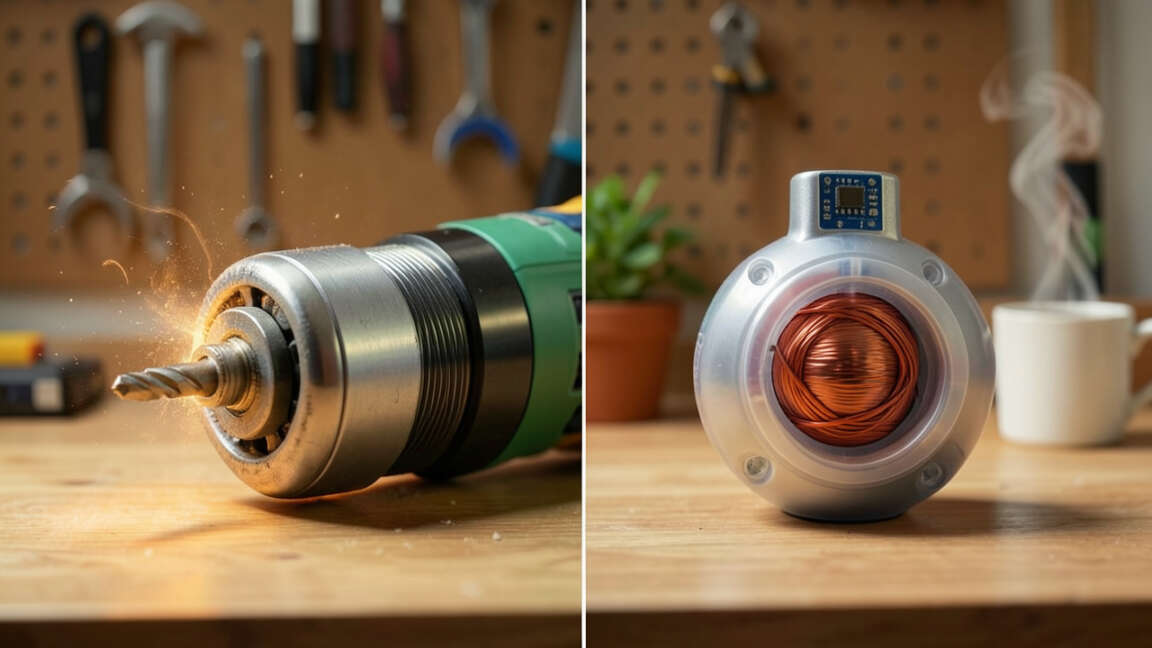
Maintenance and Longevity: What to Expect Over Time
Brushed motors require regular maintenance because the carbon brushes wear down with every use. Depending on how hard you push the tool, brushes may need replacement every 50–100 hours of runtime. Replacement brushes cost just a few dollars, but the labor and downtime add up.
Brushless motors, on the other hand, have no physical contact between moving parts. There is nothing to wear out. The electronic controller handles all power management.
As a result, brushless motors commonly last 2,000–5,000+ hours before any issues arise. For a home DIYer using a tool a few hours per week, that means decades of service.
- Check brushes every 6 months on brushed tools — look for uneven wear or sparking
- Clean commutator contacts with a soft cloth if you notice power loss
- Keep vents clean on both motor types to prevent overheating
- Store tools in a dry place — moisture damages motor windings over time
- Use the right battery — high-drain tools need high-capacity batteries for best performance
Warning: If you see excessive sparking from a brushed motor, stop using it immediately. This indicates worn brushes that can damage the commutator. Replace the brushes before using the tool again.
Another factor to consider is battery platform longevity. Major brands typically support their battery platforms for 10–15 years, but they phase out older models over time. Brushless tools are more future-proof because they tend to be part of the brand’s premium line, which receives longer support.
Brushed tools are often discontinued faster as brands transition to brushless-only lineups.
Frequently Asked Questions
Is brushless always better than brushed for DIY tools?
Brushless motors are technically superior in efficiency, torque, and lifespan, but they cost more upfront. For occasional light use, a brushed tool is still perfectly fine. The best choice depends on your budget and how often you use the tool.
How long do brushless motors last in power tools?
Brushless motors typically last 2,000–5,000+ hours of runtime, which translates to many years for a home DIYer.
With proper care and clean storage, a brushless tool can easily last 10–20 years or more.
Can I use the same batteries for brushed and brushless tools?
Yes, most major brands use the same battery platform across both brushed and brushless tools. DeWalt 20V batteries work in both brushed and brushless DeWalt tools. The same applies to Milwaukee M18, Makita LXT, and Ryobi One+ systems.
Why do brushless tools cost so much more?
Brushless tools require an electronic speed controller and more complex motor windings, which increase manufacturing costs. The premium typically ranges from 30–100% more than a brushed equivalent. However, the price gap has narrowed in recent years as brushless technology has become more common.
Do brushless motors really give longer battery life?
Yes, brushless motors are 10–15% more efficient than brushed motors, which means you get 30–50% more runtime per battery charge. This is because less energy is wasted as heat and friction inside the motor.
Final Thoughts
For a home DIY workshop, brushless motors deliver clearly better performance, longer tool life, and lower long-term costs — but brushed tools still have a place for budget-conscious hobbyists. Focus your brushless investment on the tools you use most: drill, impact driver, and circular saw. For everything else, a good brushed tool will serve you well without breaking the bank.