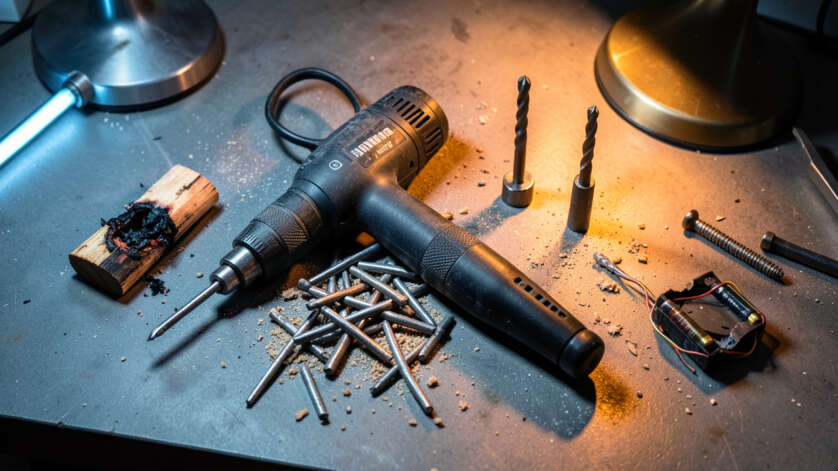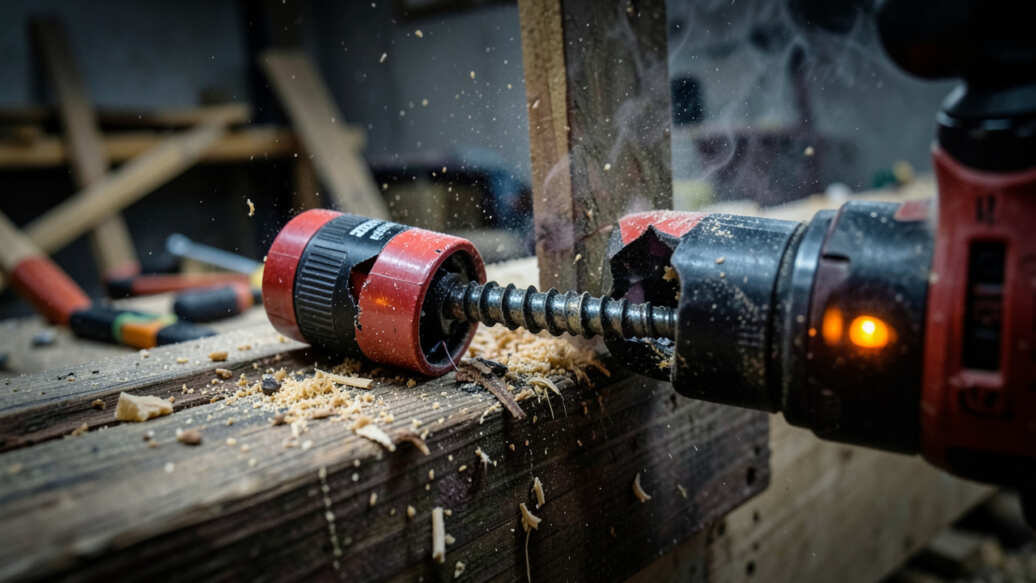

When your impact driver battery dies under load, sudden voltage sag causes the motor to stall and the impact mechanism to lock, stripping fastener heads and damaging the workpiece. This abrupt power loss also generates internal overheating that can permanently degrade lithium-ion cells, shortening the battery’s remaining lifespan. To prevent these failures, monitor voltage levels, match battery capacity to the task, and avoid deep discharge cycles during heavy use.
When your impact driver battery dies under load, several critical failures can occur that damage both your tool and your workpiece. This post explains exactly what goes wrong inside the tool and battery, why it matters, and how to prevent it.
Simply put, a battery dying under load causes sudden motor stall, voltage sag that damages cells, stripped fastener heads, and potential internal tool overheating. The impact mechanism locks up, the motor loses torque instantaneously, and the battery’s remaining lifespan shortens permanently. This is not a normal shutdown.
Key Takeaways
- Impact driver battery failure under load creates voltage sag that can permanently damage lithium-ion cells.
- Sudden power loss causes the impact mechanism to lock, stripping screw heads and damaging the workpiece.
- Preventing battery death under load requires monitoring voltage, matching battery capacity to task, and avoiding deep discharge cycles.
- The motor windings experience thermal shock when power cuts abruptly, shortening the tool’s overall life.
- Using a high-quality impact driver battery with built-in low-voltage protection significantly reduces these risks.
1. How Does Battery Voltage Drop Affect Impact Driver Performance?
Voltage drop is the first thing that happens when your impact driver battery dies under load. Inside every lithium-ion pack, cells deliver current through a circuit. Under heavy load, the internal resistance of the cells causes a momentary voltage sag.
If that sag drops below the tool’s minimum operating voltage, the driver shuts off instantly.
This is not a graceful shutdown. The motor loses power mid-strike, the impact mechanism stops rotating, and the fastener you were driving gets stuck halfway. The electronic control module inside the tool detects the undervoltage condition and cuts power to protect itself.
But the damage is already happening.
Here is what voltage drop specifically does to performance:
- Torque reduction: The impact driver’s torque output drops exponentially as voltage falls. A 20V tool operating at 15V loses nearly 40% of its rated torque.
- Impact frequency decrease: The hammer mechanism slows down because the motor cannot spin fast enough to reset the anvil. You hear a weak “tap” instead of a solid “bang.”
- Motor overheating: The motor draws more current to compensate for low voltage, generating excess heat inside the windings.
- Loss of control: Variable speed triggers become unpredictable. The driver may surge or hesitate, making precision work impossible.
- Battery cell imbalance: One cell in the pack may drop below the others, causing permanent capacity loss and making the battery unusable.
According to Boston University’s Battery Program, lithium-ion cells subjected to repeated deep discharge under load lose up to 60% of their rated cycle life. That means a battery that should last 500 charges may only deliver 200 if you regularly run it dry under heavy load.
Warning: Never hammer on the trigger of an impact driver when the battery is nearly dead. The repeated stall-and-restart cycle creates micro-shorts inside the cells that can lead to thermal runaway. A swollen battery pack is a fire hazard.
2. What Happens to the Motor When Power Is Interrupted?
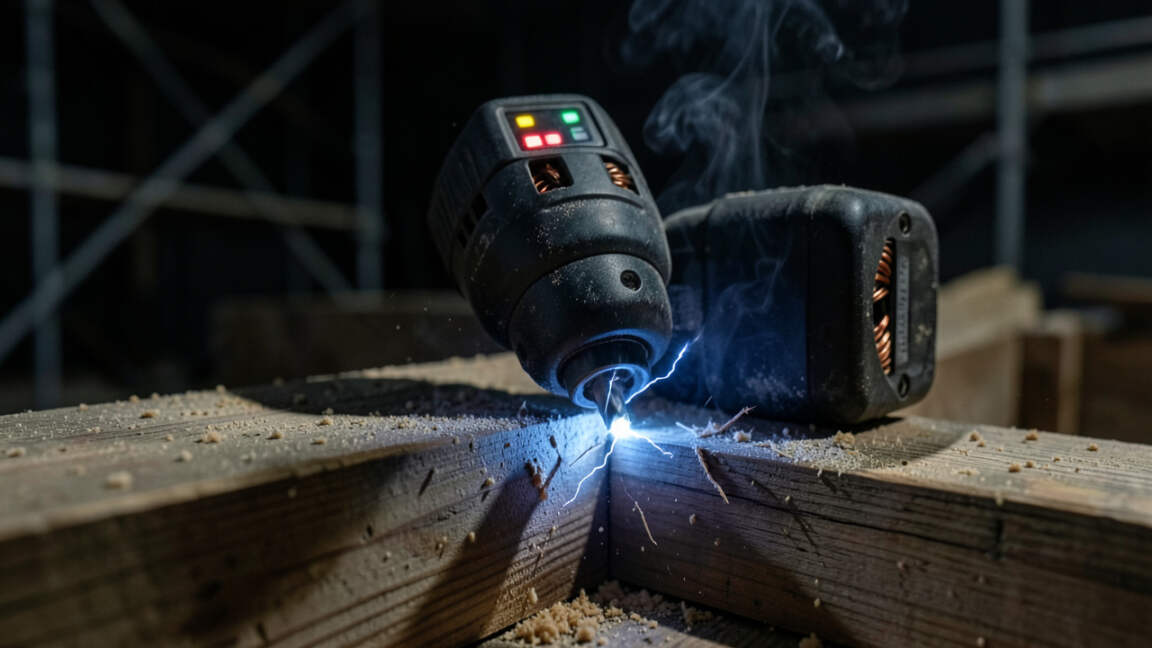
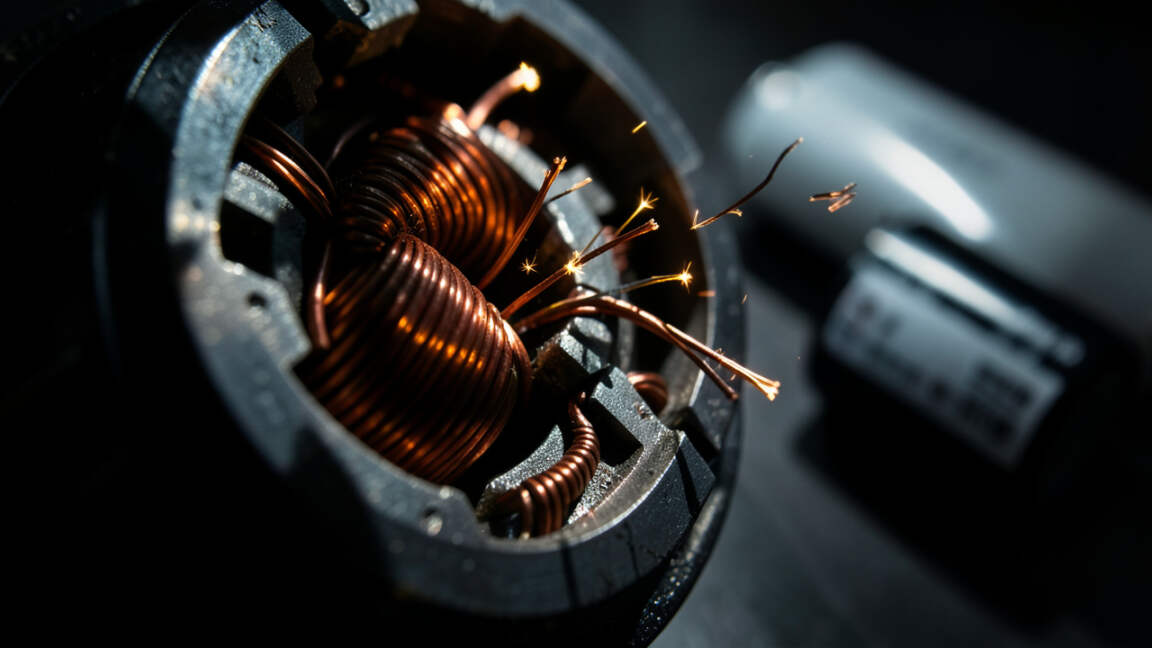
When your impact driver battery dies under load, the motor experiences something called “inductive kickback.” The rotating magnetic field inside the motor collapses instantly, sending a voltage spike back through the electronic speed controller. This spike can exceed 60V on a nominal 20V system, frying MOSFETs and capacitors inside the tool’s circuit board.
The motor itself suffers mechanical stress. The rotor is spinning at high RPM when power cuts. The sudden deceleration twists the shaft and can loosen the permanent magnets bonded to the rotor shell.
Over time, repeated sudden stops cause magnet移位, reducing motor efficiency and creating audible whining noises during normal operation.
Here is what specifically occurs inside the motor:
- Winding temperature spike: The copper windings can reach 120°C during normal load. When power cuts abruptly, heat cannot dissipate, causing localized hot spots that melt enamel insulation.
- Bearing damage: The impact mechanism’s needle bearings rely on continuous oil film. Sudden stop causes metal-on-metal contact, creating micro-pitting on bearing surfaces.
- Controller failure: The firmware inside the tool may lose calibration. Some tools require a hard reset or service to regain full variable speed control after repeated power-loss events.
- Switch contact arcing: The mechanical trigger switch arcs when power is lost under load. This carbonizes the contacts, increasing resistance and causing trigger lag over time.
Important: The electronic speed controller on modern brushless impact drivers costs between $40 and $80 to replace. Preventing battery death under load directly saves you money on controller repairs.
3. Why Does Your Impact Driver Battery Die Under Load?
The root cause is almost always a mismatch between the task and the battery’s discharge capability. An impact driver battery dying under load does not happen randomly. It happens because the battery’s cells cannot deliver enough current for the torque demand at that moment.
Several specific factors create this condition.
First, battery capacity measured in ampere-hours (Ah) determines how long the battery can sustain high current. A 2.0Ah pack driving 4-inch lag screws into hardwood will hit low-voltage cutoff much faster than a 5.0Ah pack. Second, battery age matters.
After 200-300 charge cycles, lithium-ion cells develop increased internal resistance. This resistance causes voltage sag even when the State of Charge (SoC) shows 30% remaining.
Here are the five most common reasons impact driver batteries fail under heavy load:
- Undersized capacity: Using a compact 1.5Ah or 2.0Ah battery for high-torque applications like deck building or structural framing.
- Cold battery: Lithium-ion cells lose up to 50% of their discharge capacity below 40°F (4°C). Cold batteries sag voltage dramatically under load.
- Aged cells: Batteries with more than 300 cycles have significantly higher internal resistance. Voltage drops faster under any load.
- Defective cell group: One weak cell in a series string causes the entire pack to hit low-voltage cutoff early. The tool sees the lowest cell voltage and shuts down.
- Incompatible charger: Using a standard charger instead of a rapid charger means the battery may not reach full capacity. A battery at 90% SoC can fail under sustained load.
| Battery Capacity | Max Continuous Discharge (20V) | Typical Load Limit | Risk of Under-Load Failure |
|---|---|---|---|
| 1.5 Ah | 25A | Light screwing (drywall, small fasteners) | Very High |
| 2.0 Ah | 30A | General assembly, furniture, cabinets | High |
| 3.0 Ah | 35A | Medium lag bolts, deck screws, soffit work | Medium |
| 4.0 Ah | 40A | Heavy structural, large lag screws, timber | Low |
| 5.0+ Ah | 50A+ | Sustained high-torque, commercial use | Very Low |
This table makes one thing clear: capacity is not just about runtime. It is about current delivery. A 5.0Ah battery uses thicker internal bus bars and higher-rated cells that can sustain current longer without voltage sag.
Choosing the right battery for the task is the single most effective way to prevent under-load failure.
Tip: Keep your impact driver batteries warm in winter. Store them in an insulated bag or inside your coat pocket before use. A warm battery delivers 30-40% more usable capacity under load than a cold one.

4. What Are the Signs of a Failing Impact Driver Battery Under Load?
Your impact driver gives clear warnings before the battery dies completely. Learning to read these signs can save you from the frustration of a stalled screw and a damaged workpiece. The first sign is audible: the impact mechanism changes pitch.
Instead of a sharp, rapid “brrrrp,” you hear a slower, lower-pitched “buh-buh-buh” as the hammer struggles to reset.
The second sign is tactile. The tool vibrates differently. When voltage is stable, the impact driver delivers smooth, rhythmic impacts.
As voltage drops, vibrations become erratic and harsh. You may feel the tool twist in your hand as the motor surges and then stalls. The third sign is visual: the battery’s fuel gauge LED may flash or show one bar even though you just charged it.
This indicates voltage sag, not true capacity remaining.
Here are the specific warning signs to watch for:
- Delayed trigger response: You pull the trigger and the motor takes 0.5-1 second to spin up. This is a classic sign of low voltage affecting the controller.
- Intermittent impact: The driver impacts two or three times, then stops, then impacts again. The hammer mechanism is not getting enough energy to complete a full cycle.
- Battery feels hot: A battery that is too hot to touch (above 140°F / 60°C) under load is experiencing excessive internal resistance. Stop immediately.
- Screw stalls at 50% depth: Your impact driver starts strong but cannot finish driving the screw. The battery voltage has dropped below the threshold needed for final seating torque.
- Tool shuts off then restarts: This is called “bouncing off low-voltage cutoff.” The battery recovers slightly after the load is removed, then fails again when you pull the trigger.
| Warning Sign | What It Means | Action Required |
|---|---|---|
| Slower impact rhythm | Voltage sag, motor cannot maintain RPM | Switch to a fully charged battery |
| Trigger delay | Controller undervoltage protection engaging | Let battery rest 10 minutes, then recharge |
| Hot battery case | Internal resistance causing heat buildup | Remove battery, cool down before charging |
| Flashing fuel gauge | Cell imbalance or low voltage warning | Full recharge cycle, test again |
| Tool restarts after stop | Battery recovered voltage momentarily | Stop using immediately, battery needs service |
Paying attention to these signs prevents catastrophic failure. A impact driver battery dying under load is almost always preceded by at least two of these warning indicators. Ignoring them leads to the problems described in the next section.
5. Why Sudden Power Loss Damages Fasteners and Workpieces
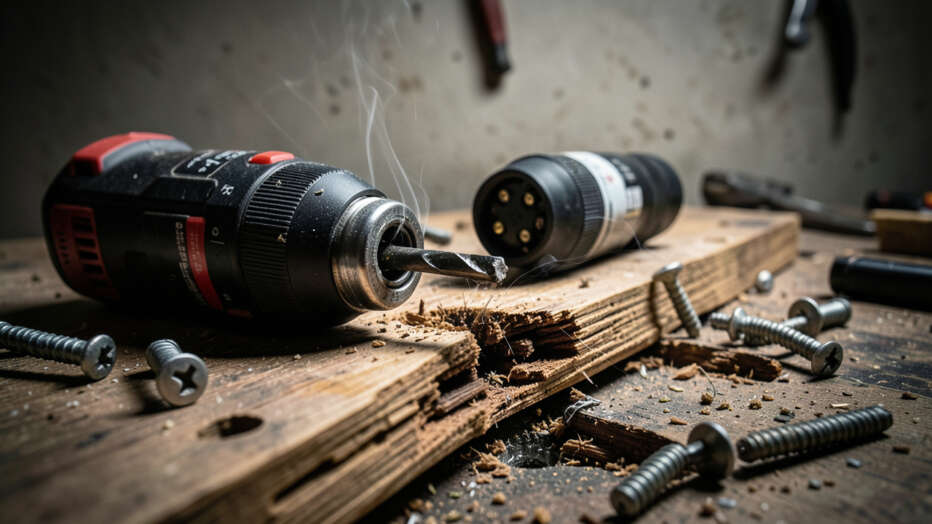
When your impact driver battery dies under load, the fastener you are driving gets stuck at an in-between depth. The screw is not fully seated, but the impact mechanism no longer has enough torque to finish the job. Removing the screw is difficult because the bit is already cammed out of the fastener head.
The damage goes beyond a stuck screw. The sudden rotational stop causes the screw head to strip. The hex-shaped recess in the screw head rounds out, making it impossible to engage with any driver bit.
You are left with a screw that is neither in nor out, stuck permanently in the workpiece. This is especially common with Phillips and Pozidriv fasteners, which are designed to cam out under excessive torque.
Here is the specific damage that occurs:
- Cam-out damage: The bit slips out of the fastener head as the tool loses power, rounding the recess and making the screw unusable.
- Workpiece marking: The impact driver’s momentum causes the tool to twist, and the bit can scratch, gouge, or dent the surface of the workpiece.
- Embedded screw: A screw stuck at 50% depth with a stripped head requires drilling out or using a screw extractor, adding 5-10 minutes per fastener to your project.
- Bit breakage: The sudden torque spike when power cuts can snap impact-rated bits, especially smaller sizes like #1 Phillips or T10 Torx.
- Thread damage: In softer materials like aluminum or plastic, the screw stops spinning but the threads keep cutting, creating oversized holes that compromise joint strength.
Tip: When driving long fasteners into hardwood, use a pilot hole. A 2.0Ah battery can drive a 3-inch screw without issues if you pre-drill. Without a pilot hole, the same battery stalls at 60% depth. Pilot holes reduce torque demand by 40%.
According to the National Association of Home Builders (NAHB), fastener-related rework accounts for approximately 12% of total labor time on residential construction sites. Stripped screws caused by power loss are a significant contributor. Understanding what goes wrong when an impact driver battery dies under load helps you avoid these costly delays.
6. How Battery Chemistry Influences Load Failure
Not all lithium-ion batteries behave the same way under load. The specific chemistry inside your impact driver’s battery pack determines how it responds to high-current demand. Most modern impact drivers use either Lithium Nickel Manganese Cobalt Oxide (NMC) or Lithium Iron Phosphate (LiFePO4).
NMC cells have high energy density but lower discharge rates, while LiFePO4 cells have lower energy density but much higher discharge rates and better thermal stability.
NMC cells typically dominate the consumer tool market because they offer 20-30% more capacity per gram. However, they are more prone to voltage sag under sustained heavy load. LiFePO4 cells, used in some premium commercial batteries, maintain flatter voltage curves and handle repeated high-current draws without premature failure.
Here is how battery chemistry specifically affects under-load failure:
- Voltage plateau: LiFePO4 cells maintain 3.2V per cell until nearly empty. NMC cells drop from 4.2V to 3.0V gradually. The flat voltage curve of LiFePO4 prevents sudden cutoff.
- Internal resistance: NMC cells have approximately 50-80 milliohms internal resistance versus 20-40 milliohms for LiFePO4. Lower resistance means less voltage sag under load.
- Thermal runaway threshold: NMC cells enter thermal runaway at around 150°C. LiFePO4 handles up to 270°C before failure. This makes LiFePO4 batteries safer when dying under load.
- Cycle life: NMC cells last 500-1000 cycles. LiFePO4 cells last 2000-3000 cycles. More cycles mean the battery maintains its discharge characteristics longer.
- Cold performance: NMC cells lose more capacity in cold weather than LiFePO4. At 0°C, NMC delivers about 60% of rated capacity, while LiFePO4 delivers about 80%.
| Parameter | NMC (Standard) | LiFePO4 (Premium) |
|---|---|---|
| Energy Density | 200-260 Wh/kg | 90-120 Wh/kg |
| Internal Resistance | 50-80 mΩ | 20-40 mΩ |
| Voltage Sag Under 30A Load | 0.8-1.2V | 0.3-0.5V |
| Cycle Life | 500-1000 | 2000-3000 |
| Cold Capacity (0°C) | ~60% | ~80% |
If you work regularly in cold conditions or push your impact driver near its torque limit, investing in LiFePO4 batteries significantly reduces the risk of under-load failure. The upfront cost is higher, but the reduced downtime and longer service life offset the expense.
Important: Never mix battery chemistries in the same tool or charger. The charging profiles are different. Using an NMC charger on a LiFePO4 battery can cause overvoltage and permanent damage. Always use the charger that came with your battery system.
7. How to Prevent Battery Failure During Heavy Use
Preventing your impact driver battery from dying under load comes down to three principles: matching capacity to task, managing temperature, and monitoring voltage. Each of these can be implemented without buying new equipment. Simple changes in how you work make a dramatic difference.
Start by matching your battery to the job. For light tasks like driving drywall screws or assembling furniture, a 2.0Ah battery is adequate. For medium tasks like deck screws or cabinet installation, use a 3.0Ah or 4.0Ah battery.
For heavy structural work with lag screws and timber screws, only use 5.0Ah or larger batteries. This eliminates the most common cause of under-load failure.
Here are seven actionable prevention strategies:
- Use the largest battery you own for high-torque tasks. Do not grab a compact battery because it is lighter. The 5.0Ah pack adds ounces but prevents voltage sag that destroys fasteners.
- Rotate batteries during heavy work. Never run a single battery below 20% charge. Swap to a fresh pack when the fuel gauge shows two bars remaining.
- Warm batteries before winter use. Store batteries at room temperature. If they get cold, warm them to at least 50°F (10°C) before heavy use.
- Use the correct impact rate. Do not hammer the trigger. Hold it steady at 70-80% speed. Rapid pulsing causes the controller to work harder and drains current faster.
- Pre-drill for long fasteners. A pilot hole reduces torque demand by 40-50%, which keeps voltage stable and prevents stalled screws.
- Keep battery contacts clean. Dirty or corroded contacts increase resistance, which causes voltage drop under load. Clean contacts with isopropyl alcohol and a stiff brush.
- Replace aging batteries proactively. If a battery consistently dies under load earlier than expected, retire it. The cells have degraded and will only get worse.
Tip: Label your batteries with the purchase date using a permanent marker. When a battery reaches 24 months of regular use, test it under full load. If it shows voltage sag within 10 seconds of heavy driving, replace it. Proactive replacement prevents on-site failures.
8. What Safety Risks Come with a Dying Impact Driver Battery?
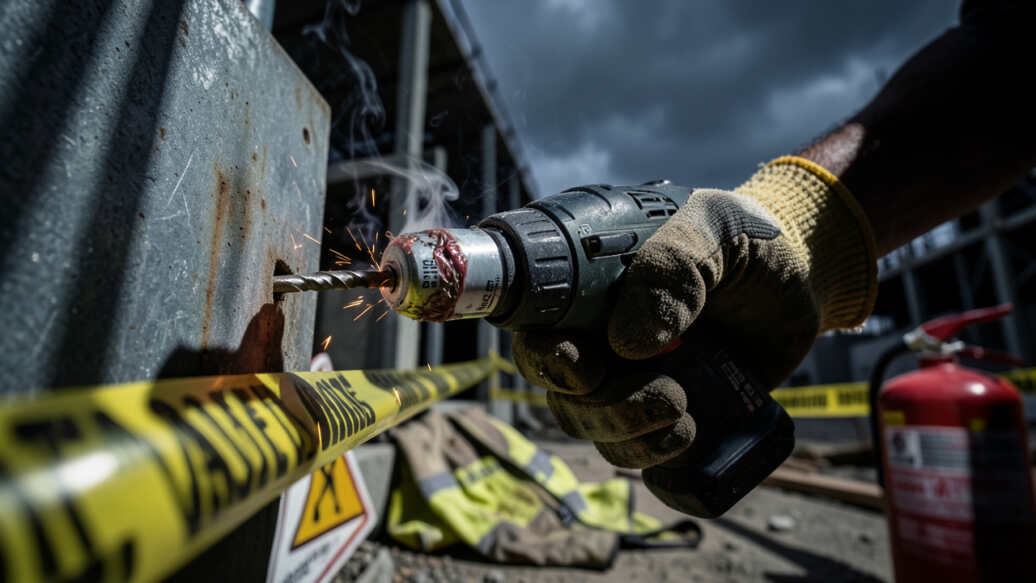
When an impact driver battery dies under load, the safety risks go beyond stripped screws and damaged workpieces. Lithium-ion batteries that fail under load can enter thermal runaway, a condition where internal short circuits generate heat faster than the battery can dissipate it. The result is smoke, fire, or even explosion.
The risk is highest when a battery repeatedly hits low-voltage cutoff under heavy load. Each time the voltage drops too low, the internal chemistry changes. Lithium metal can plate on the anode, creating dendritic growths that pierce the separator.
Once the separator is compromised, the positive and negative electrodes short circuit internally. This is the leading cause of battery fires in cordless power tools.
Here are the specific safety risks to be aware of:
- Cell venting: When internal pressure builds, the cell’s safety vent opens, releasing flammable electrolyte vapor. This vapor can ignite if it contacts a spark from the tool’s motor.
- Thermal runaway propagation: One failing cell heats adjacent cells, causing a chain reaction. A single 18650 cell can ignite the entire 5-cell pack.
- Battery swelling: Repeated deep discharge under load causes gas buildup inside the cells. A swollen battery pack is under high pressure and can rupture unpredictably.
- Tool casing damage: In rare cases, the battery’s plastic housing cracks, exposing live terminals. This creates a short circuit risk when the battery contacts metal objects.
- Chemical burns: Electrolyte leakage from a damaged battery contains lithium hexafluorophosphate, which causes skin and eye irritation on contact.
According to the U.S. Consumer Product Safety Commission (CPSC), power tool battery fires accounted for an estimated 2,400 incidents requiring fire department response in 2023 alone. Proper battery management is not just about tool performance.
It is a fire safety issue. Never charge a battery that is hot, swollen, or damaged. Never leave a charging battery unattended.
Warning: If your impact driver battery is swollen, do not use it. Do not charge it. Dispose of it at a certified battery recycling center immediately. Swollen batteries have internal damage and can catch fire without warning. Many home improvement stores offer free battery recycling.
Frequently Asked Questions
Can a dead battery damage my impact driver permanently?
Yes, repeated battery failure under load can damage the electronic speed controller, motor windings, and trigger switch. The voltage spikes when power cuts can fry MOSFETs on the circuit board, requiring a $40-80 repair. However, occasional failure is unlikely to cause permanent damage.
The risk increases with frequency.
Why does my impact driver slow down before the battery dies?
This is called “voltage sag.” The battery’s internal resistance causes voltage to drop under high current draw. When voltage drops below the tool’s operating threshold, the motor slows down as the controller reduces current to prevent complete shutdown. This is a protective feature, not a defect.
Can I use a car battery charger to revive a dead impact driver battery?
No. Car battery chargers deliver high current that is not compatible with lithium-ion cells. Attempting to charge a power tool battery with a car charger can cause overcurrent, overheating, and fire.
Only use the manufacturer-specified charger for your battery system.
How can I tell if my battery is dying from age versus voltage sag?
Charge the battery fully, then test it under load while monitoring voltage with a multimeter. If voltage drops below 16V (for a 20V nominal pack) within 10 seconds of heavy use, the cells are degraded. If voltage stays above 18V but the tool still stalls, the issue may be in the tool, not the battery.
Does using a higher Ah battery prevent under-load failure?
Yes, higher Ah batteries have more cells in parallel, which reduces internal resistance and allows higher sustained current. A 5.0Ah battery can deliver 50A continuously, while a 2.0Ah battery may only handle 30A. For heavy impact driving, always use 4.0Ah or larger packs.
Final Thoughts
Understanding what goes wrong when your impact driver battery dies under load helps you avoid damaged fasteners, costly tool repairs, and fire risks. Match your battery capacity to the task, keep packs warm in cold weather, and swap batteries before they hit low-voltage cutoff. These simple habits prevent the most common and expensive failures on any job site.