
Professional contractors should not rely on household tool kits because they are engineered for occasional use, not the repetitive demands and abuse of job sites. Household kits lack industrial-grade materials and precision, leading to frequent replacements, costly downtime, and compromised safety. Investing in professional-grade tools ultimately saves money through longer warranties, better ergonomics, and higher durability while protecting a contractor’s reputation and profit margins.
Pro contractors often face the temptation to grab a household tool kit for quick jobs, but is that choice actually costing them time, money, and reputation? This post breaks down the real differences between professional-grade tools and consumer sets, helping you decide what belongs in your truck.
Simply put, if you depend on your tools for daily income, a household tool kit will let you down. The materials, tolerances, and warranties are designed for occasional use, not the abuse of a construction site. You need industrial-grade gear to stay profitable and safe.
Key Takeaways
- Pro contractors who use household tool kits face higher replacement costs and more downtime than those using professional tools.
- Household tool kits lack the durability and precision required for repeated heavy use on job sites.
- Investing in pro-grade tools saves money over time through longer warranties, better ergonomics, and stronger materials.
- Safety ratings differ significantly – household tools often skip certifications needed for commercial work.
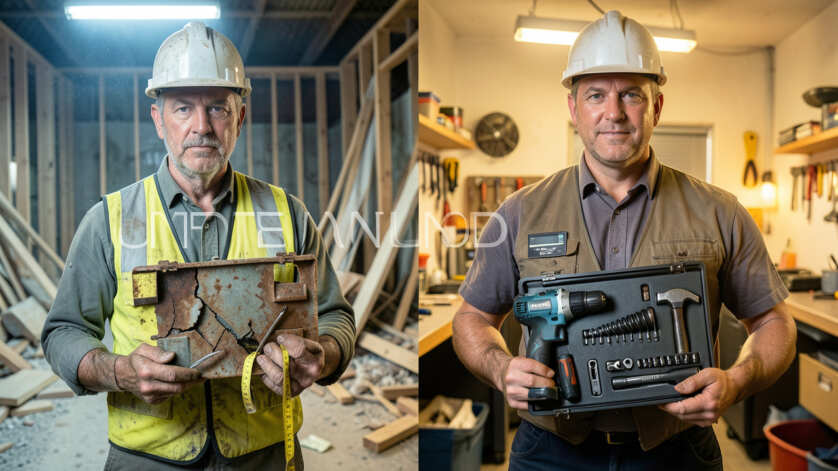
The Real Difference Between Household and Professional Tool Kits
At first glance, a household tool kit and a professional set might look similar. Both include wrenches, screwdrivers, pliers, and sockets. But the similarities end there.
The materials, manufacturing tolerances, and design philosophy are worlds apart.
Professional tool kits are engineered for thousands of cycles per month. Household kits assume you’ll use them a few times a year. This difference affects everything from the steel alloy used in wrenches to the heat treatment of screwdriver tips.
- Steel quality: Professional tools use chrome-vanadium or chrome-molybdenum steel; household sets often use cheaper carbon steel.
- Heat treatment: Pro tools undergo precise tempering for hardness and toughness; budget tools skip this step, leading to brittleness.
- Fit and finish: Professional tools have tighter tolerances (less wobble), while household tools often have sloppy fit that can round bolts.
- Ergonomics: Pro tools feature cushioned, non-slip grips; household handles are hard plastic that cause fatigue.
- Warranty: Top brands offer lifetime warranties; household kits typically have limited 1-2 year coverage.
- Safety certifications: Many professional tools meet ANSI or ISO standards; household sets rarely carry third-party testing.
- Weight and balance: Pro tools distribute weight better, reducing hand strain over a full workday.
Tip: If you’re just starting out, buy a small set of professional tools in the sizes you use most. A single quality wrench is better than a full box of cheap ones that fail on the first tough job.

Why Household Tool Kits Fail Faster on the Job Site
According to a 2023 survey by the National Association of Home Builders, 68% of contractors reported tool failure as a leading cause of project delays. When a socket cracks or a screwdriver tip twists, you stop working. That downtime costs you money.
Household tool kits are designed for light tasks like hanging pictures or tightening a loose screw. On a construction site, you’ll use them to drive stubborn fasteners, loosen rusted bolts, and pry stuck materials. The stress is exponentially higher.
- Socket failures: Household sockets often crack when used with impact wrenches because they lack the necessary heat treatment.
- Screwdriver tip wear: After 50–100 uses, cheap screwdriver tips become rounded, causing cam-out and stripped screw heads.
- Pliers joint looseness: The rivet joints on household pliers become sloppy after moderate use, making gripping difficult.
- Wrench deformation: Open-end wrenches from household kits can spread open when you apply real torque, rounding bolt heads.
- Rust and corrosion: Household tools often lack protective coatings, so they degrade quickly in humid or outdoor conditions.
Warning: Using a household tool that fails under load can cause serious injury. A broken wrench can send you off balance on a ladder, and a cracked socket can shatter and send metal fragments flying.
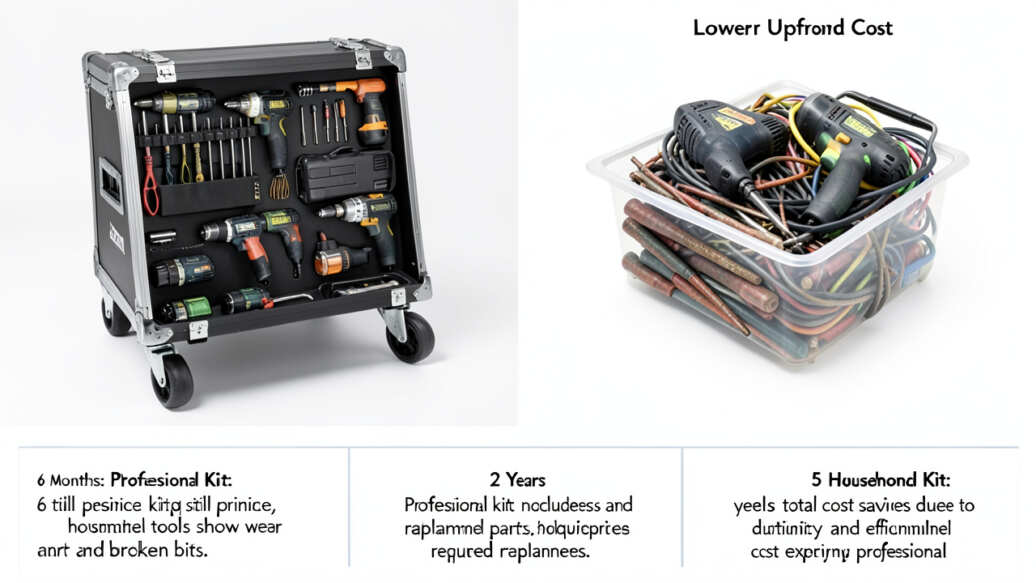
Cost Analysis: Household vs. Professional Tool Kits Over Time
You might pay $50 for a household tool kit with 100 pieces, while a professional set of 50 pieces costs $200 or more. But the true cost is in longevity. Let’s run the numbers.
| Factor | Household Kit (100 pieces) | Professional Kit (50 pieces) |
|---|---|---|
| Initial cost | $50 | $250 |
| Average lifespan (years) | 1 year | 10 years |
| Replacement cost per year | $50 (full replace) | $25 (warranty or single pieces) |
| Downtime cost per failure | $200 (lost labor) | $0 (rarely fails) |
| Total 10-year cost | $500 + $2,000 (downtime) = $2,500 | $250 + $250 (single pieces) = $500 |
Over a decade, the professional set costs 80% less in total. And that doesn’t include the frustration of broken tools or client complaints from delays.
How Tool Quality Affects Your Reputation and Safety
Pro contractors rely on their reputation to get referrals. A single messy job due to tool failure can cost you a client for life. When you pull out a household tool kit, clients notice the difference – cheap tools often leave marks, round fasteners, and take longer to use.
Safety is another layer. The Occupational Safety and Health Administration (OSHA) has guidelines for tool safety on job sites. Household tools rarely meet the same standards.
Using them can put you at risk of fines if an inspector checks your equipment.
Key Safety Differences
- Insulation: Professional screwdrivers have insulated handles rated for 1000V; household drivers are not rated for electrical work.
- Impact rating: Professional sockets are marked “impact” when made for power tools; household sockets lack this rating and can shatter.
- Non-slip grips: Pro pliers have grips that stay put in oil and grease; household grips can slip, causing hand injuries.
- Corner protection: Many pro tools have rounded edges to prevent cuts; household tools often have sharp, unfinished edges.
Important: If you work on live electrical systems, never use a household screwdriver. Even a small amount of current can be lethal. Invest in VDE-certified tools.
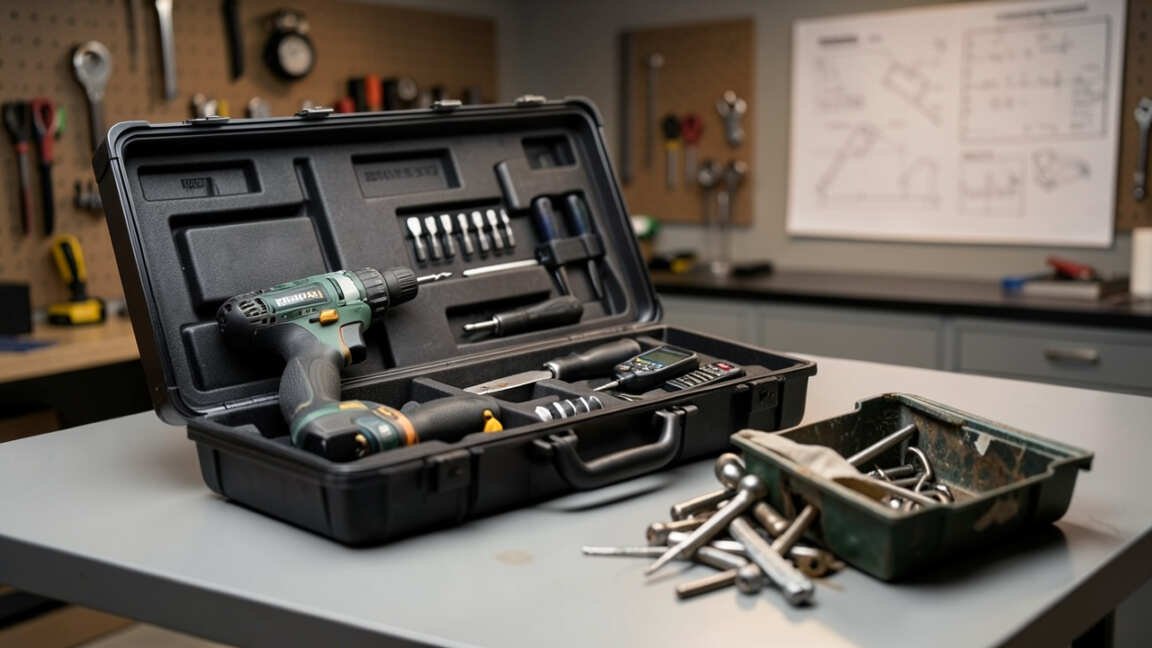
What to Look For When Building a Professional Tool Kit
You don’t need a 200-piece kit from a premium brand to work like a pro. The best approach is to start with the essentials and buy quality where it matters most. Here’s a checklist for pro contractors.
- Sockets and ratchets: Choose a 3/8″ drive set with both shallow and deep sockets in SAE and metric. Look for a 72-tooth ratchet mechanism.
- Combination wrenches: Get a set from 8mm to 19mm and 1/4″ to 3/4″. Opt for box-end with a 12-point or 6-point profile.
- Screwdrivers: A set of 6–8 drivers with hardened tips, including Phillips, flathead, and Torx bits. Insulate them for electrical safety.
- Pliers: Invest in linesman pliers, diagonal cutters, needle-nose, and tongue-and-groove pliers. All must have hardened cutting edges.
- Hex keys: Ball-end hex keys in a folding or T-handle format. Chromium-vanadium steel is best.
- Tool storage: A rugged tool box or bag that organizes and protects your investment. Avoid the cheap plastic cases that crack.
Check warranties – brands like Snap-on, Proto, and Wera offer lifetime replacements. This alone can save you thousands over your career.
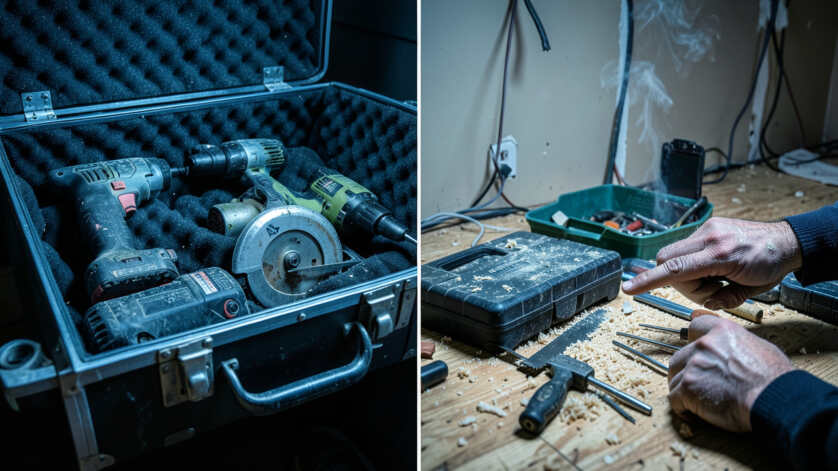
Common Mistakes Pro Contractors Make With Household Tool Kits
Even experienced tradespeople sometimes grab a household kit out of convenience. Here are the most frequent errors and how to avoid them.
- Mistake 1: Using household sockets with an impact wrench. Never. Buy impact-rated sockets separately.
- Mistake 2: Over-torquing household wrenches. The metal can yield, rounding fasteners. Use a calibrated torque wrench for critical bolts.
- Mistake 3: Ignoring corrosion. Dry your tools after use and apply a light oil. Household tools rust faster than professional ones.
- Mistake 4: Expecting lifetime use. If you bought a $30 set, don’t expect it to last a year on a full-time job.
- Mistake 5: Trusting the count. A 100-piece kit sounds great, but half the pieces may be useless sizes or duplicates. Quality over quantity.
Tip: Label your tools with your name or a color code. Household tool kits often end up mixed with others on shared job sites. Professional tools are easier to track if you mark them.
When a Household Tool Kit Might Be Acceptable for a Pro
There are limited scenarios where a household tool kit makes sense for a pro contractor. For example, as a spare set left in a service vehicle for emergencies, or as a loaner for an apprentice who hasn’t yet invested in their own tools. Some pros keep a cheap set for jobs that involve extreme dirt, paint, or chemicals that could ruin a good tool.
But those are exceptions. The core tools you use daily should always be professional grade. The line between “I’ll save money” and “I’ll waste money” is thin, and the math heavily favors the professional investment.
Frequently Asked Questions
Can a pro contractor use a household tool kit for light-duty jobs?
For occasional light work like hanging shelves or assembling furniture, a household set may suffice. But if you earn your living with tools, even “light” jobs add up, and the risk of failure remains.
What is the best brand of professional tool kits for contractors?
Top brands include Snap-on, Matco, MAC, Proto, Wera, Wiha, and Klein. Many pros start with a mix of mid-range brands like Gearwrench or Tekton and upgrade gradually.
How much should a pro contractor spend on their first tool kit?
A good starter set of essential hand tools – wrenches, sockets, screwdrivers, pliers – costs $300–$600 for professional quality. Buy fewer pieces at higher quality.
Do household tool kits come with any warranty?
Most household tool kits come with a limited 1–2 year warranty that excludes wear and tear. Professional brands usually offer lifetime warranties with no questions asked.
Are there any safety certifications I should look for?
Look for ANSI, ISO, or DIN certifications on sockets and wrenches. For electrical work, VDE certification is mandatory. Household kits rarely carry these marks.
Final Thoughts
Pro contractors who choose household tool kits are gambling with their income and safety. The upfront savings vanish quickly when tools break, jobs get delayed, and clients lose trust. Investing in professional-grade equipment pays for itself in reliability, comfort, and peace of mind.
Choose quality over quantity and build your kit one piece at a time.