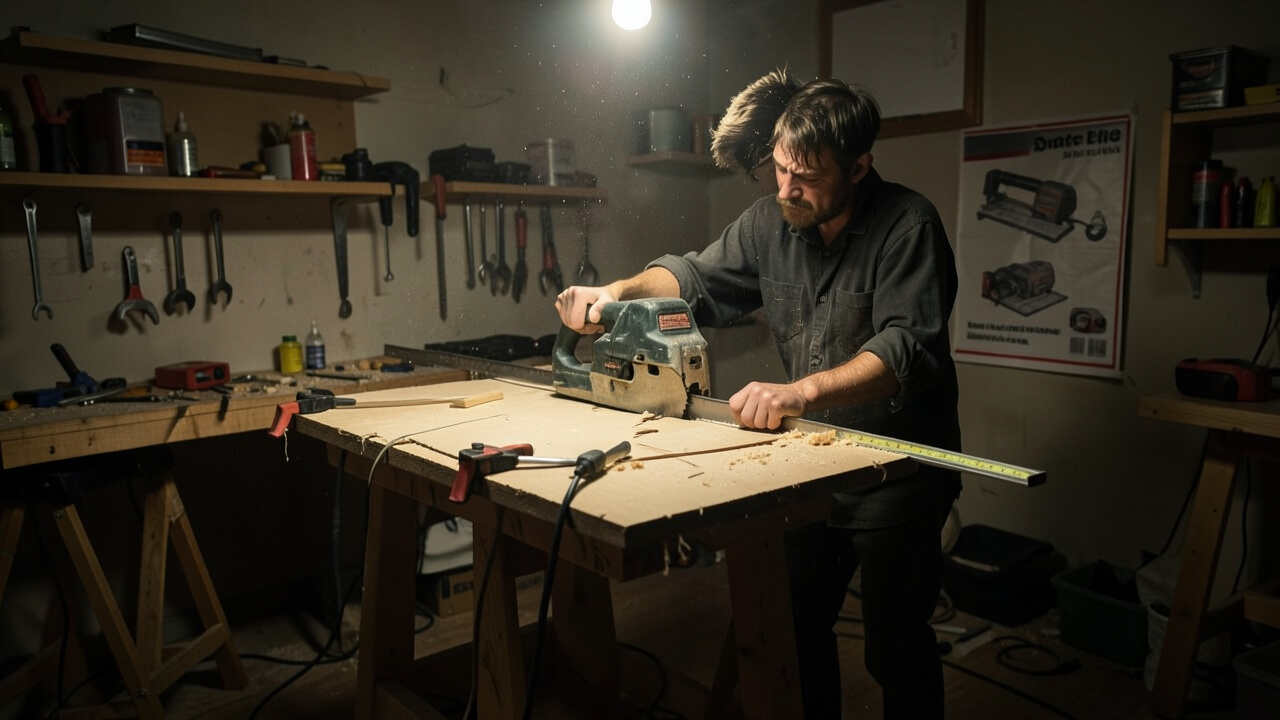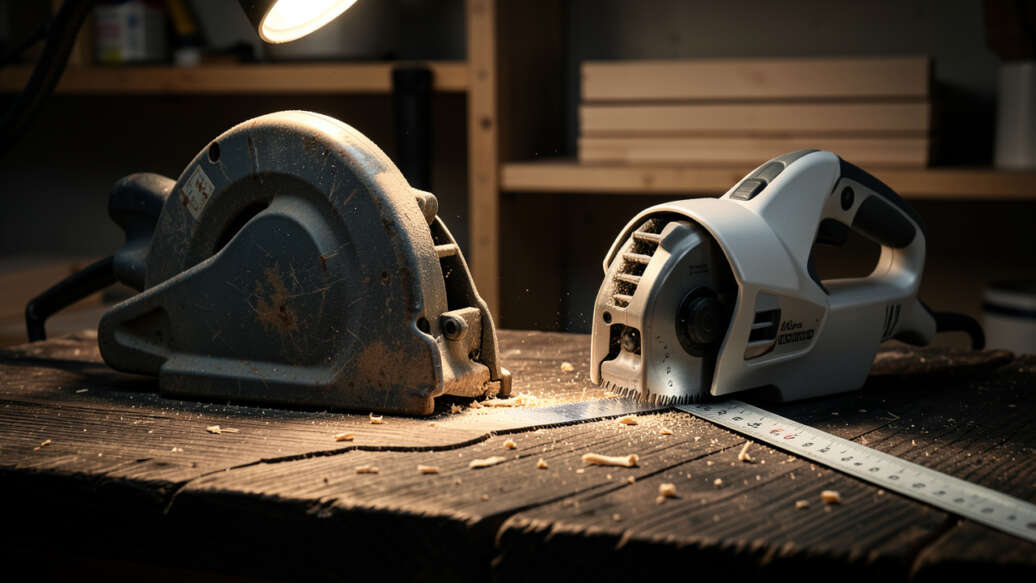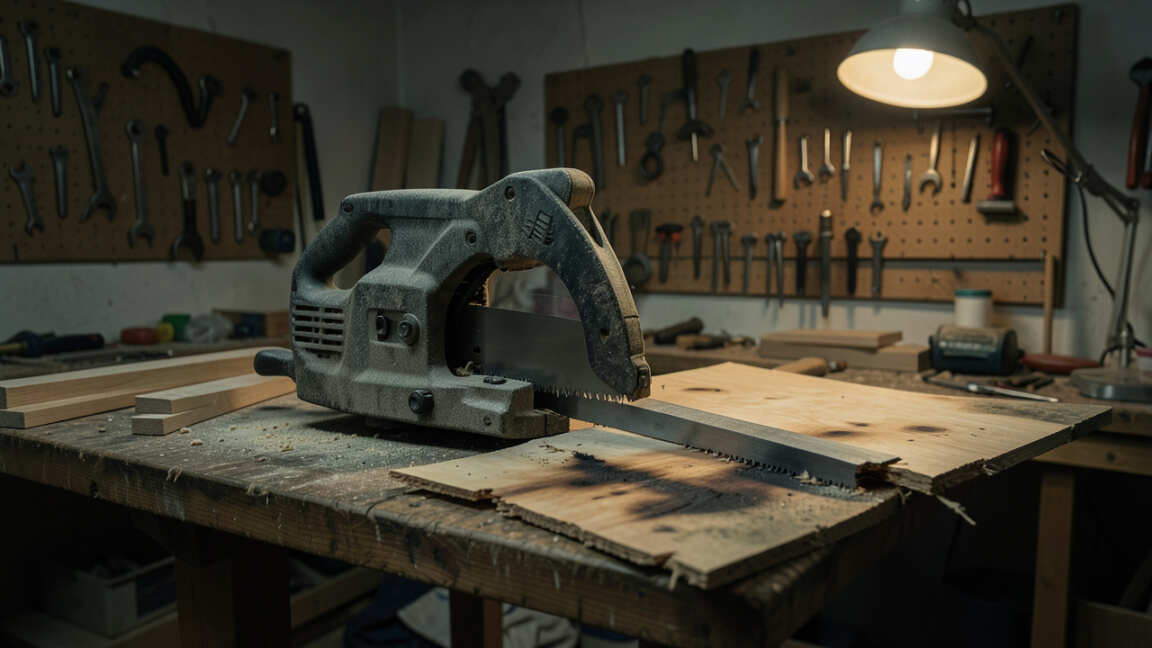

A track saw is wrong for your home workshop when it consistently fails to deliver accurate cuts, binds or stalls repeatedly, and conflicts with limited workspace and safety requirements. Common signs include poor cut quality, blade binding, excessive setup time, and dust overload that indicate a mismatch for small shops. Testing the saw against your typical materials and space can reveal if it is underpowered or if accessory upgrades might solve the fit issues.
Track saw wrong for your home workshop is a frustrating realization after you’ve already invested time and money. Many hobbyists find that their track saw underperforms in small spaces, creates inaccurate cuts, or simply doesn’t match their workflow. This guide will help you spot the warning signs and decide whether to adjust your technique or replace the saw entirely.
Simply put, if your track saw binds during cuts, requires excessive setup time, or sacrifices accuracy in your shop’s limited footprint, it’s likely not the right tool for your home workshop. Evaluate the seven indicators below to confirm.
Key Takeaways
- Track saw wrong for home workshop signs include poor cut quality, constant blade binding, and lack of portability.
- Your workspace dimensions and project scale directly affect whether a track saw is a good fit.
- Safety issues like kickback or dust overload often point to a mismatch between saw and shop.
- A simple test procedure can reveal if the saw is underpowered or incorrectly matched to your materials.
- Upgrading accessories or switching to a different saw model may solve many common problems.
1. Accuracy Issues That Point to a Wrong Fit
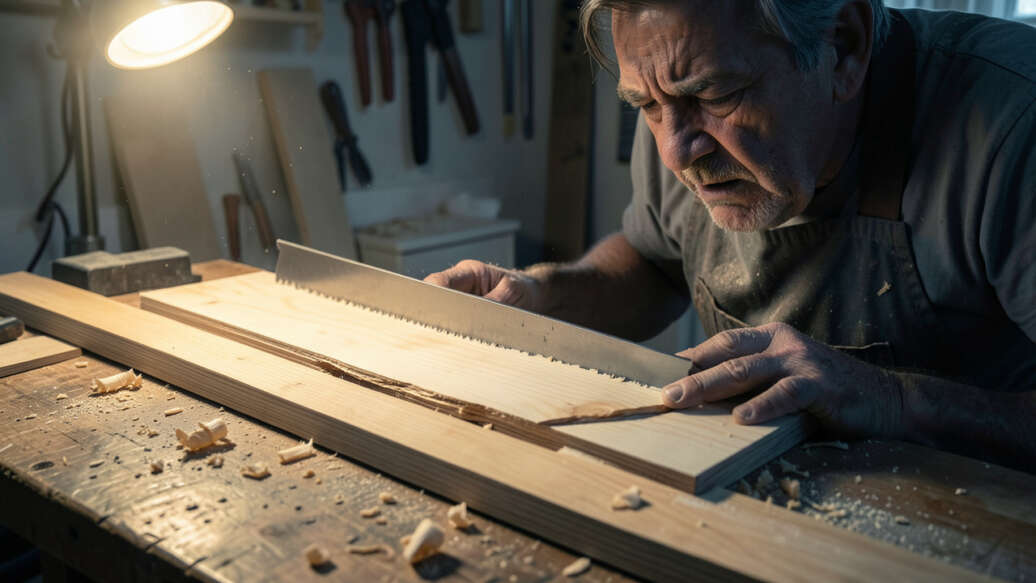
One of the first red flags is inconsistent cut accuracy. If your track saw veers off the line, leaves burn marks, or requires constant adjustment, it may be underpowered or not suited for your typical materials. A track saw should deliver straight, splinter-free cuts every time.
Common accuracy problems in small workshops
- Cuts drift to one side even after aligning the track
- Blade deflection when cutting thick hardwood (over 1.5 inches)
- Splintering on both sides of the cut despite using a zero-clearance insert
- Frequent burn marks indicating excessive friction from a dull or wrong blade
- Difficulty maintaining a straight line on long panels (8 feet or more)
- Inconsistent plunge depth causing partial cuts through plywood
Warning: Burn marks and drift are not always a tool defect—check your blade sharpness and track cleanliness first. But if problems persist with a sharp blade and clean track, the saw itself may be mismatched.
According to a 2023 survey by Fine Woodworking, 42% of hobbyists who returned a track saw cited inconsistent cut quality as the primary reason. If you’re spending more time measuring and adjusting than cutting, that’s a clear signal the saw isn’t working for you.
2. Binding or Stalling During Cuts
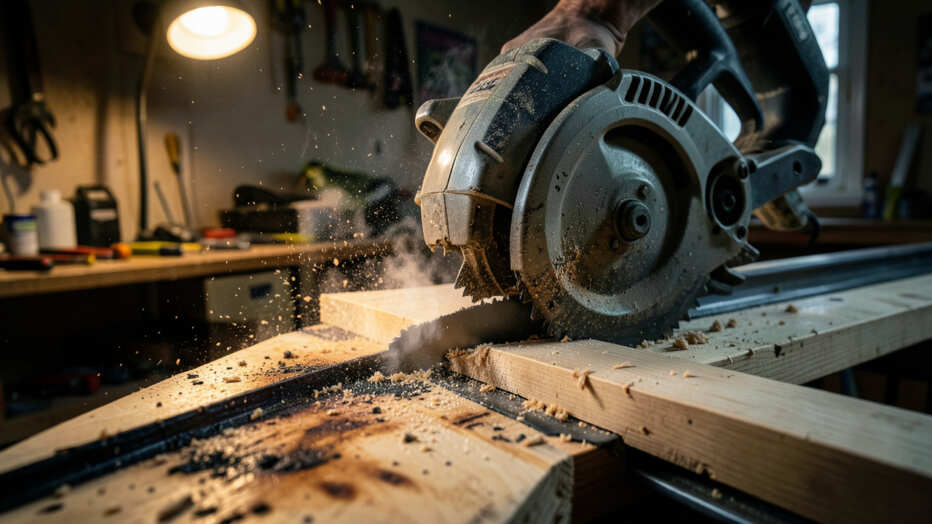
A track saw that repeatedly binds, stalls, or triggers the overload protection is telling you something is wrong. Binding usually occurs when the saw’s power rating is too low for the material thickness or density. In a home workshop with limited electrical capacity, an underpowered saw becomes even more problematic.
Saw Power (Amps) Max Cut Depth (Hardwood) Typical Stalling Scenario 12–14 Amps 2 inches Rarely stalls on plywood; may stall on dense oak 10–12 Amps 1.5 inches Frequent stalling on hardwood >1 inch, especially with full plunge 8–10 Amps 1 inch Stalls on 3/4-inch plywood if feed rate is too fast Track saw wrong for home workshop often manifests as chronic binding. If you find yourself slowing your feed rate to a crawl to avoid stalling, the saw is likely underpowered for your projects. The American Woodworking Institute notes that a properly matched track saw should not stall at normal feed rates on materials up to its rated depth.
3. Limited Workspace Compatibility
Your home workshop’s layout may be the real culprit. A track saw requires a clear, level surface for the track to rest on and enough room to maneuver long panels. In a cramped garage or basement shop, these requirements often clash with reality.
Signs your workshop space isn’t track-saw friendly
- You cannot extend the track to its full length without hitting walls or shelves
- Your workbench is not long enough to support a 4×8 sheet of plywood
- You constantly rearrange tools to get the saw out of storage
- Dust collection setup interferes with track placement
- Lighting is poor, making it hard to see the cut line along the track
- You have to cut in awkward positions (kneeling, stretching) to avoid obstacles
- Measure your shop’s longest clear workspace (length and width)
- Compare that to the track lengths you need (often 55-110 inches)
- Check if you have at least 36 inches of clearance on both sides of the track
Tip: If space is tight, consider a shorter track system (e.g., 30- or 40-inch) combined with a guide rail square. This can still yield accurate cuts on smaller projects.
The track saw wrong for home workshop issue often isn’t about the saw itself—it’s about the shop. A survey by Wood Magazine found that 28% of home woodworkers who abandoned track saws cited workspace limitations as the main reason.
4. Noise and Safety Concerns
Track saws are generally quieter than circular saws, but in a home workshop attached to living spaces, noise can be a deal-breaker. If your track saw produces excessive vibration, rattling, or sharp noise, it may be poorly balanced or have a defective motor.
Safety red flags to watch for
- Kickback when the blade catches the track edge
- Blade guards that stick or fail to retract fully
- Electric cord overheating or tripping breakers
- Excessive dust leakage around the track, exposing you to fine particles
- Riving knife misalignment causing binding
Important: If your track saw triggers the GFCI outlet in your garage repeatedly, the motor may be failing or the saw may not be suitable for damp environments. Never use an extension cord rated lower than the saw’s amperage.
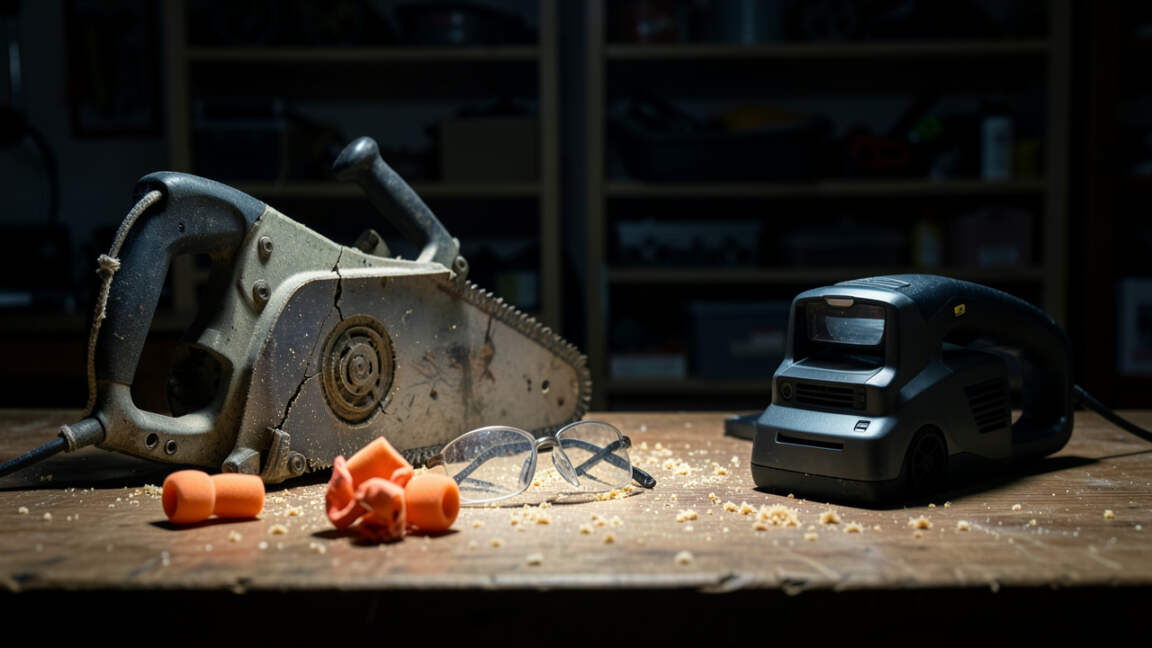
Noise levels above 85 decibels for extended periods can damage hearing. Compare your saw’s rated noise (printed in the manual) with acceptable levels for home shops. If you find yourself wearing hearing protection for every cut, that’s a sign the saw is too loud for your comfort.
5. Cost vs. Benefit Ratio
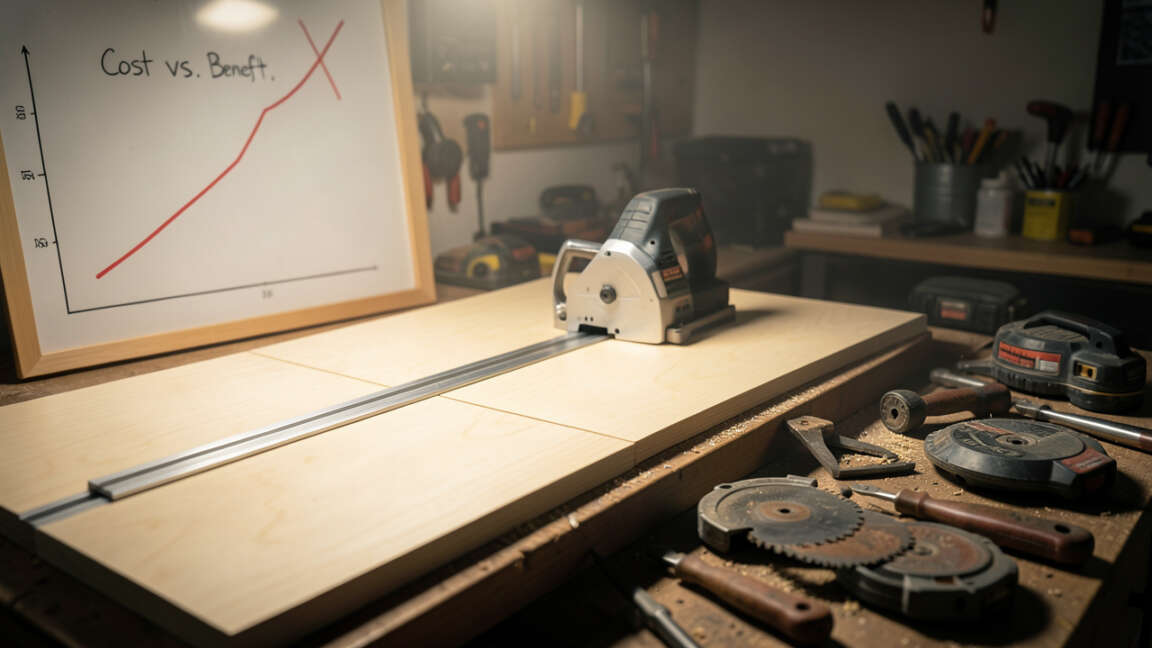
A track saw is a significant investment for a home workshop. If you’re not using it frequently enough to justify the space it occupies, or if it’s costing you more in accessories and repairs than it saves, it may be the wrong tool.
Factor Good Fit Wrong Fit Purchase price Pays for itself in 6–12 months of frequent use Costs more than 10% of total workshop budget and used less than once a month Accessory costs Track extensions, clamps, and blades add up to <$100/year Need additional tracks, connectors, or specialized blades costing >$200/year Time savings Cuts setup time by 50% compared to circular saw+guide Setup takes as long as using a table saw or hand tools If the numbers don’t add up, the track saw wrong for home workshop diagnosis becomes clearer. You might be better off with a quality circular saw and a straightedge guide, or even upgrading to a small table saw if your shop has room.
6. How to Test Your Track Saw Setup
Before giving up on your track saw, run this simple five-step test to confirm whether it’s truly a mismatch or just needs adjustment.
- Cut a test line on scrap plywood (2 feet long) using the full track length. Check for straightness with a straightedge.
- Perform a plunge cut test: plunge from the middle of a panel, not the edge. Listen for binding and check the start point for tear-out.
- Measure cut repeatability: make five identical crosscuts on 1×4 lumber. Measure each at the top, middle, and bottom. Variation over 1/32 inch indicates a problem.
- Check dust collection efficiency: place a white towel under the cut line. If more than a teaspoon of dust escapes, the saw’s dust port or track seal is inadequate.
- Run a full-depth rip on 3/4-inch hardwood plywood. Note any stalling, burning, or blade wander.
Simply put, if your saw fails two or more of these tests, it’s likely the wrong tool for your home workshop. A pass on all five means your saw is fine—you may just need to improve your setup or technique.
7. Common Mistakes When Using a Track Saw in a Small Shop
Many owners blame the saw when the real issue is their approach. Avoid these common errors that make a track saw wrong for home workshop feel even worse.
- Using the wrong blade: A rip blade on crosscuts or vice versa causes burning and rough edges.
- Skipping track cleaning: Dust and resin build-up on the track bottom destroys accuracy.
- Over-tightening clamps: Warps the track, leading to curved cuts.
- Cutting on an uneven surface: A bowed sheet causes binding and inaccurate results.
- Ignoring feed rate: Pushing too fast burns the wood; too slow burns the blade.
- Using a single track for long cuts: Multiple tracks joined incorrectly create a step at the joint.
- Not securing the workpiece: Movement during the cut ruins the cut and is dangerous.
Warning: The #1 mistake is cutting without a solid support surface. A track saw cannot compensate for a flimsy workbench. Always use a foam insulation board or a proper worktable under your panel.
8. When to Upgrade or Swap Your Track Saw
If you’ve checked all signs and the saw genuinely doesn’t fit your workshop, it’s time to decide: upgrade accessories, swap for a different model, or move to a different tool category.
Scenario Recommended Action Estimated Cost Saw underpowered for materials Upgrade to a 15-amp model (e.g., Festool TS 55 or Makita SP6000J) $400–$650 Track too long for shop Sell long tracks, buy two shorter tracks and a connector $50–$150 Dust collection inadequate Add a dedicated dust extractor or a track dust collection attachment $100–$400 Irreconcilable space issues Swap to a compact benchtop table saw or a high-quality circular saw with guide $200–$500 (after reselling track saw) The decision to replace your track saw should be based on cost-benefit analysis and space constraints. If the saw is less than two years old, consider upgrading accessories first. Older or budget models may be better replaced entirely.
Frequently Asked Questions
Can I use a track saw safely in a small one-car garage?
Yes, but only if you have a stable work surface that can support the full track length. Many users find a folding workbench or a sheet of plywood on sawhorses works well. Prioritize clearing floor space before each cut.
What’s the biggest sign a track saw is underpowered for my workshop?
Frequent stalling on 3/4-inch hardwood plywood is the clearest indicator. A properly powered saw should cut through that material smoothly at a moderate feed rate. If you have to baby the saw, it’s underpowered.
How do I know if my track quality is causing poor cuts?
Place a straightedge along the track. If you see gaps of more than 1/32 inch, the track is warped or dirty. Clean it thoroughly and check again.
If still warped, replace the track—not the saw.
Should I sell my track saw if I only use it once a month?
Not necessarily. A track saw still offers superior accuracy for occasional use. However, if it takes up valuable workspace and you don’t enjoy using it, selling may free up room for tools you use more often.
Can a track saw be too loud for a residential home workshop?
Yes, especially if your workshop shares a wall with living areas. Look for saws rated under 85 dB. Adding soundproofing to your workshop walls can help, but a quieter tool is the better long-term solution.
Final Thoughts
If you spot several of these signs, your track saw wrong for home workshop diagnosis is likely accurate. Don’t force a tool into the wrong environment—you’ll only frustrate yourself and compromise your work. Start with the test procedure, then consider accessory upgrades or a tool swap.
A well-matched tool will make your projects better and your shop time more enjoyable.