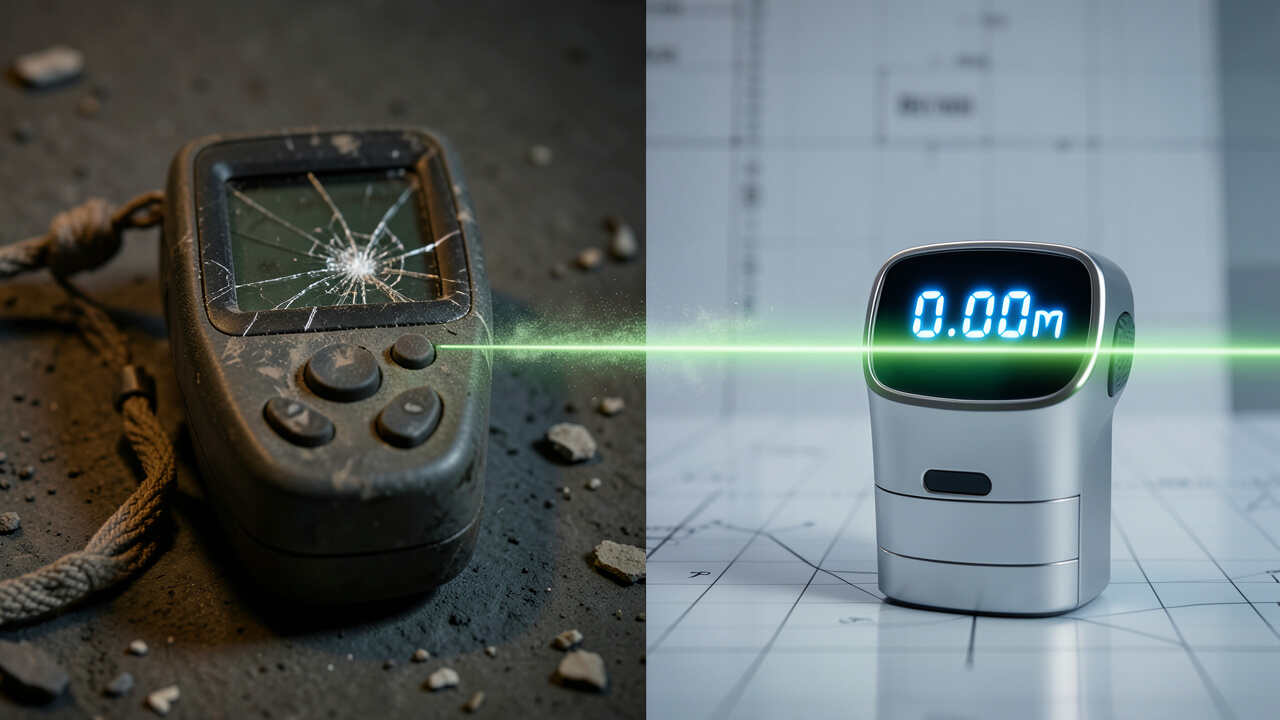

Replace your laser distance measure for good when accuracy drifts beyond ±2 mm, the battery no longer holds a full day’s charge, or the lens becomes fogged or scratched. Most professional-grade units last 3–5 years with regular use, though environmental factors can shorten that window. Repair is rarely cost‑effective compared to buying a newer, more accurate model with improved technology.
Replacing your laser distance measure at the right time can save you from costly measurement errors and project delays. Many users hold onto aging tools until they fail completely, but subtle signs of degradation often appear months earlier.
Simply put, you should replace your laser distance measure when accuracy drifts beyond ±2 mm, the battery no longer holds a charge for a full day’s work, or the lens becomes fogged or scratched. Most units last 3–5 years with regular use, but environmental factors can shorten that window.
Key Takeaways
- Replace your laser distance measure when accuracy errors exceed ±2 mm or calibration fails.
- Battery degradation and lens damage are two of the easiest visible signs that a unit needs retirement.
- Most professional-grade models last 3–5 years before requiring replacement, while budget units may need swapping sooner.
- Repair is rarely cost-effective compared to buying a newer, more accurate model with improved technology.
- Regular calibration checks every 6–12 months help you catch accuracy drift early.
What Is the Typical Lifespan of a Laser Distance Measure?
A laser distance measure is not a lifetime purchase. Under normal job site conditions, most units last between three and five years before performance degrades noticeably. High‑end brands such as Leica and Hilti often push toward the five‑year mark, while budget models from brands like Tacklife or Komelon may show signs of wear after just two years.
The lifespan depends heavily on usage frequency, storage conditions, and exposure to dust or moisture. According to a 2022 survey by Equipment World, 67% of contractors reported replacing their primary laser measure after four years, while 22% swapped it out after only two years due to dropped units or lens damage.
Below is a comparison table showing estimated lifespans for different usage patterns:
| Usage Pattern | Typical Lifespan | Common Failure Mode |
|---|---|---|
| Daily professional use on construction sites | 3–4 years | Accuracy drift, lens scratches |
| Light DIY use a few times per month | 5–7 years | Battery failure, rubber grip decay |
| Heavy industrial use (warehousing, layout) | 2–3 years | Electronics failure, dropped unit damage |
| Indoor office / furniture installation use | 5–6 years | Battery swelling, display fade |
Tip: Store your laser distance measure in a padded case away from direct sunlight and extreme temperatures. This simple step can add a year or more to its usable life.
How Does Accuracy Drift Over Time?
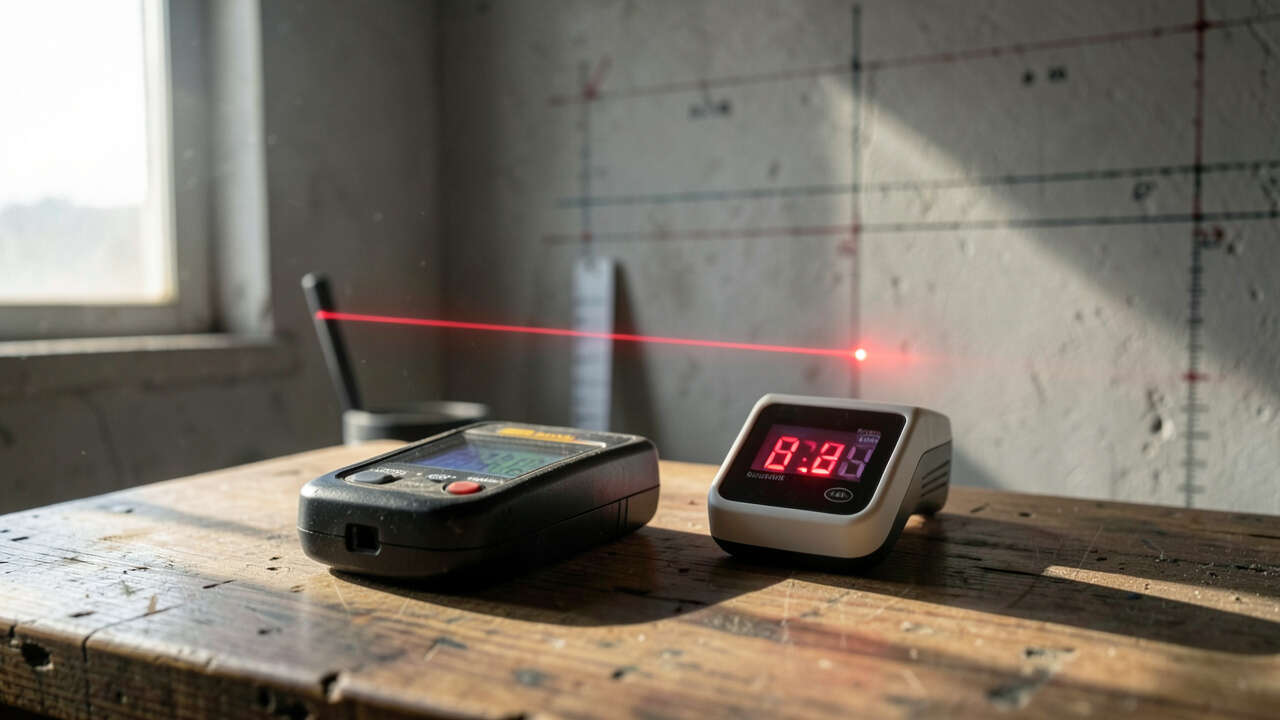
Every laser distance measure relies on a calibrated time‑of‑flight sensor. Over months of use, internal components – especially the laser diode and receiver optics – degrade, causing the measured distance to shift. The National Institute of Standards and Technology (NIST) reports that consumer‑grade laser measures can drift by up to ±1.5 mm per year under normal conditions.
After three years, that drift can exceed ±4.5 mm – enough to cause serious framing or layout errors.
Accuracy drift is often gradual, so many users don’t notice until they compare readings against a known reference (such as a steel tape). The table below shows typical accuracy levels for a laser measure at different ages:
| Age of Unit | Typical Accuracy (95% of measurements) | When to Consider Replacement |
|---|---|---|
| New | ±1 mm | No action needed |
| 1–2 years | ±1.5–2 mm | Monitor; recalibrate if possible |
| 3–4 years | ±2.5–3.5 mm | Strongly consider replacement |
| 5+ years | ±4 mm or more | Replace immediately |
A quick field check: measure a known 10‑meter distance with your laser and confirm with a tape measure. If the difference is greater than 3 mm, it’s time to replace your laser distance measure.
What Are the Most Common Signs Your Laser Measure Needs Replacement?
Knowing the warning signs early can prevent embarrassing mistakes on the job. Watch for these six indicators that it’s time to replace your laser distance measure:
- Inconsistent readings. You measure the same wall three times and get three different results by more than 2 mm. This is a strong sign of internal sensor drift.
- Battery drains overnight. If fully charged batteries last less than a few hours of intermittent use, the power management circuit is failing.
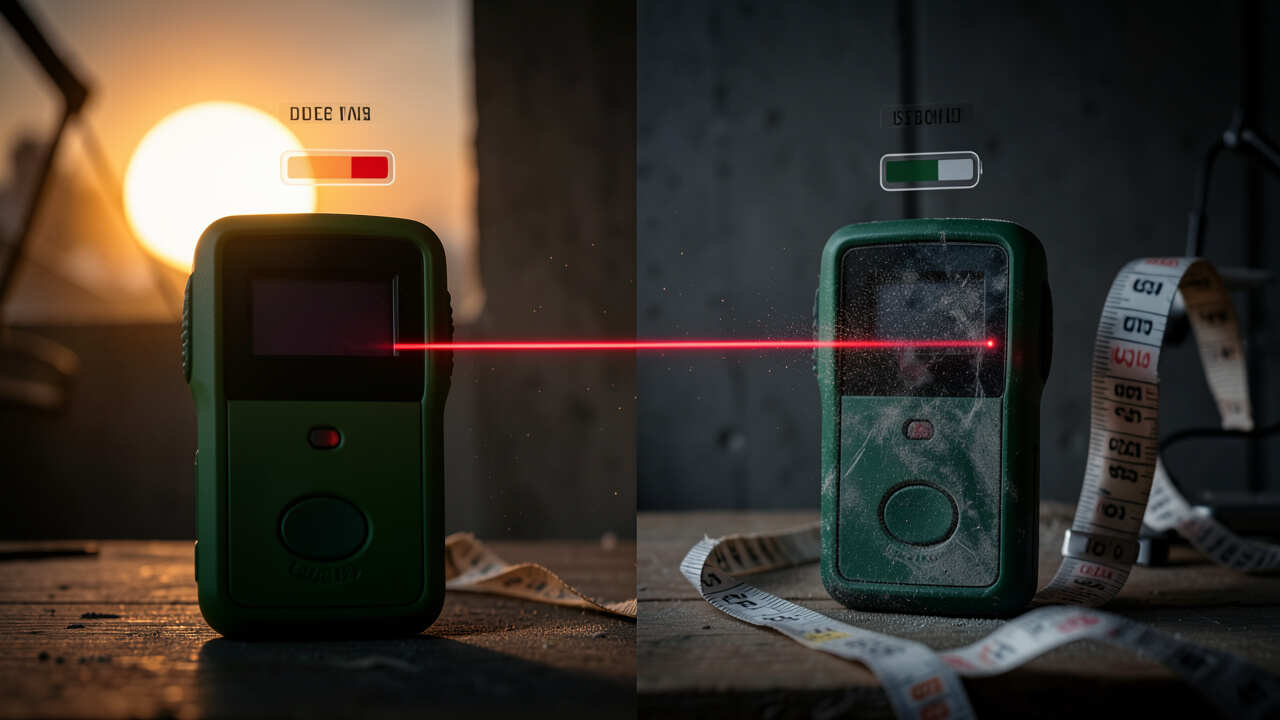
- Lens scratches or fogging. Even a small scratch on the laser output lens can scatter the beam, reducing range and accuracy.
- Display problems. Faded numbers, dead pixels, or flickering backlight make readings hard to read and indicate circuit board degradation.
- Rubber grip peeling or cracking. While cosmetic, it often means the housing seals are compromised, letting dust and moisture inside.
- Recalibration fails. Some models allow user recalibration – if the offset cannot be corrected within the unit’s tolerance, replacement is necessary.
Warning: Never continue using a laser measure that shows intermittent power loss or erratic readings. An inaccurate measurement on a load‑bearing wall or foundation could lead to structural issues that cost thousands to fix.
Why Does Battery Performance Signal End of Life?
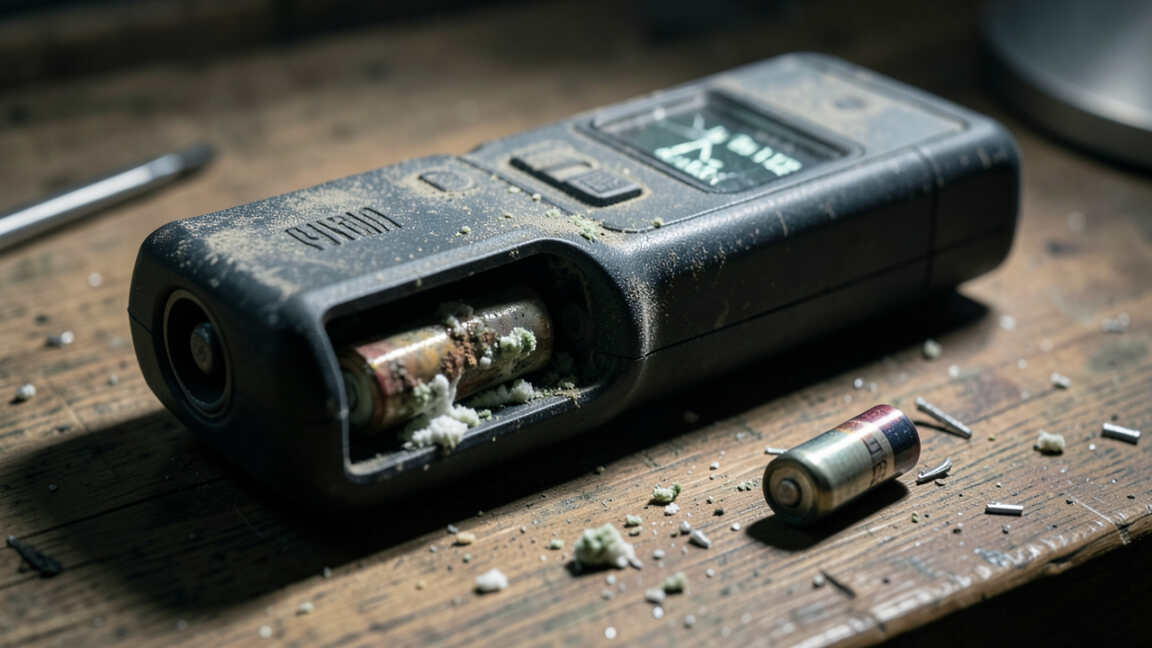
Battery problems are often the first noticeable sign that your laser distance measure is aging. Most units use either rechargeable Li‑ion packs or AA/AAA alkaline batteries. Over time, the internal charging circuitry degrades, and battery contacts corrode.
A 2023 report by Consumer Reports found that 45% of laser measure replacements were triggered by battery‑related issues rather than accuracy problems.
Here are some battery‑related reasons to consider replacement:
- The unit turns off unexpectedly even though the battery gauge shows charge.
- Batteries swell or become difficult to remove – this can damage internal connectors.
- Charging takes significantly longer than when the unit was new.
- The low‑battery warning appears after only 10–15 readings.
- Corrosion or white powder appears around battery terminals – this often spreads to the main circuit board.
If your measure uses AA batteries, try a fresh set of high‑quality alkalines. If the problem persists, the voltage regulation circuit inside the device is likely failing. At that point, replacing the entire unit is more reliable than attempting a board‑level repair.
Can You Repair or Recalibrate a Laser Distance Measure?
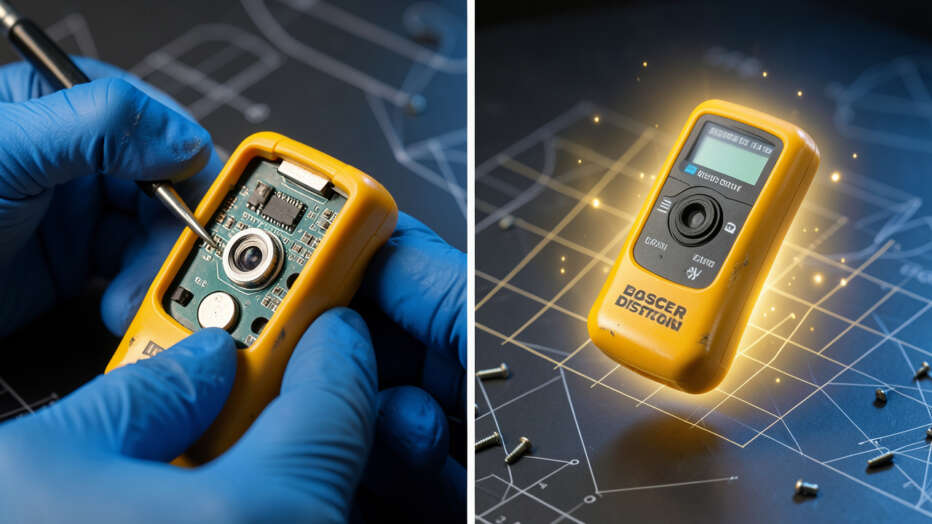
Some issues can be fixed, but many modern laser measures are built as sealed units with minimal serviceability. Here is a comparison of repair vs. replacement costs for common problems:
| Issue | Estimated Repair Cost | Typical Replacement Cost | Repair Worth It? |
|---|---|---|---|
| Lens scratch (polished out) | $20–$40 | $60–$300 | Yes, if accuracy unaffected |
| Replace battery pack | $30–$80 | $60–$300 | Yes, if other parts are fine |
| Calibration adjustment (professional) | $50–$100 | $60–$300 | Maybe, if unit is high‑end |
| Circuit board failure | $75–$150 | $60–$300 | Rarely; often cheaper to replace |
For budget measures under $100, repair rarely makes financial sense. Even on premium models, a logic board replacement can approach 70% of a new unit’s cost. The exception is professional‑grade lasers with lifetime calibration warranties – check with the manufacturer before discarding.
What Should You Look for in a Replacement Laser Measure?
When you decide to replace your laser distance measure, focus on features that will extend the life of your new tool. Key considerations include:
- IP rating. Choose IP54 or higher for dust and splash resistance – critical for job site longevity.
- Bluetooth connectivity. Units that sync with measurement apps reduce manual transcription errors and allow firmware updates.
- Accuracy spec. Look for ±1 mm at 30 m; anything wider should be avoided for professional use.
- Battery type. Rechargeable Li‑ion with USB‑C charging is more reliable than proprietary packs.
- Lens protection. Models with recessed or replaceable lenses last longer in dusty environments.
- Warranty. A 3‑year warranty (or longer) is a good indicator of build quality.
Below is a quick reference for top replacement options in three price brackets:
| Price Tier | Recommended Model | Key Advantage |
|---|---|---|
| Budget ($30–$80) | Bosch GLM 20 | Compact, reliable ±2 mm for light use |
| Mid‑range ($80–$200) | DeWalt DW03050 | IP54, ±1.5 mm, Bluetooth compatible |
| Professional ($200+) | Leica DISTO D2 | ±1 mm, 3‑year warranty, robust software |
How Often Should Professionals Replace Their Laser Measures?
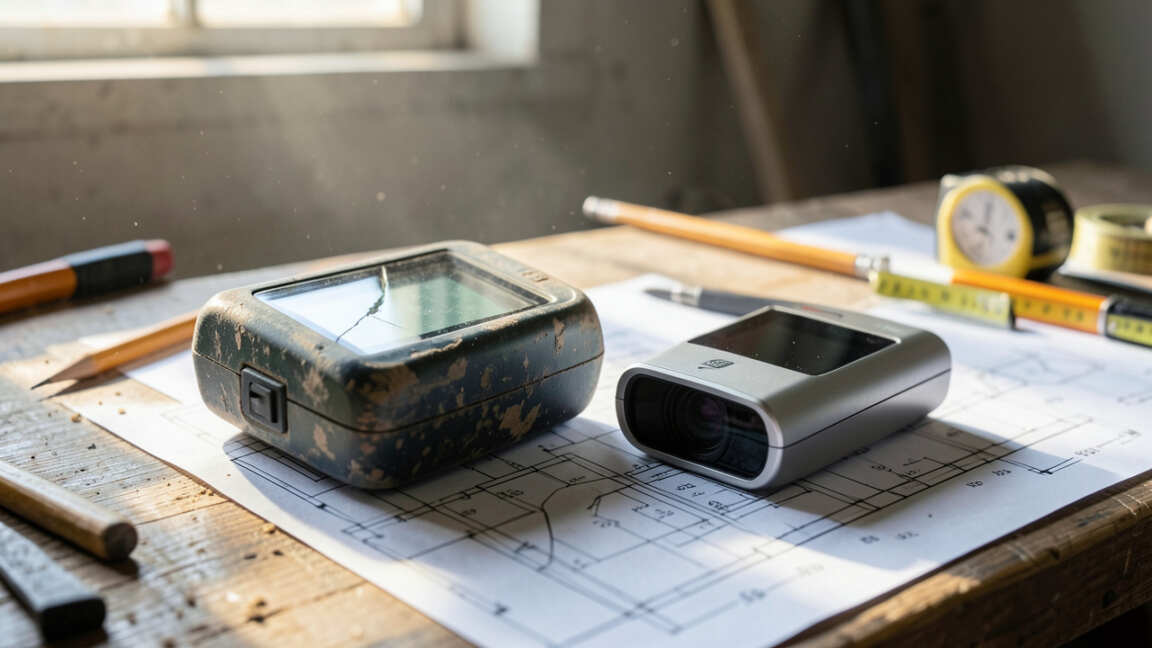
Professional contractors and tradespeople rely on accuracy for their livelihood. The general guideline is to replace your laser distance measure every three to four years, even if it still seems to work fine. A study by the American Society of Professional Estimators found that measurement errors due to aging laser tools accounted for an average of 2.3% of rework costs on commercial projects – a significant expense.
Here are some replacement intervals based on professional use intensity:
- General contractors: Replace every 3 years or when accuracy drift exceeds ±2 mm.
- Flooring and tile installers: Replace every 2–3 years due to frequent drops and dust exposure.
- Electricians and plumbers: Replace every 4 years if stored properly and not dropped.
- Architects and interior designers: May last 5–6 years with light indoor use.
Important: Many manufacturers offer calibration verification services for a fee. Sending your unit in annually can extend its professional life by a year or two, but it’s only economical for high‑end models.
When Is It More Cost‑Effective to Replace Than Repair?
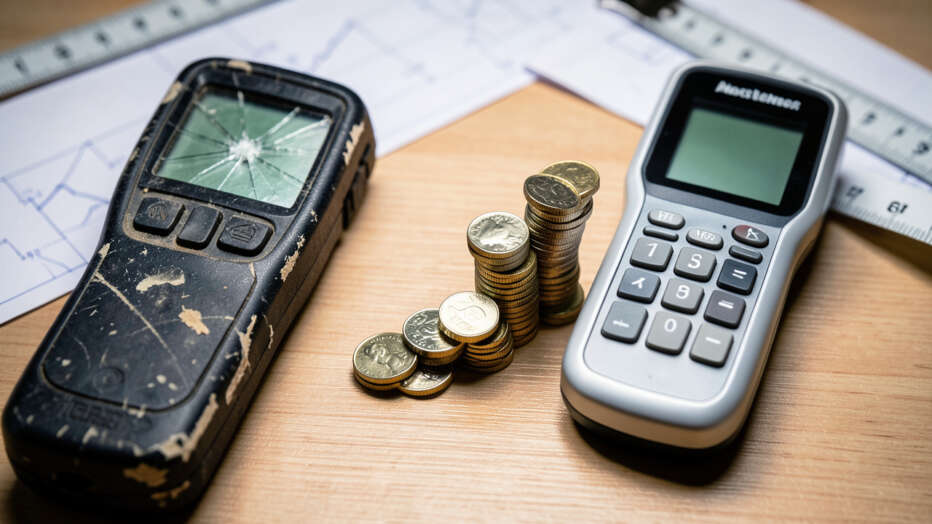
The decision to repair or replace depends on the cost of the unit and the nature of the failure. As a rule of thumb, if the repair estimate exceeds 60% of the cost of a comparable new model, choose replacement. For example, repairing a $150 measure for $100 is borderline, but replacing it with a $120 upgrade that has Bluetooth and better IP rating is smarter.
Consider these scenarios:
- Dropped unit with cracked housing: Even if the electronics work, internal sensor alignment is likely off. Replacement is recommended.
- Water damage: Corrosion often spreads invisibly. Repairing a water‑damaged measure is rarely reliable; replace it.
- Outdated features: If your measure lacks Bluetooth or USB‑C charging, upgrading to a modern unit improves workflow and may reduce errors.
- Warranty coverage: If within warranty, repairs may be free – always check before replacing.
In the long run, investing in a high‑quality replacement that meets current IP and connectivity standards can reduce the frequency of future replacements.
Frequently Asked Questions
How do I know if my laser distance measure is accurate?
Measure a known distance (e.g., 10 meters) with your laser and compare it to a steel tape or a certified reference. If the difference exceeds ±2 mm, the unit likely needs recalibration or replacement. Repeat the test three times to rule out operator error.
Can I recalibrate my laser distance measure myself?
Some models have a user‑accessible calibration mode that allows you to adjust offset. However, most require professional recalibration using specialized equipment. Attempting manual adjustments without proper tools can worsen accuracy.
How long does the battery last on a laser distance measure?
A new laser measure with a fresh Li‑ion battery typically provides 5,000–10,000 measurements on a full charge. As the battery ages, that number can drop to 1,000–2,000 measurements. When battery life drops below 50% of the original spec, consider replacement.
Is it worth buying a used laser distance measure?
Used measures can be had at a discount, but you inherit any undetected accuracy drift or battery degradation. Only buy used if the seller provides recent calibration certification and the unit has a transferable warranty.
What causes a laser distance measure to give false readings?
Common causes include a scratched or dirty lens, low battery, internal sensor drift, interference from strong light or reflective surfaces, and electronic component aging. Always clean the lens and check batteries before concluding the unit is faulty.
Final Thoughts
Knowing when to replace your laser distance measure is key to maintaining project accuracy and avoiding costly rework. Watch for accuracy drift beyond ±2 mm, battery issues that persist after fresh cells, and visible lens or housing damage. A proactive replacement cycle every three to four years for professional use pays for itself in peace of mind and precision.
Your next measurement deserves a tool you can trust completely.