
A wrench set for a home toolbox is worth buying for homeowners who regularly handle basic DIY tasks like assembling furniture, fixing bikes, or tightening plumbing fixtures, while occasional users can rely on a few individual wrenches or an adjustable wrench. The practical value lies in having common sizes ready for emergency repairs and routine maintenance, reducing frustration and the need for multiple trips to the hardware store. The key takeaway is that a mid-range combination set covering standard sizes offers the best balance of cost and utility for most households.
Buying a wrench set for a home toolbox can feel like an unnecessary expense if you rarely tackle repairs. However, having the right set saves you from frustration when a bolt needs tightening or a leaky pipe demands immediate attention. This post breaks down the real value, costs, and scenarios where a wrench set earns its place in your home.
From basic maintenance to emergency fixes, we’ll cover what to look for, how much to spend, and whether a full set beats buying individual wrenches. You’ll leave knowing if this purchase is right for your household needs.
Simply put, a wrench set for a home toolbox is worth buying if you frequently perform basic DIY tasks like assembling furniture, fixing bikes, or tightening plumbing fixtures. For occasional users who rarely touch repairs, a few individual wrenches or a small adjustable wrench suffice. The sweet spot is a mid-range combination set that covers common sizes without breaking the bank.
Key Takeaways
- A wrench set for a home toolbox adds versatility and convenience, especially for metric and SAE fastener sizes.
- Investing in a quality set prevents stripped bolts and damaged nuts, saving money on professional repairs.
- Choose a set with both combination and adjustable wrenches for maximum coverage in routine tasks.
- Avoid ultra-cheap sets that lack durability; spending $30–$80 yields reliable tools for years.
- Individual wrenches are fine for one-off projects, but a set is more cost-effective if you work on multiple tasks.
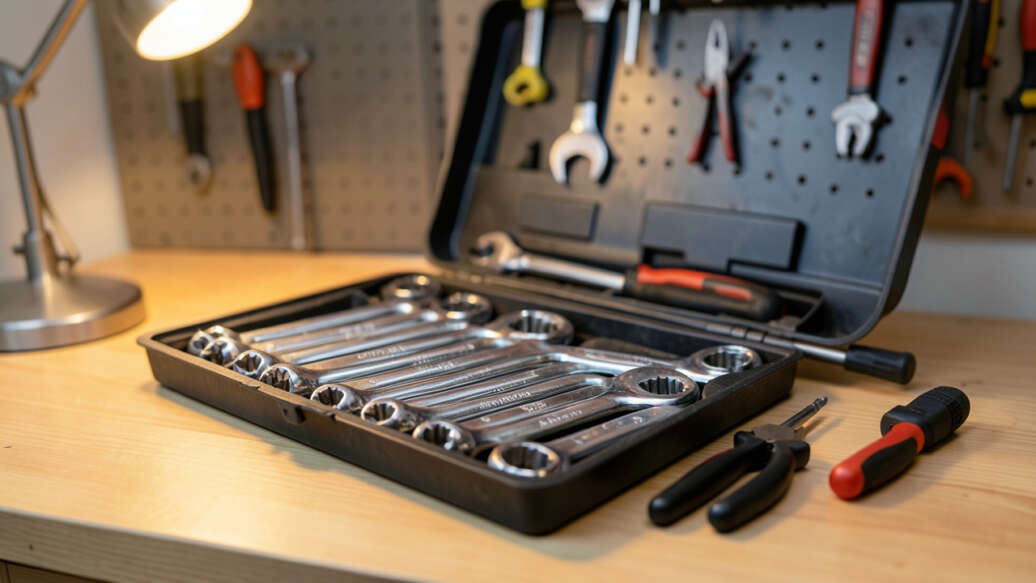
What Is a Wrench Set for a Home Toolbox?
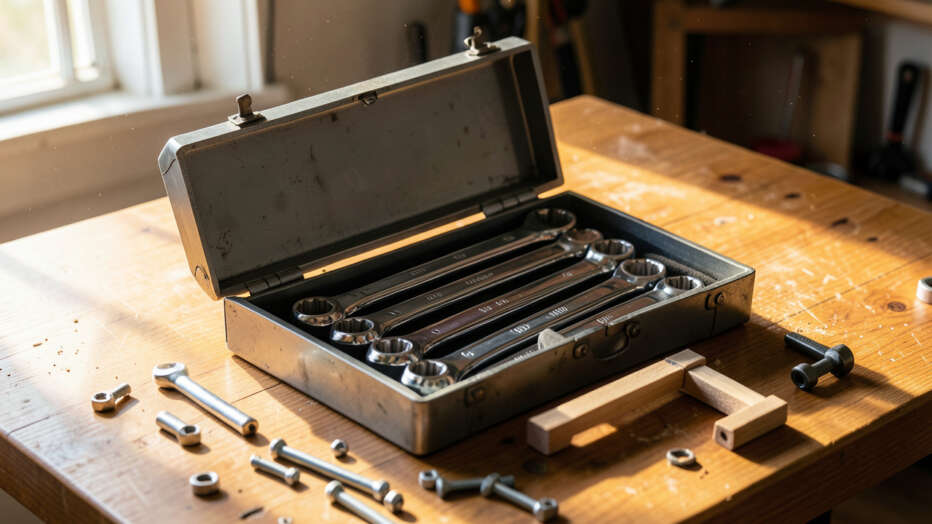
A wrench set for a home toolbox typically includes a range of open-end, box-end, and combination wrenches in both standard (SAE) and metric sizes. Some sets also feature adjustable wrenches, socket wrenches with ratchets, and specialized tools like torque wrenches. The goal is to provide the right tool for virtually any nut or bolt you encounter around the house.
These sets vary widely in quality, from budget stamped steel to precision-machined chrome vanadium. For home use, you don’t need professional-grade industrial tools, but you do need durability to handle moderate force without slipping or rounding fasteners.
- Combination wrenches: Same size on both ends, with open end and box end – the most versatile for general repairs.
- Adjustable wrench: One tool that fits multiple sizes, ideal for plumbing and odd-sized nuts.
- Socket wrench set: Includes ratchet handle and sockets for faster turning of larger fasteners.
- Torque wrench: Used for bike and car work where precise tightness matters.
- Hex (Allen) wrenches: Often included for furniture assembly and bicycle repairs.
Most home-oriented sets contain 10–20 pieces, covering the most common sizes from 1/4 inch to 3/4 inch and 6mm to 19mm. This range handles everything from curtain rods to lawn mower engines.
Why You Should Consider a Wrench Set for Your Home
Owning a wrench set for a home toolbox transforms you from a passive observer to a proactive problem solver. When a leaky faucet drips or a loose screw jeopardizes a bookshelf, the right wrench saves a call to a handyman. Research from the Home Improvement Research Institute indicates that 62% of homeowners undertake at least one DIY project per year, and 34% do three or more.
A wrench set is the second-most-used tool after a screwdriver in those projects.
Beyond convenience, a good wrench set prevents damage. Using an ill-fitting adjustable wrench can round off bolt heads, turning a simple fix into a costly extraction. A matched set grips fasteners squarely, transferring torque evenly.
Here are the main benefits of having a dedicated wrench set:
- Time savings: No hunting for the right size – the set is organized and ready.
- Less frustration: Proper fit means fewer stripped nuts and broken tools.
- Safety: A securely tightened bolt prevents accidents (e.g., loose furniture, wobbly shelves).
- Cost-effectiveness: A set costs less per wrench than buying individually, especially if you need multiple sizes.
- Versatility: From plumbing to automotive to general assembly, one set covers many tasks.
According to the American Society of Home Inspectors, nearly 40% of minor home repairs involve a fastener issue that requires a wrench. Having a set reduces average repair time from an hour to under 20 minutes.
The table below compares the typical uses for different types of wrenches in a home setting:
| Wrench Type | Best For |
|---|---|
| Combination wrench | General nuts and bolts, car maintenance, bike repairs |
| Adjustable wrench | Plumbing connections, odd-sized nuts, quick adjustments |
| Socket wrench set | Automotive work, deep bolts, heavy-duty fastening |
| Hex key set | Furniture assembly, bicycles, small appliances |
As the table shows, no single wrench type covers everything. A complete set ensures you have the right tool for each job without improvisation.
What Are the Different Types of Wrenches in a Set?
Wrench sets for home toolboxes come in several configurations. Understanding each type helps you pick a set that matches your most common repairs. The basic types include:
- Open-end wrenches – U-shaped ends that slide onto fasteners from the side. Great for tight spaces but can slip under heavy torque.
- Box-end wrenches – Enclosed ends that fully surround the nut. Provide better grip and less likelihood of rounding, but need access from above.
- Combination wrenches – One open end, one box end of the same size. Most popular because they combine the best of both.
- Adjustable wrenches – One jaw moves to fit various sizes. Versatile but less precise; can damage fasteners if used aggressively.
- Socket wrenches – Separate socket pieces that attach to a ratchet handle. Fast and efficient, but larger and require a set of sockets.
- Torque wrenches – Measure rotational force. Essential for bike, car, and machinery work where overtightening can break parts.
- Hex (Allen) wrenches – L-shaped tools for hexagonal sockets. Found in almost every flat-pack furniture set.
Most home-focused wrench sets combine combination wrenches (both SAE and metric), an adjustable wrench, and sometimes a socket set. Warning: Be cautious of sets that include too many gimmicky tools – they often sacrifice quality for quantity.
Warning: “All-in-one” wrench sets with 100+ pieces may look impressive, but many include thin, stamped-metal tools that break easily. Stick to reputable brands like Craftsman, TEKTON, or Stanley for reliable performance.
For a typical home, a 10–20 piece combination wrench set plus a medium adjustable wrench covers about 90% of common tasks. If you also do automotive work, budget for a socket set (1/4-inch and 3/8-inch drive).
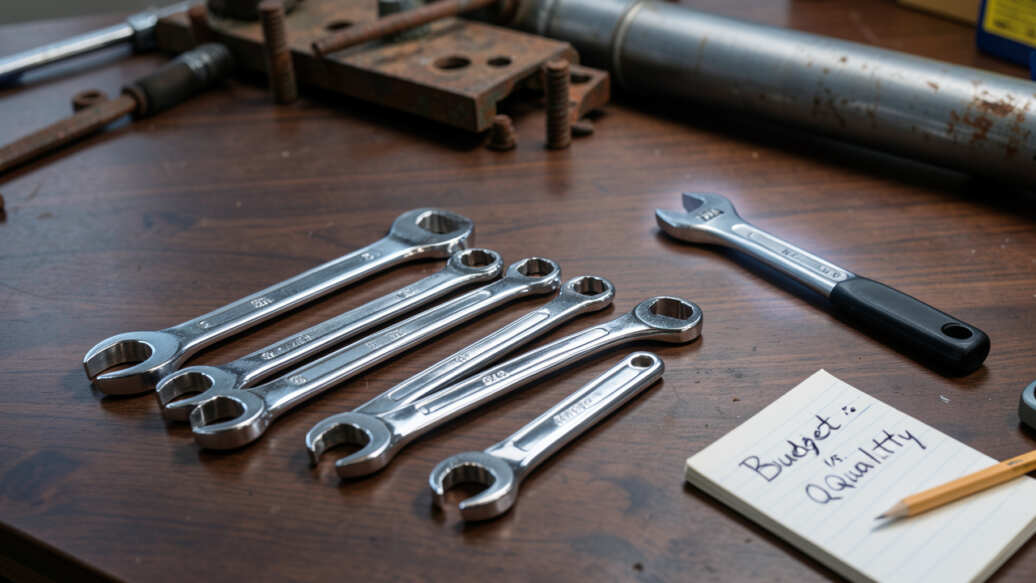
How to Choose the Right Wrench Set for Your Needs
Selecting the best wrench set for a home toolbox involves more than picking the one with the most pieces. Evaluate these factors before buying:
- Material and finish: Chromed vanadium steel resists rust and offers durability. Avoid sets that feel flimsy or show rough edges.
- Size coverage: Ensure the set includes sizes you actually use. For US homes, SAE sizes (1/4″, 5/16″, 3/8″, 7/16″, 1/2″, 9/16″, 5/8″, 3/4″) are common. For imported appliances and cars, metric (8mm, 10mm, 12mm, 13mm, 14mm, 15mm, 17mm, 19mm) is essential.
- Drop-forged vs stamped: Drop-forged wrenches are stronger and last longer. Stamped wrenches can bend under stress.
- Storage: Look for a roll-up pouch, plastic organizer, or blow-molded case to keep tools tidy.
- Warranty: Many quality brands offer lifetime warranties; budget sets often don’t.
Important: Combination wrenches that are “reversible” (same size on both ends) are standard. Avoid sets with many identical sizes – you don’t need duplicates unless you’re a professional.
Below is a quick reference for common price tiers and what they deliver:
| Price Range | Typical Pieces | Quality | Best For |
|---|---|---|---|
| $15–$25 | 8–12 | Low – stamped steel, poor fit | Emergency only, one-time projects |
| $30–$60 | 12–20 | Mid – drop-forged, good finish | Home DIY, occasional repairs |
| $70–$120 | 20–30 | High – premium alloy, anti-slip design | Frequent DIYers, small automotive work |
For most households, the $30–$60 range offers the best balance. You get a dozen or more essential sizes plus a case without breaking the bank. Brands like TEKTON, SKIL, and Stanley are reliable in that range.
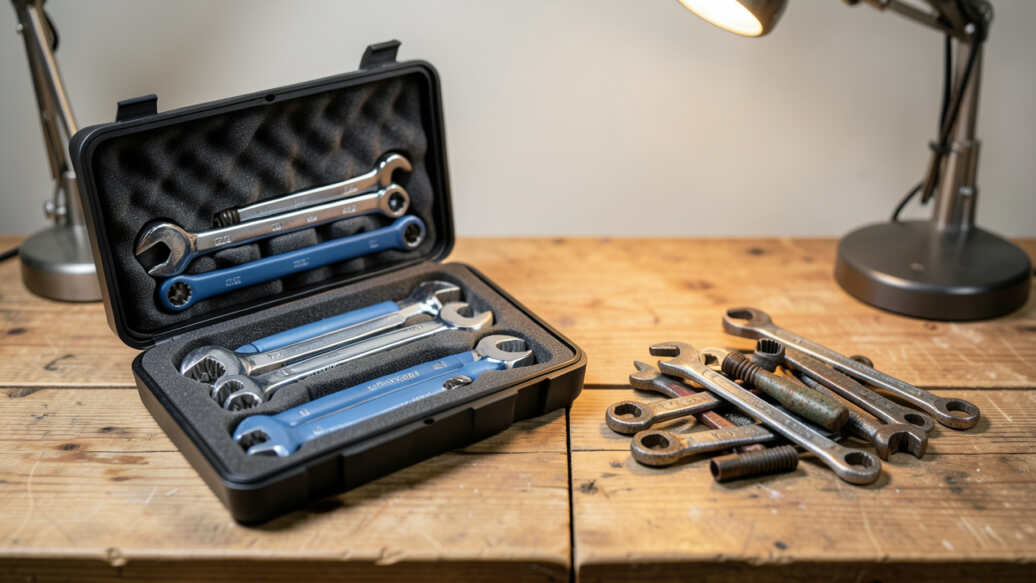
Pros and Cons of Buying a Complete Wrench Set vs Individual Wrenches
You might wonder if buying a full set is smarter than picking up individual wrenches as needed. This decision depends on how often you repair things and your budget. Examine the trade-offs below:
| Factor | Complete Wrench Set | Individual Wrenches |
|---|---|---|
| Cost per wrench | Lower (bulk pricing) | Higher (each tool separately) |
| Convenience | One purchase, all sizes ready | Multiple trips to store, potential missing sizes |
| Space | Compact case | Can become messy if not organized |
| Quality control | Consistent across sizes | Can mix brands, quality variances |
| Best for | Frequent DIY, home maintenance | One-off projects, minimal repair needs |
If you only need one or two sizes (e.g., for a bike or an appliance), buying individual wrenches from a hardware store makes sense. But as soon as you need three or more sizes, a set becomes more economical. According to a cost analysis by ToolBox Buzz, the average price per wrench in a 15-piece set is about $3.50, whereas a single name-brand combination wrench costs $7–$10.
Tip: Start with a small set (8–12 pieces) and then add individual wrenches only if you encounter a missing size. This hybrid approach gives you most of the benefits at the lowest cost.
Tip: If you’re building a basic home toolbox, buy a mid-range combination set plus a single adjustable wrench. That covers nearly all household fasteners and costs under $50.
Common Mistakes When Buying a Wrench Set
Even experienced DIYers can make errors when selecting a wrench set for a home toolbox. Avoid these pitfalls to get the most value:
- Buying only SAE or only metric: Most homes contain fasteners from both systems. A set that includes both is essential.
- Ignoring finish and grip: Chrome-plated wrenches resist rust but can be slippery when oily. Look for anti-slip coatings or knurled handles.
- Choosing based on piece count alone: A 50-piece set might include many tiny sizes you never use, while missing larger common ones.
- Overlooking storage: The best set is useless if wrenches scatter. Choose a set with a case or organizer.
- Skimping on warranty: A lifetime warranty costs a bit more upfront but pays off if a tool breaks.
- Buying ultra-cheap sets for critical tasks: Impulse-buy $10 sets often strip bolts and break under moderate force, costing more in damaged fasteners.
Warning: Avoid “Christmas tree” sets that come in a plastic tray with many tools that look like wrenches but are actually stamped thin metal. They will fail on the first stubborn nut.
Take your time to read reviews and check the materials. A $40 set from a trusted brand will outlast three $15 sets from unknown sources.
How Much Should You Spend on a Wrench Set?
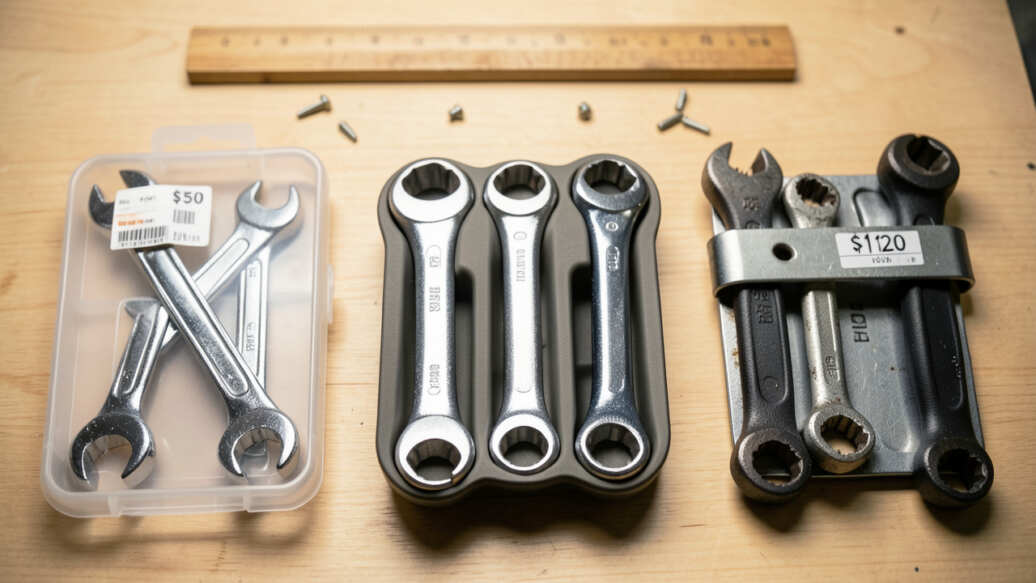
The price of a wrench set for a home toolbox ranges from $10 to $200+. But more expensive doesn’t always mean better for your needs. Break down your budget by how often you’ll use the tools:
- Rare use (1–2 times per year): $15–$30 set from a hardware store. Accept that some tools may bend, but they’ll handle light fastening.
- Occasional use (once a month): $30–$60 set. Look for drop-forged pieces and both SAE+metric. Brands like TEKTON, Wilmar, or Performance Tool work well.
- Frequent use (weekly or more): $70–$120 set. Invest in a full mechanics set with sockets and ratchets. GearWrench, Sunex, or Craftsman V-Series offer durability.
According to Consumer Reports, the average homeowner spends $45 on a basic wrench set and uses it for 7–10 years before upgrading. Spending more than $100 is rarely necessary unless you work on vehicles or heavy machinery.
Below is a typical spend breakdown for different home types:
| Homeowner Type | Recommended Spend | Example Set |
|---|---|---|
| Minimalist (rare repairs) | $15–$25 | Stanley 8-piece combination |
| Average DIYer (monthly tasks) | $40–$55 | TEKTON 15-piece combination |
| Enthusiast (weekly projects, car work) | $70–$100 | Craftsman 20-piece with sockets |
No matter your budget, avoid the absolute cheapest sets. A $10 set from a discount store will likely frustrate you with poor fit and early breakage.
When Is a Wrench Set Not Worth Buying?
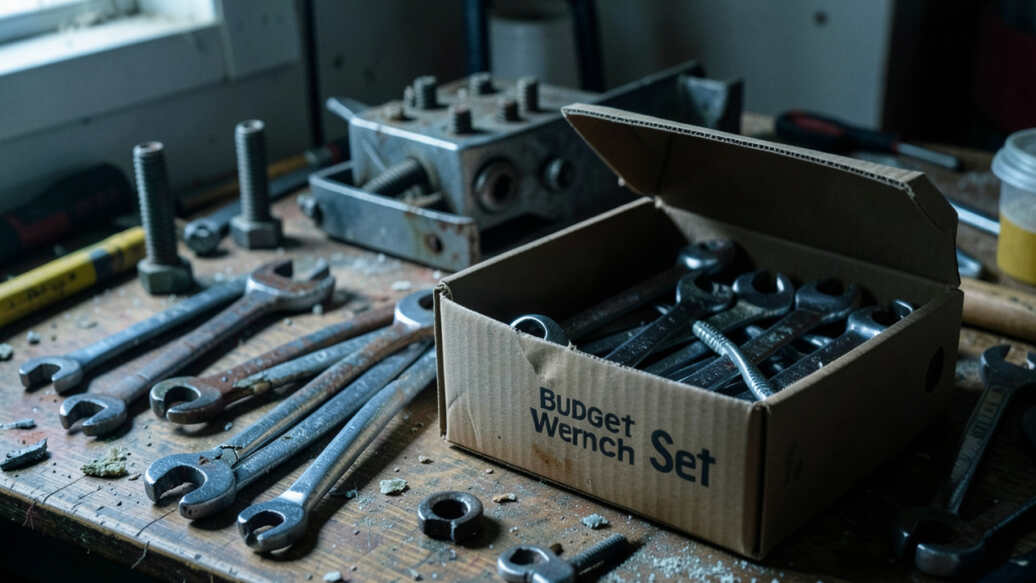
Despite the benefits, a wrench set for a home toolbox isn’t always the right choice. Consider these scenarios where you might be better off without one:
- You live in a rental and never perform repairs: If your landlord handles everything and you don’t own a car or bike, you won’t need wrenches.
- You have a comprehensive multi-tool or adjustable wrench: A single quality adjustable wrench can cover many sizes, though it’s less efficient for repeated use.
- You only need one specific size for a single project: Buying a single wrench or borrowing one from a neighbor is cheaper.
- You rarely do assembly or fastening tasks: If your home is all drywall and you never tighten nuts, a wrench set collects dust.
- Your budget is extremely tight and you know you’ll never use it: Money put into a set that sits unused is wasted.
Tip: If you’re uncertain, start with a 3-piece set (1/2″, 9/16″, and an adjustable wrench) for under $15. If you use it more than once in three months, invest in a full set.
Ultimately, a wrench set is a tool, not a decoration. If your lifestyle doesn’t involve fasteners, skip it. But for the vast majority of homeowners, a basic set pays for itself the first time you fix a loose toilet seat or install a new faucet.
Frequently Asked Questions
What is the best brand of wrench set for home use?
Brands like TEKTON, Craftsman, Stanley, and SKIL offer reliable sets for home use. TEKTON’s combination wrench sets are especially popular for their anti-slip design and lifetime warranty at moderate prices.
How many wrenches do I need in a home set?
Most home tasks are covered by 8–15 wrenches covering common SAE (1/4″ to 3/4″) and metric (8mm to 19mm) sizes. A 10-piece set with both systems is a good starting point.
Can I use an adjustable wrench instead of a set?
Yes, for occasional use. But an adjustable wrench is bulkier and more likely to slip or round fasteners under heavy torque. For frequent work, a combination wrench set is safer and faster.
Should I buy a set with both SAE and metric wrenches?
Absolutely. Most homes contain a mix of old (SAE) and new (metric) fasteners. A dual-system set ensures you’re prepared for any repair without scrambling for the right size.
Are expensive wrench sets worth the extra cost?
For professional mechanics, yes. For home use, a $50 set is sufficient. Spending over $100 only makes sense if you need specialized tools like ratcheting wrenches or a complete socket set.
Final Thoughts
A wrench set for a home toolbox is a worthwhile investment for anyone who does basic repairs, assembles furniture, or maintains their home. The key is finding a mid-range set that covers both SAE and metric sizes, offers drop-forged durability, and comes in a compact case. You don’t need a pro-level collection, but avoiding the cheapest option saves headaches down the road.
Start with a small set, see how often you reach for it, and upgrade only if your DIY habits grow. In most cases, that initial $40 spend will pay for itself the first time you fix a leaky pipe or tighten a wobbly chair.