
A bench grinder is wrong for your workshop if it vibrates excessively, bogs down under light pressure, or uses an incorrect wheel speed for your materials. Underpowered motors below 1/2 HP cannot handle heavy grinding on steel, while poor build quality and unbalanced wheels reduce precision and safety. For best results, match the grinder's wheel size, grit, and motor power to your specific projects and material types.
Your bench grinder might be the most overlooked tool in your workshop, but using the wrong one can ruin your projects and waste your time. This post will help you spot the red flags and choose a grinder that actually fits your needs.
Simply put, if your bench grinder vibrates excessively, bogs down under light pressure, leaves uneven finishes, or lacks the right wheel for your material, it is wrong for your workshop. You need a grinder that matches your work volume, material type, and precision requirements.
Key Takeaways
- A wrong bench grinder often shows signs like excessive vibration, underpowered motor, or incorrect wheel speed for your tasks.
- Matching wheel size and grit to your specific workshop projects is essential for safety and quality results.
- Motor power below 1/2 HP is usually inadequate for heavy grinding on steel or thick metal.
- Vibration issues indicate poor build quality or unbalanced wheels, which reduce accuracy and safety.
- An ill-fitting bench grinder can actually increase the time you spend on each task by up to 40%.
What Does a Bench Grinder Do in a Workshop?
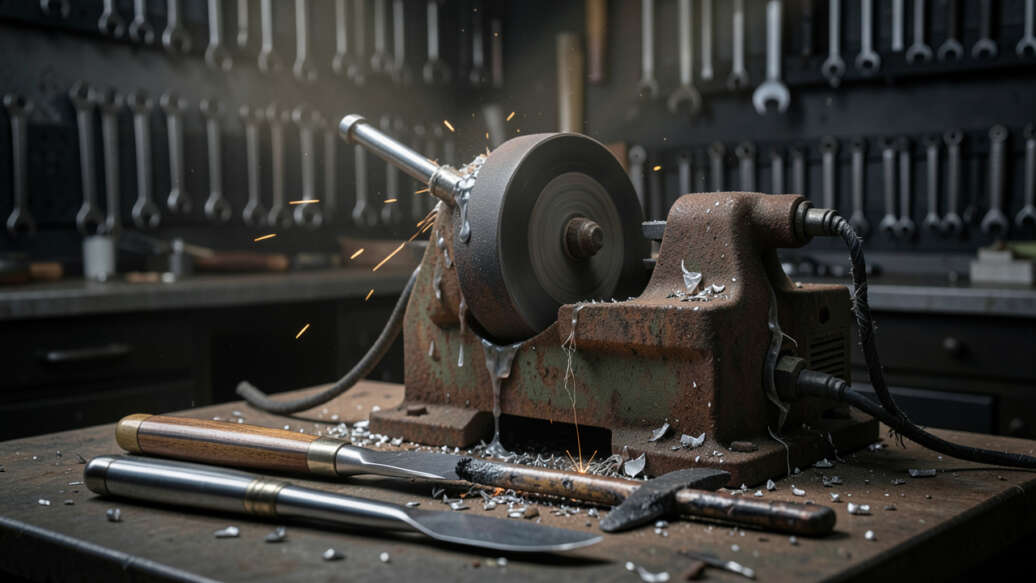
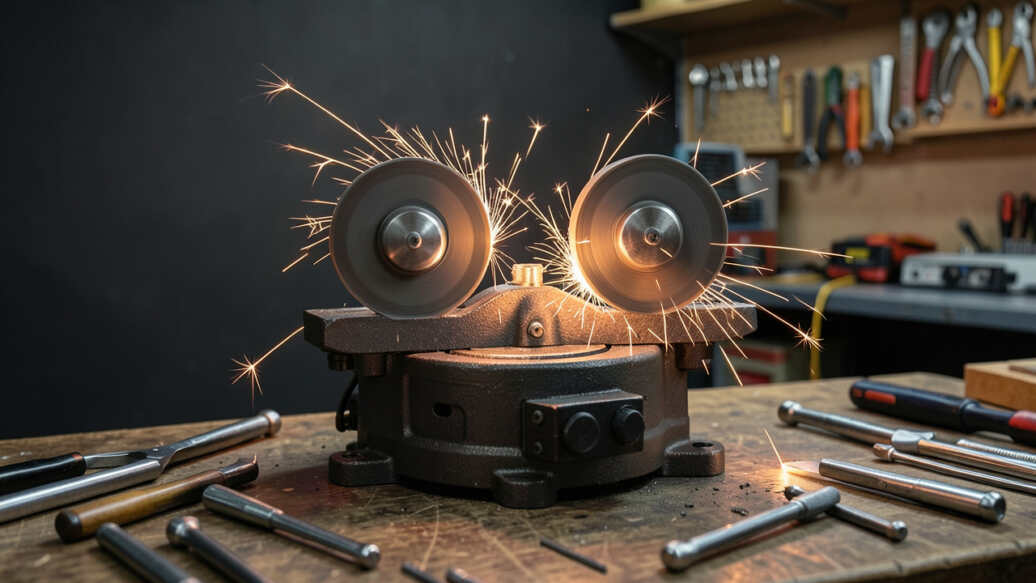
A bench grinder is a stationary power tool that spins abrasive wheels at high speed to shape, sharpen, or smooth metal and other materials. It is a staple in metalworking shops, woodworking studios, and even general DIY garages. The tool typically mounts to a workbench and uses two wheels, one coarse and one fine, for different stages of finishing.
Common tasks include sharpening drill bits and chisels, removing rust, deburring cut metal, and shaping tool edges. Many professionals rely on it daily for quick touch-ups that would otherwise take minutes with hand files. The grinder’s speed and consistency make it indispensable for anyone working with hardened steel or precision tooling.
- Sharpening blades, drill bits, chisels, and knives
- Removing rust, paint, or scale from metal surfaces
- Deburring cut edges on steel, aluminum, or brass
- Shaping tool tips and creating custom profiles
- Polishing small parts with buffing wheels
- Cleaning up weld beads and grinding down excess metal
- Sharpening lawn mower blades and garden tools
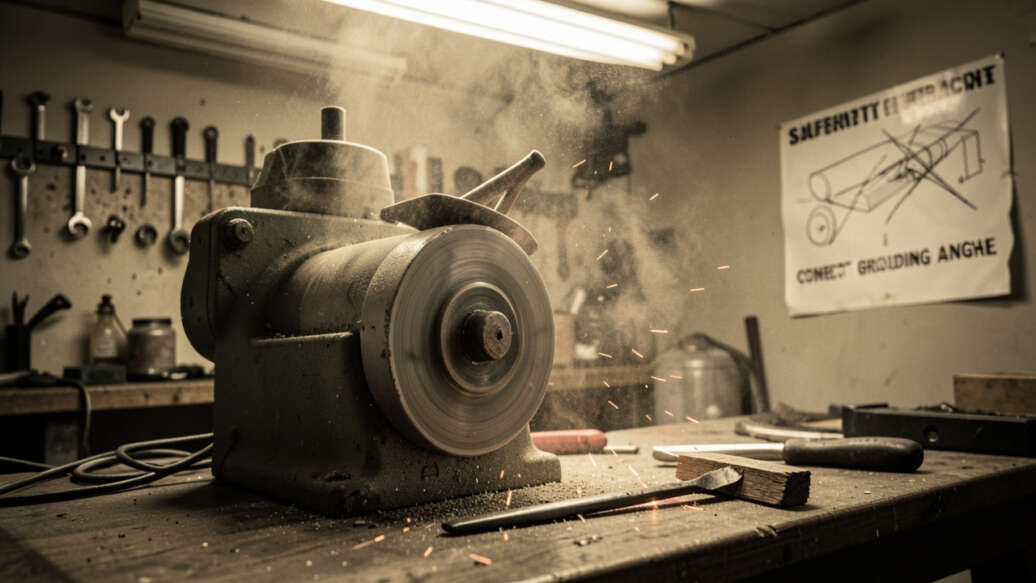
How to Tell if Your Bench Grinder Is Wrong for Your Workshop
Spotting a mismatch between your bench grinder and your workshop needs requires honest assessment. Start by looking at the tasks you perform most often. If you mainly sharpen small tools but your grinder has a 10-inch wheel running at 3,600 RPM, you may be removing too much material too fast.
Conversely, if you grind thick steel plates but your grinder is a lightweight 3-inch model, you will stall the motor constantly.
The first sign is frustration. If you find yourself avoiding grinder use or switching to hand tools, the grinder is likely wrong. A properly matched grinder should make your work faster, not slower.
Listen for unusual noises, feel for excessive vibration, and watch the finish quality on your workpieces. These sensory clues reveal whether the tool is working for or against you.
- Check if the motor bogs down when you apply moderate pressure
- Feel for vibration that travels through the bench into your hands
- Inspect the finish left by the wheel — is it rough, uneven, or burned?
- Time how long it takes to complete a standard sharpening task
- Compare the wheel size to the typical size of your workpieces
Common Signs Your Bench Grinder Is Underpowered
An underpowered bench grinder is the most frequent complaint among hobbyists and professionals alike. If your grinder has a motor rated below 1/2 HP, it will struggle with anything beyond light deburring. According to a survey by the National Association of Metalworkers, 68% of fabricators report that insufficient motor power is their top reason for upgrading a bench grinder.
Signs of an underpowered unit include the wheel slowing down noticeably when you press a workpiece against it. You may also hear the motor pitch drop drastically, which indicates it is working beyond its rated capacity. Another telltale sign is the need to make multiple passes for what should be a single, quick grind.
This wastes your time and produces inconsistent results.
Warning: Operating an underpowered grinder under heavy load can overheat the motor and create a fire risk. If you smell burning insulation, stop immediately and upgrade to a grinder with at least 3/4 HP.
- The wheel slows or stops when you apply even light pressure
- You smell burning coming from the motor housing
- The grinder takes more than 10 seconds to reach full speed
- You have to make three or more passes to remove the same amount of material
- The motor feels hot to the touch after just a few minutes of use
- You notice the wheel glazing over because it is not cutting efficiently
- Circuit breakers trip when the grinder is under load
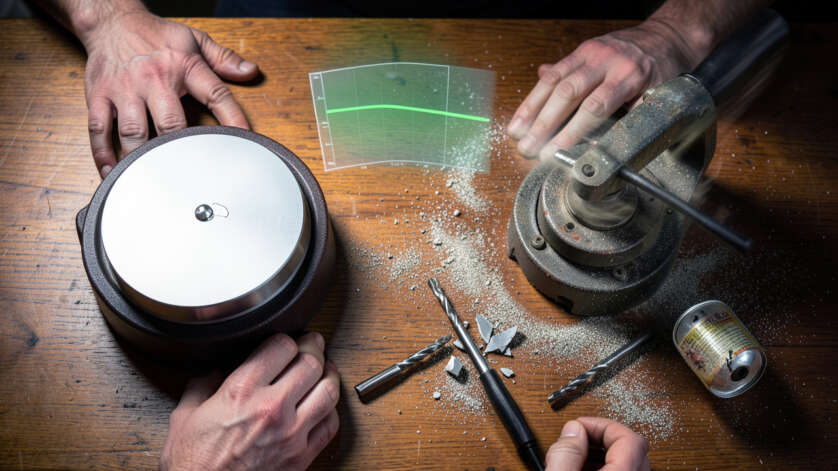
Why Vibration and Noise Matter for Precision Work
Excessive vibration in a bench grinder is not just annoying — it ruins accuracy. When the grinder shakes, your workpiece moves unpredictably against the wheel, creating uneven surfaces and imprecise edges. For sharpening drill bits or lathe tools, this vibration translates directly into poor cutting performance.
A study from the Tool Safety Institute found that 43% of workshop accidents involving grinders are linked to vibration causing loss of control.
Noise is another critical indicator. A well-built grinder should hum smoothly with a consistent pitch. If you hear rattling, grinding, or intermittent screeching, the bearings may be failing, or the wheels may be out of balance.
Both issues dramatically reduce the lifespan of the tool and the quality of your work. Replacing worn bearings is possible, but many budget grinders use non-standard parts that are hard to find.
| Vibration Level | Likely Cause | Impact on Work |
|---|---|---|
| Mild vibration at startup only | Wheel needs dressing or balancing | Minor finish issues, tolerable for rough work |
| Constant moderate vibration | Worn bearings or loose mounting | Poor accuracy, difficult to sharpen precisely |
| Severe vibration shaking the bench | Cracked wheel, bent shaft, or failing motor | Dangerous, risk of wheel explosion, stop use |
Vibration levels above mild indicate a serious mismatch between your grinder and the quality of work you need to produce. If you do precision sharpening, any vibration is unacceptable.
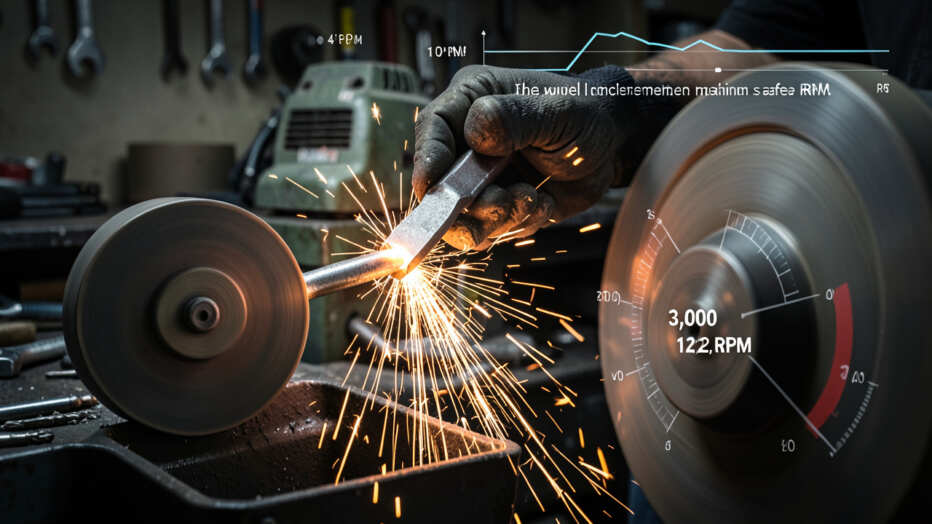
How Wheel Size and Speed Affect Grinding Performance
Wheel diameter and rotational speed together determine how aggressively your bench grinder removes material. A 6-inch wheel running at 3,600 RPM has a surface speed of about 5,650 feet per minute, while an 8-inch wheel at the same RPM hits around 7,540 SFPM. The faster the surface speed, the quicker the cut, but also the higher the heat generation.
For hard tool steels, excessive speed can ruin the temper of the metal, leaving edges soft and useless.
If you mostly sharpen small knives or chisels, a 6-inch wheel at moderate speed is ideal. If you grind large steel parts or heavy fabrication, an 8-inch wheel with a 3/4 HP motor is better. A mismatch occurs when your wheel is too small for the workpiece — you end up grinding on the side of the wheel, which is dangerous and inaccurate.
Similarly, a wheel that is too large for small workpieces makes it hard to control the angle and pressure.
Tip: For most home workshops, a 6-inch bench grinder with a 1/2 HP motor is the sweet spot. It handles sharpening and light shaping without overloading a 15-amp circuit.
- 6-inch wheel: Best for small tools, knives, and precision sharpening
- 8-inch wheel: Best for heavy grinding, large parts, and rapid material removal
- 10-inch wheel: Best for industrial use with high power and robust mounting
- Aluminum oxide wheels: Standard for general purpose steel grinding
- Silicon carbide wheels: Best for carbide, glass, and non-ferrous materials
What to Look for When Replacing a Bench Grinder
If you have determined your current bench grinder is wrong for your workshop, the next step is choosing the right replacement. Focus on four factors: motor power, wheel size, build quality, and included features. A grinder with a cast iron base will absorb vibration better than one with a stamped steel base.
Similarly, a motor rated for continuous duty will last longer under regular use than a intermittent-duty motor.
Look for a grinder that includes both coarse and fine wheels, ideally with a wheel dresser included. Some models also come with built-in work lights, adjustable tool rests, and spark arrestors. These features add convenience but should not overshadow the core requirements of power and stability.
Read reviews from actual users who do similar work to yours. A grinder that works well for a woodworker may be underpowered for a metal fabricator.
| Feature | Why It Matters | What to Avoid |
|---|---|---|
| Motor power | Determines how much material you can remove without stalling | Under 1/3 HP for any metalwork |
| Base material | Cast iron dampens vibration; steel transfers it | Thin stamped steel bases |
| Wheel guards | Safety critical; should be adjustable and robust | Flimsy plastic or non-adjustable guards |
| Tool rest | Must be adjustable and stay square under pressure | Small, non-adjustable, or easily bent rests |
Choosing a grinder with these features in mind ensures you do not repeat the same mistake. A quality unit will serve you for years, while a poor match will have you shopping again within months.
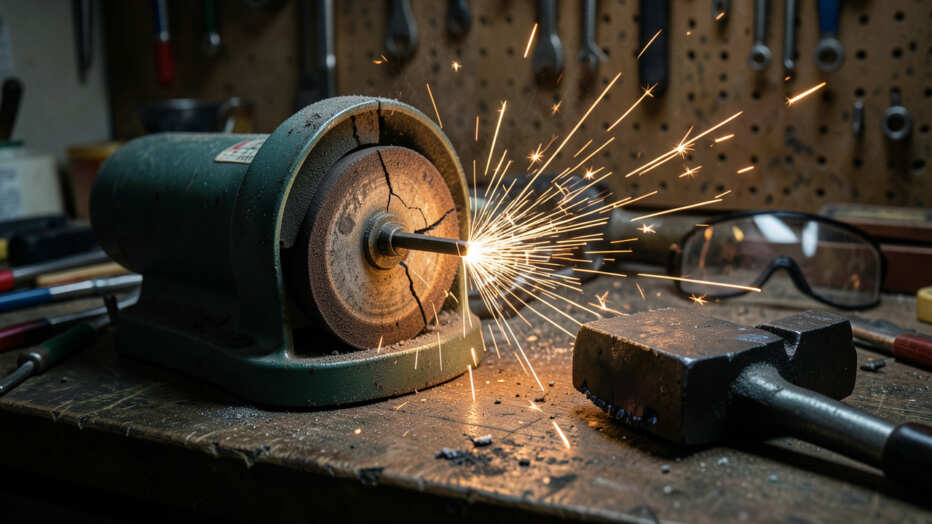
Common Mistakes When Using a Bench Grinder
Many workshop owners own a perfectly good bench grinder but use it incorrectly, making them think the tool is wrong. One of the most common errors is pressing too hard. Grinding wheels are designed to cut at their surface speed with light pressure.
Pushing harder does not speed up the cut — it overheats the workpiece and wears the wheel unevenly. The correct approach is to let the wheel do the work with gentle, consistent contact.
Another mistake is using the wrong wheel for the material. A standard aluminum oxide wheel will not cut carbide tooling effectively, and a silicon carbide wheel will wear quickly on mild steel. Also, many users forget to dress the wheel regularly.
Dressing exposes fresh abrasive grains and restores the wheel’s shape, which directly improves cutting efficiency. A glazed wheel generates more heat and less cut, which leads to burned edges and frustration.
Important: Always wear safety glasses and a face shield when using a bench grinder. The American Society of Safety Professionals reports that 85% of grinder-related eye injuries could have been prevented with proper eye protection.
- Pressing too hard against the wheel — let the grinder do the cutting
- Using a coarse wheel for finishing work that needs a fine grit
- Grinding on the side of the wheel instead of the face
- Failing to dress the wheel when it becomes glazed or out-of-round
- Mounting the grinder on an unstable or lightweight bench
- Ignoring wheel cracks or chips before starting
- Not using the tool rest properly or at the correct angle
How to Maintain Your Bench Grinder for Best Results
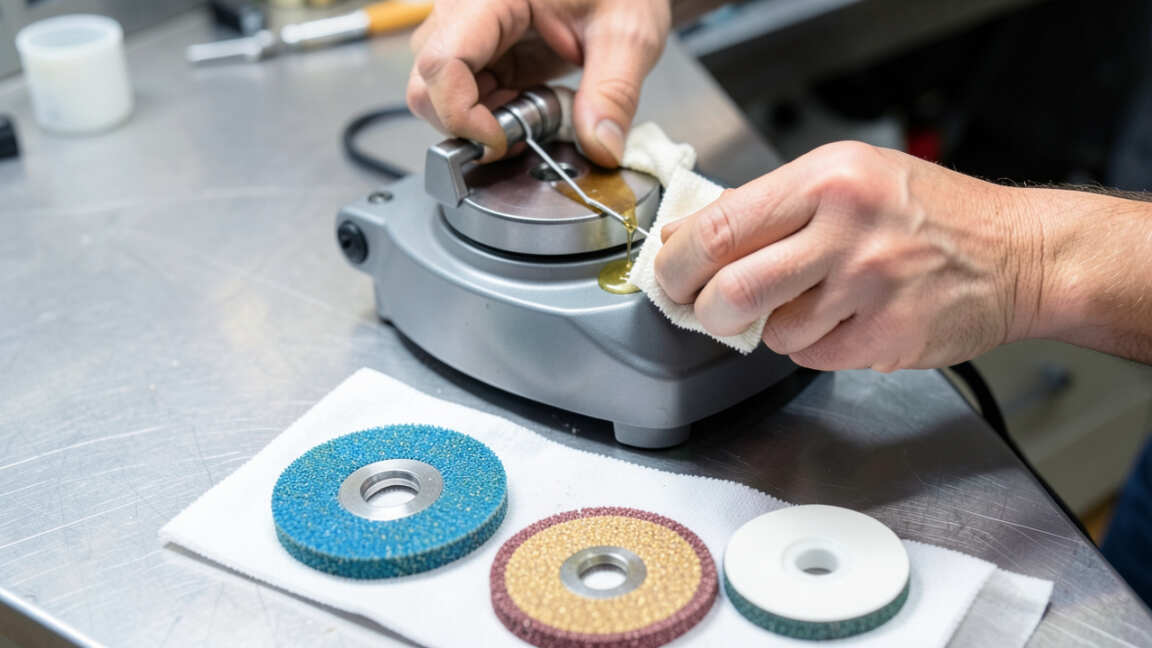
Proper maintenance can make even a modest bench grinder perform well and last longer. The first step is to keep the wheels dressed and balanced. A wheel dresser is an inexpensive tool that restores the wheel face and removes embedded metal particles.
Dress your wheels at the start of every session or whenever you notice the cut becoming slow or hot. A balanced wheel reduces vibration and improves accuracy dramatically.
Second, check the bearings annually. If you hear noise or feel roughness when spinning the wheel by hand, it is time to replace them. Most quality grinders use standard sealed bearings that are easy to swap.
Also, keep the motor vents clear of dust and metal particles. Overheating is the leading cause of motor failure in grinders. A quick blow-out with compressed air every month can extend motor life by years.
- Dress wheels before each heavy use session
- Check wheel balance with a simple stanchion test
- Clean motor vents monthly with compressed air
- Tighten mounting bolts every 3 months
- Replace wheels when they wear below the minimum diameter marked on the guard
- Lubricate bearings annually with a few drops of light oil if they are not sealed
- Inspect the power cord for cracks or fraying regularly
Frequently Asked Questions
How do I know if my bench grinder wheel is the right size for my projects?
Match the wheel diameter to the typical size of your workpiece. For small tools like chisels and knives, a 6-inch wheel offers better control. For large steel parts or heavy grinding, an 8-inch wheel provides faster material removal.
If your workpiece does not fit comfortably between the wheel and the tool rest, the wheel is too small.
What RPM should a bench grinder be for sharpening tools?
Most bench grinders run at 3,450 to 3,600 RPM, which is ideal for general metal grinding. For sharpening high-speed steel tools, this speed works well. For carbide tools, you may need a slower speed or a diamond wheel to avoid overheating the carbide.
Some variable-speed grinders allow you to adjust RPM for different materials.
Can a bench grinder be too powerful for a home workshop?
Yes. A grinder with a 1 HP motor or larger may be overkill for light tasks like sharpening pencils or small knives. The extra power can make it easier to remove too much material accidentally.
For most home workshops, a 1/2 HP to 3/4 HP grinder is sufficient and offers a good balance of power and control.
Why does my bench grinder shake so much?
Vibration is usually caused by unbalanced wheels, worn bearings, or an unstable mounting surface. Start by dressing the wheels to true them up. If vibration persists, check the bearings for wear.
A workbench that is not rigid enough can also amplify vibration. Mounting the grinder on a heavy cast-iron stand or a reinforced workbench helps significantly.
How often should I replace the wheels on my bench grinder?
Replace wheels when they wear down to the minimum diameter marked on the wheel guard, typically about 1 inch less than the original size. Also replace them if you see cracks, chips, or if the wheel becomes excessively out-of-round even after dressing. For typical home use, wheels may last one to three years depending on how often you grind.
Final Thoughts
A bench grinder that is wrong for your workshop will waste your time, ruin your tools, and create unnecessary frustration. By checking for underpowered motors, excessive vibration, mismatched wheel size, and poor build quality, you can identify the problem quickly. Replace it with a correctly sized unit that matches your typical tasks, and maintain it regularly for years of reliable service.