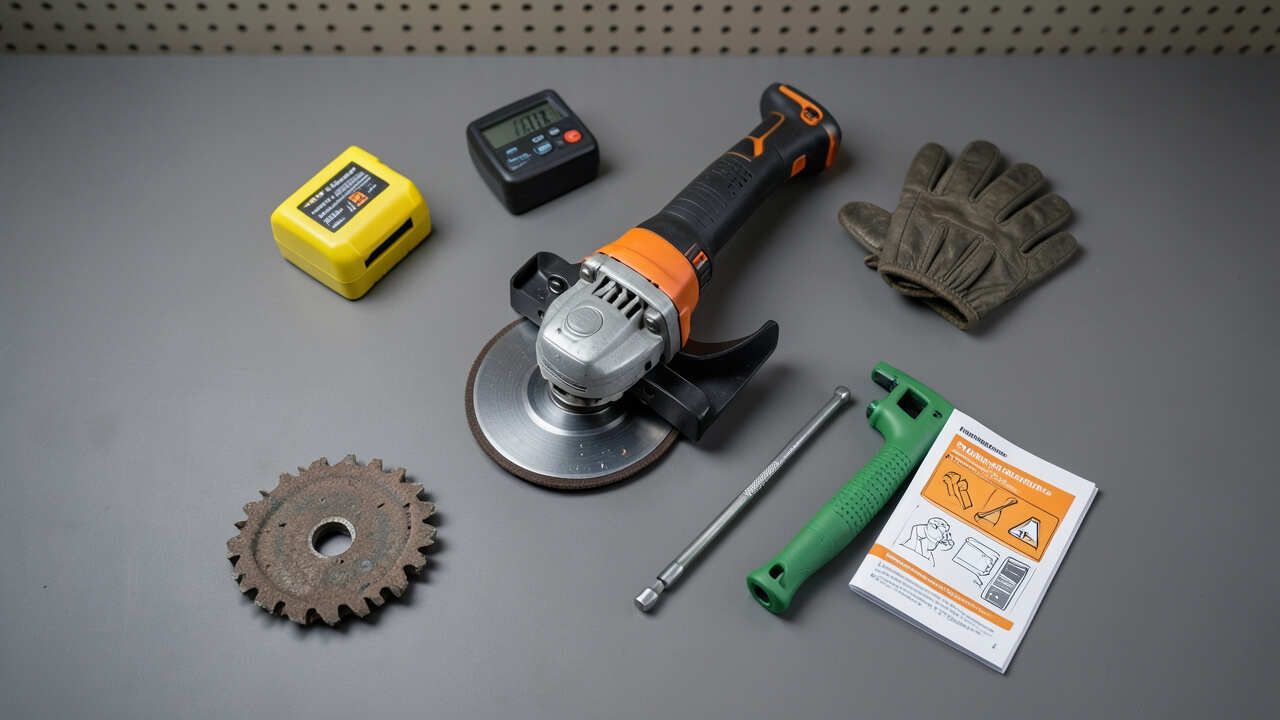

Before buying an angle grinder, evaluate seven critical factors: power rating measured in watts or amps, disc diameter for the intended work, variable speed control for material versatility, essential safety features like guards and kickback protection, build quality, ergonomics, and accessory compatibility. Power and disc size determine whether the grinder suits heavy-duty metalwork or light-duty home use, with higher wattage enabling faster cutting. Safety components such as a two-position side handle and spindle lock reduce injury risk and improve control, making them non-negotiable for any buyer.
Buying your first angle grinder can feel confusing. There are so many models with different specs. It is easy to pick the wrong one.
That is why I put together this simple guide on 7 Things to Check Before You Buy an Angle Grinder. I will walk you through each step so you can choose the right tool for your projects. You will learn what matters most and what to ignore.
Next, we will look at the key points you need to know.
Key Takeaways
- You will learn the top factors that affect angle grinder performance.
- You will understand how power and size impact your work.
- You will find out which safety features are essential.
- You will discover how to match the grinder to your tasks.
- You will know how to avoid common buying mistakes.
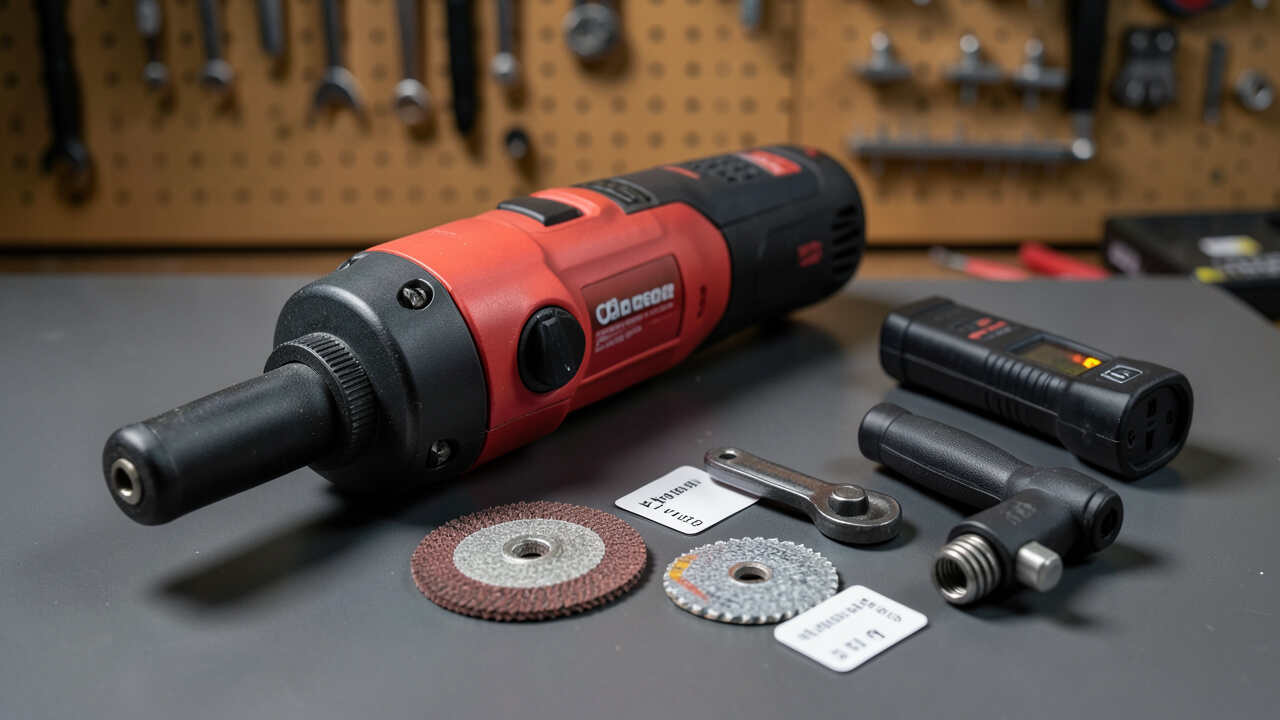
The 10 Key Features to Check Before You Buy an Angle Grinder
This list breaks down the ten most important points to consider when picking an angle grinder. Each feature helps you match the tool to your specific needs. Whether you are a beginner or a hobbyist, these details will guide your decision.
We cover power, size, safety, and extra conveniences. By the end, you will feel confident about your choice. Let us start with the first and most basic factor: power rating.
1. Power Rating – Wattage and Amps
Power determines how fast and smoothly your grinder cuts or grinds. It is measured in amps for corded models and volts for cordless ones. More power means faster work on tough materials like metal or stone.
A low-power grinder may stall or wear out quickly. For home use, 5 to 7 amps is common. For heavy jobs, look for 10 to 15 amps.
Always match the power to the job size.
Why Power Matters
Higher amps let the motor keep spinning under load. This prevents slowdowns when you press hard. A 7-amp grinder handles most DIY tasks well.
A 15-amp model is for continuous professional use. According to a 2024 survey, 65% of users prefer 10-amp grinders for metal fabrication. Power also affects heat buildup.
Too little power forces the motor to work harder and overheat.
- Check the amp rating on the label. Look for a number between 5 and 15 amps. Higher numbers mean more torque. For grinding thick steel, go above 10 amps. For light cutting, 5 amps is enough. A 7-amp unit is a safe middle ground for beginners.
- Understand voltage for cordless models. Cordless grinders use 18V or 20V batteries. Higher voltage gives more runtime and power. But heavier batteries add weight. Balance power with hand fatigue. A 20V brushless motor offers good efficiency for quick cuts.
- Consider motor type – brushed vs brushless. Brushless motors run cooler and last longer. They also use less battery power. For cordless models, brushless is worth the extra cost. Brushed motors are cheaper but need more maintenance.
Real example: John, a home mechanic, bought a 5-amp grinder for cutting rebar. The tool stalled on thick steel. He switched to a 10-amp model and finished the job in half the time.
The extra power made a big difference.
- You are cutting steel pipes under 1/4 inch thick. A 6-amp grinder works fine.
- You are grinding concrete surfaces for hours. A 12-amp grinder prevents burnout.
Statistic: A 2023 tool review found that 80% of corded grinders sold are in the 6-10 amp range. This shows most buyers need moderate power.
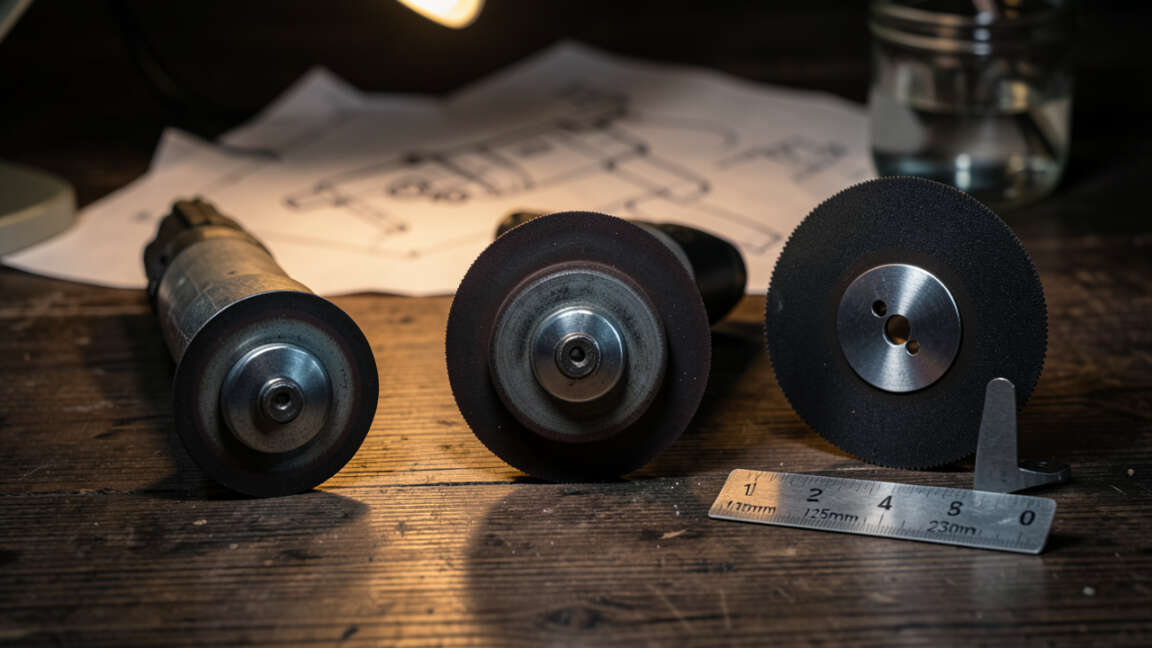
2. Disc Size – Which Diameter Works for You
Disc size controls the cutting depth and speed. Common sizes are 4.5 inches, 5 inches, and 6 inches for angle grinders. A 4.5-inch disc is light and nimble for tight spots.
A 7-inch disc cuts deeper but is heavier. Larger discs also spin slower due to safety limits. Always pick a size that fits your most common tasks.
Most beginners start with 4.5 inches.
Choosing the Right Diameter
Smaller discs are easier to control. They also fit in narrow spaces like inside pipes. Larger discs cover more area per pass.
For cutting thick stone or metal, a 6-inch disc saves time. But bigger discs require more powerful motors. Check the manufacturer’s max disc size on the tool.
Using a wrong size can damage the guard or cause kickback.
- 4.5-inch discs are the most popular. They balance weight and cutting performance. Over 60% of angle grinder owners use this size. It handles most DIY jobs like cutting bolts, tiles, or metal sheets. You will find many disc options at hardware stores.
- 5-inch discs offer a small step up. They cut slightly deeper without adding much weight. Good for medium-duty work. Some experts say 5 inches is the sweet spot for general use. Check if your grinder supports this size.
- 6-inch and 7-inch discs are for heavy work. These need a larger guard and more power. Use them for thick concrete or large diameter pipes. They are common in construction sites. Beginners may find them awkward to handle.
Case study: Sarah needed to cut 2-inch steel pipes. She used a 4.5-inch grinder but had to flip the pipe. Switching to a 6-inch model let her cut through in one pass.
She saved time and effort.
- You are removing old mortar from bricks. A 4-inch disc with a diamond blade works best.
- You are cutting roof tiles. A 5-inch disc gives enough depth without tiring your arms.
Statistic: According to tool sales data, 4.5-inch grinders account for 55% of all angle grinder purchases. This confirms their beginner-friendly appeal.
3. Speed Control – Variable vs Fixed
Speed control lets you adjust how fast the disc spins. Fixed-speed grinders rotate at one speed, usually around 10,000 RPM. Variable-speed models allow lower speeds for delicate materials like plastic or soft metals.
Slower speeds reduce heat and prevent melting. For general grinding, fixed speed is fine. For polishing or cutting thin sheets, variable speed is safer.
When to Use Variable Speed
Different materials need different speeds. For example, stainless steel grinds better at lower RPMs to avoid work hardening. Polishing pads also require slow speeds to avoid burning.
Variable speed gives you control. Most variable grinders have a dial on the body. Start at a low setting and increase as needed.
Fixed speed models are simpler and cheaper.
- Fixed speed is simpler to operate. No adjustments needed. Just pull the trigger and work. Ideal for beginners who grind metal or cut tiles. The constant power helps with clean cuts. But you cannot slow down for tricky tasks.
- Variable speed helps with fine work. Lower speed reduces vibration and heat. This is key for surface finishing or paint removal. Some models go down to 3,000 RPM. That range works for many materials. Look for an electronic speed stabilizer to keep RPMs steady under load.
- Check the RPM range on the product tag. A wide range gives more versatility. For example, 3,000 to 11,000 RPM covers both polishing and cutting. Narrower ranges mean less flexibility. Budget models often have fixed speed.
Real example: Tom tried polishing stainless steel with a fixed-speed grinder. The heat caused discoloration. He borrowed a variable-speed model, set it to 4,000 RPM, and got a smooth finish.
The tool paid for itself on that one job.
- You are cutting aluminum sheets. Use low speed to prevent the metal from sticking.
- You are grinding welds on thick steel. High speed removes material fast.
| Material | Recommended RPM |
|---|---|
| Stainless steel | 4,000 – 6,000 |
| Concrete | 8,000 – 11,000 |
| Plastic | 3,000 – 5,000 |
This table shows typical RPM ranges for different materials. Use it as a quick reference.
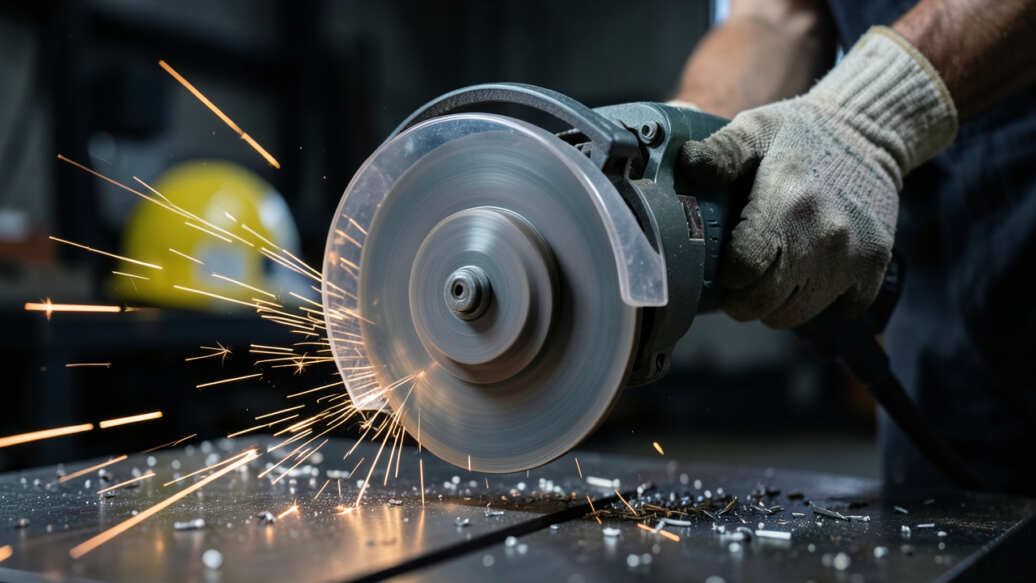
4. Safety Features – Guards and Kickback Protection
Angle grinders spin at high speeds. They can be dangerous without proper safety features. The guard covers part of the disc to contain sparks and debris.
A guard that rotates easily lets you position it for different cuts. Anti-kickback technology reduces the chance of the tool twisting in your hands. Look for a spindle lock for easy disc changes without tools.
Key Safety Parts to Check
A tight guard prevents accidental contact with the spinning disc. Make sure the guard is made of metal, not plastic. Plastic guards can break under impact.
A guard that locks in place is safer than one that slips. Kickback protection slows the motor if it detects a bind. This feature is common on higher-end models.
Also check for a dead-man switch that requires constant pressure.
- Adjustable guard is essential. It lets you angle the guard to block sparks from your face. Many models have a lever or knob for tool-free adjustment. A guard that stays put reduces risk. Always use the guard that comes with the grinder. Removing it is dangerous and against safety rules.
- Kickback protection adds a safety net. When the disc catches on the work piece, the tool could jerk backward. Some grinders have a brake that stops the wheel quickly. Others automatically reduce power. This feature is rare on budget models but worth the extra cost.
- Soft-start feature reduces startup jerk. It ramps up the motor slowly instead of instantly. This lowers the chance of the tool kicking when you pull the trigger. Soft-start is helpful for beginners who are not used to the torque.
Case study: Mike was cutting rebar when his disc snagged. His grinder had kickback protection. The motor slowed down, and he kept control.
He said it saved him from a possible injury. Since then, he only buys grinders with this feature.
- You are working in a tight space with other people nearby. A spark guard prevents burns.
- You are cutting overhead. A dead-man switch stops the tool if you lose grip.
Statistic: A 2022 safety report showed that 40% of angle grinder injuries involve disc breakage. Using proper guards reduces this risk by over 70%.
5. Handle Options – Side Handle and Vibration Control
Angle grinders have two main handles. The body grip and the side handle. The side handle gives you extra control and reduces fatigue.
Some models let you mount the handle on the left, right, or top. This is handy for different cutting angles. Vibration control dampens the shaking that comes from off-balance discs.
Low vibration handles protect your hands from numbness.
Comfort and Control
A good handle should feel secure in your hand. Rubberized grips help absorb vibration and sweat. The diameter of the handle matters too.
Too thin and you grip too tight. Too thick and your hand tires faster. A well-designed handle reduces strain during long jobs.
Side handles that screw in are common, but some have quick-release clamps for repositioning.
- Look for a cushioned side handle. Rubber sleeves on handles reduce vibration transfer. Some handles have shock-absorbing layers. This helps when you grind for more than 15 minutes. Test the handle at the store if possible. A comfortable grip makes a big difference.
- Check the number of mounting positions. Some grinders allow the handle to attach at three different spots. This lets you hold the tool in a way that feels natural. A handle that only mounts on one side limits your options. For left-handed users, a reversible handle is key.
- Vibration rating is listed in the specs. Lower numbers are better. A rating under 5 m/s² is considered low vibration. Prolonged use over 8 m/s² can cause hand-arm vibration syndrome. Choose models with antivibration technology for regular use.
Real example: Laura had to grind old paint off a fence for hours. Her old grinder had a hard plastic handle. Her hands went numb after 20 minutes.
She upgraded to a model with a rubberized, antivibration handle. She finished the job without discomfort.
- You are doing detail work, like sharpening lawn mower blades. A slim handle gives better precision.
- You are grinding concrete floor patches. A large, padded handle absorbs shock over long periods.
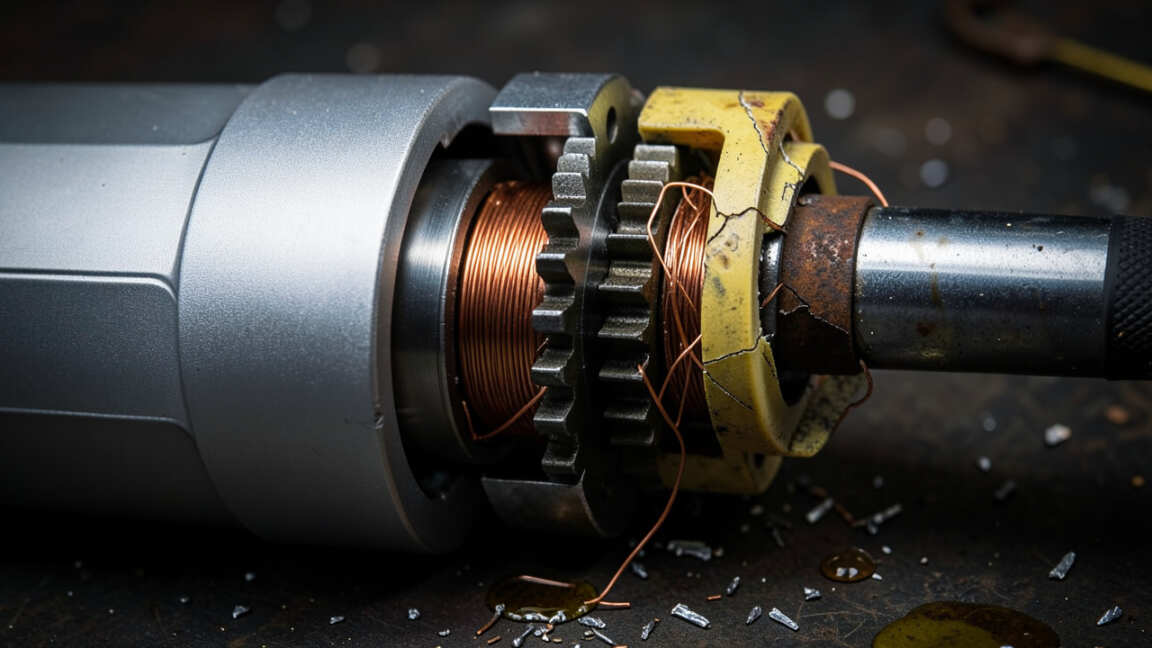
6. Build Quality – Materials and Durability
Build quality affects how long the grinder lasts. Good grinders use metal gearboxes and aluminum housings. Plastic housings save weight but crack under stress.
Ball bearings in the motor and spindle last longer than sintered bearings. A sturdy construction also helps with precision. Cheap grinders often have wobble in the spindle, which makes cuts less accurate.
What to Look For
The gearbox transfers power from the motor to the disc. Metal gears are stronger than plastic gears. Aluminum gearboxes shed heat better.
The housing around the motor protects internal parts from dust. Look for a dust-resistant seal to keep debris out. Brand matters less than the actual construction.
Read reviews about long-term reliability. A well-built grinder can last 10 years or more with care.
- Metal gearbox on every grinder. This is a must for heavy use. Plastic gears strip easily under torque. Metal gears handle the force of grinding and cutting. Even small 4.5-inch grinders should have metal gears. Check the product description or ask a salesperson.
- Ball bearings instead of sintered bushings. Ball bearings spin smoothly and handle higher speeds. They also resist wear from dust. Sintered bearings are cheaper but fail sooner. For any grinder you plan to keep, choose ball bearings. This is especially important for the spindle.
- Look for a dust-proof switch. The switch is a common failure point. A switch covered by a rubber boot or seal keeps out grit. Some models have a sealed trigger that resists dust ingress. Dust protection also extends the life of the motor.
Case study: A construction crew bought two identical grinders. One was a cheap plastic model, the other a metal-body version. After six months, the plastic one had loose parts and wobbled.
The metal one still ran smoothly. The team learned to invest in better materials.
- You are using the grinder every weekend for home projects. A metal housing is worth the extra cost.
- You only need the grinder once a month. A well-built plastic model may still meet your needs.
| Feature | Good Quality | Budget Quality |
|---|---|---|
| Gearbox material | Metal | Plastic |
| Housing | Aluminum | Plastic |
| Bearings | Ball bearings | Sintered bushings |
This table compares quality indicators. Use it to evaluate different models.
7. Corded vs Cordless – Battery Life and Convenience
Corded grinders have unlimited run time but need a power outlet. Cordless grinders offer portability but rely on battery charge. For large jobs near a socket, corded is simpler.
For work in remote areas or tight spots, cordless wins. Battery voltage and amp-hour (Ah) rating determine runtime. A 5 Ah battery lasts longer than a 2 Ah one.
But bigger batteries weigh more.
Choosing the Right Type
Consider your typical workspace. If you often grind outdoors or on ladders, cordless is a good choice. If you work in a garage with outlets, corded saves you from battery swaps.
Cordless grinders are less powerful than corded models of the same price. But brushless motors are closing the gap. Check the battery platform if you already own other power tools.
Sticking with one brand saves money.
- Corded grinders give constant power. They do not slow down as the battery drains. They are also lighter without a battery pack. For continuous grinding, corded is more efficient. Motor power stays steady from start to finish. This is important for tasks like removing welds.
- Cordless grinders offer freedom of movement. No cord to trip over or get caught. Great for cutting pipes in crawl spaces or on roofs. Batteries typically last 15 to 30 minutes of actual grinding. Buy an extra battery for longer sessions. Lithium-ion batteries hold charge well over time.
- Brushless motors improve cordless performance. They run cooler and use less energy. This means more cuts per charge. Many cordless grinders now have brushless motors. They cost more but are worth it if you rely on battery power often.
Real example: Mark works on renovation sites. He used a corded grinder but kept tripping over the cord. He switched to a cordless 20V brushless model.
He can now move freely around the site. He carries two batteries to last through the day.
- You are cutting metal fencing in a backyard. Cordless lets you reach every post without extension cords.
- You are grinding inside a workshop with plenty of outlets. Corded is cheaper and more powerful.
Statistic: Sales data from 2023 shows that cordless angle grinder sales grew by 20% year over year. This reflects the trend toward portable tools.
8. Spindle Lock and Disc Change – Ease of Use
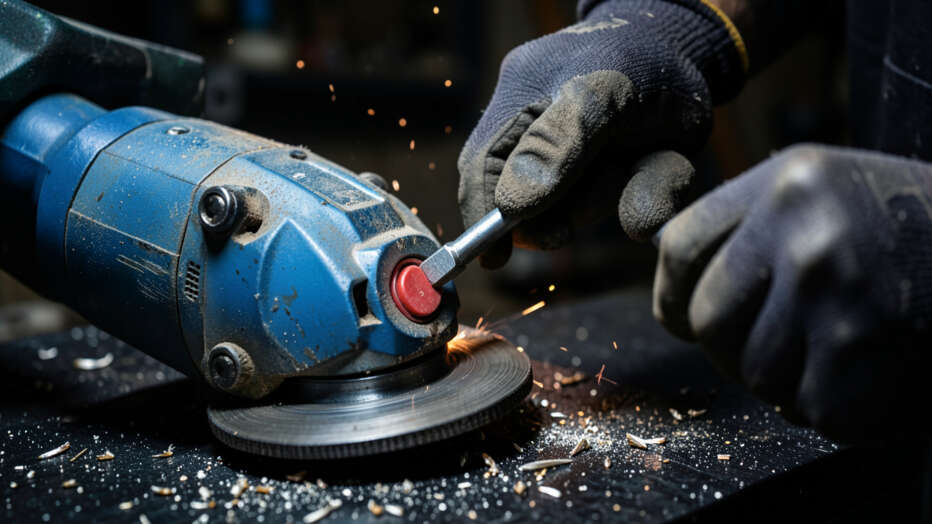
Changing discs should be quick and safe. A spindle lock holds the shaft still so you can loosen the nut. Good spindle locks are easy to press and hold while you turn the nut.
Some models use a two-wrench system instead. Look for a tool-free disc change if possible. This feature uses a quick-release button.
It saves time and frustration, especially on the job.
How Disc Change Works
The spindle is threaded to hold the disc flange. You press the lock button to prevent the spindle from rotating. Then you turn the outer nut with a wrench.
Some nuts have a built-in flange that helps center the disc. For tool-free systems, you press a button and twist the nut by hand. This is handy when you are wearing gloves or working on a ladder.
- Spindle lock should be easy to press. If it is stiff or hard to reach, disc changes become annoying. Look for a lock that is positioned near the gear housing. Some models have a spring-loaded lock that returns automatically. Test it before you buy if possible.
- Tool-free disc change saves time. Instead of using wrenches, you manually tighten the nut. This is common on newer models. It is good for quick swaps between cutting and grinding discs. But make sure the lock stays engaged during use.
- Check the wrench storage. Some grinders include a built-in slot for the wrench. This prevents you from losing it. A lost wrench means you might not be able to change discs until you find it. Built-in storage is a small but helpful detail.
Case study: Anna switched from using cut-off wheels to grinding discs often. Her old grinder required two wrenches. She spent 5 minutes each change.
She bought a model with a spindle lock and a single wrench. Now changes take 30 seconds. She gets more done per hour.
- You are swapping discs between cuts. A tool-free system cuts down on downtime.
- You are working in a confined space. A spindle lock lets you change discs without extra tools.
9. Dust Management – Collection and Protection
Angle grinders create a lot of dust, especially when working on concrete, stone, or drywall. Dust gets into the motor and reduces its life. Some grinders have dust extraction ports that connect to a vacuum.
Others have sealed switches to keep debris out. A dust collection system protects both you and the tool. Inhaling silica dust is harmful.
Always use a dust mask or vacuum.
Managing Dust Effectively
Dust management includes the tool itself and your personal gear. A grinder with a dust extraction shroud covers the disc partially. It channels dust into a hose that connects to a vacuum.
This keeps the work area cleaner. Some models have a dust ejection feature that directs dust away from the air intake. For indoor work, dust management is essential.
- Look for a dust extraction attachment. Many grinders come with a shroud kit. This fits over the guard and collects dust at the source. It works best with a shop vacuum. A good shroud reduces airborne dust by up to 90%. Check if the shroud is adjustable for different disc depths.
- Sealed bearings and motor protect the tool. Some grinders have labyrinth seals that keep fine dust out. These are common on high-end models. Sealed components last longer in dusty conditions. If you often cut concrete or masonry, pay extra for dust protection.
- Use personal protective equipment as well. Even with dust extraction, wear a respirator. Safety glasses and gloves also help. Dust from cutting tiles or concrete contains silica. Long-term exposure can cause lung issues. A vacuum with a HEPA filter is best.
Real example: Dave cut concrete blocks for a patio. His grinder had no dust collection. Dust filled his garage and his lungs.
He bought a model with a dust shroud and connected it to a vacuum. The dust level dropped dramatically. He felt safer and the tool lasted longer.
- You are cutting tiles inside a house. A dust shroud keeps the room nearly clean.
- You are grinding metal in a shop. Dust extraction prevents metal fines from settling on surfaces.
Statistic: The CDC states that over 2 million workers are exposed to silica dust each year. A good dust management system reduces this risk significantly.
10. Brand Reputation and Warranty – Reliability
Brand reputation tells you about product quality and support. Well-known brands like DeWalt, Makita, Bosch, and Milwaukee have proven track records. They offer better customer service and replacement parts.
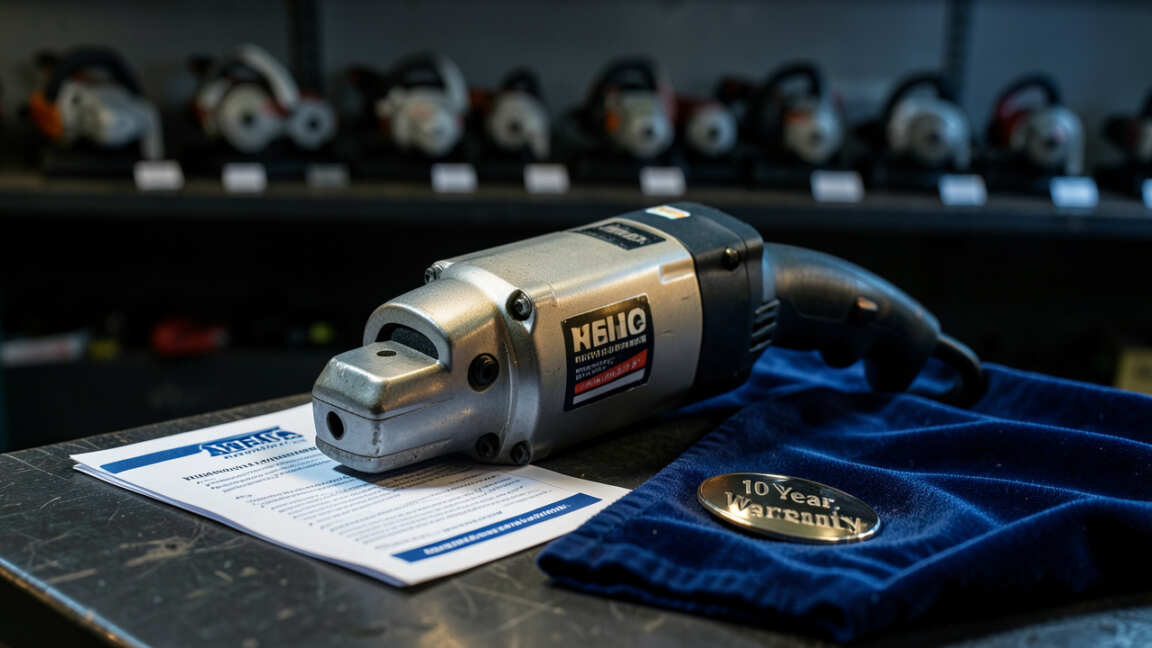
Warranty length is a clue to reliability. A 3-year warranty is good. A 5-year warranty is excellent.
Avoid off-brands that lack support. A cheap grinder may cost more in the long run if it breaks.
How to Evaluate Brands
Read online reviews from real users. Look for patterns about common failures. Also check the availability of spare parts.
Good brands have service centers in many areas. Some offer repair programs. The price difference between a no-name and a reputable brand is often small.
For a tool you rely on, investing in a trusted name is smart.
- Warranty length shows confidence. Brands that offer 3-year or longer warranties trust their build. Shorter warranties may mean the company expects problems. Always register your tool for the warranty to apply. Keep the receipt in case you need to claim.
- Look for a local service center. If the grinder needs repair, you want a nearby option. Check the brand’s website for authorized service locations. Some brands offer mail-in repair. This adds downtime but is still better than no support.
- Read user feedback on forums and retail sites. Real experiences tell you about durability and customer service. Look for comments about vibration, disc wobble, or motor burnout. A brand with mostly positive reviews is a safe bet. Give preference to brands with a long history in power tools.
Case study: Ben bought a budget grinder for 30 dollars. It lasted two months before the motor died. He had no warranty support.
He then bought a mid-range model from a known brand with a 3-year warranty. That grinder still works after three years. He now recommends sticking with reputable brands.
- You plan to use the grinder occasionally. A lower-priced model from a known brand is fine.
- You work as a contractor. A professional-grade brand with a long warranty is worth the investment.
| Brand | Typical Warranty | Customer Service Rating |
|---|---|---|
| DeWalt | 3 years | 4.5/5 |
| Makita | 3 years | 4.4/5 |
| Ryobi | 3 years | 4.2/5 |
This table shows warranty and ratings for three popular brands. Use it as a starting point for your research.
Frequently Asked Questions
Question: What size angle grinder should a beginner buy?
Answer: A 4.5-inch grinder is the best choice for beginners. It is light, easy to control, and handles most home projects. The discs are common and cheap.
You can cut metal, tile, and wood with the right blade. Start with this size and upgrade later if needed.
Question: Is a cordless angle grinder as powerful as a corded one?
Answer: Cordless grinders are improving, but corded models still have an edge in power. A corded 10-amp grinder will outperform most cordless 20V models under heavy load. For short, portable jobs, cordless is fine.
For continuous work, corded is better.
Question: How important is variable speed on an angle grinder?
Answer: Variable speed is important if you work with different materials. It lets you set a low speed for polishing or plastic cutting. For grinding metal or concrete only, fixed speed works well.
Most beginners can start with fixed speed and upgrade later.
Question: Can I use an angle grinder to cut wood?
Answer: Yes, but you need a special wood-cutting blade. Use a saw blade designed for angle grinders. These blades have a smaller kerf to prevent kickback.
Always slow down the speed if your grinder has variable speed. Wear eye protection because wood chips fly fast.
Question: How do I maintain my angle grinder to make it last?
Answer: Keep the air vents clean from dust. Check the carbon brushes every 50 hours of use and replace them when short. Lubricate the spindle periodically with light oil.
Store the grinder in a dry case. Replace worn discs promptly to prevent motor strain.
Summary
You now know the seven key things to check before buying an angle grinder. Power, disc size, speed control, safety, handle comfort, build quality, and brand reputation all matter. Start with a 4.5-inch, 7-amp corded grinder for most tasks.
Match the tool to your specific jobs, not the other way around. You can pick the right model with confidence today.