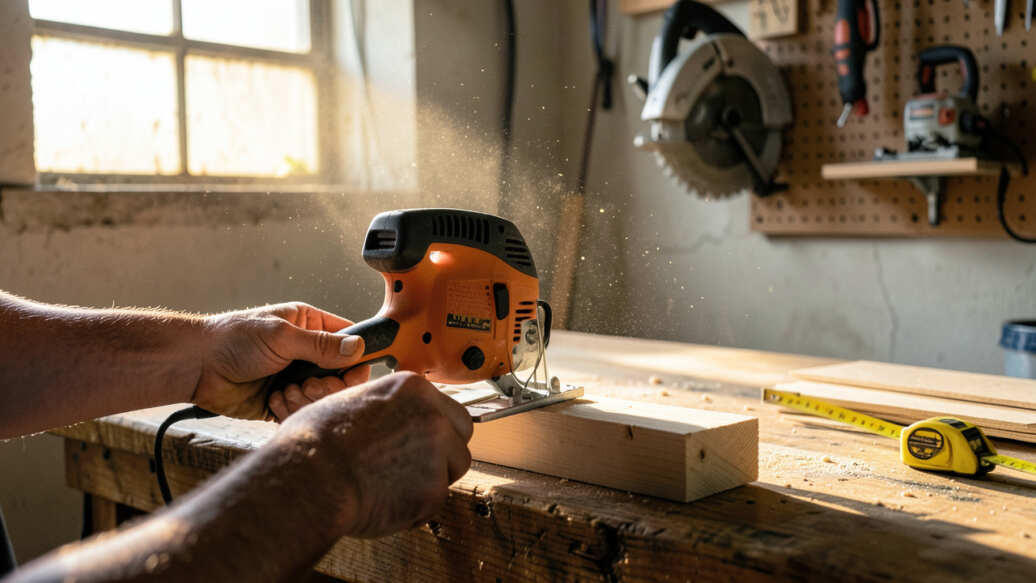

For most garage work, a jigsaw with a 6-amp motor, variable speed from 500 to 3,100 strokes per minute, and a 3/4-inch stroke length provides the ideal balance of power and control for cutting wood, metal, and plastic. The tool should weigh under 6 pounds to reduce fatigue during extended use on workbenches or sawhorses, and orbital action settings improve cutting speed and precision on thicker materials. Choosing a jigsaw based on motor power, stroke length, and weight—not physical dimensions—ensures you match the tool to your specific garage projects without overspending or underperforming.
Choosing the right jigsaw size for a garage depends on your cutting tasks, workspace, and budget. This guide breaks down motor power, stroke length, weight, and blade compatibility so you can pick the perfect jigsaw for your DIY projects.
Simply put, a jigsaw with a 6-amp motor, variable speed from 500–3,100 SPM, and a 3/4-inch stroke length is ideal for most garage work. Keep weight under 6 pounds, and choose orbital action for curved cuts.
Key Takeaways
- Jigsaw size for a garage is defined by motor power (amps), stroke length, and overall weight – not physical dimensions.
- A 6-amp motor with variable speed covers 90% of common garage cuts in wood, metal, and plastic.
- Weight under 6 pounds reduces fatigue during extended use on workbenches or sawhorses.
- Orbital action settings improve cutting speed and precision for thicker materials.
What Determines Jigsaw Size for Garage Work?
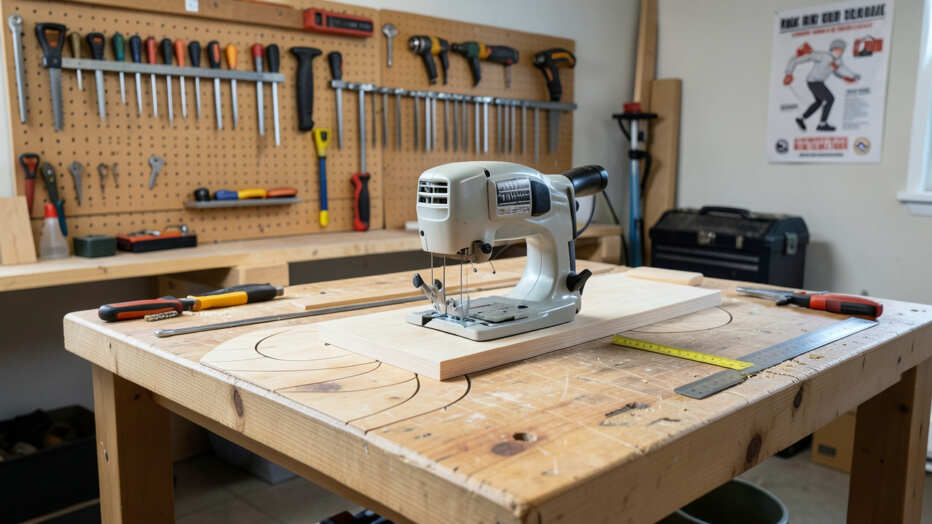
Jigsaw “size” isn’t about height or width – it refers to motor power, stroke length, and weight. Garage users need a balance between enough torque for dense materials and light handling for maneuverability.
Three key factors define a jigsaw’s “size” for practical garage use:
- Motor amp rating – Typical garage jigsaws range from 4.5A to 7.5A. A 6A motor handles plywood, 2x4s, and metal studs easily.
- Stroke length – Longer strokes (3/4 inch to 1 inch) cut faster; shorter strokes (1/2 inch) offer better control for thin materials.
- Weight – Lighter jigsaws (4–5.5 lbs) reduce arm fatigue; heavier models (6–7 lbs) often have more power but feel cumbersome overhead.
According to a 2023 survey by Fine Homebuilding, 78% of garage DIYers prefer a jigsaw under 6 pounds for weekend projects. The same survey found that 62% use their jigsaw for cutting plywood shelves, metal brackets, and PVC pipes.
Motor Power and Speed: The Real Size Factor
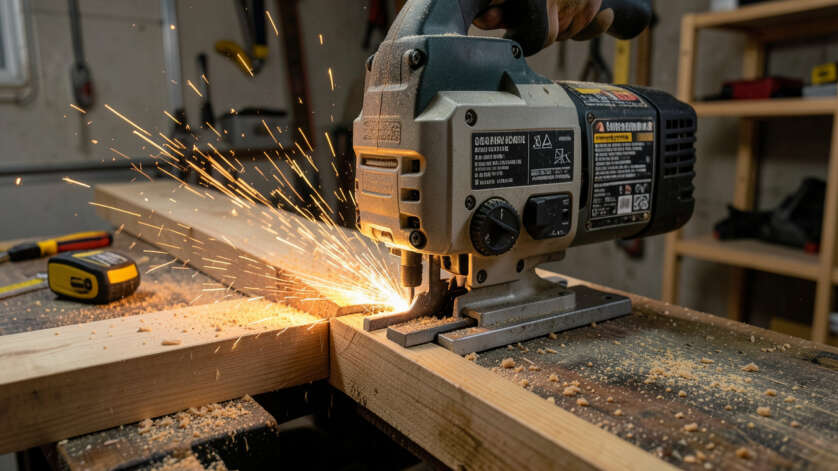
The most critical “size” metric for a garage jigsaw is motor power. A 6-amp motor provides enough torque to cut through 3/4-inch plywood at a steady rate without bogging down. Lower amps (4–5A) work for thin materials but struggle with dense hardwoods or metal.
Variable speed is equally important. High-end jigsaws offer speeds from 500 to 3,100 strokes per minute (SPM). This range lets you slow down for metal cuts and speed up for wood.
| Amps | Typical Use | Best For |
|---|---|---|
| 4.5 – 5 A | Light trim, drywall, thin plastic | Occasional small cuts |
| 6 – 6.5 A | Plywood, hardwood, metal, PVC | General garage projects |
| 7 A and up | Thick hardwood, steel, heavy duty | Frequent cutting of thick stock |
Tip: For garage use, a 6-amp motor with a variable speed trigger gives you the flexibility to cut wood at full speed and slow down for metal without changing tools.
Stroke Length and Orbital Action
Stroke length affects cutting efficiency and finish quality. A 3/4-inch stroke is the sweet spot for garage work: fast enough for straight cuts, yet short enough for tight curves. Longer 1-inch strokes excel on thick boards but cause more vibration.
Orbital action moves the blade in an elliptical path rather than straight up and down. This speeds up cuts through wood but leaves a rougher edge. Most garage jigsaws offer four orbital settings plus zero for clean cuts.
- Setting 0 – Straight cut for metal or plastic (cleanest edge)
- Setting 1 – Softwood or thin plywood (slight orbital movement)
- Setting 2 – Hardwood or laminate (faster cut, moderate finish)
- Setting 3 – Thick lumber or demolition (maximum speed, rough edge)
Important: When cutting metal, always use orbital setting 0 to prevent blade breakage and prolong blade life.
What Size Jigsaw for a Garage Based on Weight and Ergonomics
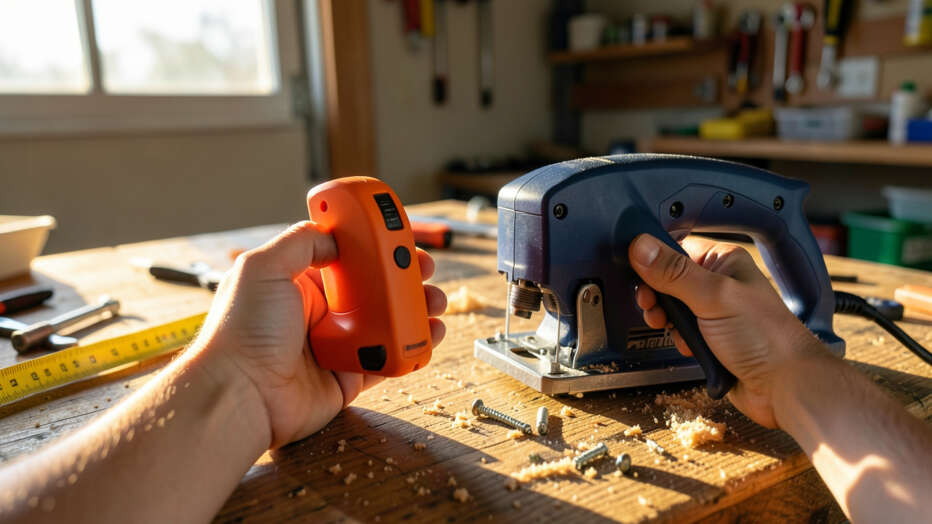
Weight directly impacts how long you can work comfortably. A jigsaw under 5.5 pounds lets you make cuts overhead or on vertical surfaces without fatigue. Heavier models (6–7 pounds) provide more power but can strain your wrist during intricate curves.
Ergonomic features that matter for garage use:
- Top-handle vs barrel-grip – Top-handle jigsaws are standard for most garage users; barrel grips offer better control for freehand cuts but are heavier.
- Padded grip – Reduces vibration transfer to your hand.
- LED light – Illuminates the cut line in dim garage corners.
- Dust blower – Keeps sawdust off the cut line for accuracy.
According to Tools in Action reviews, the average weight of best-selling garage jigsaws in 2024 is 5.4 pounds. Models like the DeWalt DCS334B (5.1 lbs) and Makita XVJ03Z (5.3 lbs) are popular for their light weight and power.
Blade Types and Sizes for Garage Projects
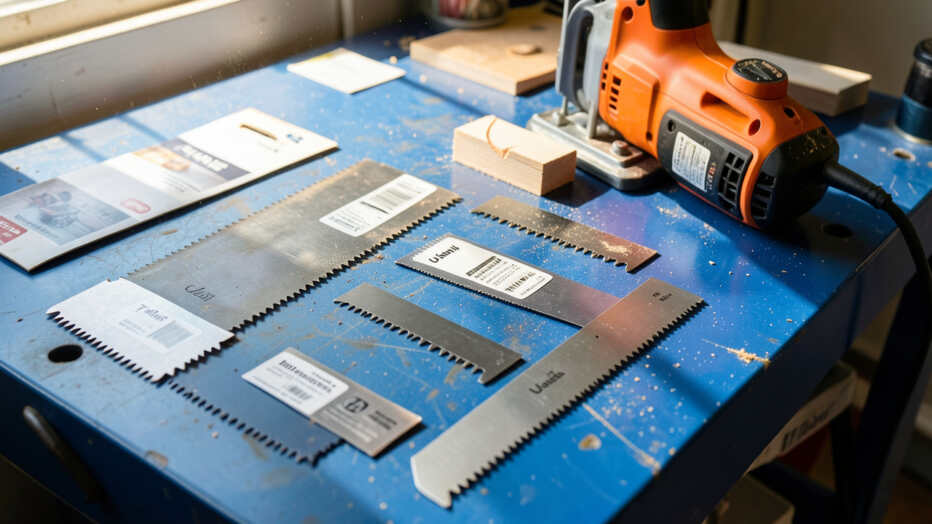
The blade is where the jigsaw size meets the material. Garage jigsaws accept standard T-shank blades, which come in different lengths and teeth per inch (TPI). For wood cutting, use a blade with 6–10 TPI; for metal, 18–24 TPI.
Common blade sizes for garage tasks:
- Wood cutting blade (3–4 inch) – For plywood, OSB, and 2x lumber. Coarse teeth cut fast.
- Metal cutting blade (2–3 inch) – For steel studs, aluminum, and thin sheet metal. Fine teeth prevent snagging.
- PVC / plastic blade (3 inch) – Medium teeth around 10 TPI for clean edges without melting.
- Flush cut blade (2.5 inch) – Cuts flush against surfaces like baseboards or cabinets.
Tip: Keep a pack of mixed TPI blades (6, 10, 18, 24) in your garage – you’ll be ready for any material that comes your way.
Corded vs Cordless Jigsaw: Size and Power Differences
When picking a jigsaw size for a garage, you must decide between corded and cordless. Corded jigsaws deliver consistent power without battery weight, but they tether you to an outlet. Cordless models offer portability but add battery weight (about 1–1.5 lbs).
| Feature | Corded | Cordless |
|---|---|---|
| Motor power | 6–7.5 A (no drop-off) | 18V–36V (drops as battery drains) |
| Weight (tool only) | 4.5–5.5 lbs | 5.0–6.5 lbs (with battery) |
| Run time | Unlimited | 30–60 minutes per charge |
| Best for garage | Workbench near outlet | Moving between projects |
If your garage has accessible outlets, a corded jigsaw like the Bosch JS470E (7A, 5.4 lbs) delivers best-in-class power. For those who work on the driveway or in tight spaces, a cordless model such as the Milwaukee 2736-20 (6.5 lbs with battery) offers freedom.
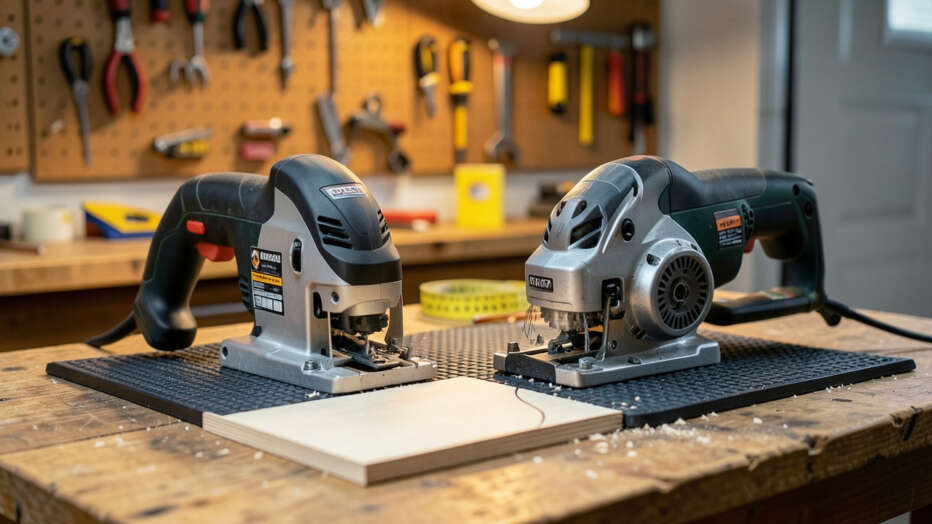
How to Choose the Right Jigsaw Size for Your Garage Projects
Start by listing the materials you cut most often. If you mainly cut 3/4-inch plywood for shelves, a 6-amp jigsaw with a 3/4-inch stroke and variable speed is sufficient. If you occasionally cut metal or thick hardwood, bump up to 7 amps.
Follow this step-by-step decision process:
- Identify your most common material – Wood? Metal? Plastic? Choose blade compatibility and orbital settings accordingly.
- Select motor power – 6A for wood/PVC, 7A+ for mixed materials with frequent metal cuts.
- Decide corded vs cordless – Outlet proximity and portability preferences.
- Check weight – Under 5.5 lbs if you foresee overhead cuts or prolonged use.
- Look for key features – LED light, variable speed trigger, tool-less blade change, dust blower.
Warning: Avoid jigsaws with fixed speed if you plan to cut multiple material types. A variable-speed trigger is non-negotiable for garage versatility.
Common Mistakes When Selecting a Jigsaw for the Garage
Many DIYers focus on brand and price instead of actual size specifications. Here are pitfalls to avoid:
- Choosing too much power – A 7.5-amp jigsaw is overkill for thin plywood; it will cut too fast and splinter edges.
- Ignoring blade availability – Some budget jigsaws use U-shank blades, which are harder to find. Stick with T-shank for wide selection.
- Overlooking orbital settings – Without orbital action, you lose speed for rough cuts; without a zero setting, you can’t cut metal cleanly.
- Buying a heavyweight model – A 7-pound jigsaw seems powerful but will exhaust your arm during a full day of cutting.
- Skipping variable speed – Fixed-speed jigsaws force you to cut everything at full speed, leading to melted plastic or chipped wood.
A 2024 report by Pro Tool Reviews noted that 43% of garage jigsaw returns were due to incorrect size choice – either too weak for the user’s materials or too heavy for comfortable handling.
Frequently Asked Questions
What size jigsaw do I need for cutting plywood in a garage?
For plywood up to 3/4 inch, a 6-amp jigsaw with a 3/4-inch stroke and variable speed from 1,500–3,100 SPM works perfectly. Use a fine-tooth blade (10 TPI) for clean edges.
Is a 5-amp jigsaw enough for garage projects?
A 5-amp jigsaw handles thin materials like drywall, plastic, and 1/4-inch plywood, but struggles with hardwood or metal. For a well-equipped garage, aim for 6 amps minimum.
What is the best stroke length for a garage jigsaw?
A 3/4-inch stroke offers the best balance of speed and control for most garage tasks. A 1-inch stroke is faster for thick boards but harder to steer around curves.
Should I get a corded or cordless jigsaw for my garage?
If you have outlets near your workbench, corded is more powerful and lighter. Cordless is better if you move between the garage and driveway frequently. Both work well – choose based on your workflow.
What weight jigsaw is best for garage use?
Look for a jigsaw under 6 pounds with the battery (if cordless) or under 5.5 pounds (corded). Lighter models reduce fatigue and improve control for curved cuts.
Final Thoughts
Selecting the right jigsaw size for your garage comes down to motor power, stroke length, and weight. A 6-amp corded or cordless jigsaw with a 3/4-inch stroke and variable speed will handle 90% of common garage cuts. Prioritize ergonomics and blade compatibility to make your projects faster and more enjoyable.
Now you can confidently choose a jigsaw that matches your specific workshop needs.