
Pergolas wear out early primarily due to six preventable factors: poor material selection, weather exposure, substandard construction, pest damage, lack of maintenance, and improper fasteners. Choosing appropriate wood types such as cedar or pressure-treated lumber and using correct building techniques greatly enhances durability. Consistent upkeep and proper ground contact prevent the structural decay that shortens a pergola's lifespan.
It can be a bit confusing for new DIYers to figure out why their pergolas might not last as long as they hoped. Thinking about 6 Reasons Pergolas Wear Out Early can seem like a lot at first. But don’t worry!
We’ll break it down simply, step-by-step, so you can make your pergola last. We’ll show you what to watch out for and how to fix it.
Key Takeaways
- You will learn the main reasons why pergolas can break down sooner than expected.
- We will explain how different types of wood affect a pergola’s lifespan.
- You will find out how weather can harm your pergola and what to do about it.
- We will cover the importance of proper building techniques to prevent early wear.
- You will see how pests can damage your pergola and how to stop them.
- We will discuss the role of regular upkeep in keeping your pergola strong.
Why Pergolas Sometimes Don’t Last
The Importance of Good Materials
Picking the right wood is super important for any outdoor structure. Some woods are naturally stronger and can handle the weather better than others. If you pick a wood that’s soft or not meant for the outdoors, it’s going to start showing wear and tear much faster.
Think of it like choosing clothes for a rainy day – you want something waterproof, not something that soaks up water.
Wood Types and Their Durability
Different wood types have different strengths. Cedar and redwood are often good choices because they have natural oils that help them resist rot and bugs. Pine, on the other hand, is less expensive but needs more care to protect it from the elements.
If a pergola is built with pine and not sealed well, it’s one of the top reasons pergolas wear out early.
Pressure-Treated Wood
Pressure-treated wood is a popular option. It’s been soaked in chemicals to help it last longer against rot and insects. However, not all treated wood is the same.
The level of treatment matters. Also, if the wood isn’t allowed to dry properly after treatment or if it’s cut and not sealed at the ends, those exposed areas can still let moisture in, starting the decay process.
Weather’s Big Impact
Our outdoor spaces face a lot. Sun, rain, snow, and wind all play a role in how long things last outside. A pergola is no different.
The constant exposure to changing weather can be tough on the materials. This is a major factor in 6 Reasons Pergolas Wear Out Early.
Sun Damage
Direct sunlight, especially during hot summer months, can dry out wood. When wood dries out, it can start to crack and split. This makes it weaker and also opens up little paths for water to get in, leading to rot.
UV rays from the sun can also fade the color and finish, making the pergola look old before its time.
Rain and Moisture
Rain is a pergolas best friend and worst enemy. It keeps things clean, but too much water can cause serious problems. When wood stays wet for too long, it can start to rot.
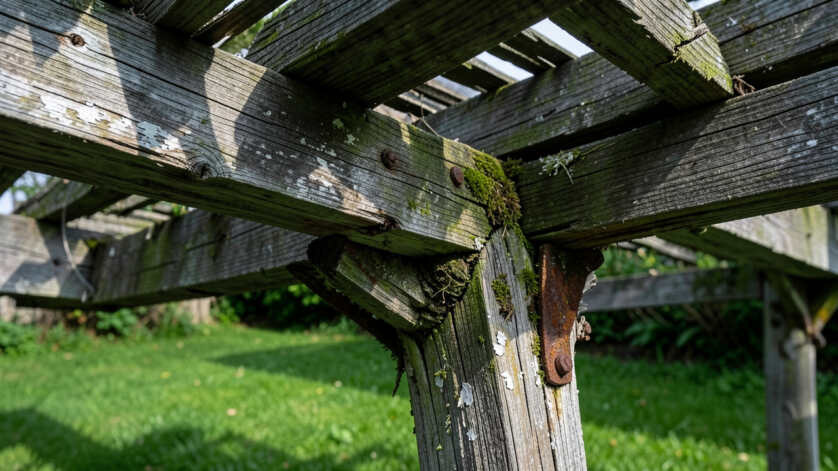
This is especially true for parts of the pergola that don’t get much air, like where the posts meet the ground or where beams overlap. Trapped moisture is a key culprit.
Wind and Storms
Strong winds can put a lot of stress on a pergola. If it’s not built very strongly, or if the foundations are weak, wind can cause parts to loosen or even break. Over time, shaking and movement can weaken joints and connections, leading to structural problems and faster wear.
Poor Building Techniques
How a pergola is put together makes a huge difference in how long it lasts. Even the best wood will struggle if it’s not built correctly. Simple mistakes during assembly can lead to big problems down the road.
This is another big one when we talk about why pergolas wear out early.
Foundation Issues
The base of your pergola is critical. If the posts aren’t set deep enough in the ground, or if they aren’t properly anchored, the whole structure can become unstable. Water pooling around weak foundations can also cause the wood to rot from the bottom up, which is a common and costly problem.
Loose Joints and Connections
All the places where pieces of wood join together are weak points. If screws aren’t tight, or if the right hardware isn’t used, these joints can loosen over time. This creates wobble and stress on the entire pergola.
It’s like a puzzle piece that isn’t fitted snugly – it makes the whole picture weaker.
Opt for naturally rot-resistant woods like cedar or redwood to significantly extend your pergola's lifespan.
Improper Drainage
Water needs to be able to get away from the pergola easily. If water collects on flat surfaces or at the base of posts, it will sit there and soak into the wood. Good design includes ways for water to run off quickly, preventing prolonged contact with the wood.
The Threat of Pests
Tiny creatures can cause big damage to your pergola. Pests like termites and carpenter ants love wood, and if they find your pergola, they can start to eat away at it from the inside. This can weaken the structure significantly without you even knowing it’s happening until it’s too late.
Termites
Termites are a serious threat. They tunnel through the wood, consuming it and creating hollow spaces. This can make the wood brittle and weak.
If a pergola is built near the ground or if there’s any contact with soil, it’s more attractive to termites.
Carpenter Ants
Carpenter ants don’t eat wood, but they carve out nests in it. This excavation process weakens the wood, similar to termites. They prefer damp or decaying wood, so their presence often indicates a moisture problem that needs fixing.
Beetles and Other Wood Borers
Various types of beetles and other insects can bore into the wood. Their larvae can tunnel through the wood as they feed, causing damage that compromises the structural integrity over time.
Lack of Regular Maintenance
This is perhaps the most overlooked reason for pergolas wearing out early. A little bit of care now and then can prevent big problems later. Skipping this step is like ignoring small leaks in your roof – they always get worse.
Not Sealing or Staining
Wood needs protection. Applying a good quality sealant or stain every year or two helps create a barrier against moisture and UV rays. This keeps the wood from drying out, cracking, and rotting.
If the finish wears off and isn’t reapplied, the wood is left exposed to all the elements.
Ignoring Small Problems
If you see a loose screw, a small crack, or a bit of mold, fix it right away. Small issues can quickly turn into larger, more expensive problems if they are left unaddressed. Regular checks can catch these things early.
Cleaning
Dirt and debris can trap moisture against the wood, encouraging rot and mold growth. Simply cleaning your pergola with water and a mild soap can help keep it in good shape and prevent these issues from starting.
Foundation and Ground Contact
How the pergola meets the ground is very important for its longevity. Wood that is constantly in contact with soil or sitting in standing water will rot much faster. This is a critical factor in why pergolas wear out early.
Direct Wood-to-Ground Contact
Pergola posts should ideally not sit directly on the soil. Even with treated wood, constant dampness from the ground will accelerate decay. Using post anchors that lift the wood off the soil is a much better approach.
Poor Drainage Around Posts
If the area around your pergola posts doesn’t drain well, water will collect there. This creates a perpetually damp environment that is perfect for rot to set in. Ensuring the ground slopes away from the pergola is a simple but effective measure.
Using the Wrong Fasteners
The metal bits that hold your pergola together matter. Using the wrong kind of screws or nails can lead to problems.
Corrosion
If you use regular steel screws or nails outdoors, they will rust. Rust can spread and weaken the fastener, making the connection loose. It also looks bad, leaving rusty streaks down the wood.
Stainless steel or galvanized fasteners are best for outdoor use.
Inadequate Strength
Some fasteners are just not strong enough for the forces a pergola experiences, especially from wind. Using screws that are too small or nails that are not properly driven can result in joints that loosen and fail over time.
Frequently Asked Questions
Question: What is the lifespan of a typical pergola?
Answer: With proper care and good construction, a pergola can last anywhere from 10 to 20 years, sometimes even longer. However, the 6 Reasons Pergolas Wear Out Early we discussed can shorten this significantly.
Question: How often should I seal or stain my pergola?
Answer: It’s generally a good idea to reapply sealant or stain every 1 to 3 years, depending on the product used and how harsh your climate is. Check the manufacturer’s recommendations.
Question: Can I prevent rot in my pergola posts?
Answer: Yes, you can. Ensure posts are treated for ground contact, use post anchors to keep wood off the soil, and make sure the ground around the posts drains well.
Question: Are there specific types of wood that are better for pergolas?
Answer: Cedar and redwood are excellent choices because they are naturally resistant to rot and insects. Pressure-treated lumber is also a good option if properly maintained.
Question: What should I do if I see small cracks in my pergola wood?
Answer: You should fill small cracks with a quality wood filler designed for outdoor use. Then, reseal or repaint the area to protect it from moisture.
Final Thoughts
Keeping your pergola looking great and standing strong is totally doable. By understanding the main issues, like using the right wood, protecting it from weather, building it well, and doing simple upkeep, you can avoid the common problems. These steps will help your pergola last much longer than if you just set it up and forgot it.