
The 9 shade coverage mistakes explained include failing to account for undertones, relying on store or home lighting, and testing shades on the hand or wrist instead of the jawline. Skin changes such as tanning, aging, or seasonal shifts also cause mismatches when shades are not reassessed. Addressing these errors by blending down the neck and evaluating in natural light leads to a seamless, natural-looking foundation match.
Finding the right shade of makeup can feel tricky sometimes. It’s easy to get confused, and that’s why we’re here to help. We’ll look at 9 Shade Coverage Mistakes Explained so you can avoid them.
Don’t worry, it’s simpler than you think. We have a clear, step-by-step guide that makes sense. Let’s start by seeing what you’ll learn.
Key Takeaways
- You will learn common reasons why choosing the wrong shade happens.
- We will show you how lighting affects your shade choice.
- Discover how your skin’s undertones play a big role.
- Understand why testing shades on your face is important.
- Learn how to fix a shade that’s a little off.
- You’ll gain confidence in picking your perfect match.
Why Shade Matching is So Tricky
Picking the right makeup shade might seem easy, but many people find it a puzzle. There are so many colors and brands, and what looks good in the store might not look right at home. Skin tones are unique, and undertones add another layer of challenge.
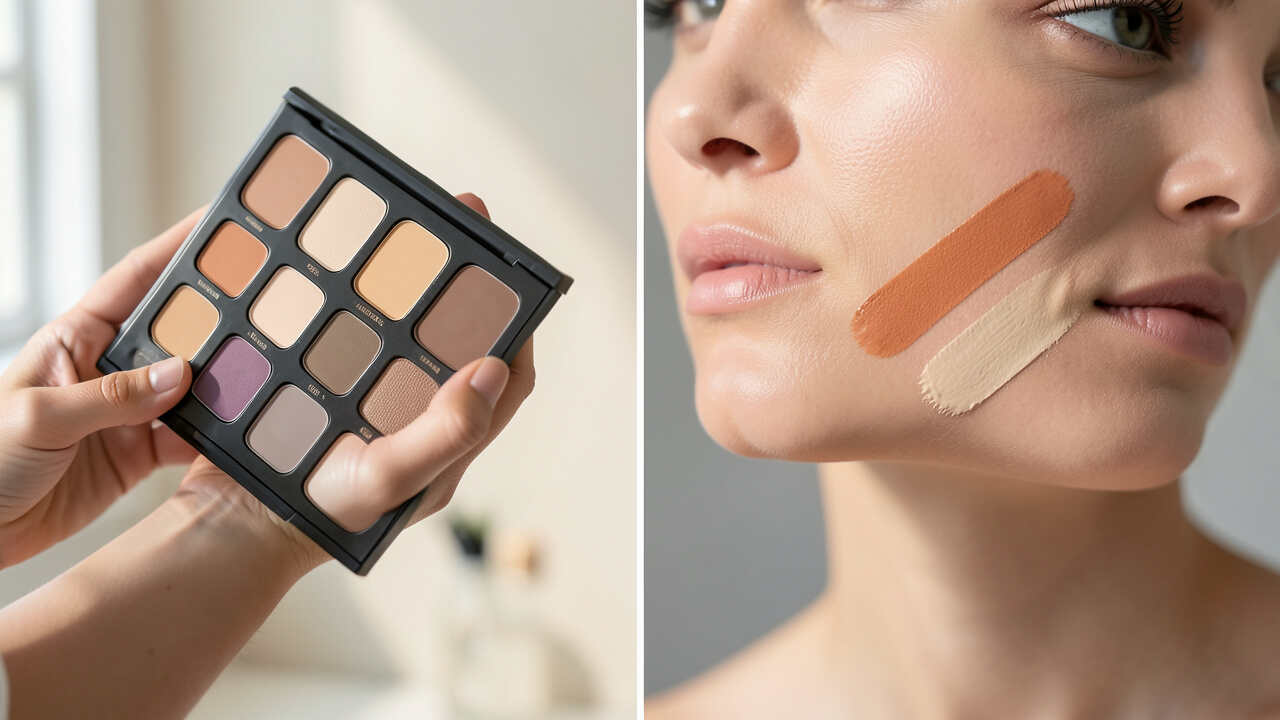
To avoid a mismatched look, always test foundation shades on your jawline in natural light, not just on your hand.
This can lead to frustration and makeup that doesn’t look quite natural. We’ll break down the common slip-ups and show you how to get it right every time.
The 9 Shade Coverage Mistakes Explained
Mistake 1: Not Considering Your Undertones
This is a big one! Your undertone is the subtle color that comes through your skin’s surface. It’s different from your surface color.
Are you warm (yellow, golden, peachy), cool (pink, red, bluish), or neutral (a mix of both)? If you pick a shade that clashes with your undertone, it can make your makeup look orange, gray, or too pink. Warm undertones often look best in shades with yellow or golden bases.
Cool undertones shine in pink or red-based shades. Neutral undertones can wear a wider range of shades.
Mistake 2: Relying on Store Lighting
Shops often use bright, artificial lights that can trick your eyes. What looks perfect under fluorescent lights might look totally different in natural daylight. Always try to check your shade in natural light if possible.
Step outside the store for a moment or look near a window. This simple step can save you from buying the wrong shade.
Mistake 3: Testing on Your Hand or Wrist
The skin on your hand is usually lighter than the skin on your face. It also has different undertones. The best place to test foundation or concealer is on your jawline or neck.
This area is closer to your actual face color and undertone. Blend a small amount down your jaw and see how it looks in natural light. It should disappear into your skin.
Mistake 4: Not Blending Down Your Neck
Even if you find a good match for your face, if it stops at your jawline, you can create a visible line. This is especially true if your face is slightly lighter or darker than your neck. Always blend your foundation down your neck a bit.
This ensures a seamless transition and a natural look. It makes your whole complexion look even.
A common mistake is stopping foundation at the jawline; blending it down the neck ensures a seamless, natural transition.
Mistake 5: Assuming All “Beige” or “Tan” Shades Are the Same
Brands have different ideas about what a “beige” or “tan” shade means. One brand’s medium might be another’s deep. Undertones also vary greatly within these general categories.
Always look at the undertone description if available (e.g., “warm beige,” “neutral tan”) and test the shade, don’t just rely on the name. It’s more about the specific color family.
Mistake 6: Using the Wrong Lighting at Home
Similar to store lighting, the lighting in your bathroom or bedroom can be misleading. Overhead lights can create shadows, and yellow bulbs can cast a warm tone. Try to apply your makeup near a window with natural light.
If that’s not possible, use a good ring light or a well-lit mirror. Good lighting makes a huge difference in seeing your true shade.
Mistake 7: Not Considering Skin Changes
Your skin tone isn’t static. It can change with the seasons, sun exposure, and even hormones. You might be a different shade in the summer than you are in the winter.
It’s a good idea to have two shades – one for warmer months and one for cooler months – or to adjust your coverage with bronzer or a slightly darker/lighter concealer. Your skin color can shift throughout the year.
Mistake 8: Forgetting About Coverage Level
The coverage level of your foundation can affect how the shade appears. A sheer foundation might let more of your natural skin show through, making a shade seem lighter. A full-coverage foundation will mask more of your skin, and the shade will appear more pronounced.
If you’re used to a sheer formula and switch to a full-coverage one, you might need to adjust your shade slightly for the best match. The opacity matters for how the color reads.
Mistake 9: Not Checking Swatches in Different Lights
Once you’ve swatched a shade on your jawline, take a step back. Look at it in different types of light if you can. Look in the store, by a window, and ideally in natural daylight.
What looks okay in one light might look off in another. This final check is crucial for confirming that the shade truly works with your skin.
Frequently Asked Questions
Question: How do I know if my skin is warm, cool, or neutral?
Answer: Look at the veins on your wrist. If they look blue or purple, you likely have cool undertones. If they look green, you probably have warm undertones.
If you see a mix of blue and green, you might be neutral. You can also try wearing gold jewelry (looks good on warm) or silver jewelry (looks good on cool).
Question: Can I use a foundation that’s slightly too light or too dark?
Answer: Yes, you can often correct a shade that’s a little off. If it’s too light, use a slightly darker bronzer or powder over it. If it’s too dark, a lighter concealer on certain areas or a lighter powder can help.
It’s best to get it as close as possible, but these fixes can help.
Question: What if I have very pale skin?
Answer: Pale skin can have cool (pinkish), warm (yellowish), or neutral undertones. Don’t just assume you need the lightest shade. Pay close attention to those undertones.
Some very fair skin tones need shades with a pink base, while others need a yellow base to avoid looking ashy.
Question: Does my age affect shade selection?
Answer: Age itself doesn’t change your undertone, but skin can change. As we age, skin might become drier or have changes in pigmentation. This can slightly affect how foundation looks.
The key is still matching your undertone and current skin tone, regardless of age.
Question: What’s the difference between foundation shade and concealer shade?
Answer: Foundation shades are meant to match your overall skin tone. Concealer shades are often chosen to be one to two shades lighter than your foundation for brightening under the eyes, or to perfectly match your foundation to cover blemishes without looking obvious.
Final Thoughts
Picking the right makeup shade doesn’t have to be a guessing game. By understanding your undertones, checking shades in natural light, and testing on your jawline, you can avoid common mistakes. You’ve learned how to spot when a shade looks off and why lighting matters so much.
Now you can feel more confident finding the perfect match every time. Go ahead and try these tips!