
Pressure washing myths—like higher pressure is always better, one nozzle fits all jobs, or pointing the wand at people is safe—commonly lead to property damage and personal injury. Proper technique involves selecting the correct nozzle and pressure for each surface, using a detergent specifically formulated for pressure washers, and always preparing the area by removing obstacles and covering plants or electrical outlets. Understanding these 10 misconceptions enables users to clean thoroughly and safely without risking damage to concrete, wood, siding, or their own health.
Pressure washing sounds pretty straightforward, right? Just grab a machine and blast away grime. But there are a lot of ideas out there about how it works and what you can do with it.
Many beginners get mixed up by these ideas, leading to mistakes. This guide cuts through the confusion. We’ll go over 10 Pressure Washing Myths and show you the simple, right way to get great results.
Get ready to learn how to clean effectively and safely.
Key Takeaways
- Pressure washing doesn’t have to be complicated, even for newcomers.
- You’ll learn common mistakes to avoid with pressure washers.
- This guide clarifies what pressure washers can and cannot clean.
- You will discover the right tools and techniques for different jobs.
- Safety tips are included to help you work without problems.
- You’ll gain confidence in tackling your own pressure washing projects.
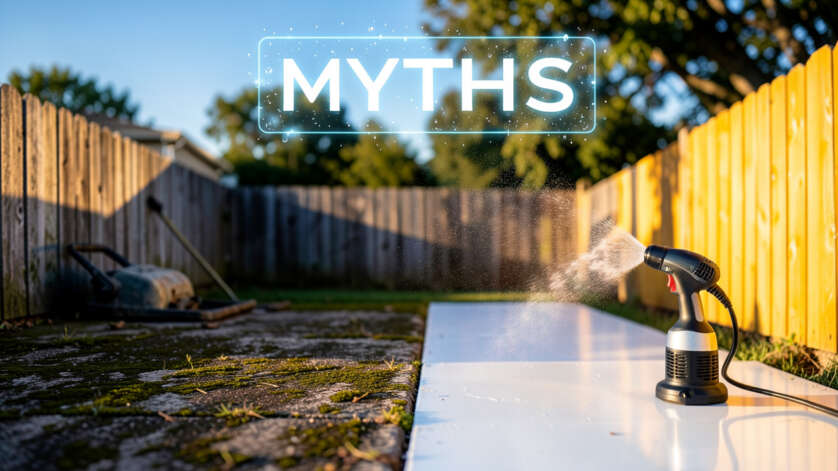
Understanding Pressure Washing Myths
Pressure washing is a powerful cleaning method. Many people think it’s just about using high pressure. This can lead to damage if not done right. Let’s clear up some common ideas that aren’t true. Knowing these myths helps you use your pressure washer safely and get the best clean.
Myth 1: Higher Pressure is Always Better
It’s easy to think that more pressure means a better clean. But this is not always the case. Using too much pressure can damage surfaces like wood siding, paint, and even concrete.
Different materials need different pressure levels. A gentle wash might be enough for some jobs, while others require more power.
Myth 2: One Nozzle Fits All Jobs
Pressure washers come with different spray nozzles. Each one creates a different spray pattern and pressure. A narrow nozzle sprays with high pressure, good for tough stains.
A wider nozzle sprays with lower pressure and covers a larger area, perfect for rinsing or delicate surfaces. You need to pick the right nozzle for the job to avoid harm.
Myth 3: You Can Pressure Wash Anything
While pressure washers are great for many outdoor surfaces, they are not suitable for everything. Delicate items like old bricks, certain types of wood, or even electrical boxes can be damaged. Always check the material before you start.
If you’re unsure, it’s better to use a gentler cleaning method or test in a small, hidden area.
Myth 4: It’s Okay to Point the Wand at People or Pets
This is a dangerous myth. The high-pressure spray from a power washer can cause serious injuries. It can cut skin, damage eyes, and harm pets.
Always treat the pressure washer with respect. Keep the spray pointed away from anyone or any animal. Safety should always come first.
Myth 5: Any Detergent Works
Using the wrong cleaning solution can cause problems. Some cleaners might damage your pressure washer or the surface you’re cleaning. Others can harm plants and the environment.
Always clear away furniture, plants, and debris before starting to pressure wash. This simple step prevents damage and helps you get a more thorough, even clean.
Always use detergents specifically designed for pressure washing. Follow the manufacturer’s instructions for mixing and application.
Myth 6: You Don’t Need to Prepare the Area
Before you start pressure washing, it’s important to prepare the area. This means moving furniture, covering plants, and closing windows. Protecting nearby surfaces and plants prevents damage and makes the cleaning process smoother.
A little preparation saves a lot of trouble later.
Myth 7: You Can Clean Without Getting Wet
Pressure washing can be messy. Water and dirt can splash everywhere. Wear protective gear like waterproof clothing, gloves, and eye protection.
This keeps you dry and safe from debris. Even with gear, expect to get a little wet.
Myth 8: All Pressure Washers Are the Same
There are two main types of pressure washers: electric and gas-powered. Electric models are lighter and easier to use for small tasks. Gas-powered models are more powerful and better for larger jobs.
Each has its own strengths and weaknesses. Choosing the right type depends on what you need to clean.
Myth 9: Pressure Washing Solves All Cleaning Problems Instantly
Sometimes, stubborn stains need more than just a quick spray. You might need to let a cleaning solution soak for a bit. Or, you might need to use a scrub brush along with the pressure washer.
Patience and the right technique are key. It’s not always an instant fix.
Myth 10: You Can Skip the Maintenance
Like any tool, pressure washers need regular maintenance to work well. This includes checking oil levels, cleaning filters, and storing it properly. Taking care of your machine will make it last longer and perform better.
Neglecting maintenance can lead to breakdowns and costly repairs.
Frequently Asked Questions
Question: Can I use a pressure washer on my car?
Answer: Yes, but with caution. Use a wide-angle nozzle and a low-pressure setting. Keep the wand moving and at a distance to avoid damaging the paint or trim.
Question: How do I clean mold and mildew?
Answer: For mold and mildew, use a pressure washer-safe cleaner mixed according to the instructions. Apply the solution, let it sit for a few minutes, then rinse with medium pressure. Always wear protective gear.
Question: Is pressure washing bad for my house siding?
Answer: It can be if done incorrectly. Use a fan-tip nozzle, keep it at least a foot away from the siding, and use the lowest effective pressure. Avoid spraying directly into seams or vents.
Question: How often should I pressure wash my driveway?
Answer: You can pressure wash your driveway as needed, typically once or twice a year. This helps remove dirt, oil stains, and moss, keeping it looking good and preventing damage.
Question: What kind of safety gear do I need?
Answer: You should wear safety glasses or goggles, waterproof gloves, and sturdy closed-toe shoes. Long pants and sleeves are also recommended to protect your skin.
Final Thoughts
You now know that 10 Pressure Washing Myths aren’t true. Using the right pressure, nozzle, and cleaner makes all the difference. Always prepare your area and wear safety gear.
Don’t rush the job; sometimes a little extra time or a scrub brush is needed. Treat your pressure washer with care, and it will serve you well. Now you can tackle your cleaning projects with confidence and get fantastic results without the guesswork.