
A sliding miter saw should never be placed in damp basements, uninsulated garages, outdoors, or any location prone to moisture, as humidity is the primary cause of rust and motor failure. Avoid direct sunlight, unstable surfaces, high-traffic areas, and dusty environments to prevent warping, misalignment, and debris clogging that shorten the tool’s lifespan. The key takeaway is to store the saw on a stable, level surface in a dry, clean, covered area to preserve blade precision and motor health.
A sliding miter saw is a precision tool that deserves proper care. Where you store and use it directly impacts its accuracy, motor life, and overall longevity. This post covers the worst places to put a sliding miter saw and why those locations can ruin your investment quickly.
Simply put, never place your sliding miter saw in damp, unlevel, high-traffic, dusty, or outdoor environments. These conditions cause rust, alignment issues, motor wear, and safety hazards. Store it in a dry, stable, and clean area to maximize its lifespan.
Key Takeaways
- Sliding miter saw placement directly affects blade alignment, motor health, and tool durability.
- Never store a sliding miter saw in damp basements, uninsulated garages, or outdoors – moisture is the #1 enemy.
- Keep the saw away from direct sunlight, high-traffic zones, and dusty areas to prevent warping, accidental damage, and motor clogging.
- Always use a stable, level surface and a dedicated stand or cart to protect the sliding mechanism.
- Cover your saw when not in use, even in a clean shop, to block dust and debris.
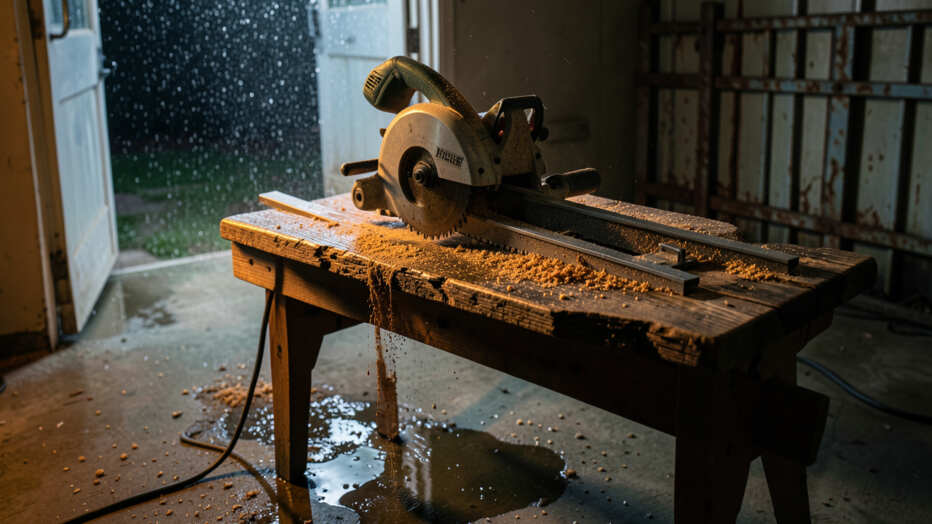
1. Why Placement Matters for a Sliding Miter Saw
A sliding miter saw has moving rails, a powerful motor, and precision components. The place you keep it influences how long those parts last. Poor placement leads to rust, binding rails, motor burnout, and inaccurate cuts.
Modern saws use steel rails, aluminum fences, and plastic guards. Each material reacts differently to environment. Steel rusts in damp air.
Aluminum corrodes near salt or chemicals. Plastic degrades in UV light. Knowing where sliding miter saw placement is safe helps you avoid costly repairs.
- Rust on rails causes rough sliding action and uneven cuts
- Moisture inside the motor housing corrodes windings and brushes
- Heat from direct sunlight warps plastic guards and adjustments
- Dust buildup in the blade guard reduces visibility and safety
- Uneven floors throw off miter and bevel angles
- Bumps from foot traffic knock saw out of calibration
- Heavy items on top of the saw can bend the blade or fence
Warning: Even one season of improper storage can reduce a saw’s accuracy by 1–2 degrees. That means you’ll fight to get square cuts for the rest of the tool’s life.
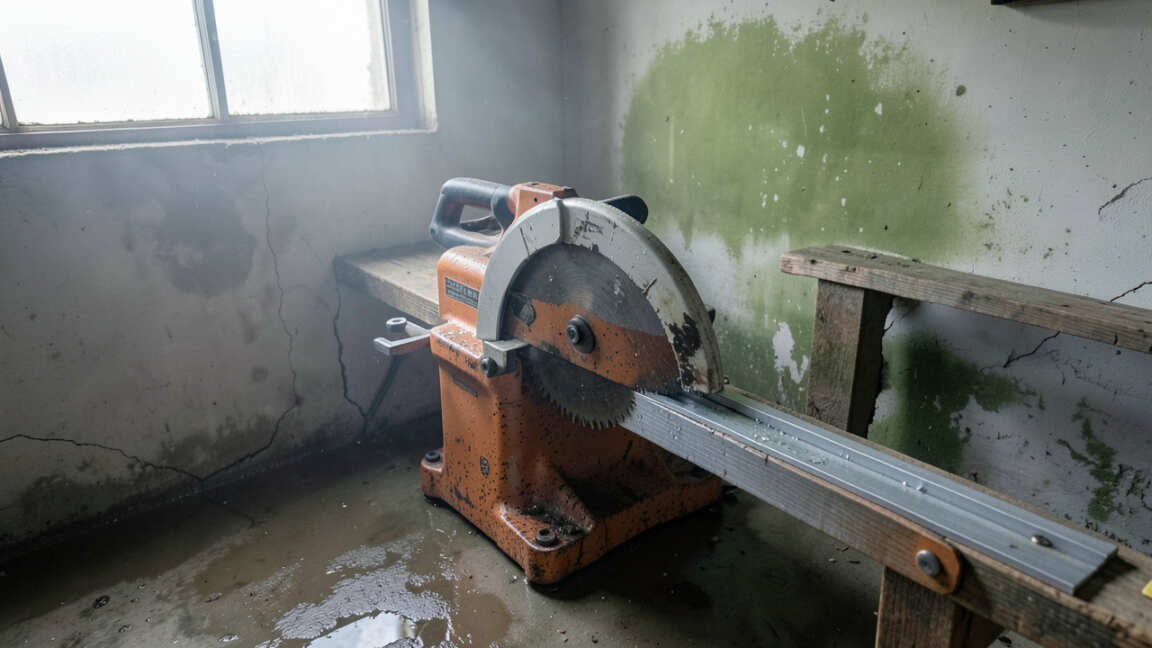
2. Never Store It in a Damp or Humid Area
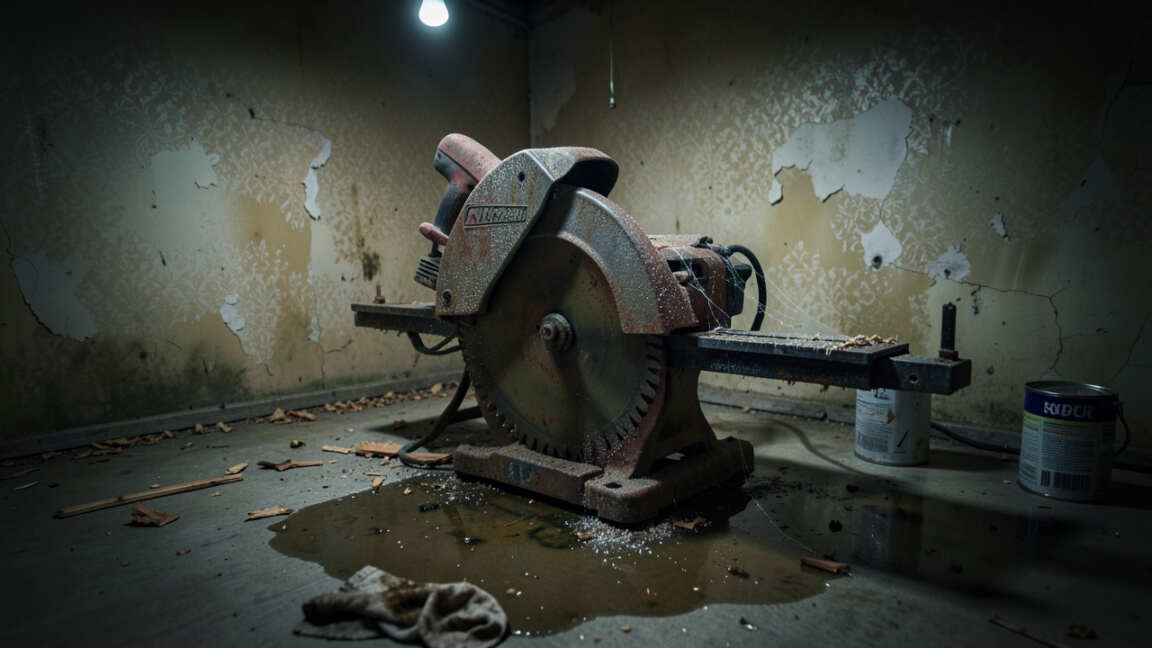
Damp environments are the most common killer of sliding miter saws. Basements, unsealed garages, sheds without vapor barriers, and coastal workshops all invite moisture. High humidity causes metal components to rust within days.
The sliding rails are the most vulnerable. Once rust forms, the saw’s ability to slide smoothly and return to center is compromised. You’ll hear grinding noises, feel resistance, and eventually the rails may lock entirely.
The sliding miter saw motor also suffers – moisture gets into the bearings and switch, shortening electrical life.
| Location | Risk Level | Why It’s Dangerous |
|---|---|---|
| Unfinished basement | Extreme | Constant damp, potential flooding, poor air circulation |
| Garage without HVAC | High | Temperature swings cause condensation on metal parts |
| Outdoor storage shed | Extreme | Rain, humidity, pests – no protection at all |
| Apartment balcony | High | Rain splash, direct moisture, limited airflow |
If you must keep the saw in a damp space, use a dehumidifier and a breathable cover (not plastic, which traps moisture). Apply a thin coat of paste wax to the rails monthly to create a moisture barrier.
3. Avoid Direct Sunlight Exposure
Direct sunlight seems harmless, but it damages a sliding miter saw in two ways: heat and UV radiation. When left in a sunny window or uncovered near a south-facing workshop wall, the saw’s plastic components become brittle and warp over time.
The blade guard, the depth stop, the miter detent plate, and the handle grips are all made from high-impact plastics. UV rays break down the polymer bonds, causing cracking and fading. Additionally, heat buildup inside the blade guard can soften lubricants, causing them to drip onto the slide rails.
The sliding miter saw accuracy suffers when plastic parts lose their shape.
- Places to avoid: windowsills, unshaded workshop benches, truck beds on sunny days
- Better options: interior wall bench, cabinet with doors, under a shelf
- Always cover the saw with a UV-resistant tarp or a dedicated saw cover
Tip: If your workshop gets strong afternoon sun, install UV-blocking window film on the windows nearest your saw. It costs little and protects your tools and your eyes.
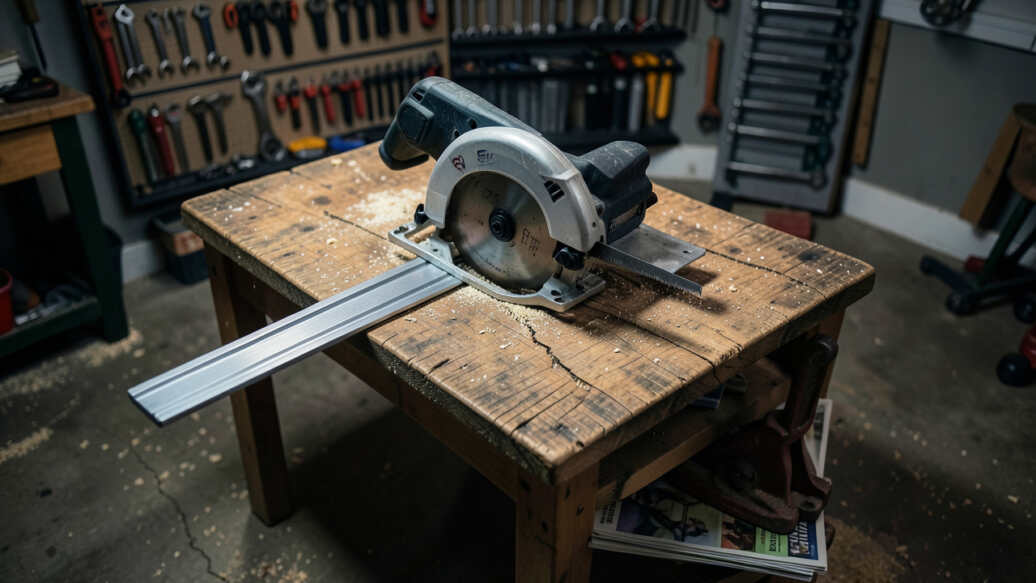
4. Do Not Place It on Unstable or Uneven Surfaces
A sliding miter saw needs a perfectly level, stable base to maintain its precision. Never set it on a wobbling workbench, an uneven floor, or a folding table that rocks. That kind of sliding miter saw setup causes repeated calibration shifts.
When the saw is used on a slanted or bouncing surface, the sliding rails experience uneven stress. The blade may bind during a cut, kick back, or produce inaccurate angles. Over time, the linear bearings wear unevenly, leading to loose motion and play in the head assembly.
The saw will never cut square again without replacement parts.
- Unstable surfaces to avoid:
- Plastic folding tables
- Horse workbenches without cross-bracing
- Cinder blocks and boards (dangerous and unstable)
- Rusty or damaged rolling carts
- Floors with more than 1/8″ slope per foot
- Best practice: use a dedicated miter saw stand with locking wheels and leveling feet
- If using a workbench, bolt the saw down and ensure the bench is anchored to the wall
Important: Always check level in both directions (front-to-back and side-to-side) before any critical cut. A 1° tilt off level becomes a noticeable error on long boards.
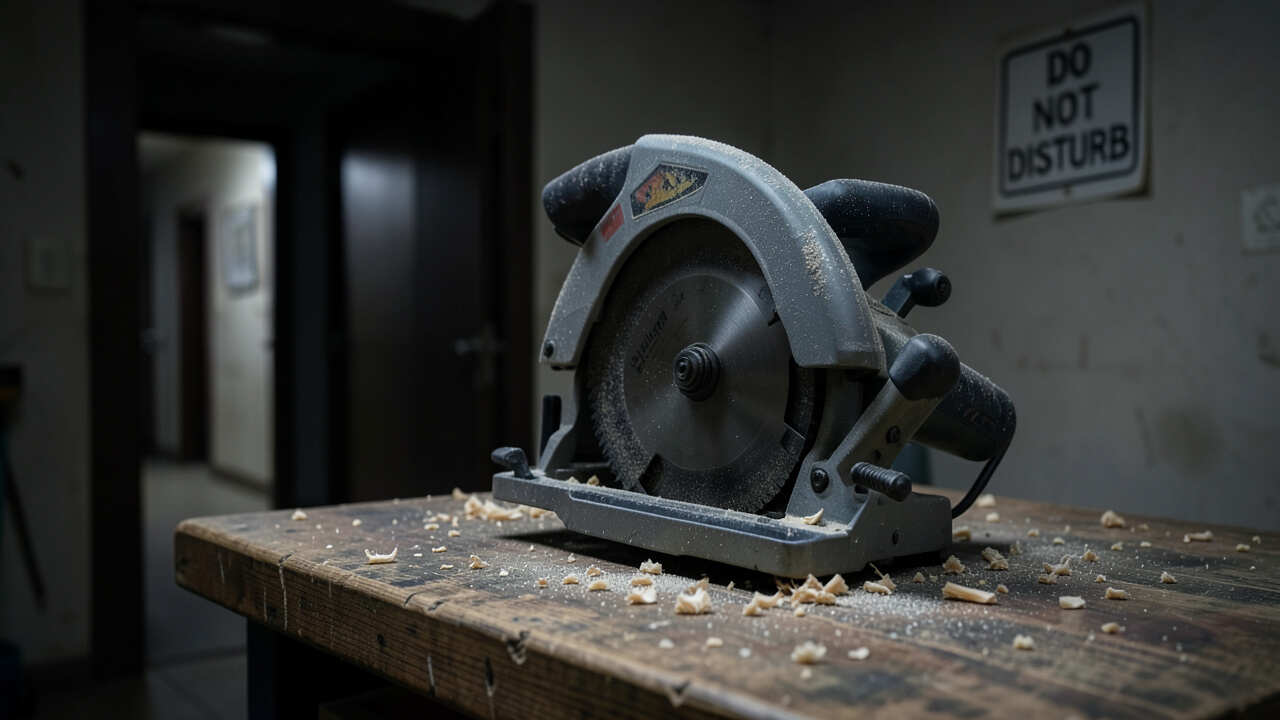
5. Keep Away from High-Traffic Areas
A workshop is busy, but your sliding miter saw should not be in a walkway. High-traffic zones increase the risk of accidental bumps, debris hitting the saw, and tools or materials landing on it. These incidents can knock the saw out of alignment or damage the sliding mechanism.
Consider a typical garage workshop: the saw sits near the garage door for ventilation. People walk past carrying lumber, opening doors, moving vehicles. A single bump from a falling board can bend the blade guard or shift the miter index.
Even if no visible damage appears, the alignment can change. The sliding miter saw rail system is sensitive to lateral impacts.
| High-Traffic Zone | Common Damage | Recommended Distance |
|---|---|---|
| Near entry/exit doors | Bent fence, misaligned miter | At least 4 feet from door swing |
| Along material storage aisles | Scratched rails, knocked-off cover | 3 feet from any shelving edge |
| Garage parking spots | Crushed base, bent arm | Never store in vehicle path |
Create a designated saw station away from main walking paths. Use floor tape to mark a buffer zone. If the saw must be in a shared space, install a folding table that tucks away and a locking cabinet.
6. Never Leave It Outdoors Uncovered
Leaving a sliding miter saw outside, even for a few hours, is asking for trouble. Rain, pollen, bird droppings, and temperature swings all attack the saw. The sliding miter saw longevity drops sharply when exposed to the elements.
Rainwater gets inside the motor through the blade shaft and ventilation slots. It causes rust on the armature and can short the electronics. Even if you cover it with a tarp, condensation forms underneath.
The saw’s labels fade, the power cord rubber hardens, and the sliding rails corrode. Professional woodworkers report that a single overnight rain can ruin a saw.
- What happens when left outdoors:
- Rust forms on all steel surfaces within 24 hours
- Wood dust absorbs moisture and cakes onto slides
- Blade dulls faster due to corrosion
- Bearings seize from water intrusion
- Miter handle becomes stiff from oxidation
- If you must work outdoors (e.g., on a job site), bring the saw inside each night
- Use a hard-sided job site box or a rolling tool chest for transport and overnight storage
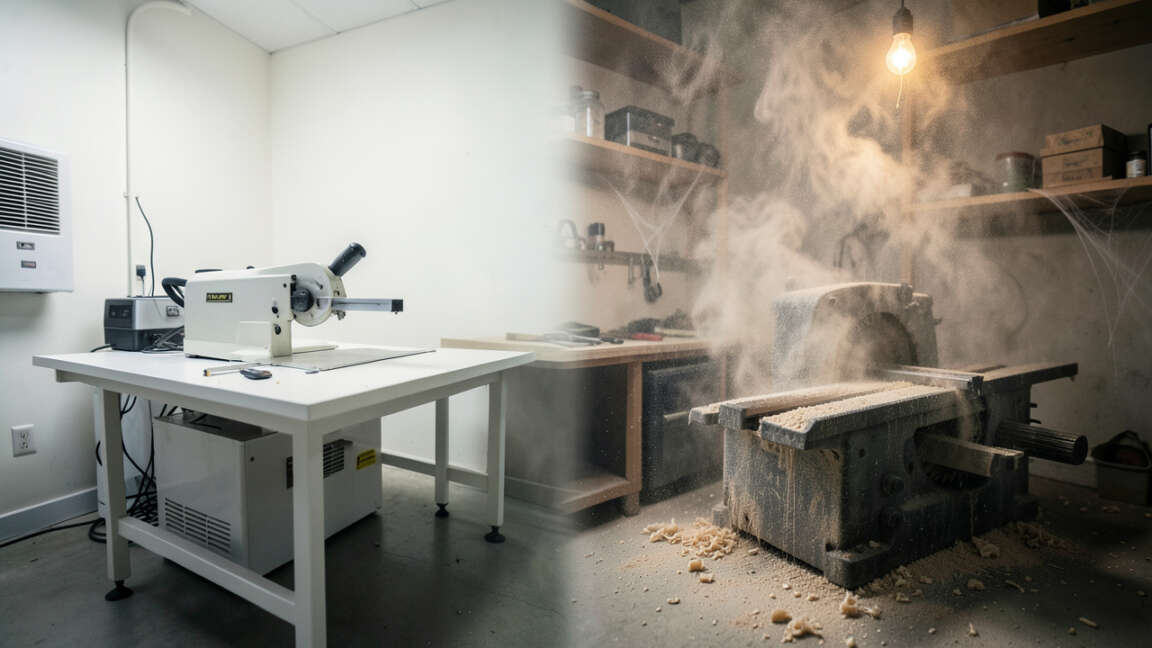
7. Avoid Storage in Dusty Environments
Wood dust, drywall dust, and concrete dust are abrasive. When a sliding miter saw sits in a dusty area without protection, fine dust enters every crevice. It mixes with lubricants on the sliding rails and forms a grinding paste that wears down the surfaces.
Even if the saw is not used, dust settling on the rails and inside the motor can cause problems. The dust attracts moisture and promotes corrosion. The switch contacts can become contaminated, leading to erratic operation.
The blade guard may jam because dust cakes into the pivot points.
- Worst dusty spots: near a table saw, sanding station, planer, or cut-off saw
- Better spots: on a separate bench, inside a cabinet with a door, or hung on a wall bracket
- Always cover the saw with a canvas cover – not plastic, which traps condensation
- Use compressed air weekly to blow out the rail area and motor vents
Tip: Place your saw station on the upwind side of dust sources. If possible, install a dust collection hose near the saw to capture debris directly.
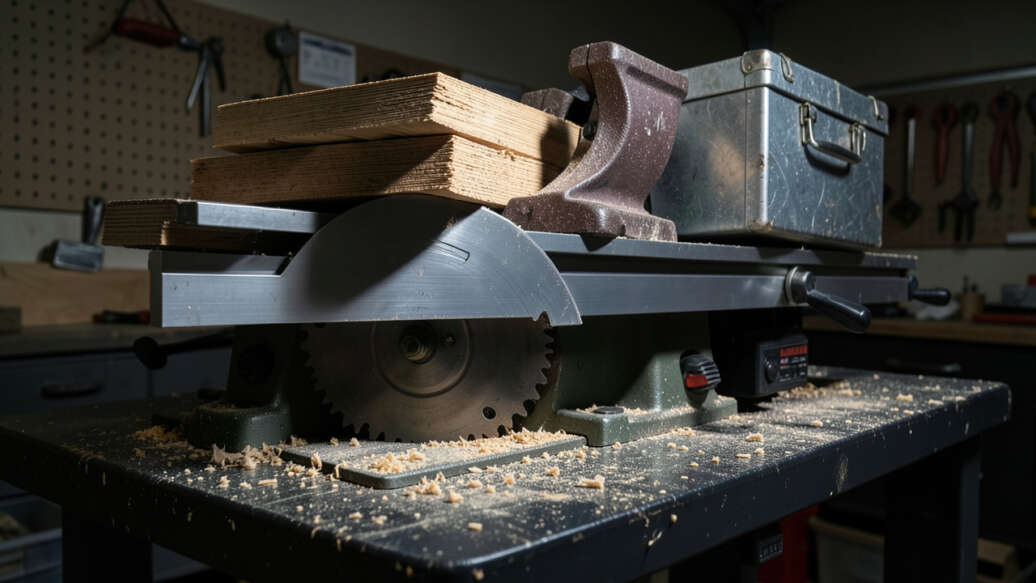
8. Don’t Store Heavy Items on Top of the Saw
It’s tempting to stack boxes, lumber, or tools on top of a miter saw when it’s not in use. But the saw’s fence, blade guard, and sliding head assembly are not designed to support weight. Putting heavy items on top can bend the fence, crack the plastic guard, or misalign the sliding mechanism.
The fence especially is vulnerable. A bent fence causes non-square cuts. If the sliding head assembly gets pushed sideways, the rails bind.
Even a 5-pound object resting on the blade guard can warp it over weeks. The sliding miter saw fence is a precision component – treat it like glass.
| Item | Weight | Damage Risk |
|---|---|---|
| Box of wood screws | ~5 lbs | Low immediate risk, but prolonged pressure warps guards |
| Stack of plywood | 20–40 lbs | High – can bend fence and dent rails |
| Another power tool | 10–15 lbs | Moderate – may knock saw off level |
Instead, mount the saw on a rolling stand with a dedicated storage shelf underneath. Keep the saw table clear at all times. Use wall-mounted racks for lumber and cabinets for small parts.
Frequently Asked Questions
Can I store my sliding miter saw in a garage in winter?
Yes, but only if the garage is insulated or you keep a dehumidifier running. The freeze-thaw cycle produces condensation that rusts rails. If the garage is unheated, bring the saw inside or use a heated storage box.
Is it safe to keep the saw on a floor-mounted stand?
Floor stands are fine as long as the floor is level and the stand has locking casters. Avoid stands that wobble or have plastic joints. Anchor the stand to the floor if you cut long boards that could tip it.
How often should I clean and lubricate the rails if stored in a clean shop?
Every 40 hours of use or once a month, whichever comes first. Wipe rails with a dry cloth, then apply a silicone-free lubricant. In a very dry environment, you can go longer, but check monthly.
What is the best humidity level for a sliding miter saw storage?
Keep relative humidity between 30% and 50%. Above 60% encourages rust; below 20% can cause plastic to become brittle. Use a hygrometer in your storage area.
Should I cover my saw with plastic or canvas?
Canvas or breathable fabric covers are best. Plastic traps moisture and causes condensation. A dedicated miter saw cover with a waterproof yet breathable membrane is ideal.
If you use plastic, poke small holes for air circulation.
Final Thoughts
Your sliding miter saw is an investment in precision. Protecting it from dampness, sunlight, unstable surfaces, traffic, dust, and stacking weight will keep it accurate for years. Pick a dedicated, clean, level spot and always cover it when idle.
A few small choices in where you put the saw today will save you hours of frustration and hundreds of dollars in repairs tomorrow.