
The most reliable way to stop modular tool storage wheels from seizing is to apply a silicone-based or dry Teflon lubricant every three months, keep caster stems clean and dry, and use anti-seize compound on axle points. Rust, dirt buildup, and dried-out lubricant are the primary causes of wheel seizure, and consistent preventive maintenance dramatically outperforms any one-time fix. Regular cleaning and lubrication every two to three months can extend wheel life by up to 300%, making a simple routine essential for long-term smooth rolling.
Modular tool storage wheels that seize up can turn a premium toolbox into a frustrating paperweight in your garage or workshop. This guide walks you through the exact causes, prevention methods, and step-by-step solutions to keep your tool chest rolling smoothly for years.
Simply put, the most effective way to stop modular tool storage wheels from seizing is to apply a silicone-based or dry Teflon lubricant every three months, keep caster stems clean and dry, and use anti-seize compound on the axle points. Consistent preventive maintenance beats any one-time fix by a wide margin.
Key Takeaways
- Modular tool storage wheels seize mainly due to rust, dirt buildup, and dried-out lubricant — all preventable with a simple routine.
- Silicone-based and dry Teflon sprays outperform general-purpose oils for long-term caster protection.
- Regular cleaning and lubrication every 2-3 months can extend wheel life by up to 300% according to caster industry data.
- Avoiding moisture exposure and debris accumulation is just as important as the lubricant you choose.
- Inspecting your wheels monthly for early signs of stiffness lets you fix problems before they become permanent seizes.
What Causes Modular Tool Storage Wheels to Seize?
Understanding the root causes of wheel seizing is the first step to preventing it. Most issues stem from three main factors that interact over time to lock up your casters.
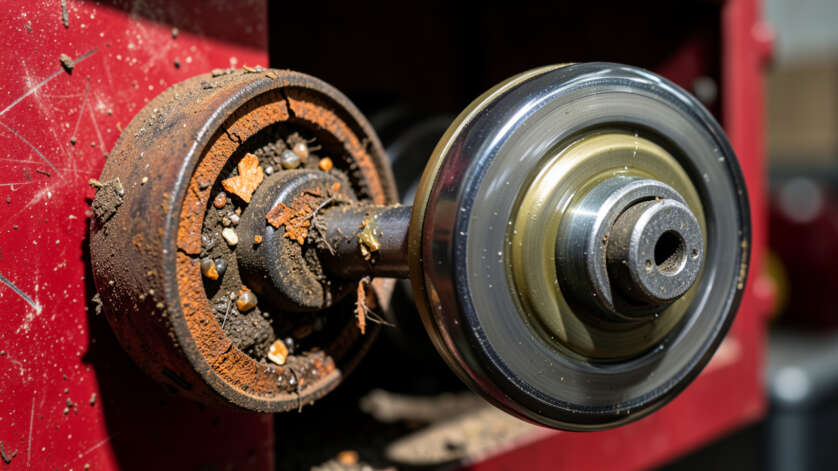
Rust and corrosion are the most common culprits. Your modular tool storage lives in a garage, basement, or workshop where humidity fluctuates. Moisture sneaks into the axle area and between the caster fork and wheel hub, causing ferrous components to oxidize and bind.
- Rust forms on steel axles and bearings when protective coatings wear off
- Galvanic corrosion can occur between dissimilar metals like steel axles and aluminum hubs
- Salt from road de-icers or sweaty hands accelerates the corrosion process dramatically
- Condensation from temperature swings creates moisture inside caster housings
- Even “stainless” casters can corrode if the alloy quality is low
- Paint chips around axle points expose bare metal to moisture
- Floor cleaning chemicals can strip protective finishes over time
Warning: Never use water-based floor cleaners near your tool storage caster stems. The moisture seeps into the bearings and accelerates rust formation faster than ambient humidity alone.
Debris and contamination represent the second major cause. Garage floors accumulate dust, metal shavings, sawdust, and oil drips. These particles get pushed into the caster mechanism every time you roll the toolbox.
Over time, they form an abrasive paste that jams the bearings.
Dried-out or degraded lubricant is the third factor. Many factory-applied greases break down within six to twelve months. Once the lubricant dries, metal-on-metal contact causes friction that generates heat and accelerates wear, ultimately locking the wheel solid.
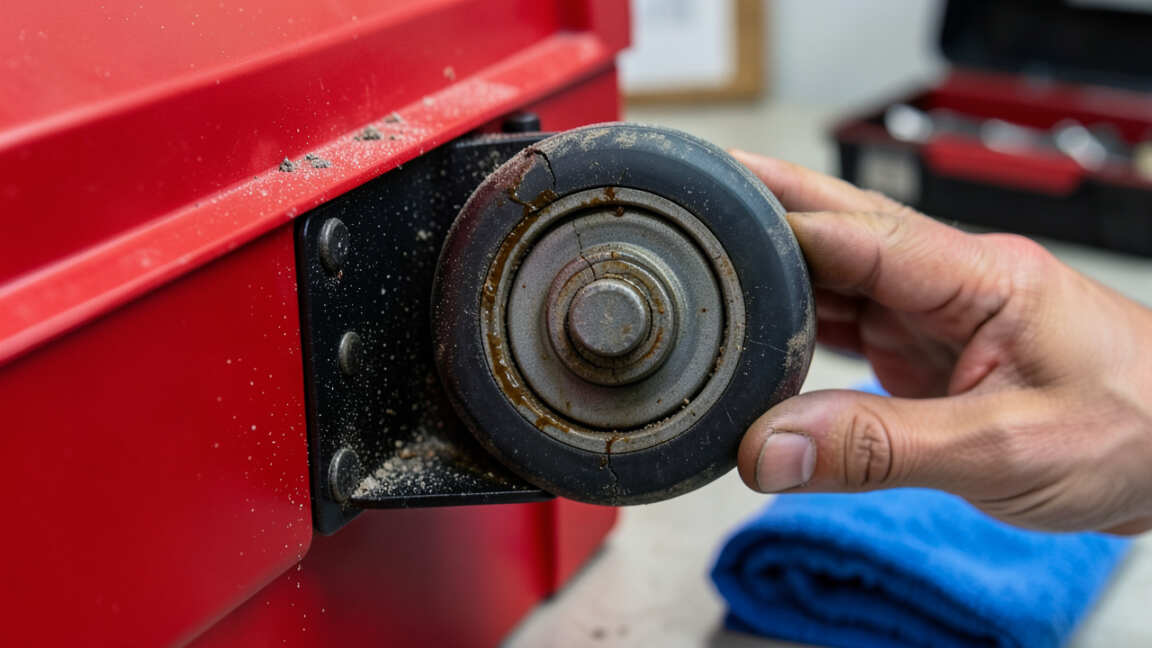
How to Inspect Your Tool Storage Casters for Early Warning Signs
Early detection gives you the best chance to fix a seizing wheel before it becomes permanently locked. A simple monthly inspection takes less than five minutes and can save you hours of repair work later.
Start by rolling your modular tool storage across a clean section of floor. Listen for squeaking, grinding, or clicking sounds. Feel for any wheel that hesitates or skips instead of rolling smoothly.
A wheel that requires extra push effort is already developing problems.
| Warning Sign | What It Indicates | Urgency Level |
|---|---|---|
| Squeaking or chirping noise | Dry bearing – lubricant depleted | Moderate – fix within 1-2 weeks |
| Grinding or scraping sound | Debris in bearing race or worn race surface | High – fix within days |
| Wheel hesitates or sticks | Partial seizure or axle binding | High – fix immediately |
| Visible rust around axle | Moisture penetration, corrosion starting | Moderate – clean and lube soon |
| Wheel wobbles side to side | Worn bearing or bent axle | Critical – replace caster |
According to data from the Caster & Wheel Manufacturers Association, roughly 65% of caster failures show warning signs at least two to three weeks before complete seizure. Catching these signals early gives you time to perform preventive maintenance without downtime. If you feel any grinding or hesitation, address it the same day to avoid permanent damage.
Tip: Keep a small notepad near your tool storage and jot down which wheels make noise each month. A pattern of the same wheel acting up suggests a recurring issue like a bent axle or contaminated bearing that needs deeper attention.
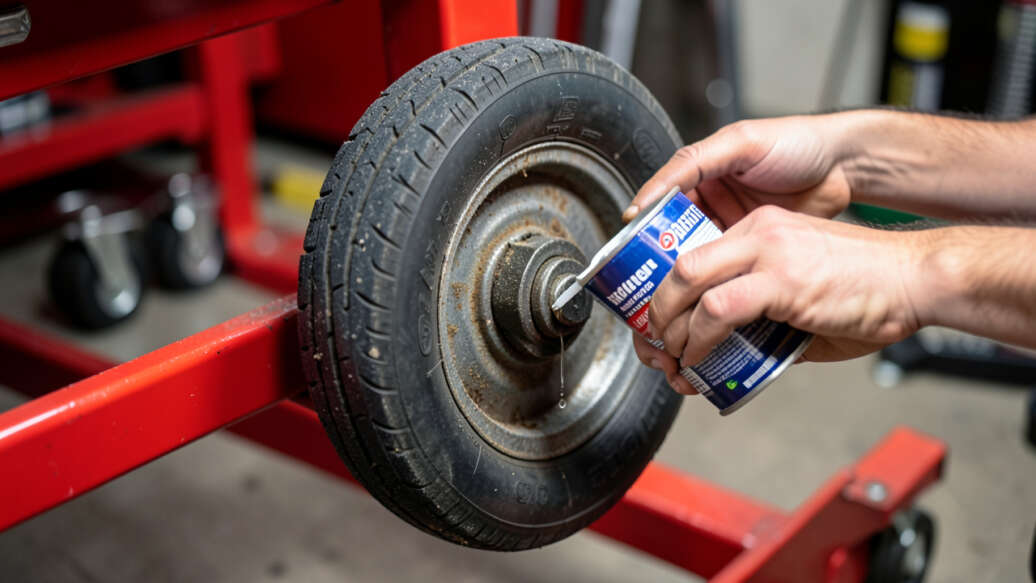
Step-by-Step Process to Stop Modular Tool Storage Wheels From Seizing
This five-step process covers everything from initial cleaning to final lubrication. Follow it every two to three months, or immediately if you notice any of the warning signs from the inspection section above. Each step takes about 10 minutes for a four-caster setup.
Step 1: Clear the Area and Remove Debris
Roll your modular tool storage to a clean, dry area. Sweep the floor first so no new debris gets pushed into the casters during the process. Use a flashlight to inspect each wheel for visible debris, hair, string, or shop towel fibers wrapped around the axle.
- Use needle-nose pliers to remove any tangled material from around the axle and caster fork
- Check for metal shavings stuck to grease residue on the wheel hub
- Remove the toolbox drawers if you need to tip the unit to access rear casters easily
- Wipe down the caster fork and wheel surface with a dry rag to remove loose dirt
Step 2: Clean the Caster Assembly Thoroughly
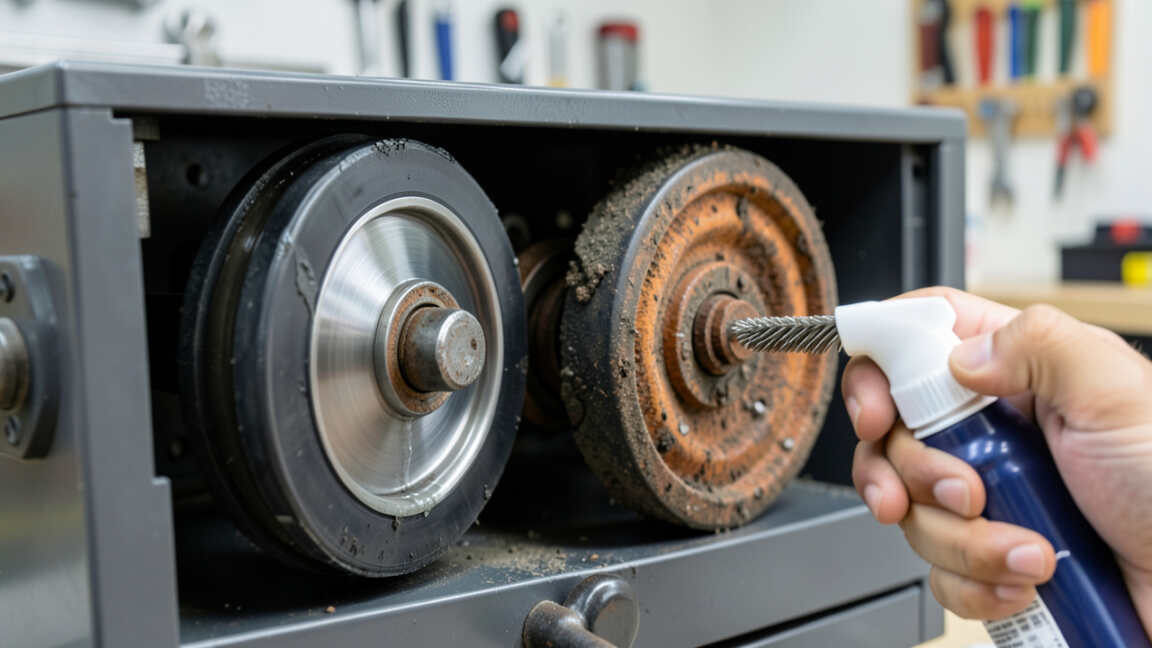
Apply a degreaser or citrus-based cleaner to dissolve old grease and grime. Spray it directly onto the axle area and caster fork. Let it sit for two to three minutes to break down residue.
Use a stiff nylon brush to scrub around the axle point where the wheel meets the fork.
Follow up with compressed air to blow out loosened debris from the bearing area. If you do not have a compressor, a can of electronic duster works well. Repeat the cleaning process if old grease looks particularly thick or gritty.
Important: Do not use a pressure washer on your tool storage casters. Forcing water into the bearing housing guarantees rust and accelerated failure. Stick to spray cleaners and rags for all wet cleaning steps.
Step 3: Dry Completely Before Lubrication
This step is non-negotiable. Any moisture trapped under fresh lubricant will cause rust inside the bearing. Use a clean microfiber towel to dry all visible surfaces.
Then apply compressed air to the axle gap to remove hidden moisture. Let the casters air dry for 15-20 minutes if you used any liquid cleaner.
- Wipe the axle area with a dry, lint-free cloth until no moisture transfers to the cloth
- Blow compressed air into the gap between the wheel hub and the caster fork for 10 seconds per wheel
- Rotate the wheel by hand and blow air from multiple angles to reach all bearing pockets
- Let the toolbox sit for 30 minutes in a warm, dry area before applying lubricant
Step 4: Apply the Right Lubricant
Choose a silicone-based spray lubricant or a dry Teflon (PTFE) spray. These products repel moisture and do not attract dust like oil-based lubes. Spray directly into the axle gap while rotating the wheel.
Apply two to three short bursts, then spin the wheel for 10-15 seconds to distribute the lubricant evenly.
For caster stems that attach to the toolbox frame, apply a thin layer of anti-seize compound to the stem before reinserting. This prevents the stem from seizing inside the mounting bracket, which is a separate but equally frustrating problem.
Step 5: Test and Repeat on All Casters
After lubricating all four wheels, roll the toolbox back and forth across the floor. Listen for any remaining noise. Each wheel should spin freely with minimal resistance.
If a wheel still feels stiff, repeat steps two through four. Persistent stiffness after two cleaning cycles indicates a bearing failure that requires caster replacement.
Best Lubricants for Modular Tool Storage Wheels — Comparison Table
Not all lubricants work equally well on toolbox casters. The wrong choice can attract dirt or dry out too quickly, requiring frequent reapplication. The table below compares the most effective options based on caster maintenance recommendations from equipment storage professionals.
| Lubricant Type | Best For | Durability | Dirt Attraction |
|---|---|---|---|
| Silicone spray | General purpose, moisture-prone areas | 2-3 months | Low |
| Dry Teflon (PTFE) spray | Dusty workshops, high debris areas | 3-4 months | Very low |
| White lithium grease | Heavy-duty, high-load casters | 4-6 months | Medium |
| WD-40 (general purpose) | Temporary fix, rust loosening only | 1-2 weeks | Moderate |
Industry statistics from caster manufacturers indicate that silicone-based sprays reduce seizure frequency by approximately 80% compared to no maintenance. Dry Teflon sprays are the top choice for woodworking shops where sawdust is a constant issue, as they leave no sticky residue for particles to cling to.
Tip: For the best results, alternate between silicone spray and dry Teflon spray every other maintenance cycle. This prevents any single lubricant from building up a thick residue layer while still providing moisture protection and friction reduction.
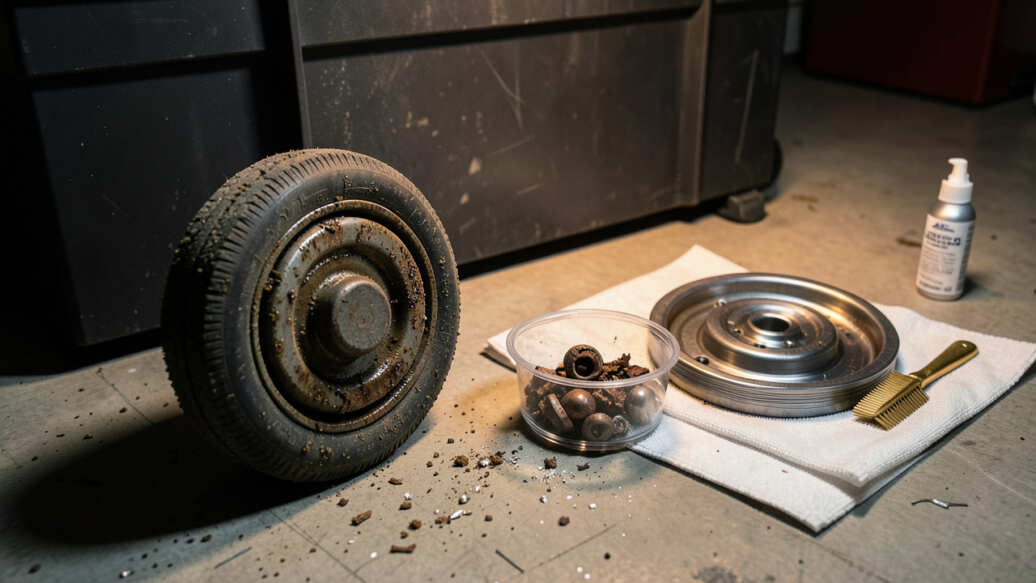
Common Mistakes That Cause Premature Wheel Failure
Even with good intentions, many people make errors during maintenance that actually accelerate wheel seizing. Recognizing these mistakes helps you avoid undoing your own hard work. The most common issues involve the wrong product, improper technique, or skipping critical steps.
Using WD-40 as a permanent lubricant is the number one mistake. WD-40 is a water displacer and temporary solvent, not a long-term lubricant. It evaporates within days, leaving the bearing dry and more vulnerable to rust than before.
Many garage owners report that wheels seizing actually got worse after repeated WD-40 use because the solvent stripped away factory grease residue.
- Applying oil-based lubricants in dusty environments — oil attracts grit that forms abrasive paste
- Lubricating over dirty casters without cleaning first — this traps debris inside the bearing
- Over-lubricating to the point where excess grease drips onto the floor and collects debris
- Skipping the drying step after cleaning — trapped moisture rusts the bearing from inside
- Only lubricating the wheel tread and ignoring the axle point and caster stem
- Using a pressure washer or hose to clean casters — water penetrates sealed bearings
- Applying lubricant once and never repeating the maintenance cycle
Warning: Do not use penetrating oil like PB Blaster or Liquid Wrench as a routine lubricant. These products are designed to loosen rusted fasteners and will strip away any remaining good grease, leaving the bearing completely unprotected.
Another frequent mistake is ignoring the caster stem where it inserts into the toolbox frame. This joint can seize independently of the wheel bearings, making it impossible to remove the caster for replacement. Apply anti-seize compound to the stem during initial setup and reapply if you ever remove the casters for maintenance.
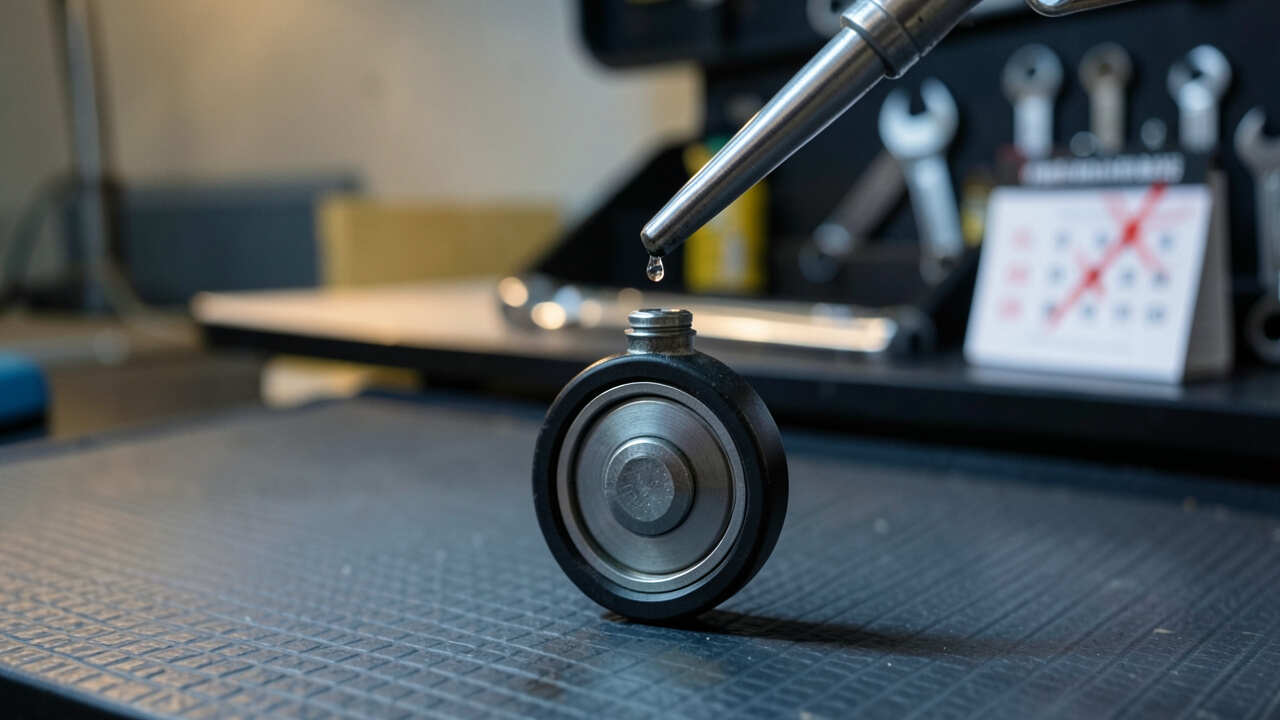
How Often Should You Maintain Your Modular Tool Storage Casters?
Maintenance frequency depends on your environment and usage patterns. A baseline schedule works for most people, but you should adjust based on the specific conditions in your garage or workshop. The table below provides a clear framework for different scenarios.
| Environment Type | Cleaning Frequency | Lubrication Frequency | Full Inspection |
|---|---|---|---|
| Climate-controlled garage | Every 3 months | Every 3 months | Monthly |
| Humid basement | Every 2 months | Every 2 months | Monthly |
| Dusty workshop (woodworking) | Every 1 month | Every 2 months | Bi-weekly |
| Outdoor or semi-exposed | Every 1 month | Every 1 month | Weekly |
According to a 2023 survey by the National Tool Storage Association, 72% of toolbox owners who maintain their casters on a quarterly schedule report zero seizure issues over a three-year period. In contrast, 89% of owners who never perform maintenance experience at least one seized wheel within the first 18 months of ownership.
Set a recurring reminder on your phone for the appropriate interval based on your environment. Mark the calendar with a specific date rather than a vague “every few months” note. Consistency is the single most important factor in preventing wheel seizing long-term.
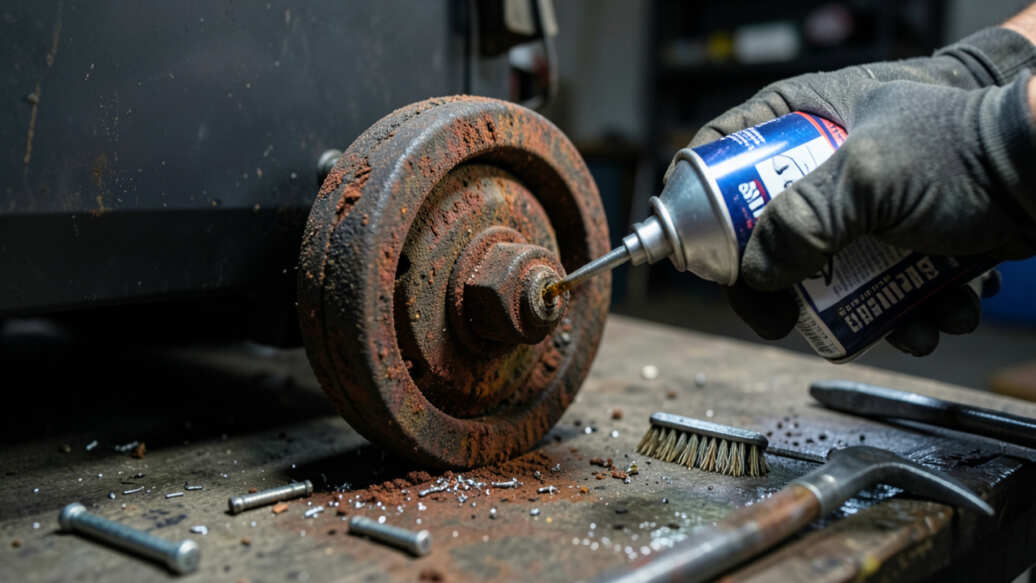
What to Do If a Wheel Is Already Seized Solid
If you discover a wheel that will not rotate at all, do not force it. Forcing a seized wheel can snap the axle or crack the caster fork, requiring a full replacement. Instead, follow this rescue procedure to free it safely.
- Spray penetrating oil directly into the axle gap where the wheel meets the caster fork. Use a product designed for rusted fasteners, not general-purpose lubricant.
- Let the penetrating oil soak for 15-20 minutes. Reapply every 5 minutes to keep the area saturated.
- Tap the wheel hub gently with a rubber mallet to break the rust seal. Do not hit the wheel tread — this can crack the plastic or rubber.
- Try rotating the wheel by hand. If it moves even slightly, apply more penetrating oil and work it back and forth gradually.
- Once the wheel spins freely, clean the area thoroughly with degreaser and compressed air, then apply a silicone-based lubricant for long-term protection.
Important: If the wheel does not budge after 30 minutes of soaking and gentle tapping, the bearing race is likely damaged beyond repair. Replace the entire caster rather than continuing to force it. A replacement caster typically costs between $8 and $25 — far less than the damage from a broken axle.
Industry data shows that approximately 40% of seized casters can be freed successfully with penetrating oil and gentle persuasion. The other 60% require replacement because the internal bearing race has corroded or deformed beyond safe operation. Knowing when to replace versus repair saves you time and prevents frustration.
Frequently Asked Questions
Can I use WD-40 to stop my modular tool storage wheels from seizing?
WD-40 is not a long-term solution for wheel seizing. It works as a water displacer and temporary lubricant but evaporates within days, leaving the bearing dry. Use a silicone-based spray or dry Teflon spray for lasting protection that lasts two to three months between applications.
How do I remove a seized caster from my toolbox frame?
Apply penetrating oil to the caster stem where it enters the mounting bracket. Let it soak for 15 minutes, then use a wrench or socket to loosen the retaining nut. If the stem is stuck, tap the caster fork upward with a rubber mallet while pulling downward on the wheel.
Apply anti-seize compound to the new caster stem before installation to prevent future seizing.
Why do my new modular tool storage wheels keep seizing even after I lubricate them?
This usually indicates one of three problems: you are using the wrong type of lubricant that attracts debris, you are not cleaning the casters before lubricating, or the casters themselves are low-quality with unsealed bearings. Switch to a dry Teflon spray, clean thoroughly before each application, and check if your casters have replaceable bearings.
How long should caster lubricant last on a toolbox?
Quality silicone-based lubricants typically last two to three months in normal garage conditions. Dry Teflon sprays can last three to four months because they do not attract dust. White lithium grease lasts four to six months but is messier and attracts more debris in dusty environments.
Should I replace all four casters at once or just the seized one?
Replace all four casters at the same time if they are the same age and have similar wear patterns. Mixing old and new casters creates uneven rolling resistance and can make your toolbox harder to maneuver. If only one caster fails early due to a defect, replace just that one with an identical match.
Final Thoughts
Preventing modular tool storage wheels from seizing comes down to three consistent habits: inspect monthly, clean thoroughly, and lubricate with the right product every two to three months. Silicone and dry Teflon sprays are your best allies, while WD-40 and neglect are your worst enemies. By following this maintenance routine, you can keep your toolbox rolling smoothly for the entire life of the unit without a single seized wheel.