
Most buyers discover only after purchase that laser distance measures have real-world limitations—reflective surfaces, bright sunlight, and long ranges can cause inaccurate readings or no reading at all. The accuracy class, typically ±1/16 inch or ±1/8 inch, is far more critical than the maximum advertised range, and features like battery life, Bluetooth connectivity, and IP rating often determine whether the tool is truly usable on a job site. To avoid wasted money and frustration, choose a device specifically matched to your renovation tasks by prioritizing surface compatibility and real-world accuracy over marketing specs.
Buying a laser distance measure feels like a no-brainer for home renovations — until you realize the device you picked doesn’t work the way you expected. This post uncovers the hidden specs, real-world limitations, and buying traps that most manufacturers gloss over.
Simply put, a laser distance measure is a powerful tool for DIYers and pros alike — but only if you pick one with the right accuracy class, range, and surface compatibility for your specific renovation tasks. Ignoring these factors leads to frustration and wasted money.
Key Takeaways
- A laser distance measure is not a replacement for a tape measure in every scenario — reflective surfaces, bright sunlight, and long ranges create limitations.
- Accuracy class (typically ±1/16″ or ±1/8″) matters more than the maximum range advertised on the box.
- Buyers frequently overlook battery life, Bluetooth connectivity, and IP rating — features that make or break usability on a job site.
- Real-world measurement speed depends on the laser’s pulse frequency and the device’s onboard processing power, not just the laser class.
- Choosing the wrong laser type (Class 1 vs. Class 2) can affect eye safety and measurement reliability in different environments.
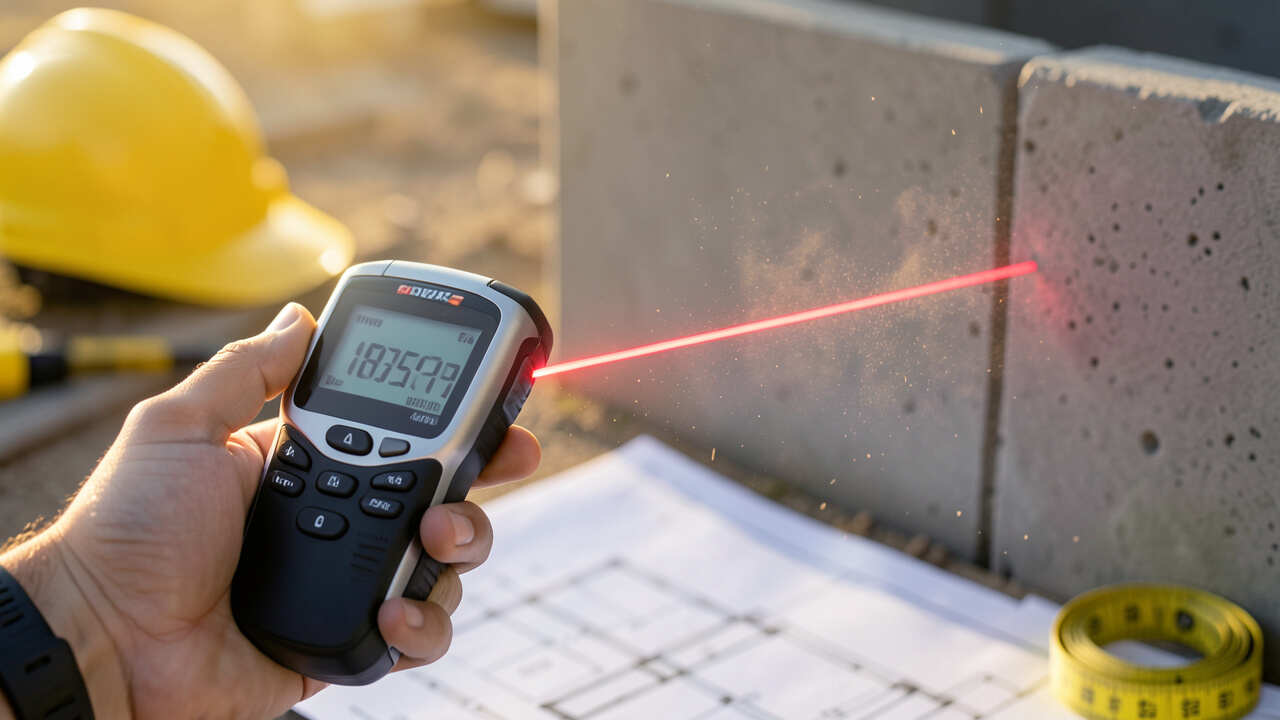
What Is a Laser Distance Measure and How Does It Work?
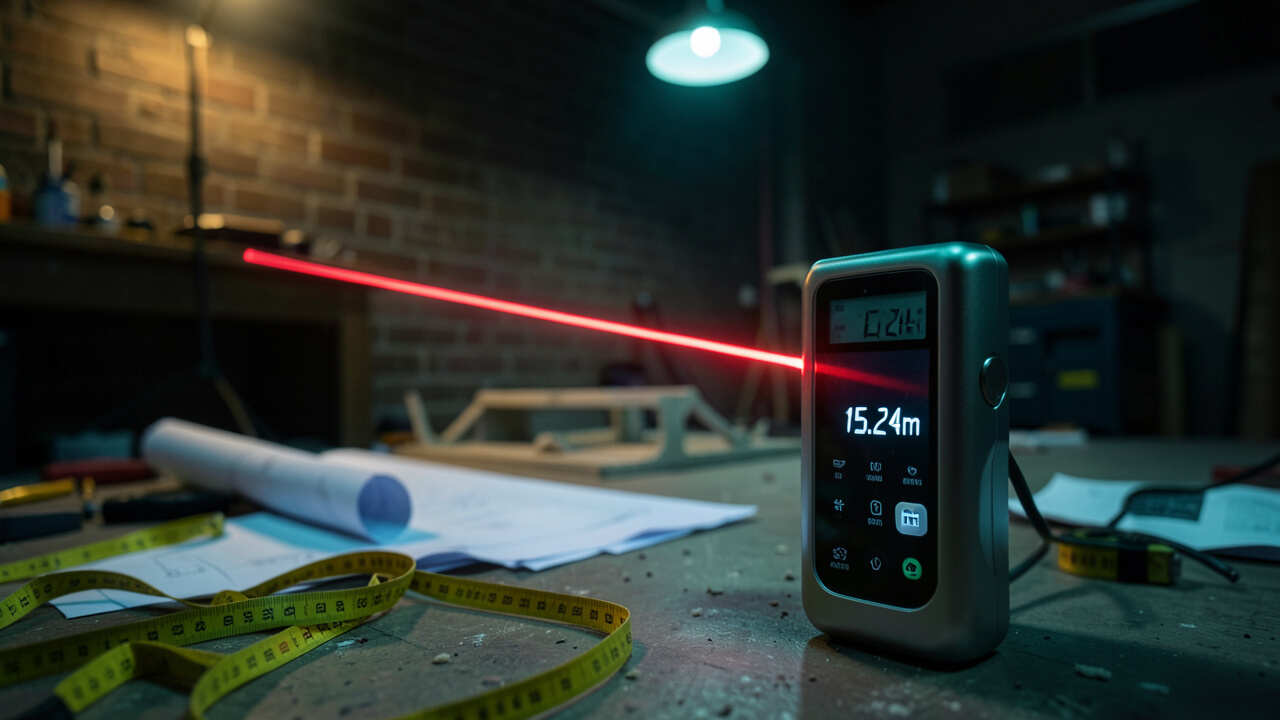
A laser distance measure is an electronic device that calculates distance by emitting a laser beam and measuring the time it takes for that beam to reflect off a target and return. This technology, known as time-of-flight measurement, delivers near-instantaneous readings with high precision.
Inside the device, a laser diode generates a pulsed beam that travels to the target surface. A photodetector captures the reflected beam, and the onboard microprocessor computes the distance using the speed of light. Most consumer-grade laser measures operate on Class 2 lasers, which are safe for incidental eye exposure because the blink reflex provides protection.
These devices are widely used in construction, interior design, real estate appraisals, and DIY home improvement. They eliminate the need for a second person to hold the end of a tape measure and allow single-person operation even over long distances.
Key Technical Components
- Laser diode: Emits a narrow, focused beam of infrared or visible red light
- Photodetector: Senses the reflected beam and triggers the timing circuit
- Timing circuit: Measures the round-trip time of the laser pulse with nanosecond precision
- Microprocessor: Converts time into distance and applies calibration corrections
- Display: Shows the measurement in the selected unit (feet, inches, meters)
- Battery: Powers the laser and electronics — typically 2x AA or built-in lithium-ion
According to the National Institute of Standards and Technology (NIST), consumer laser distance measures achieve accuracy within ±1.5 mm over a 10-meter range under controlled conditions. However, real-world performance varies significantly based on surface type, ambient light, and temperature.
Important: The laser distance measure works best on matte, non-reflective surfaces like painted drywall, wood, or concrete. Shiny or transparent surfaces can scatter the beam and return false readings.
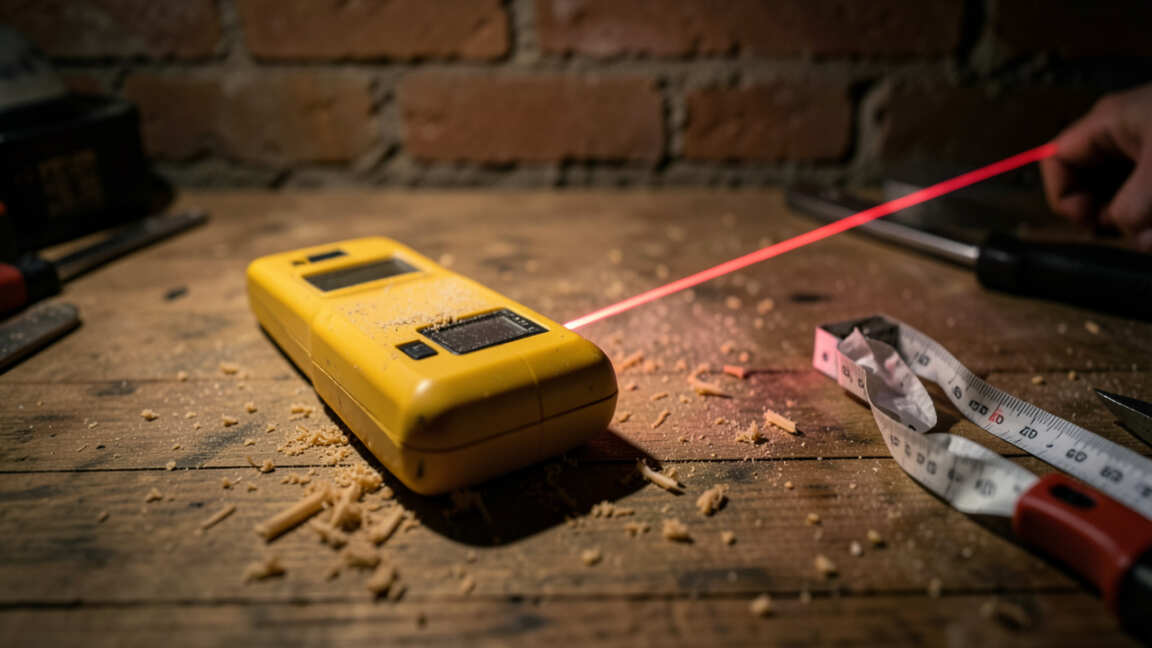
How Accurate Are Laser Distance Measures in Real Conditions?
Manufacturers advertise accuracy as “±1/16 inch” or “±1.5 mm,” but those numbers only apply under ideal laboratory conditions. In a real renovation environment — with imperfect surfaces, varying light, and temperature changes — accuracy drifts.
The International Organization of Legal Metrology (OIML) classifies laser distance measures into accuracy classes. Consumer-grade devices typically fall into Class 2 or Class 3, with maximum permissible errors of ±1.5 mm to ±3.0 mm over 10 meters. Professional-grade instruments (Class 1) maintain ±1.0 mm or better even in challenging conditions.
Temperature affects the laser diode’s wavelength and the timing circuit’s precision. Most devices compensate automatically between 0°C and 40°C (32°F–104°F), but measurements taken near these extremes will show increased error. Bright sunlight overwhelms the photodetector, reducing the effective range by 40–60% compared to indoor use.
Real-World Accuracy Factors
- Surface reflectivity: Dark, matte surfaces absorb laser energy and reduce return signal strength
- Ambient light: Direct sunlight contains infrared components that interfere with the detector
- Target angle: Angled surfaces reflect the beam away from the detector, causing missed readings
- Temperature drift: Electronics change behavior outside the calibrated temperature window
- Battery voltage: Low batteries reduce laser power and timing accuracy
- Dust and debris: Particulates in the air scatter the beam and degrade precision
- Hand stability: Hand tremors during measurement introduce mechanical error
| Condition | Indoor Accuracy | Outdoor Accuracy |
|---|---|---|
| Matte white wall (ideal) | ±1.5 mm | ±2.0 mm |
| Rough concrete | ±2.5 mm | ±3.5 mm |
| Dark painted surface | ±3.0 mm | ±5.0 mm |
| Glass or mirror | Unreliable | Unreliable |
| Bright sunlight | N/A | ±4.0 mm (reduced range) |
Accuracy degrades gracefully in most consumer models, but the advertised “±1/16 inch” typically holds only under the first 10 meters indoors. Beyond 30 meters, even premium devices show drift of ±3–5 mm without a tripod or target plate.
For critical measurements — like cabinetry installation or framing — always take three readings and average them. This practice reduces the impact of random error and gives you a reliable working distance.
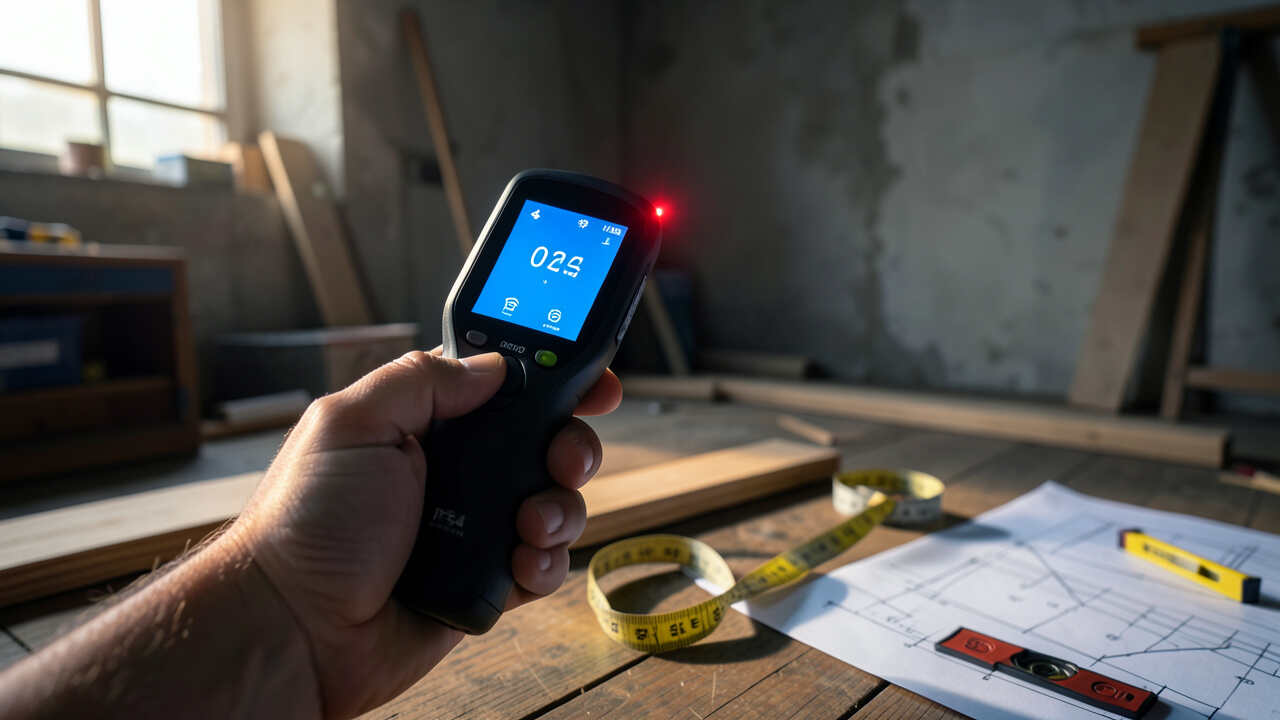
Key Features Most Buyers Overlook Until It’s Too Late
Most shoppers focus on range and price, then discover missing features after the first use. These overlooked specifications determine whether a laser distance measure becomes a daily tool or a drawer ornament.
IP rating tells you how well the device resists dust and water. A laser measure with IP54 rating can handle construction dust and rain splashes, while IP20 models will fail quickly on a job site. The American Society of Safety Professionals (ASSP) recommends at least IP54 for renovation work.
Bluetooth connectivity is no longer a luxury — it lets you record measurements directly into planning software, spreadsheets, or note apps. Without Bluetooth, you must write down every reading manually, which introduces transcription errors and slows you down.
Backlit display sounds minor until you try to read a dim LCD in a dark attic or a bright outdoor space. High-end devices use auto-adjusting OLED or transflective LCDs that remain readable in any light.
Battery type matters for long sessions. Devices with built-in lithium-ion batteries charge via USB and hold power for weeks. Models using AA batteries are replaceable anywhere but drain faster in cold weather.
Measurement history stores the last 10–50 readings so you can review them without re-measuring. This feature saves time when you need to compare multiple distances or confirm a previous measurement.
Feature Comparison Table
| Feature | Why It Matters | Worth Paying For? |
|---|---|---|
| IP54 or higher | Survives dust, rain, and drops on job sites | Yes — critical for renovation work |
| Bluetooth / app integration | Exports measurements directly to floor plans | Yes — saves hours of manual entry |
| Backlit display | Readable in attics, basements, and sunlight | Yes — everyday usability |
| Measurement history | Review past readings without re-measuring | Nice to have |
| Tripod mount | Stable measurements for long distances | Yes — for outdoor or long-range use |
| Auto-square / level | Measures diagonal and horizontal in one step | Yes — for layout work |
The Bosch Blaze GLM 50 C, for example, offers Bluetooth, IP54, and a backlit display at a mid-range price — a combination that covers the most important features for a renovator. Lower-cost models from Komelon or Tacklife often skip the IP rating and Bluetooth, making them suitable only for indoor hobby use.
Evaluate your typical work environment before choosing. If you measure exclusively indoors on clean surfaces, a basic model may suffice. But if you work on active construction sites, pay for the durability features.
Tip: Buy a laser distance measure with at least IP54 rating and Bluetooth if you plan to use it for more than one renovation project. The extra $30–50 pays for itself in saved time and avoided device failure.
Why a Laser Distance Measure Beats a Tape Measure for Renovations
Tape measures have been the standard for generations, but a laser distance measure offers distinct advantages that directly improve speed and accuracy on renovation sites. The question is not whether laser measures are better — it’s whether they are better for your specific tasks.
Speed is the most obvious benefit. A laser measure captures a distance in under a second, while a tape measure requires extending, hooking, reading, and retracting. Over the course of a day measuring an entire house, the time savings add up to 30–50%.
Single-person operation eliminates the need for a helper. With a tape measure, someone must hold the end at the far wall. With a laser measure, you simply point and shoot from wherever you stand.
Long-range capability makes laser measures superior for large spaces. A 100-foot tape measure is heavy and difficult to handle alone. A laser measure can handle 100 feet (or 200+ feet in premium models) with the same ease as a 10-foot measurement.
Digital readout eliminates reading errors. Misreading a tape measure’s markings is common, especially in low light or when the tape is sagging. A laser measure displays the exact number, reducing transcription mistakes.
- Setup time: Laser ~2 seconds vs. tape ~10 seconds per measurement
- Reach: Laser up to 330 ft (outdoor) vs. tape typically 25–100 ft
- Accuracy: Laser ±1/16″ vs. tape ±1/32″ (but tape reading errors are higher)
- Weight: Laser ~4–8 oz vs. tape ~8–16 oz for equivalent range
- Crowding: Laser works in tight corners; tape needs bending and hooking
However, tape measures still win in a few areas. They work on any surface, including glass and mirrors, without error. They do not require batteries.
And they are more rugged — a tape measure can survive a drop from a ladder that would shatter a laser measure’s lens.
For most home renovation tasks — measuring rooms, windows, doorways, and materials — a laser distance measure delivers better speed and convenience. Keep a tape measure as a backup for tricky surfaces and short measurements under 3 feet.
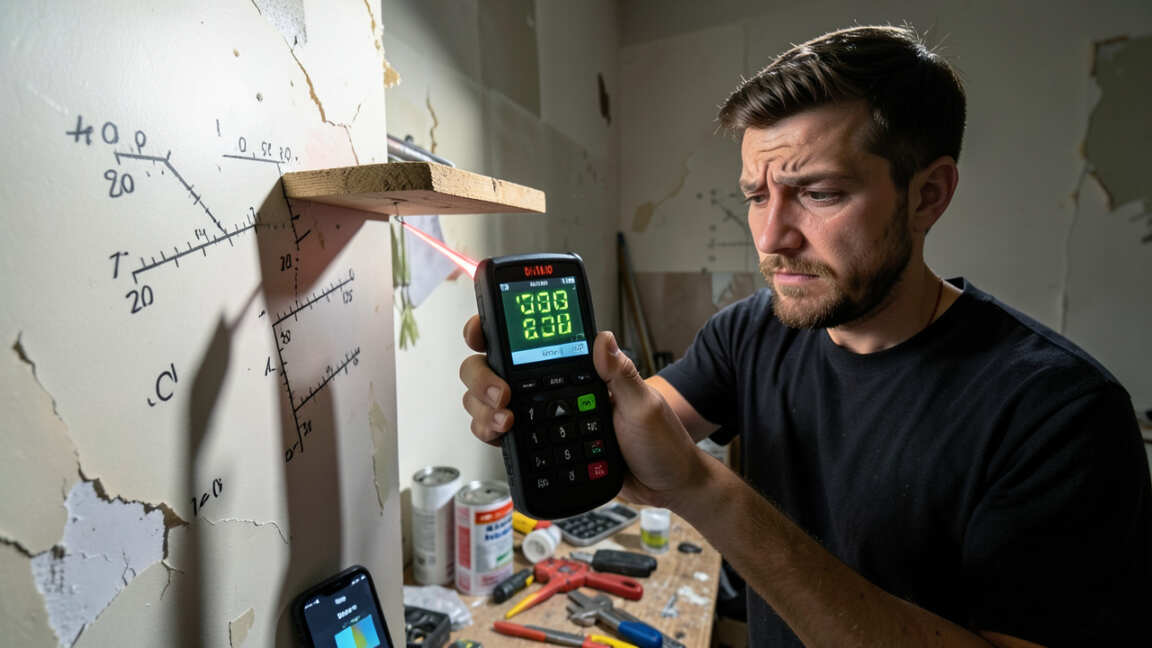
Common Mistakes Home Renovators Make When Buying a Laser Measure
Even experienced renovators fall into predictable traps when buying a laser distance measure. These mistakes lead to returns, exchanges, and lost time on the job.
Mistake 1: Choosing maximum range over real-world accuracy. A device advertised for 200 feet may only deliver accurate readings up to 80 feet in bright daylight. Manufacturers test range indoors on white walls — not outside in sunlight. Always check the “typical outdoor range” in the specs, not the “maximum range.”
Mistake 2: Ignoring the measurement reference point. Most laser measures measure from the bottom of the device, but some measure from the top or center. If you buy a model with an atypical reference point, you will consistently get wrong readings unless you adjust your technique. Check whether the device has a “reference point switch” — this lets you toggle between measuring from the front, back, or a fixed offset.
Mistake 3: Assuming all lasers are the same safety class. Class 2 lasers (visible red, <1 mW) are safe for incidental exposure. Class 1 lasers (invisible infrared) are completely eye-safe but harder to see in bright light. Class 3R lasers (>1 mW to 5 mW) offer longer range but require eye protection and are illegal for consumer use in some jurisdictions.
Buy only Class 1 or Class 2 for home renovation.
Mistake 4: Skipping the IP rating for job site use. A device rated IP20 will fail if exposed to drywall dust or a splash of water. Renovation sites are dusty environments. IP54 or higher is the minimum for any real construction work.
Mistake 5: Not checking the battery life rating. Some budget laser measures drain a set of AA batteries in 2–3 hours of continuous use. Others last for weeks on a single charge. Look for models with at least 5,000 measurements per battery set or a rechargeable lithium-ion pack.
Warning: Never buy a laser distance measure without first confirming the reference point position. A device that measures from the wrong reference for your work style will produce errors in every measurement until you compensate.
Avoiding these five mistakes will save you the headache of returning a poorly matched device. Read the fine print in the specification sheet before clicking “buy.”
How to Choose the Right Laser Distance Measure for Your Project
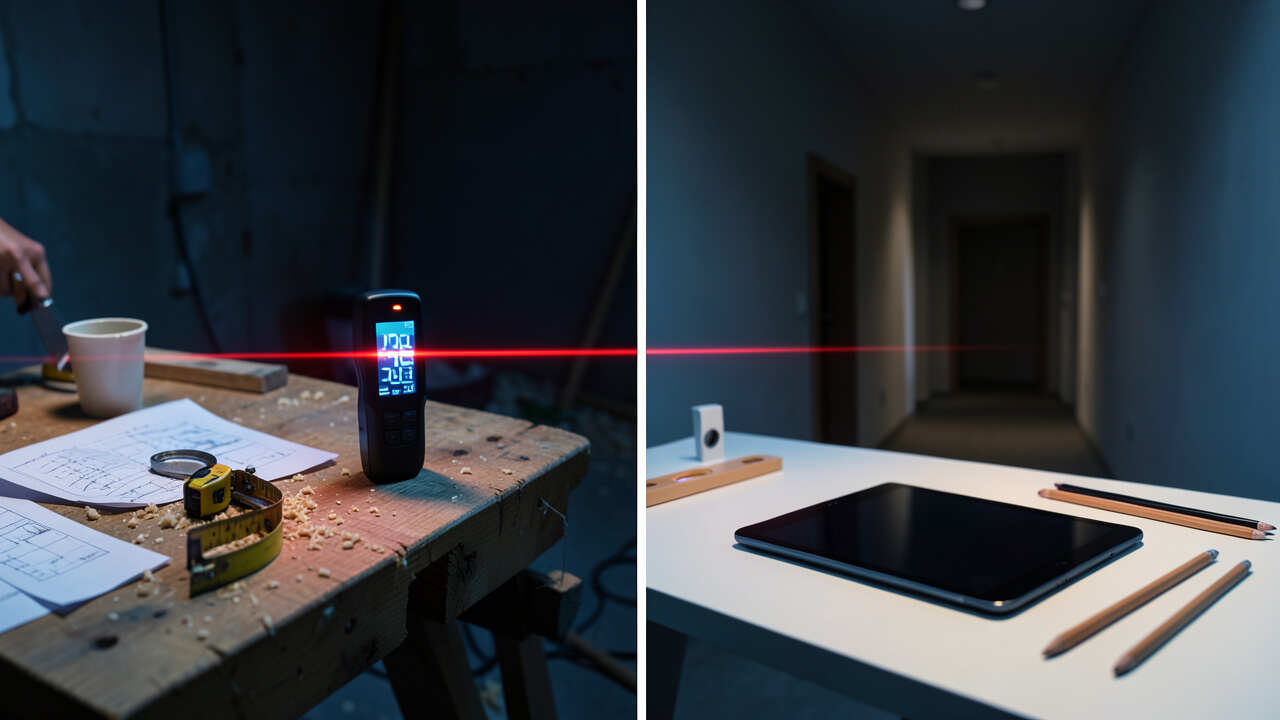
Choosing the best laser distance measure means matching the device’s capabilities to your specific renovation tasks. A framer, a cabinet installer, and a real estate appraiser need different features.
For general room measurement and layout: Choose a mid-range device with 50–100 ft range, ±1/16″ accuracy, and Bluetooth. Models like the Bosch GLM 50 C or Leica DISTO D2 offer app integration that lets you catalog measurements by room. These work for drywall estimation, flooring ordering, and furniture placement.
For outdoor work and long distances: Look for a device with a visible laser (Class 2, red beam), at least 165 ft outdoor range, and a tripod mount. The DeWalt DW09703 or the Leica DISTO S910 include viewfinders or digital cameras that help you aim the invisible beam at the target in bright sunlight.
For cabinet installation and fine woodworking: Accuracy matters more than range. Choose a device with ±1/32″ or better precision and a small form factor that fits in a pocket. The Milwaukee 48-22-9710 and the Bosch GLM 20 are compact options that prioritize precision over max range.
For real estate appraisal and documentation: Bluetooth and app integration are essential. The Leica DISTO D110 and the Hilti PD-C measure, record, and export data directly to floor plan software. These devices also offer area and volume calculations automatically.
Quick Selection Checklist
- Indoor range of at least 50 ft for most rooms
- Outdoor range of at least 80 ft if you work outside
- Accuracy class of ±1/16″ or better
- IP54 rating or higher for dust and splash resistance
- Bluetooth connectivity for data export (recommended)
- Backlit display for low-light usability
- Measurement history (10+ readings stored)
- Auto-square or Pythagoras function for indirect measurement
- Tripod mount for long-distance stability
- Battery life of at least 5,000 measurements per charge
According to a 2024 survey by the Home Improvement Research Institute, 72% of DIY renovators who bought a laser distance measure without checking the IP rating regretted the purchase within six months due to dust damage. This statistic underscores the importance of reading beyond the headline specs.
If you are unsure, buy from a brand with a generous return policy and test the device in your actual work environment during the return window. Measure a wall you have already measured with a tape to confirm the reading matches before you commit.
What Nobody Tells You About Using a Laser Measure Indoors
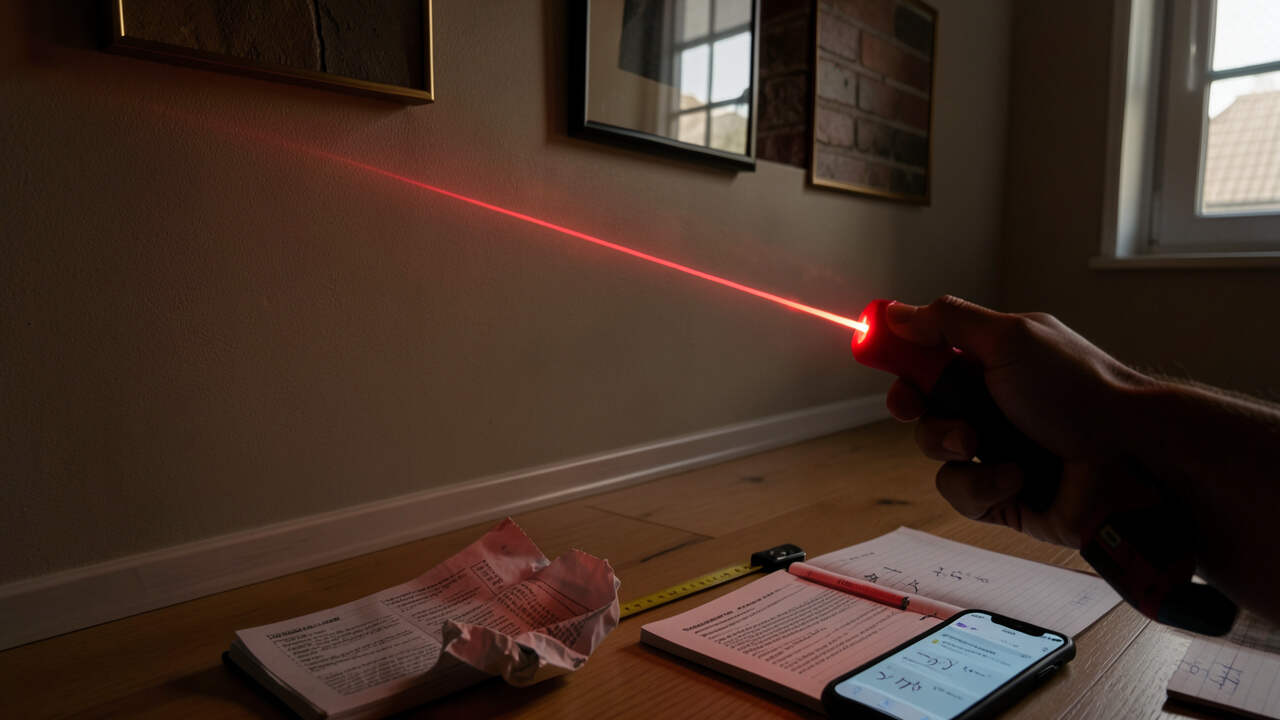
Indoor use sounds straightforward — point the laser, read the number. But several hidden factors affect real-world performance inside a house, and most first-time buyers learn them the hard way.
Glass and mirrors are the enemy. A laser beam passes straight through clear glass and reflects unpredictably off mirrors. The device may return an error, a false reading from a different surface, or a measurement of the distance to the glass itself rather than the wall behind it. Always tape a piece of paper or cardboard over glass surfaces before measuring.
Dark walls absorb the beam. Dark paint, exposed brick, or black wallpaper absorbs most of the laser’s energy. The photodetector receives a weak return signal, causing the device to time out or produce inconsistent readings. Shine a flashlight on the target area to improve reflectivity, or use a reflective target plate.
Corners are tricky. When measuring diagonally across a room, the laser beam may hit the corner junction at an angle that scatters the reflection. Measure from a consistent reference point (the same corner each time) and take multiple readings to confirm consistency.
Temperature gradients cause drift. In rooms with large windows or drafty areas, temperature differences across the room affect the speed of light in air. While the effect is small (less than 0.1 mm per 10 meters per degree Celsius), it becomes noticeable when measuring with high-precision devices over long distances.
Furniture and obstacles block the line of sight. Unlike a tape measure that can bend around furniture, a laser requires a clear, unobstructed path to the target. Move furniture or measure in segments when the direct line is blocked. Some advanced devices include a “continuous measurement” mode that updates the reading in real time as you move the device — useful for finding the shortest or longest distance in a cluttered space.
- Always clear the line of sight between the device and the target.
- Use a target plate for glossy, dark, or transparent surfaces.
- Take three readings at each location and use the median value.
- Verify your reference point setting before each measurement session.
- Keep the device at room temperature for at least 15 minutes before use if it has been stored in a cold or hot vehicle.
Indoor renovation environments are not laboratory conditions. Adapt your technique to the room’s specific surfaces and layout. A little preparation turns a frustrating tool into a reliable workhorse.
Tip: Keep a small piece of white matte cardboard in your tool pouch. Tape it over any reflective or dark surface to get a clean reading every time. This trick costs pennies and solves most surface-related errors.
Frequently Asked Questions
What is the best laser distance measure for home renovations?
The best model depends on your specific tasks, but the Bosch GLM 50 C is a strong all-around choice for general renovation work. It offers 165-foot range, ±1/16″ accuracy, Bluetooth connectivity, IP54 dust and water resistance, and a backlit display — all at a reasonable price point. For cabinet work, the Milwaukee 48-22-9710 offers superior precision.
Can a laser distance measure be used outdoors?
Yes, but outdoor range and accuracy drop significantly compared to indoor use. Bright sunlight reduces effective range by 40–60%, and the laser dot becomes hard to see over long distances. For outdoor use, choose a device with a visible red laser and a range rated at 165 feet or more.
A tripod and a reflective target plate improve reliability outdoors.
How accurate are laser distance measures compared to tape measures?
Consumer laser distance measures typically offer ±1/16″ to ±1/8″ accuracy over 50 feet, which is comparable to a quality tape measure. However, tape measures can be more precise (down to ±1/32″) for short measurements under 10 feet. Laser measures eliminate the reading errors that occur when misreading tape markings, so in practice, laser measures often produce more reliable results over longer distances.
Why does my laser distance measure sometimes show “Error” or no reading?
Error messages occur when the laser beam does not return to the photodetector with sufficient strength. Common causes include aiming at glass, mirrors, dark surfaces, or objects outdoors in bright sunlight. The laser may also error if the target is beyond the device’s rated range or if the battery is low.
Use a target plate or move closer to the target to resolve the issue.
Do I need a Class 1 or Class 2 laser distance measure for home use?
For home renovation and DIY use, a Class 2 laser distance measure is the standard choice. Class 2 lasers emit visible red light at less than 1 milliwatt, which is safe for incidental eye exposure because your blink reflex provides protection. Class 1 lasers are completely eye-safe but often invisible, making them harder to aim.
Avoid Class 3R lasers, which require eye protection and are generally not approved for consumer use.
Final Thoughts
A laser distance measure is one of the most time-saving tools you can add to your renovation kit — but only if you pick one that matches your real working conditions. Prioritize accuracy class, IP rating, and battery life over maximum range. Plan for surface limitations and outdoor challenges before you start measuring.
Invest in a mid-range device with Bluetooth and a backlit display, and you will wonder how you ever managed with a tape measure alone.