
Replace your wrench set when the jaws are visibly rounded, the handle is bent or cracked, the chrome is flaking, or the ratcheting action slips, as these defects compromise grip and safety. Continuing to use damaged wrenches risks injury, stripped fasteners, and costly rework, while a new set restores precise fit and reliable torque transfer. Regular inspection and proper storage can extend tool life, but irreversible damage like jaw wear or structural cracks always warrants immediate replacement.
Simply put, replace your wrench set when the jaws are visibly rounded, the handle is bent or cracked, the action is slipping, or the chrome is flaking. Continuing to use damaged wrenches risks injury and ruined fasteners. A new set restores precision and safety.
Key Takeaways
- Replace your wrench set if you notice rounded jaw edges, which cause slippage and damage fasteners.
- Bent handles, cracked chrome, or sticky ratcheting mechanisms signal that the tool has lost its structural integrity.
- Investing in a new wrench set prevents workplace injuries and saves money on stripped bolts and rework.
- Regular maintenance can extend the life of quality wrenches, but some damage is irreversible.
- Always test each size after cleaning; if the fit feels loose in the jaws, it’s time to replace.
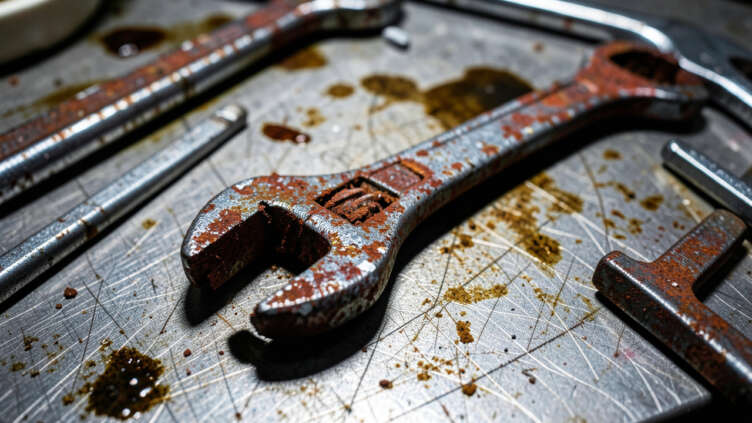
Common Signs Your Wrench Set Needs Replacing
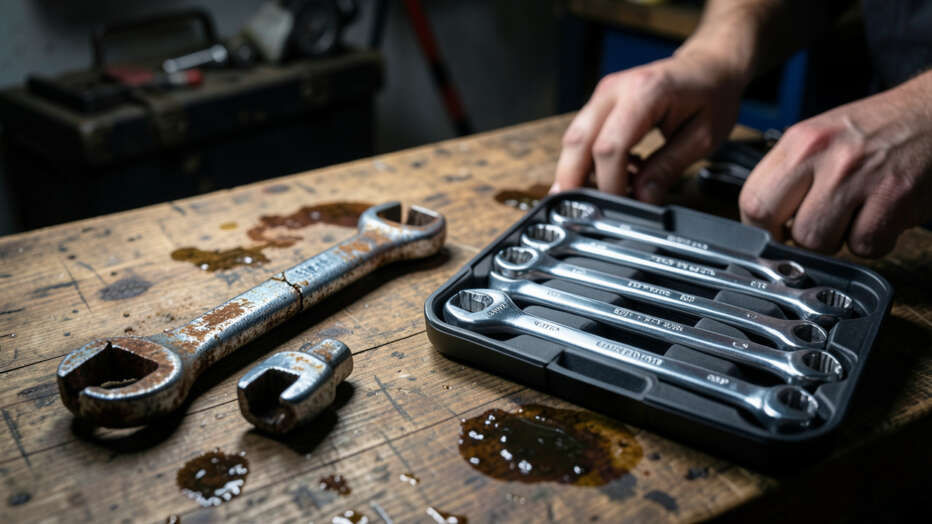
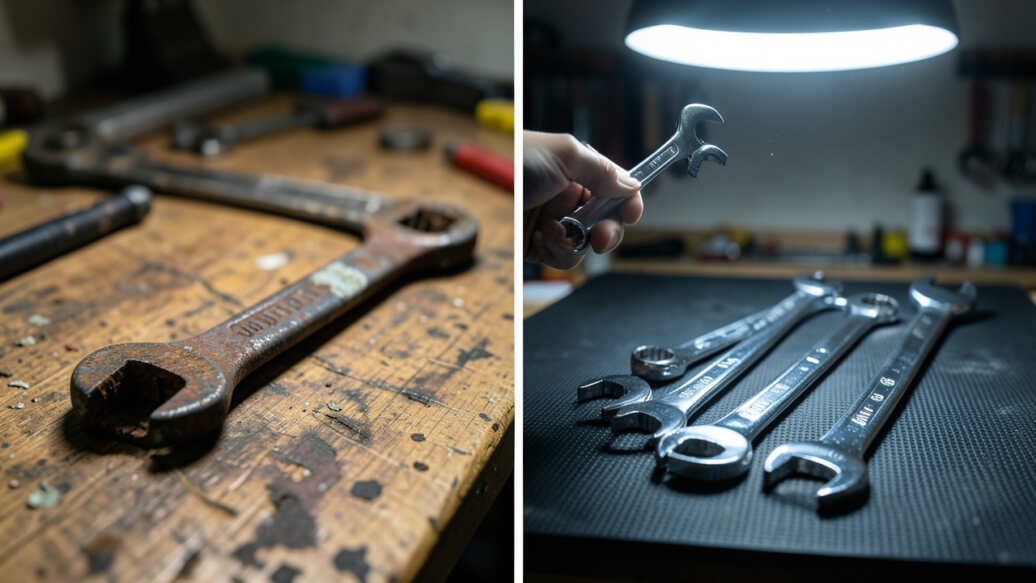
You might think a wrench is indestructible, but frequent use takes a toll. The first visible indicator is rounding of the jaw opening. When the once-crisp flats become smooth, your wrench can no longer grab a bolt head firmly.
This leads to cam-out, where the tool slips off, rounding the fastener itself.
Another clear sign is handle deformity. A bent handle, even slightly, alters the torque angle and reduces control. Cracks in the chrome or fractures in the steel are dangerous – the tool could snap under pressure.
Finally, if your ratcheting wrench feels gritty or skips teeth during use, internal wear has reached a critical point.
- Rounded jaw edges – check each size under a bright light; any smooth spot means replacement.
- Bent or twisted handle – lay the wrench on a flat surface; if it rocks, it’s compromised.
- Chrome flaking or cracks – flaking chrome can cut your hands, and cracks lead to breakage.
- Ratcheting mechanism skipping – clean and oil it first; if it persists, the pawl or gear is worn.
- Loose fit even on correct-size fasteners – this indicates the jaws have spread.
- Rust or pitting on the working surfaces – surface rust is cosmetic, but deep pitting weakens the steel.
Warning: Never use a wrench with visible cracks or bends. Applying torque can cause sudden failure, sending metal shards flying and potentially causing serious injury.
Inspect your entire set once a month if you use wrenches daily. A quick visual check and a test on a known-good bolt will reveal any hidden damage. Do not ignore a single damaged wrench – a set is only as reliable as its weakest tool.
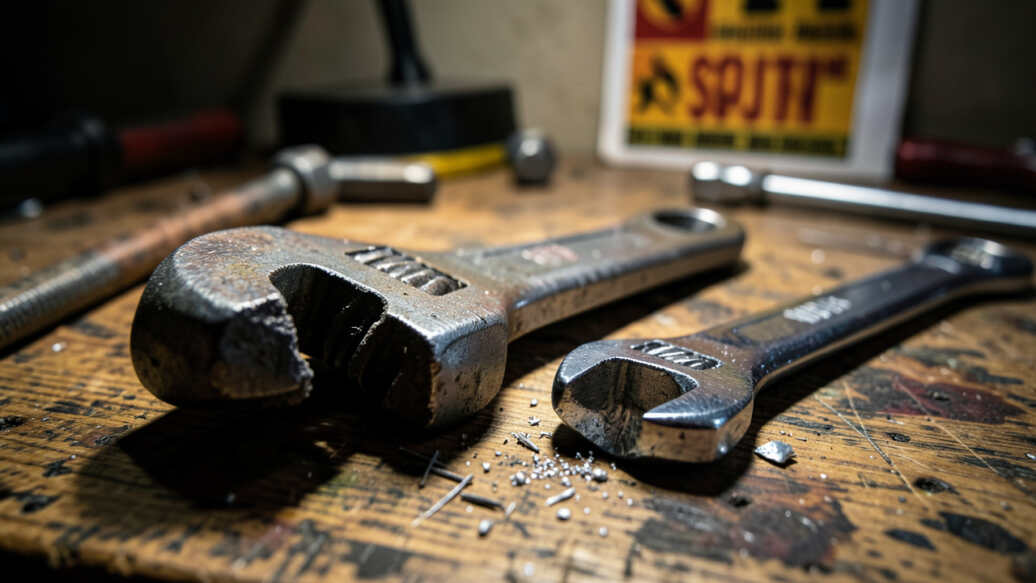
How Jaw Wear Affects Your Work and Safety
Worn jaws don’t just annoy you – they create real risks. According to a 2022 report from the National Safety Council, tool-related hand injuries account for over 150,000 emergency room visits annually in the United States. A rounded wrench that slips off a bolt can cause your hand to smash against nearby metal, leading to cuts, bruises, or even fractures.
Beyond personal injury, a slipping wrench damages the fastener head. That means you waste time trying to remove a now-stripped bolt, often requiring a bolt extractor or grinder. The cost of those repairs quickly exceeds the price of a new wrench set.
| Jaw Condition | Effect on Fastener | Safety Risk |
|---|---|---|
| Sharp, square edges | Perfect grip, no damage | Low risk |
| Slightly rounded (1-2mm) | Occasional slip, minor rounding | Moderate – hand can slip off |
| Heavily rounded (3mm+) | Frequent slip, fastener stripped | High – tool can fly off |
| Cracked or broken | Tool failure, fastener damage | Extreme – shrapnel risk |
The table shows that even moderate jaw wear reduces grip and increases danger. If you find yourself tightening a nut with extra force because the wrench keeps slipping, that’s a clear sign you need to replace the set.
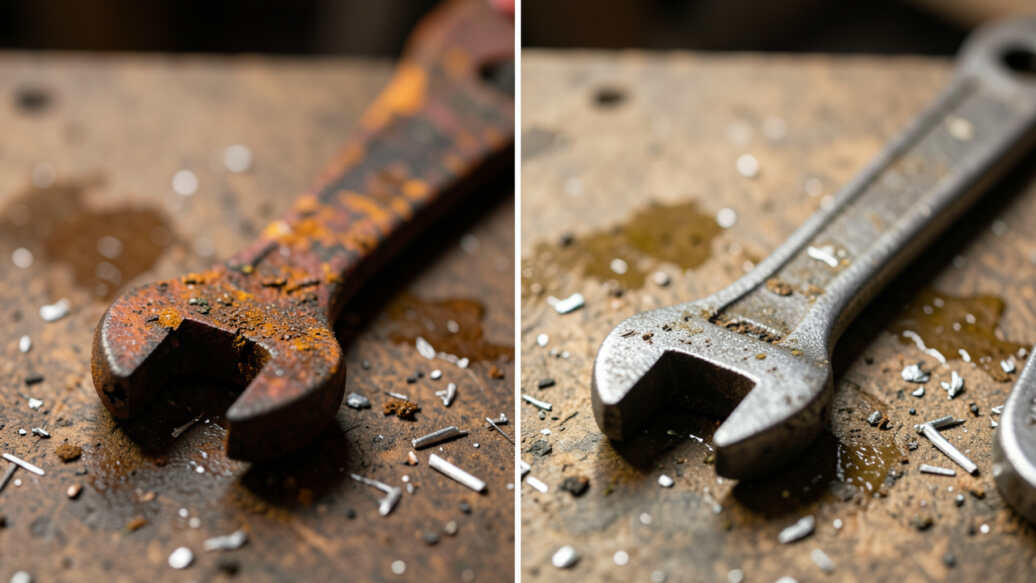
What Types of Damage Can Be Fixed vs. Replaced?
Not every flaw means you must toss your wrench set. Light surface rust can be removed with steel wool and oil. A loose ratcheting mechanism often improves after cleaning and lubricating the internal gears.
However, structural damage is permanent.
Here’s a practical breakdown of repairable versus non-repairable issues:
- Repairable: Light surface rust (use evaporating rust remover), sticky ratchet (disassemble, clean, relubricate), loose screw on adjustable wrench (tighten with correct driver), decorative chrome discoloration (cosmetic only).
- Non-repairable: Bent or twisted handle, cracked chrome that exposes steel, rounded jaw edges, spread jaw opening, broken ratcheting pawl or gear, chipped or broken tips.
Important: Chrome flaking exposes the underlying steel to moisture, leading to rapid corrosion. It also creates sharp edges that can cut your hands. Replace any wrench with flaking chrome immediately.
Also consider the cost of repair. A high-end ratcheting wrench might be worth sending to the manufacturer for a rebuild, but budget sets are cheaper to replace entirely. According to a 2023 survey by the Tool Institute of America, 72% of professional mechanics replace combination wrench sets every two to three years, while DIYers stretch that to five to seven years.
Cost Comparison: Replacing Cheap Sets vs. Investing in Quality
Your budget heavily influences the decision. A basic 10-piece combination wrench set from a discount store costs around $15–$30. These tools are made from lower-grade steel and will show wear much faster.
Replacing a cheap set every year may seem economical, but over a decade you spend $150–$300 on inferior tools.
| Category | Price Range (10-pc set) | Typical Lifespan | Total Cost Over 10 Years |
|---|---|---|---|
| Cheap (budget steel) | $15–$30 | 1–2 years (light use) | $150–$300 |
| Mid-range (chrome vanadium) | $40–$80 | 3–5 years | $80–$160 |
| Premium (forged alloy, lifetime warranty) | $100–$200+ | Lifetime (or indefinite) | $100–$200 (one-time) |
Premium sets with lifetime warranties – like those from Proto, Snap-on, or Wright – cost more upfront but offer the best long-term value. If your jaw wears out on a premium brand, you can often get a free replacement. So when is it time to replace your wrench set for good?
If you own a budget set and see damage, the answer is now. If you own a quality set, check the warranty first.
Tip: Before buying a new wrench set, look for a wrench set that offers a limited lifetime warranty. Many mid-range brands like GearWrench and Tekton provide excellent warranty coverage without the Snap-on price tag.
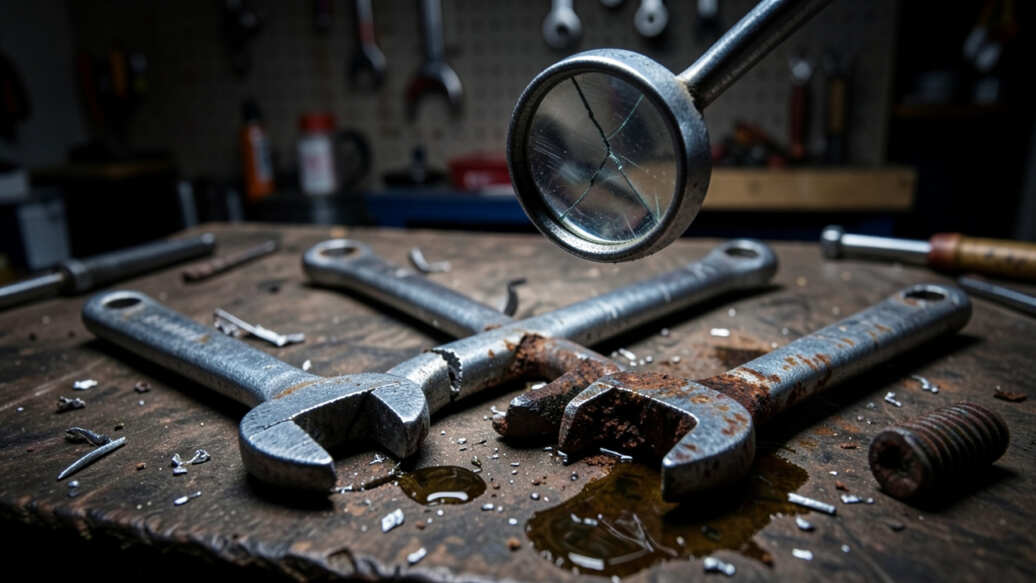
How to Test Your Wrench Set for Impending Failure
You don’t need special tools to evaluate your wrenches. Perform these simple tests on the most-used sizes (e.g., 10mm, 13mm, 1/2-inch, 9/16-inch):
- Visual inspection: Hold each wrench under a strong light and rotate it. Look for dents, burrs, or shiny spots on the flats of the jaw. Any shiny spot indicates wear.
- Fit test: Try the wrench on a fastener of the correct size. A new wrench should slide on with a slight resistance (interference fit). If it slides on easily and has play, the jaw has spread.
- Torque test: Apply moderate torque (about half your usual force) on a fixed bolt. If the wrench “clicks” or slips before you reach full torque, the jaw is too rounded.
- Handle flex test: Grip the wrench with both hands and try to bend it. A quality wrench will feel rigid. If it flexes noticeably, the steel is fatigued.
- Ratcheting sound test: For ratcheting wrenches, spin the mechanism back and forth. A smooth, quiet click indicates health. Grinding or skipping means internal wear.
Perform these tests every six months. If two or more sizes in your set fail any of these tests, it’s time to replace the entire set – mismatched wrenches reduce workflow efficiency and increase the chance of using the wrong tool.
Common Mistakes That Accelerate Wrench Wear
Even the best wrench set can fail prematurely if you misuse it. Avoid these habits to double the lifespan of your tools:
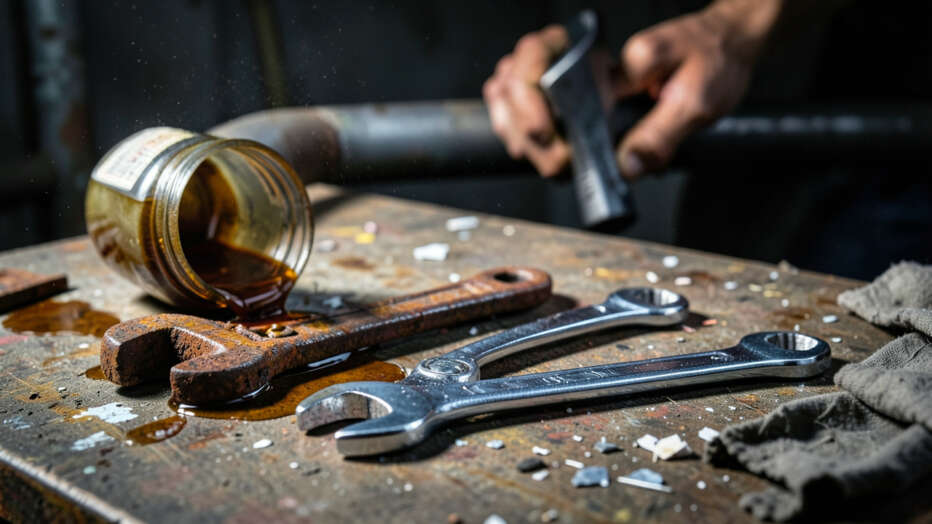
- Using a wrench as a hammer: Hitting a wrench with a hammer deforms the jaw and creates microcracks. Always use a proper hammer and punch.
- Applying cheater bars (pipe extensions): Adding a pipe to your wrench handle multiplies torque beyond its design limit, bending the handle or spreading the jaw.
- Using the wrong size: “Close enough” leads to rounded fasteners and worn jaws. Always use the exact metric or SAE size.
- Storing wrenches loose in a drawer: Tumbling against each other chips chrome and rounds edges. Use a wrench organizer or roll.
- Neglecting lubrication: Ratcheting mechanisms need light oil every few months. Dry mechanisms wear faster.
Warning: Never use a wrench on a fastener that is already rounded. The poor contact will accelerate your wrench’s wear and can cause the tool to break. Instead, use a bolt extractor or replace the fastener first.
Following these care tips can delay replacement by years. The American Society of Mechanical Engineers notes that proper tool storage extends working life by an average of 40%. But once wear reaches the critical point, no amount of maintenance can restore precision.
When Is It Worth Upgrading vs. Simply Replacing?
Sometimes you might consider a lateral replacement – same quality, new set. But other situations call for an upgrade. Ask yourself these questions:
- Have your tasks changed? Moving from home repairs to professional work? Upgrade to a set with wider size range and better ergonomics.
- Are you frustrated with current design? Maybe you want ratcheting box ends instead of combination wrenches, or you desire longer handles for more leverage.
- Is your set missing sizes? If you constantly reach for an adaptor or crescent wrench, you need a more complete set.
- Is the warranty worth it? If your current premium set has a hassle-free lifetime warranty, you may not need to buy a new set at all – just file a claim.
| Scenario | Action | Reason |
|---|---|---|
| Jaw wear but set still works for basic tasks | Replace with same tier | Cost-effective, no need for higher performance |
| Major damage (cracking, bending) on 3+ wrenches | Replace and consider upgrade | Set is compromised; investing in better quality prevents repeat damage |
| You’ve started working on vehicles/ machinery | Upgrade to larger set with ratcheting and flare-nut wrenches | Specialized fasteners require specialized wrenches |
| Set is complete but old, with rusty finish | Keep if structurally sound, replace if rust pitted | Surface rust is cosmetic; deep pitting weakens steel |
Upgrading is smart when the cost of a better set saves future frustration. For example, a mechanic who uses wrenches eight hours a day should invest in a top-tier set with ergonomic handles and lifetime guarantee. A homeowner doing occasional work can stick with mid-range.
Frequently Asked Questions
How often should I replace my wrench set?
Professional mechanics often replace sets every two to three years. DIY users can last five to seven years with proper care. However, replace immediately if you spot any jaw rounding, cracks, or bent handles.
Can I replace just one wrench from a set?
Yes, if the broken size is a common standard (e.g., 10mm, 13mm, 1/2-inch). Many hardware stores sell individual wrenches. But if the set is discontinued, buy a new set because future availability may be poor.
What is the best way to store wrenches to prevent wear?
Use a wrench roll, foam insert, or magnetic strip. Keep them clean, dry, and separated to prevent metal-on-metal contact. Avoid storing in damp basements or garages.
Does a lifetime warranty cover jaw wear?
It depends on the brand. Snap-on and Proto typically cover any defect, including wear under normal use. Budget brands usually do not.
Always read the warranty terms before purchasing a premium set.
Are cheap wrench sets ever worth buying?
For very occasional light use, a cheap set might suffice. But for regular use, you’ll spend more money replacing cheap sets over time. Mid-range options like GearWrench offer the best balance of cost and durability.
Final Thoughts
Knowing when to replace your wrench set boils down to safety and precision. Check for rounded jaws, bent handles, and internal ratchet wear regularly. A worn tool not only slows you down but also risks injury and fastener damage.
Invest in a quality set with a good warranty – it will pay for itself through reliability and longevity. Don’t wait for a wrench to snap mid-job; replace it proactively when the signs appear.