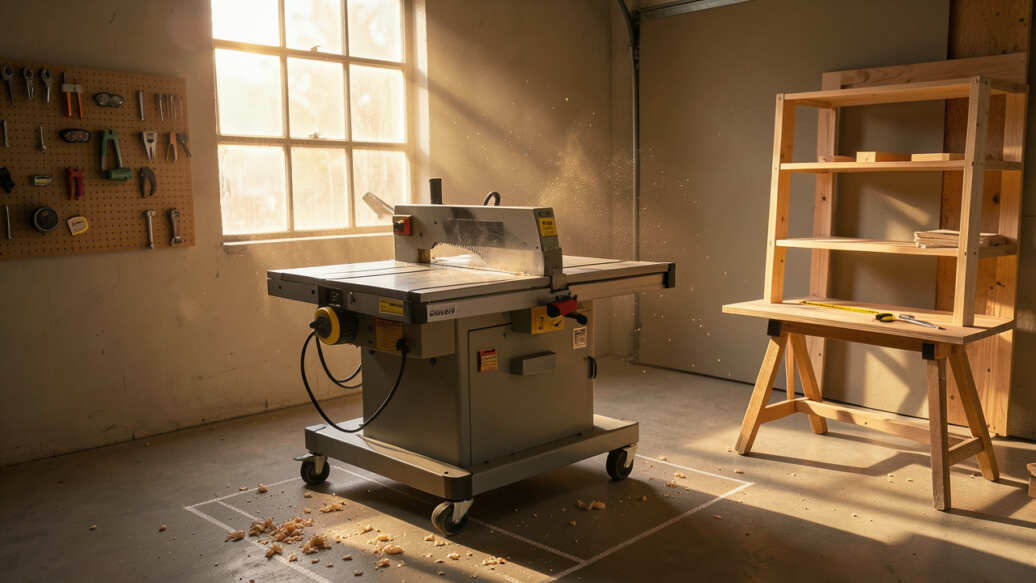

Buying a table saw for a garage is worth the investment if you have adequate space, prioritize cutting precision and safety, and perform frequent woodworking tasks. A compact jobsite saw works best for limited garages, while hybrid or cabinet models suit larger workshops with room for dust collection and outfeed support. Proper space planning, a sturdy stand, and safety gear are essential to maximize the value of a garage table saw setup.
Buying a table saw for a garage is a big decision that depends on your space, budget, and woodworking goals. This post breaks down the real benefits, potential drawbacks, and key factors to help you decide if a garage table saw setup is right for you.
Simply put, a table saw in the garage is absolutely worth it if you have enough space, prioritize accuracy and safety, and plan to do frequent cuts. For occasional DIYers with tight space, a compact jobsite saw may be a better fit.
Key Takeaways
- Buying a table saw for a garage improves cut accuracy and speed, but requires careful space planning.
- A dedicated saw stand or foldable model helps maximize limited floor area.
- Garage table saw setups reduce dust and noise compared to outdoor use, especially with dust collection systems.
- Jobsite saws are ideal for small garages, while hybrid or cabinet saws suit larger workshops.
- Safety gear and proper outfeed support are essential for a successful garage saw station.
What Makes a Table Saw Worth the Investment?
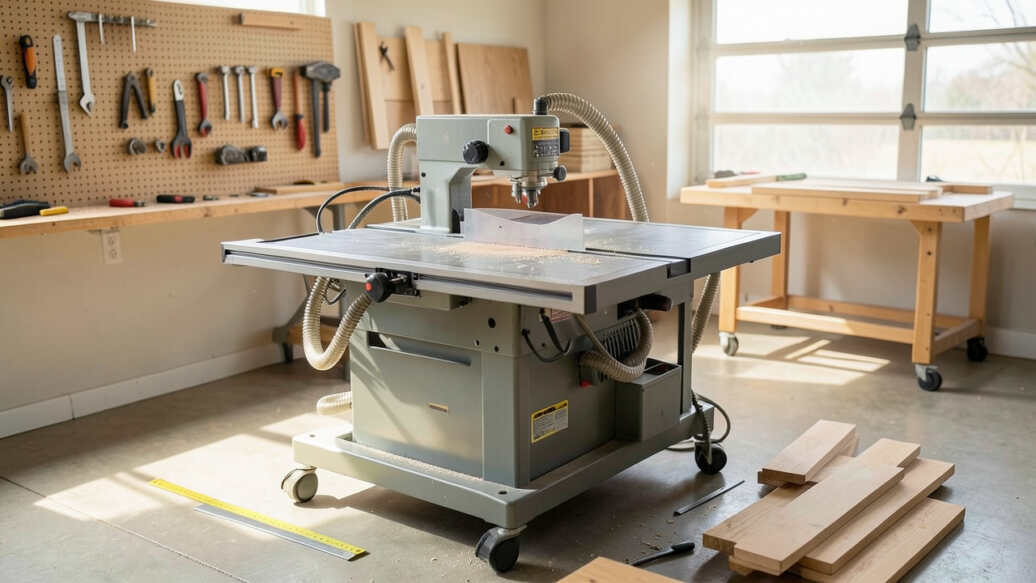
You get unmatched cutting precision and repeatability with a table saw in the garage. Unlike circular saws or miter saws, a table saw allows you to rip long boards, crosscut with a sled, and make dado cuts consistently. That versatility alone makes it a core tool for most woodworkers.
Consider the time savings. A table saw cuts through hardwood, plywood, and MDF in seconds. You can break down full sheets of plywood with a rip fence and outfeed table, reducing manual effort and mistakes.
The ability to set blade height and angle quickly makes joinery tasks like rabbets and tenons far easier.
Key Advantages of Owning a Table Saw
- Ripping long boards perfectly parallel with a reliable fence system
- Crosscutting with a miter gauge for accurate angles up to 45 degrees
- Making dado cuts for shelving, drawers, and box joints
- Using jigs and sleds for tenons, box joints, and tapered cuts
- Cutting sheet goods more safely than with a circular saw
- Repeatable cuts with stop blocks and fence settings
- Better dust collection than a circular saw used indoors
According to the Woodworking Network, nearly 70% of professional woodworkers use a table saw as their primary tool. For serious DIYers, the investment in a decent saw pays for itself within a few projects. You save time, reduce material waste, and improve overall quality.
Tip: If you only build small projects like birdhouses or picture frames, a table saw might be overkill. But for furniture, cabinetry, or decking, it quickly becomes indispensable.
What to Consider Before Buying a Table Saw for a Garage
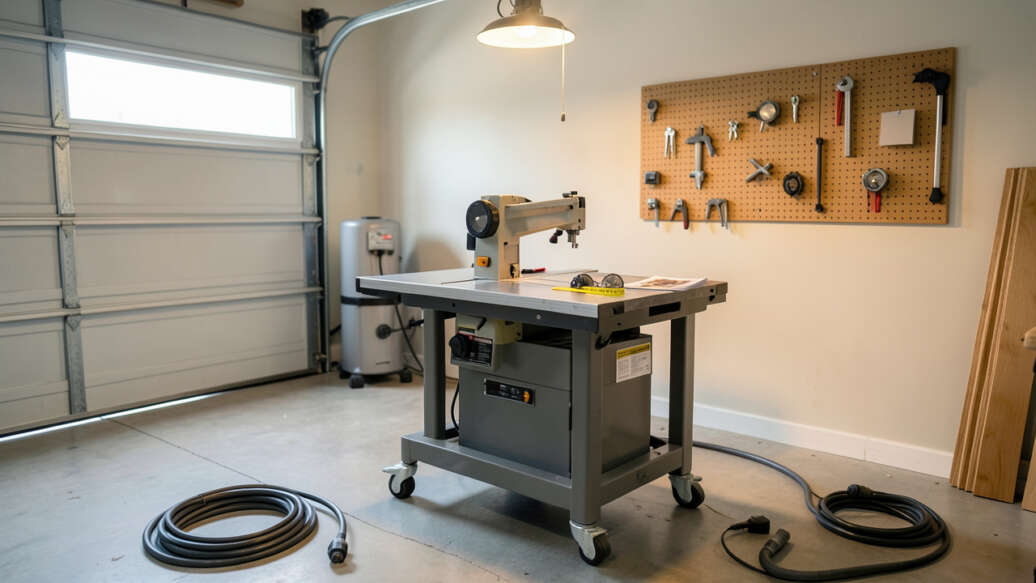
Space is the biggest challenge for most garage workshops. A typical contractor saw takes up about 30 inches by 40 inches of floor space, plus room for infeed and outfeed. You need at least 8 feet of clear space in front and behind the blade for ripping long boards.
Power supply matters too. Most table saws run on 120V, but larger cabinet saws may require 240V. Check your garage outlets before buying.
Also think about dust collection – a shop vac with a cyclone separator works for small saws, but larger saws benefit from a dedicated dust collector.
| Factor | Jobsite Saw | Hybrid Saw | Cabinet Saw |
|---|---|---|---|
| Footprint | Compact, foldable | Medium, 30×40″ | Large, 36×48″+ |
| Weight | 50-70 lbs | 200-300 lbs | 400-600 lbs |
| Power | 15A, 120V | 15A, 120V | 3-5 HP, 240V |
| Dust Collection | Poor, bag only | Good, 4″ port | Excellent, 4″-6″ port |
| Typical Price | $300-$800 | $800-$1,500 | $1,500-$4,000 |
This table shows that the best table saw for a garage depends heavily on your space and budget. A jobsite saw fits in tight corners but lacks power for heavy use. Hybrid saws offer a balance for serious hobbyists.
Cabinet saws are for dedicated woodworkers with ample room.
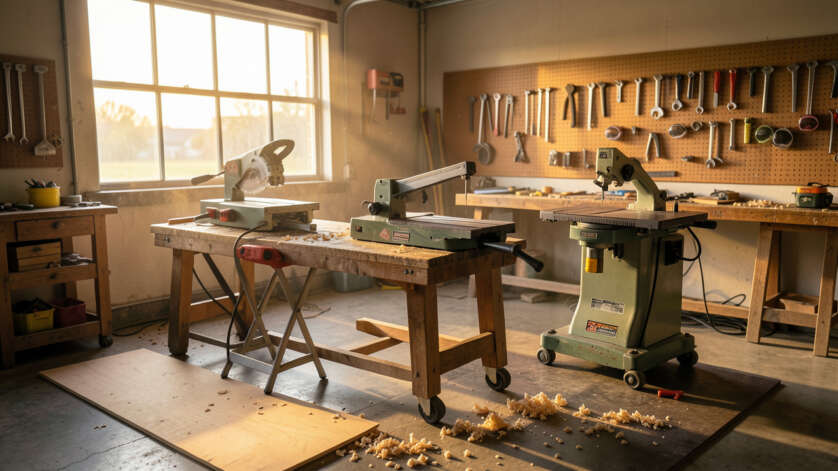
Best Types of Table Saws for a Garage Workshop
When you decide that buying a table saw for a garage is right, you need to choose the type. Each category serves a different need, and the wrong choice can make your garage feel cramped or underpowered.
Jobsite Table Saws
These are lightweight, portable, and typically have a folding stand. They are ideal for small garages where you need to store the saw against a wall or move it outdoors. Brands like DeWalt, Bosch, and Makita dominate this category.
The trade-off is less table surface and a less accurate fence system compared to larger saws.
- Weight under 70 lbs, easy to lift onto a shelf
- Folding legs for compact storage
- 15-amp motor sufficient for 2x lumber and plywood
- Smaller rip capacity (24 inches right of blade typical)
- Limited dust collection – fine dust escapes easily
Best for: DIYers, small projects, and renters who need to put the saw away after each use.
Hybrid Table Saws
Hybrid saws combine a contractor style base with a cabinet-like trunnion system. They offer more stability and cutting capacity than jobsite saws without the massive weight of a full cabinet saw. Many models include a mobile base, making them easier to move around the garage.
The Grizzly G0771Z and Shop Fox W1837 are popular choices.
- Trunnion mounted to the cabinet for stability
- Cast iron table for vibration reduction
- Usually 1.5 to 2 HP motor, 120V or 240V
- Rip capacity up to 30 inches right of blade
- Better dust collection with a 4-inch port
Best for: Serious hobbyists who want accuracy without dedicating a permanent corner.
Cabinet Table Saws
These are the gold standard for professional woodworking. Cabinet saws have the motor mounted inside the cabinet, providing maximum power and stability. They require a dedicated spot in the garage and often need 240V power.
The SawStop PCS and Jet ProShop are common choices for high-end home workshops.
- 3-5 HP motor for heavy hardwood and large panels
- Full cast iron table and wings
- Precision fence system with micro-adjustment
- Excellent dust collection with a 4-inch or 6-inch port
- Can weigh 400-600 lbs – install on a mobile base for flexibility
Best for: Dedicated woodworkers, cabinet makers, and anyone building furniture full-time.
Warning: Never use a table saw without a proper outfeed support. A falling board can cause kickback, serious injury, or damage to the saw. Build or buy a simple outfeed table or roller stand first.
How to Choose the Right Table Saw for Your Garage Space
Measuring your garage is the first step. Clear a space where you can walk around the saw on three sides. You need at least 4 feet in front of the blade for infeed and 6 feet behind for outfeed.
If you rip 8-foot boards, you need about 14 feet of total length clearance.
Think about storage. A table saw in the garage should either live on a mobile base or fold away. Mobile bases with locking casters let you roll the saw to the center of the room when working and tuck it against a wall when done.
That single feature can turn a cramped garage into a functional workspace.
- Measure your garage dimensions – note doorways, shelving, and car parking space
- Choose a saw type based on available floor space
- Plan for 220V if you select a cabinet saw; hire an electrician if needed
- Add a mobile base to maximize flexibility
- Install an outfeed table that folds up against the wall
- Set up dust collection with a shop vac + cyclone or dedicated dust collector
- Organize blades, push sticks, and safety gear nearby
The American Woodworking Institute reports that 55% of home workshops use 120V hybrid or jobsite saws due to garage electrical limitations. If you rent, check your lease about power tools indoors.
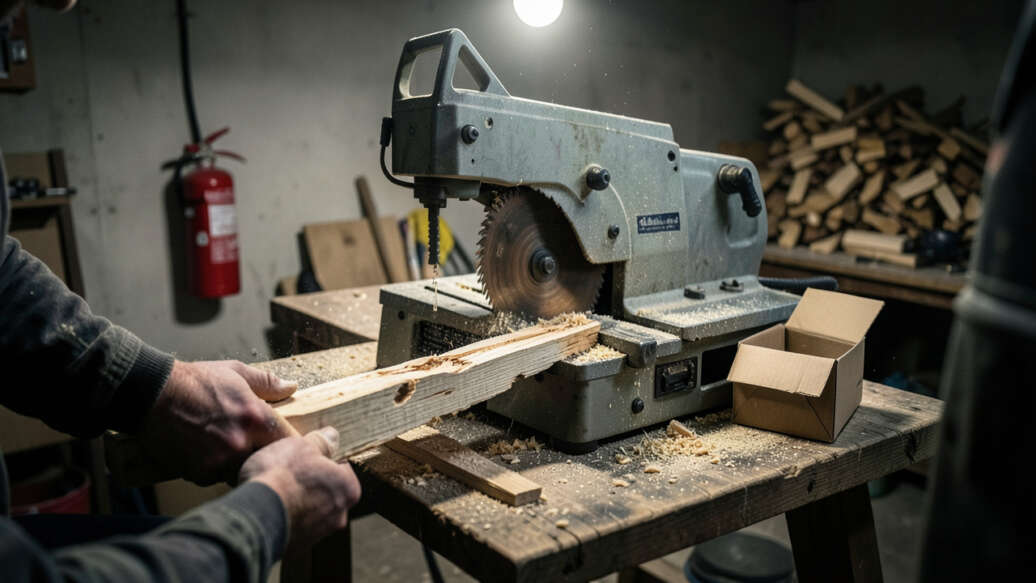
Common Mistakes When Setting Up a Table Saw
Many beginners set up their table saw for garage use incorrectly. They place it too close to a wall, skip the outfeed table, or ignore dust collection. These mistakes lead to frustration, wasted material, and safety risks.
- Placing the saw against a wall – leaves no room for long rips
- Forgetting to level the saw – causes uneven cuts and binding
- Using the stock miter gauge for crosscuts – a sled is safer and more accurate
- Neglecting dust collection – fine dust lingers in the garage for hours
- Overloading the blade – feeding too fast burns the wood and dulls the blade
- Not using push sticks or featherboards – increases kickback risk
- Ignoring blade alignment – a misaligned blade causes burning and rough cuts
| Mistake | Consequence | Solution |
|---|---|---|
| Poor fence alignment | Tapered cuts, binding | Check with a square after each adjustment |
| No anti-kickback pawls | Workpiece thrown back | Install pawls and use riving knife |
| Dust bag only | Respirable dust in air | Connect to shop vac + cyclone |
| No outfeed table | Board falls, kickback risk | Build a folding outfeed table |
Learning from these common errors saves you time and money. A properly set up table saw is a joy to use, while a poorly configured one can be dangerous.
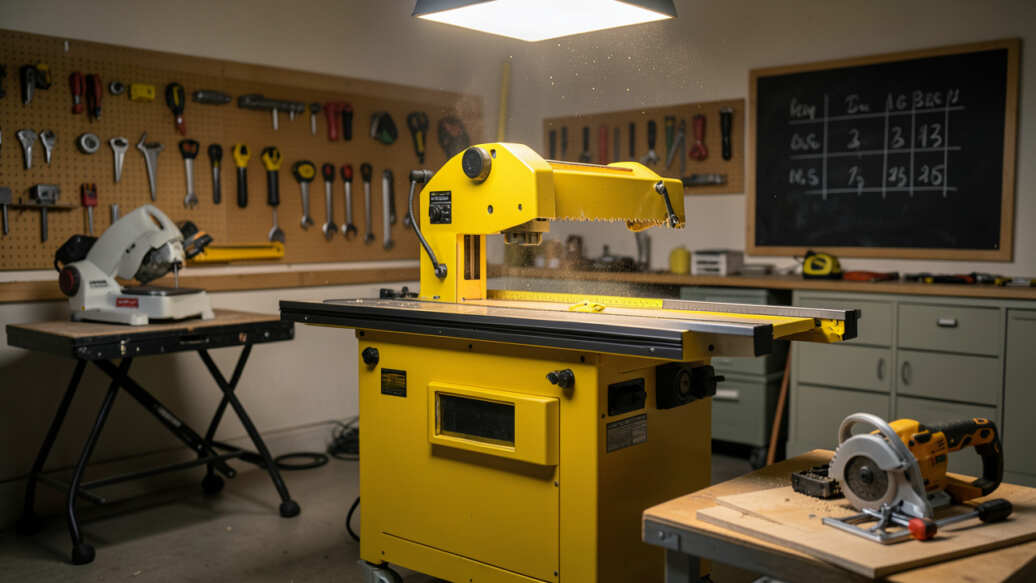
Table Saw vs Other Saws for the Garage
You might wonder if a miter saw, band saw, or circular saw could replace a table saw in the garage. Each tool excels in different areas, but for rip cuts, dado work, and repeatability, the table saw wins.
A miter saw is great for crosscuts and angled cuts but cannot rip boards. A band saw excels at curves and resawing but struggles with straight long rips. A circular saw is portable and cheap but lacks the fence and precision for consistent width cuts.
The table saw combines all these functions in one station.
| Feature | Table Saw | Miter Saw | Circular Saw |
|---|---|---|---|
| Rip cuts | Excellent | Not possible | Fair (with guide) |
| Crosscuts | Good (with sled) | Excellent | Fair |
| Dado cuts | Excellent | Not possible | Not possible |
| Portability | Low to medium | High | Very High |
| Accuracy | Very high | High | Medium |
| Cost | $300-$4,000 | $100-$1,500 | $50-$300 |
If you already own a miter saw and circular saw, a table saw still adds unique capabilities. You can rip boards to custom widths, cut tenons, and make precise dado grooves that no other saw can do as cleanly. The investment pays off the first time you need to rip a 6-foot board to an exact width.
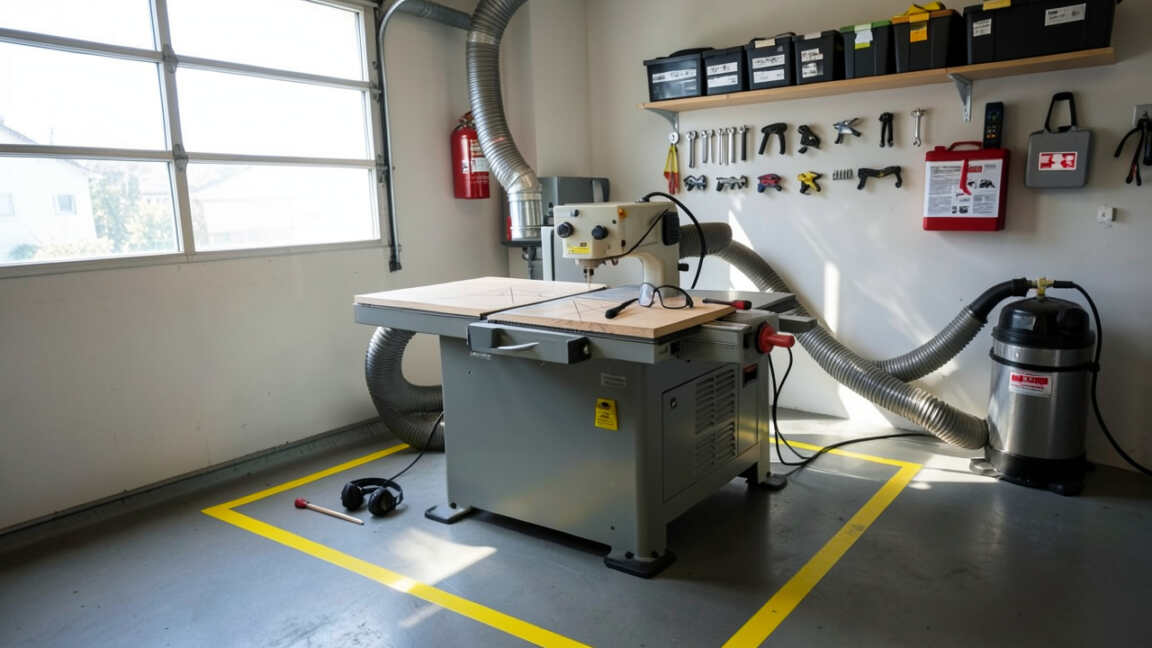
Safety and Setup Tips for Garage Use
Using a table saw in a garage requires specific safety practices. Garages often have concrete floors, limited lighting, and stored items that can become tripping hazards. Follow these guidelines to stay safe.
- Always wear safety glasses and hearing protection – table saws generate over 100 dB
- Use a push stick or push block for narrow cuts under 6 inches
- Keep the riving knife installed to prevent kickback
- Make sure the blade guard is in place unless the cut requires it removed
- Keep the floor clear of extension cords and scrap wood
- Install bright LED lighting above the saw to see the cut line
- Never reach over the blade – reposition your body instead
Important: A SawStop or other flesh-sensing brake system can prevent severe injuries. If your budget allows, consider a saw with this technology. The cost is high, but the peace of mind is worth it.
Dust collection is a safety issue too. Fine wood dust can cause respiratory problems and is a fire hazard when accumulated. The National Institute for Occupational Safety and Health (NIOSH) recommends dust collection with a HEPA filter for indoor woodworking.
A cheap shop vac with a cyclone separator removes about 95% of dust at the source.
Finally, invest in a fire extinguisher rated for electrical fires. Keep it within reach of the saw station. Garages often have stored gasoline, paint, and solvents – a spark from a saw can be dangerous.
Frequently Asked Questions
Can I use a table saw in a small one-car garage?
Yes, but you need a compact jobsite saw or a hybrid saw on a mobile base. Plan your workflow so you can roll the saw out from storage to the center of the garage. An outfeed table that folds against the wall also helps save space.
How much does a decent table saw for a garage cost?
A good jobsite saw costs $400 to $800. Hybrid saws range from $800 to $1,500. Cabinet saws run $1,500 to $4,000.
Set aside at least $100 for a mobile base and $50 for push sticks and safety gear.
Do I need 220V power for a garage table saw?
Only if you buy a 3-5 HP cabinet saw. Most hybrid and jobsite saws run on standard 120V outlets. Check the motor rating before purchase.
You can also run a 1.5 HP hybrid saw on 120V without any electrical work.
Is a table saw safe to use inside a garage?
Yes, with proper precautions. Use a riving knife, blade guard, and push sticks. Install dust collection to minimize airborne particles.
Never operate the saw near flammable liquids. Keep the area well-lit and free of clutter.
What is the best brand of table saw for a garage workshop?
DeWalt and Bosch make excellent jobsite saws. Grizzly and Shop Fox offer good hybrid models. SawStop leads in safety technology for cabinet saws.
Jet and Powermatic are also reputable brands. Choose based on your budget and space.
Final Thoughts
Buying a table saw for a garage is a worthwhile investment for anyone serious about woodworking. It delivers unmatched cutting precision, speed, and versatility that other saws cannot match. Choose a model that fits your space and power requirements, set it up safely, and you will wonder how you ever worked without it.
With proper planning, your garage can become a highly functional workshop that handles everything from simple shelving to fine furniture.