
You should keep a reciprocating saw in your garage only if you tackle demolition, pruning, or plumbing work more than twice a year, as its fast cutting through wood, metal, and plastic offers unmatched versatility for heavy-duty projects. For homeowners who rarely cut dense materials or need precision, this tool occupies unnecessary space and budget. The deciding factor is your project frequency, with a jigsaw or manual saw being a better choice for light or occasional use.
Adding a reciprocating saw to your garage is a decision many DIYers and homeowners wrestle with. This guide breaks down the real benefits, the downsides, and exactly who needs one so you can decide with confidence.
Simply put, a reciprocating saw is worth keeping in your garage if you tackle demolition, pruning, or plumbing projects more than twice a year. If your work is limited to small crafting or light repairs, you can skip it and use a jigsaw or hand saw instead.
Key Takeaways
- A reciprocating saw excels at demolition, pruning, and cutting through materials like wood, metal, and plastic quickly.
- It takes up moderate space but offers unmatched versatility for heavy-duty jobs around the house and yard.
- If you rarely cut dense materials or need precision, a reciprocating saw may not be the best fit for your garage.
- Consider your project frequency, storage space, and budget before adding one to your tool collection.
What Does a Reciprocating Saw Actually Do?
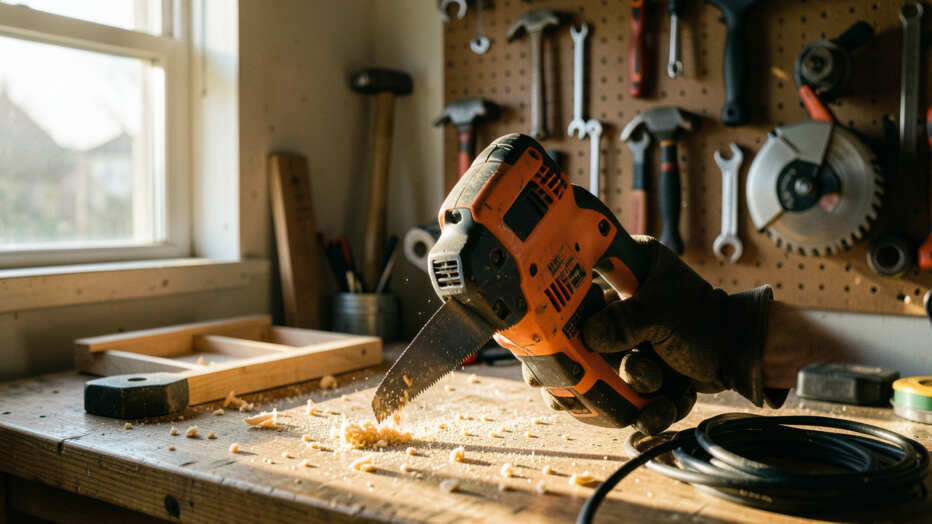
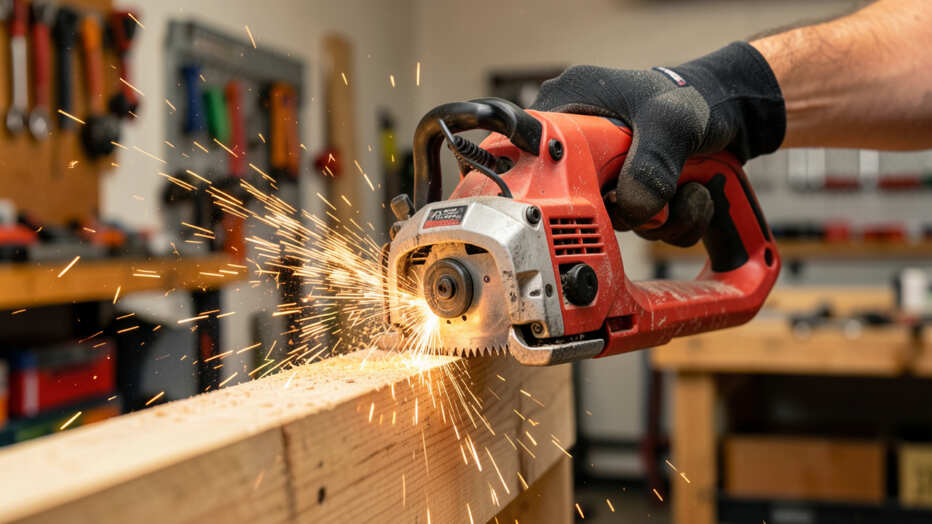
A reciprocating saw uses a push-and-pull blade motion to cut through a wide range of materials. It is often called a “Sawzall” after the popular Milwaukee brand, but many manufacturers make them. These saws are built for speed and aggressive cutting rather than fine precision.
The blade moves back and forth at high speed, allowing you to cut through wood with nails, metal pipes, drywall, and even tree branches. You can swap blades in seconds to match the material you are cutting. This makes the tool incredibly flexible for different jobs.
- Cuts wood, metal, plastic, drywall, and masonry with the right blade
- Ideal for demolition work like removing old framing or cabinets
- Great for pruning tree limbs and cutting roots during landscaping
- Works well for plumbing cuts on copper, PVC, and cast iron pipes
- Can be used for auto repair tasks like cutting exhaust pipes or bolts
- Often used by roofers for cutting shingles and underlayment
- Useful for cutting through thick branches and small logs in the yard
According to the Power Tool Institute, reciprocating saws account for about 12% of all portable electric saw sales in North America, making them a popular choice among both professionals and homeowners. This popularity stems from their raw cutting power and the ability to handle jobs that other saws cannot.
Why You Should Add a Reciprocating Saw to Your Garage
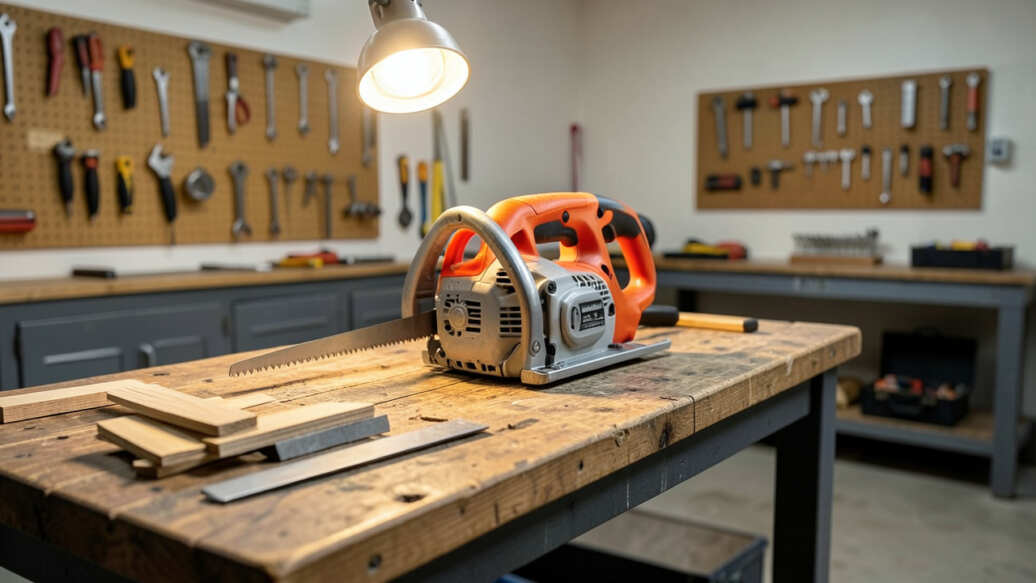
Having a reciprocating saw in your garage gives you a tool that can handle the toughest cutting jobs without breaking a sweat. Unlike a circular saw or jigsaw, a recip saw is designed to cut through materials that would stall or damage other tools. It is especially useful for jobs where you need to cut in tight spaces or at awkward angles.
One of the biggest advantages is the ability to cut through nails and screws embedded in wood. If you are tearing out an old deck or remodeling a room, you will run into fasteners constantly. A reciprocating saw cuts right through them, saving you time and frustration.
- Demolition: remove old walls, floors, and framing quickly
- Plumbing: cut pipes in tight spaces under sinks and in crawlspaces
- Landscaping: trim tree branches and cut roots without a chainsaw
- Auto repair: cut exhaust components, bolts, and body panels
- Emergency use: cut through drywall or metal in rescue situations
- HVAC work: cut ductwork and metal strapping with ease
- General construction: cut lumber, plywood, and sheathing on site
Tip: Keep a variety of blades in your garage. A bi-metal blade for metal cutting and a carbide-tipped blade for abrasive materials will cover most jobs you face.
The versatility of a reciprocating saw means you can reduce the number of specialized tools in your garage. Instead of owning a separate pipe cutter, branch saw, and drywall saw, one recip saw with interchangeable blades handles all those tasks. This saves both money and storage space over time.
When a Recip Saw Is Not Right for Your Garage
Despite its power, a reciprocating saw is not the best choice for every situation. If you primarily do fine woodworking, cabinetry, or precision cutting, this tool will disappoint you. The aggressive blade motion creates rough edges and makes accurate cuts difficult without practice.
Another downside is the vibration and kickback. Reciprocating saws are known for being heavy and vibrating intensely during use. This can cause fatigue in your hands and arms, especially during longer cutting sessions.
If you have joint issues or limited hand strength, you may find the tool uncomfortable to use.
| Drawback | Impact | Mitigation |
|---|---|---|
| Poor precision | Rough cuts, not for fine work | Use a jigsaw or circular saw for accuracy |
| High vibration | Fatigue, reduced control | Choose a model with anti-vibration tech |
| Noise level | Loud, disturbing neighbors | Use hearing protection and cut during day |
| Blade cost | Ongoing expense for quality blades | Buy multi-packs to save per blade |
| Storage space | Takes up drawer or shelf room | Hang on pegboard or store in a case |
These drawbacks mean that for homeowners who rarely cut dense materials or need precision, a reciprocating saw takes up valuable garage space without enough payoff. If you only cut lumber for small projects or never touch plumbing or demolition, you are better off with a circular saw or hand saw.
How to Decide If a Reciprocating Saw Belongs in Your Garage
Making the right decision depends on three factors: the type of projects you do, how often you do them, and the space you have available. Start by listing the common cutting tasks you face in a typical year. If demolition, pruning, or pipe cutting appears on that list more than twice, a reciprocating saw is a smart addition.
Next, consider your current tool collection. If you already own a jigsaw, circular saw, and hand saw, a recip saw fills the gap for heavy-duty and demolition work. If you lack these basic tools, you may want to prioritize them first before adding a specialized saw.
- List your typical projects for the past 12 months
- Count how many involved cutting wood with nails, metal, or thick branches
- Assess your storage space and budget for a new tool
- Compare the recip saw against a jigsaw or circular saw for your needs
- Test a friend’s or rental recip saw before buying if possible
Important: If you rent a reciprocating saw for a project and find it indispensable, that is a strong signal to buy one. If you finish the job without wishing you owned it, you can safely skip the purchase.
According to a survey by the Home Improvement Research Institute, 68% of homeowners who own a reciprocating saw use it at least four times a year. If your usage matches or exceeds that frequency, the investment pays off quickly. For less frequent use, a rental or borrowing from a neighbor may be more practical.
Key Features to Look For in a Reciprocating Saw for Garage Use
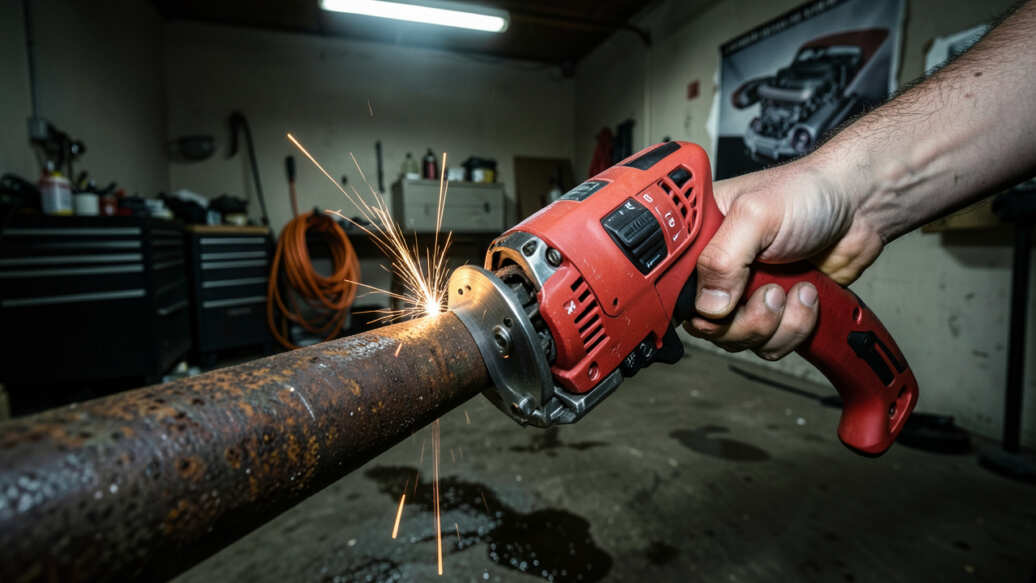
If you decide to buy a reciprocating saw, choosing the right model makes a big difference in usability and longevity. Corded models offer unlimited run time and more power, while cordless models give you portability and convenience. Your choice depends on whether you work near an outlet or need to take the saw to remote spots.
One of the most important features is stroke length. A longer stroke means faster cutting, while a shorter stroke gives you more control. Most reciprocating saws have a stroke length between 1 and 1.25 inches.
For general garage use, a 1.25-inch stroke provides a good balance of speed and control.
- Motor power: 10-12 amps for corded, 18V or higher for cordless
- Stroke length: 1.25 inches is ideal for most garage tasks
- Variable speed trigger: lets you match speed to material
- Tool-free blade change: saves time and frustration
- Anti-vibration system: reduces fatigue during extended use
- Orbital action: increases cutting speed in wood
- LED light: helps you see in dark corners and tight spaces
| Feature | Why It Matters | Best For |
|---|---|---|
| Tool-free blade clamp | Quick blade swaps without a tool | All users, especially beginners |
| Keyless shoe adjustment | Adjusts cutting depth easily | Demolition and plunge cuts |
| Orbital action | Faster cuts in wood and drywall | Rough framing and demolition |
| Variable speed trigger | Control over cut speed | Mixed materials and precision cuts |
Choosing a model with these features ensures your reciprocating saw will serve you well for years. Brands like Milwaukee, DeWalt, and Makita are reliable choices, but even budget-friendly options from Ryobi or Black+Decker can perform well for occasional garage use. The key is matching the tool to your typical workload.
What Are the Best Alternatives to a Recip Saw?
If you decide a reciprocating saw is not right for your garage, several alternatives can handle similar jobs with different strengths. A jigsaw is excellent for curved cuts and finer work in wood and metal. It produces cleaner edges and gives you more control, but it cannot cut through nails or thick materials as easily.
A circular saw is the go-to for straight cuts in plywood, lumber, and sheet goods. It is faster and more precise than a recip saw for those tasks. However, it cannot cut in tight spaces or handle demolition work with embedded nails.
A hand saw or hacksaw is a no-cost alternative for small jobs and requires no electricity or battery.
- Jigsaw: best for curved cuts and finer work in wood and metal
- Circular saw: ideal for straight cuts in lumber and sheet goods
- Hacksaw: good for cutting metal pipes and bolts manually
- Chainsaw: better for heavy pruning and cutting large branches
- Oscillating multi-tool: excellent for plunge cuts and tight spaces
- Hand saw: no cost, no power needed, works for small jobs
- Sabre saw: similar to recip saw but lighter and more compact
Warning: Do not try to use a jigsaw or circular saw for demolition work. These tools are not designed to handle nails, screws, or embedded metal and can be damaged or cause injury if used incorrectly.
Each alternative has its place in a well-rounded garage. If you already own two or three of these tools, you may find that a reciprocating saw is redundant for your needs. On the other hand, if you lack a demolition-capable saw, the recip saw stands alone in its ability to cut through almost anything quickly.
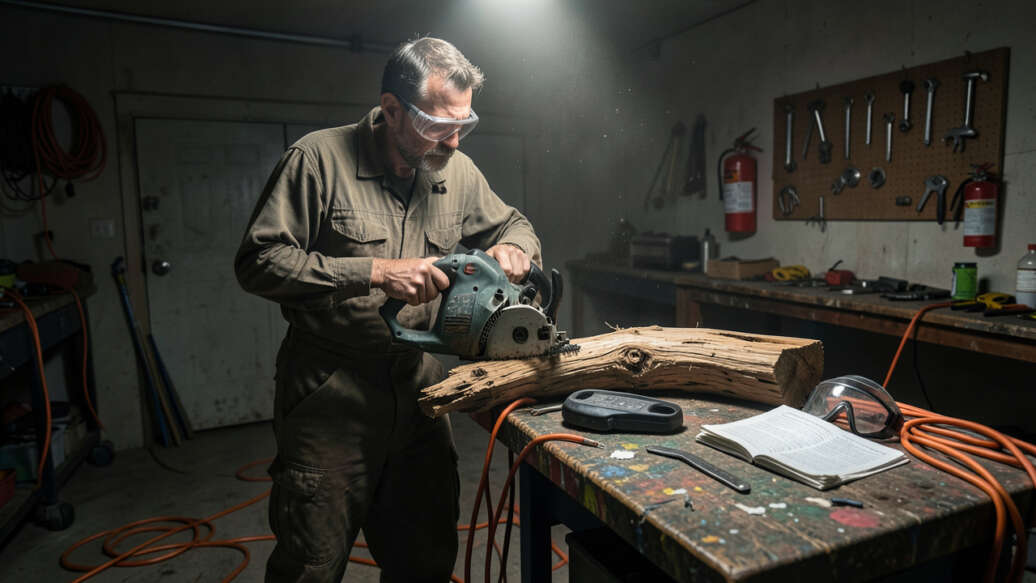
Common Mistakes When Using a Recip Saw in a Garage
Even experienced DIYers make mistakes with reciprocating saws that reduce performance or cause safety issues. One of the most common problems is using the wrong blade for the material. A blade designed for wood will dull quickly on metal, and a metal blade will cut wood slowly and produce rough edges.
Always match the blade to the job.
Another mistake is applying too much pressure. Reciprocating saws cut best with light to moderate pressure. Pushing hard does not make the cut faster and can cause the blade to bind or break.
Let the saw do the work and guide it steadily. Also, failing to secure the workpiece can lead to kickback or inaccurate cuts.
- Using a dull or wrong blade for the material you are cutting
- Pushing too hard, which strains the motor and breaks blades
- Cutting without wearing eye and hearing protection
- Not securing the workpiece with clamps or a vise
- Cutting into hidden wires, pipes, or nails without checking first
- Ignoring the shoe adjustment, which affects depth and stability
- Running the saw at full speed when a slower speed would work better
Tip: Keep a stud finder and wire detector in your garage. Before cutting into any wall or ceiling, scan the area to avoid hitting electrical lines or plumbing pipes. This simple step prevents costly repairs and dangerous accidents.
According to the Consumer Product Safety Commission, about 8,500 emergency room visits per year involve reciprocating saw injuries, with the majority caused by kickback or blade breakage. Following proper technique and using the right blade dramatically reduces this risk. A little caution goes a long way toward keeping your garage projects safe.
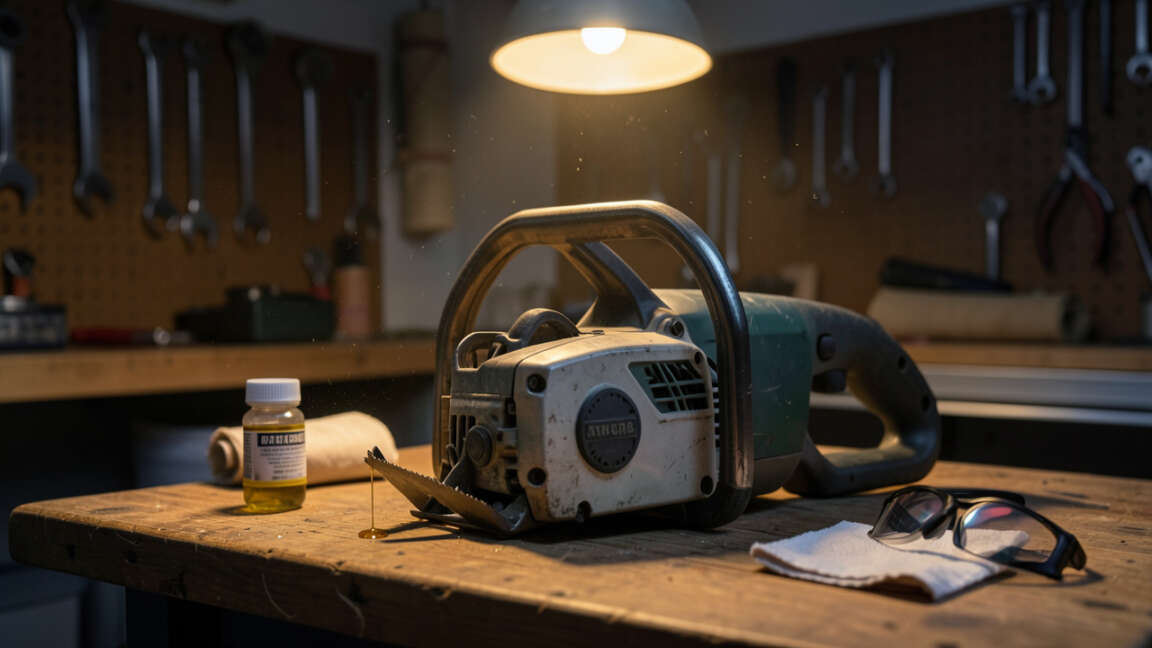
How to Maintain a Reciprocating Saw in Your Garage
Keeping your reciprocating saw in good condition extends its life and ensures safe operation. Basic maintenance takes only a few minutes after each use. Start by cleaning the saw body and blade clamp with a dry cloth or compressed air to remove sawdust and debris.
This prevents buildup that can cause overheating or jamming.
Check the power cord or battery terminals regularly for damage. A frayed cord or corroded battery contact can cause intermittent power loss or create a fire hazard. For cordless models, store batteries at room temperature and avoid leaving them on the charger after they reach full capacity to extend battery life.
- Clean the saw after every use with compressed air or a dry cloth
- Inspect the power cord for frays or cuts before plugging in
- Lubricate the blade clamp mechanism monthly with a light oil
- Store the saw in a dry place to prevent rust on metal parts
- Replace blades when they become dull or show signs of wear
- Check the shoe for damage and tighten it if loose
- Test the trigger and safety lock before each use
Proper storage also matters. A reciprocating saw stored loose in a toolbox can get banged around, damaging the blade clamp or trigger assembly. Use the original case or a dedicated drawer with foam inserts to keep the saw secure.
Hanging the saw on a pegboard also works well and keeps it accessible without taking up shelf space.
Frequently Asked Questions
Is a reciprocating saw useful for a beginner DIYer?
Yes, but with some caution. A reciprocating saw is easier to use than a circular saw for demolition and rough cuts. Beginners should start with slower speeds and practice on scrap wood before tackling important projects.
Safety gear like goggles and gloves is essential.
Can a reciprocating saw replace a circular saw?
No. A circular saw cuts straight lines much more accurately and is better for sheet goods and lumber. A reciprocating saw complements a circular saw but does not replace it.
Most garages need both for different tasks.
What size reciprocating saw should I buy for home use?
A corded model with 10-12 amps or a cordless model with an 18V battery is ideal for most home garages. These sizes provide enough power for demolition, pruning, and pipe cutting without being too heavy or expensive. Avoid small 12V models as they lack the power for serious work.
How many blades should I keep in my garage for a recip saw?
Keep at least six blades: three for wood (including a demolition blade for nails), two for metal, and one for general purpose. This variety covers most jobs without running to the store mid-project. Store blades in a labeled container to find the right one quickly.
Is a cordless reciprocating saw as good as a corded one?
For most garage tasks, yes. Modern 18V and 20V cordless models deliver power close to corded versions. The convenience of portability often outweighs the slight power loss.
However, for heavy demolition work, a corded model still offers more consistent power and no battery downtime.
Final Thoughts
A reciprocating saw is a powerful and versatile tool that earns its place in many garages, especially if you tackle demolition, pruning, or plumbing projects regularly. It is not a precision tool, and it takes up space and requires proper technique. For DIYers who face rough cutting jobs a few times a year, it is a smart investment that pays for itself in time and effort saved.