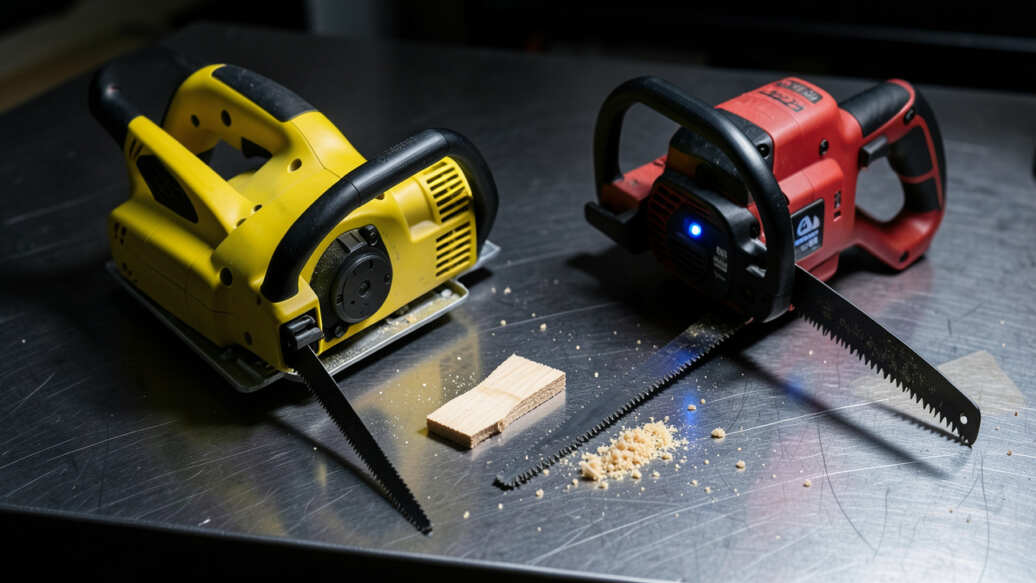

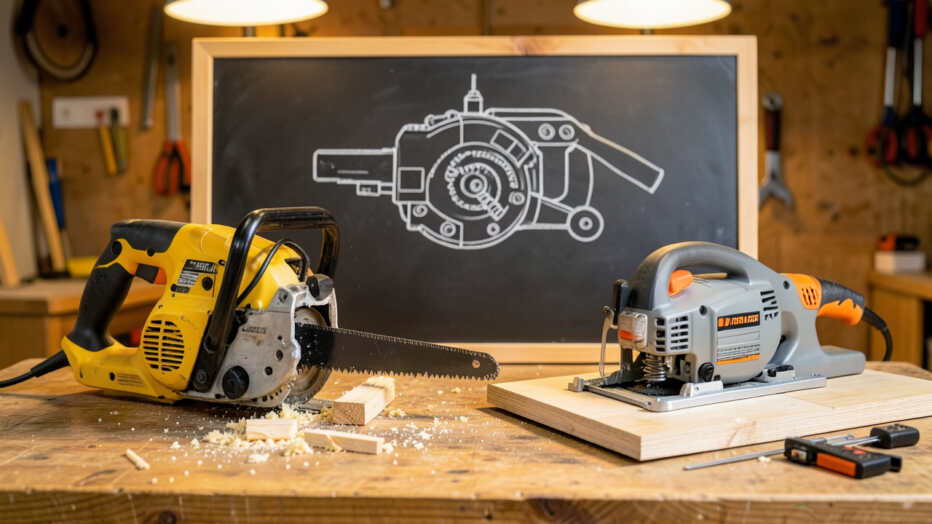
The real differences between a jigsaw and a reciprocating saw lie in their intended cutting tasks and design, with jigsaws optimized for precise, intricate curves in thin materials like plywood and reciprocating saws engineered for aggressive demolition of thick lumber, nails, and pipes. A jigsaw delivers finer control through a shorter stroke and a smaller, thinner blade guided by a base plate, whereas a reciprocating saw uses a longer, more powerful stroke and a larger, stouter blade for rough, fast cuts in confined spaces. For a craftsperson needing clean, detailed shapes, a jigsaw is the correct choice; for tearing out walls or cutting through nail-embedded wood, a reciprocating saw provides the raw force required.
Understanding the differences between a jigsaw and reciprocating saw is essential for choosing the right power tool for your cutting project. While both saws use a reciprocating blade motion, their design, blade size, and cutting capabilities make them suited for very specific tasks.
This guide compares the jigsaw versus the reciprocating saw across key features, common applications, and performance metrics so you can decide which tool belongs in your workshop.
Simply put, a jigsaw is designed for precise, curved cuts in thin materials like plywood and laminate. A reciprocating saw is a demolition tool built for rough cutting through thick lumber, nails, and plumbing in tight spaces. You use a jigsaw for detailed work and a reciprocating saw for tearing things apart.
Key Takeaways
- Jigsaws excel at cutting intricate curves and shapes with high precision, making them ideal for cabinetry and craft projects.
- Reciprocating saws prioritize raw power and longer stroke length for aggressive demolition and rough cutting through thick materials.
- The differences between a jigsaw and reciprocating saw include blade design, cutting action, material compatibility, and control requirements.
- Both tools are available in corded and cordless versions, but cordless reciprocating saws are more common on job sites for their portability.
- Your choice depends on the project: detailed cuts need a jigsaw; demolition and heavy framing need a reciprocating saw.
What Is a Jigsaw and How Does It Work?
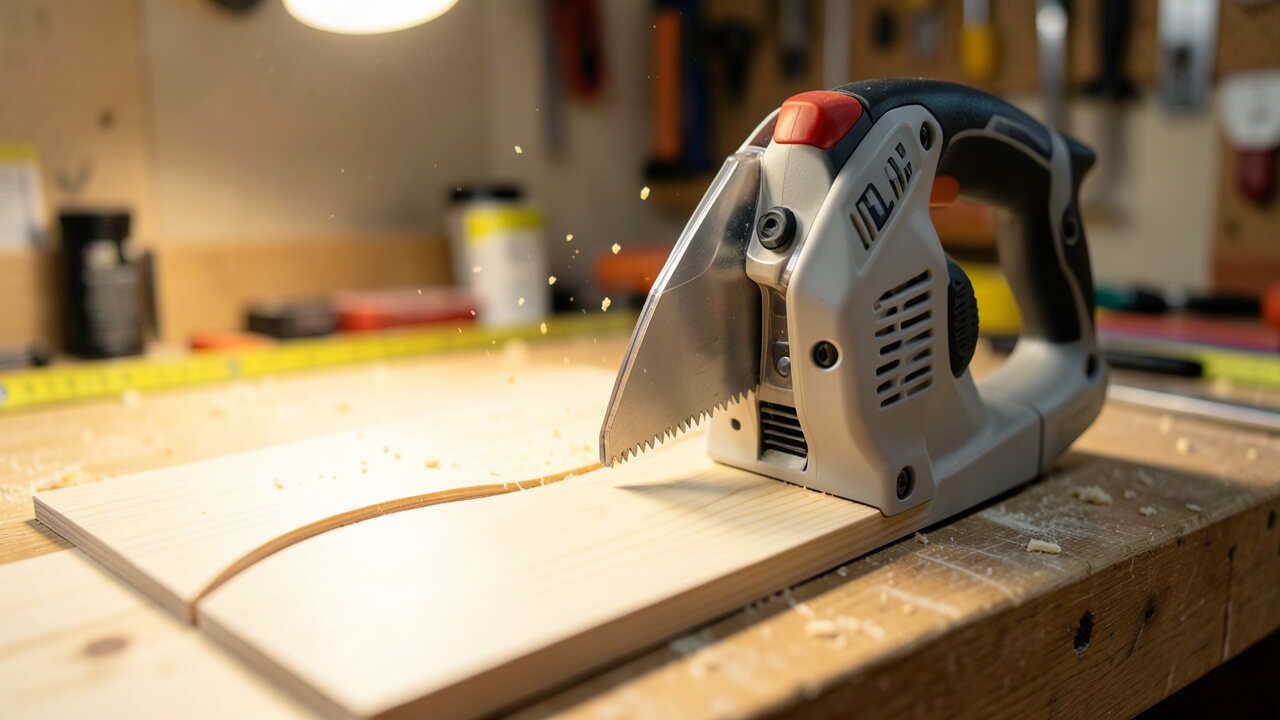
A jigsaw is a versatile power saw that uses a short, straight blade moving rapidly up and down in a reciprocating motion. The blade is mounted vertically through the base plate (shoe) and cuts on the upstroke. Most modern jigsaws offer orbital action, which pushes the blade forward during the cutting stroke for faster material removal.
Jigsaws are built for control and precision. You guide the saw along a marked line while the shoe rests firmly on the workpiece. The narrow blade allows for tight radius cuts, making the jigsaw the go-to tool for curves, patterns, and flush cuts.
These saws handle a wide range of materials when paired with the correct blade. Common materials include plywood, MDF, hardwood, laminate, plastic, PVC, and thin non-ferrous metals like aluminum and copper.
Key Features of a Jigsaw
- Variable Speed Control: Adjust the blade speed based on material hardness and cutting type. Faster speeds for wood, slower speeds for metal and plastic.
- Orbital Action Settings: Choose between straight cutting and orbital settings (1-3) for aggressive cuts in wood. Orbital action reduces blade heat and increases cutting speed.
- Tool-Free Blade Change: Most jigsaws now feature a lever or clamp that allows you to swap blades without using a hex key.
- Bevel Capabilities: The shoe tilts to 45 degrees for cutting angled edges and bevels.
- Blade Guide Roller: Supports the blade during cutting to reduce deflection and improve accuracy in thick materials.
Jigsaw Blade Types and Compatibility
| Blade Shank | Compatibility | Common Use |
|---|---|---|
| T-Shank | Universal fit for most modern jigsaws | General woodworking, metal cutting |
| U-Shank | Older jigsaw models, less common | Basic DIY projects |
| Bayonet | Proprietary to specific brands | Specialized industrial cutting |
Choosing the right blade shank is critical. T-shank blades offer more clamping security and are widely available. U-shank blades are harder to find now but still usable on older tools.
Tip: Use a fine-tooth blade with 10-20 TPI for clean cuts in plywood and laminate. Use a coarse blade with 4-6 TPI for fast ripping in solid softwood.
What Is a Reciprocating Saw and How Does It Work?
A reciprocating saw, often called a Sawzall, is a heavy-duty power tool that moves a long blade back and forth in a horizontal pushing and pulling motion. The blade extends forward from the tool body and cuts on the pull stroke. This design allows the saw to reach into tight spaces, through walls, and up into overhead positions.
Reciprocating saws are built for raw power and aggression. They lack the precision of a jigsaw but compensate with blade length, stroke length, and torque. These tools are standard on construction sites for demolition, rough framing, and remodeling tasks.
Common materials for reciprocating saws include thick lumber, pressure-treated wood, drywall, metal studs, cast iron pipes, PVC, and even tree limbs for landscaping. The tool excels in applications where speed and force matter more than a clean cut edge.
Key Features of a Reciprocating Saw
- Stroke Length: Longer stroke length (1 to 1.5 inches) removes more material per stroke, increasing cutting speed in thick stock.
- Variable Speed Trigger: Provides full control over cutting speed, from slow starts for precision to full speed for aggressive demolition.
- Orbital Action: Some models offer orbital blade movement for faster cuts in wood, similar to jigsaws but more aggressive.
- Tool-Free Blade Change: Quick-release chucks allow you to swap blades in seconds without any additional tools.
- Pivoting Shoe: The adjustable shoe provides stability against the workpiece and can be repositioned to extend blade life by using different sections of the blade.
Corded vs Cordless Reciprocating Saws
| Power Source | Pros | Cons |
|---|---|---|
| Corded | Unlimited runtime, consistent power output, lower upfront cost | Limited mobility by cord length, not ideal for work at height |
| Cordless | Portable, accessible in tight spaces, convenient for job sites | Limited runtime per battery, heavier, higher initial investment |
According to the Power Tool Institute, cordless reciprocating saws account for over 60% of sales in the construction sector because of their portability. However, corded models still dominate in heavy demolition where continuous power is required.
Warning: Always disconnect the battery or unplug the saw before changing blades. Accidentally engaging the trigger during blade changes can cause serious injury.
What Are the Key Differences Between a Jigsaw and a Reciprocating Saw?
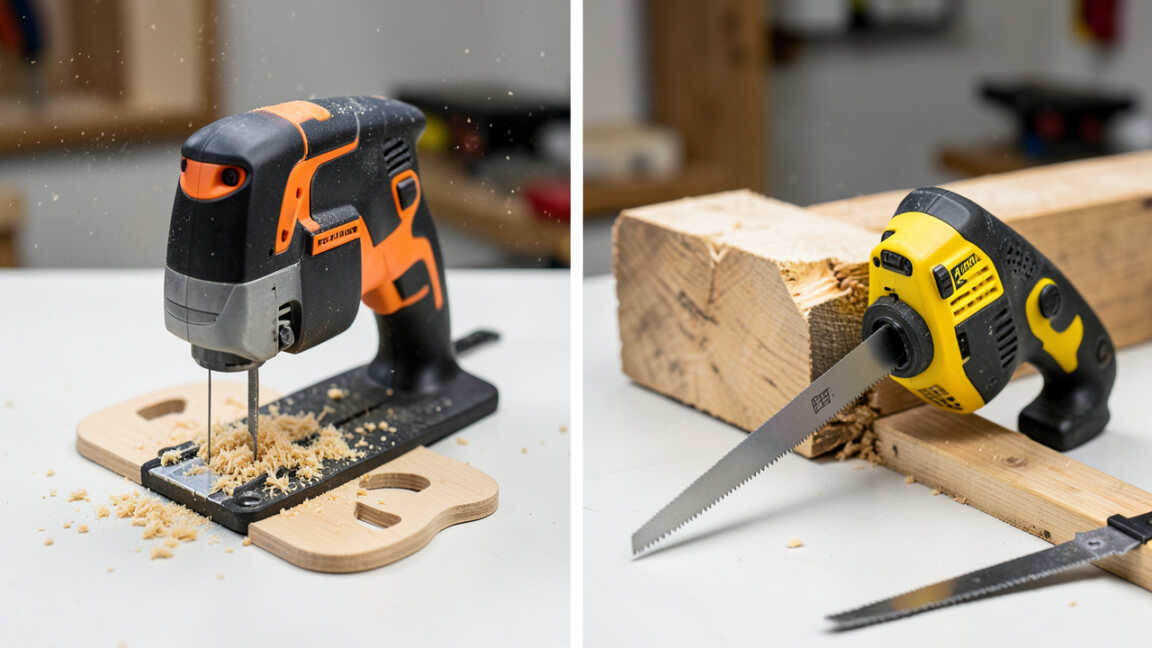
The differences between a jigsaw and reciprocating saw go beyond just size and power. These tools are engineered with distinct cutting mechanics, blade systems, and application profiles. Understanding these differences helps you avoid using the wrong tool for a project.
Important: Using a reciprocating saw for fine woodworking will result in frayed edges and inaccurate cuts. Using a jigsaw for demolition will overload the motor and break blades. Match the tool to the task.
Detailed Comparison Table
| Feature | Jigsaw | Reciprocating Saw |
|---|---|---|
| Primary Use | Curved cuts, intricate patterns, bevels | Demolition, rough cuts, pruning, plumbing |
| Blade Length | 3 to 6 inches | 6 to 12 inches |
| Cutting Action | Up-and-down vertical motion | Back-and-forth horizontal motion |
| Precision Level | High, suitable for tight radius curves | Low, best for straight and rough cuts |
| Max Material Thickness | Up to 2 inches typically | Up to 6-8 inches or more |
| Blade Mount | Clamp or screw (T/U shank) | Quick-release chuck (universal shank) |
| Cut Quality | Smooth, clean edges possible | Rough, often splintered edges |
| Best Applications | Cabinetry, craft work, flooring, shelving | Framing, roofing, demolition, fire rescue |
This table highlights that the fundamental differences between a jigsaw and reciprocating saw revolve around the scope of the cut. Jigsaws are surgical instruments for woodworking, while reciprocating saws are sledgehammers for construction and rescue.
Cutting Mechanism and Control
A jigsaw relies on the user guiding the tool along a marked line. The blade is narrow and susceptible to deflection if too much sideways force is applied. You must let the blade do the work and feed the saw at a steady pace.
For tight curves, you use a narrow blade and go slow.
A reciprocating saw uses the user’s weight and leverage to control the cut. You press the shoe against the workpiece and let the blade dig in. The long blade is less prone to deflection but produces a coarser cut due to the aggressive tooth geometry.
Orbital settings can make the cut even faster but rougher.
Blade Speed and Stroke Rate
- Jigsaw: Typically runs at 500 to 3,200 strokes per minute (SPM) with a short stroke length of about 3/4 inch to 1 inch. High SPM with fine blades creates a clean finish.
- Reciprocating Saw: Runs at 0 to 2,800 SPM but with a much longer stroke of 1 to 1.5 inches. The longer stroke removes more material per second, making it faster for rough cuts.
- Variable Speed: Both tools offer variable speed triggers, but reciprocating saws have a wider range of speed control to handle different materials like metal (slow speed) and wood (high speed).
How to Choose the Right Saw for Your Project
Your choice comes down to the specific demands of your project. Do you need a clean, precise cut that might be visible in a finished piece? Or do you need to rip out a section of wall or cut down a branch?
Answering this question directs you to the correct saw.
When to Use a Jigsaw
- Cutting curves and circles in plywood for shelves or furniture.
- Making flush cuts in laminate flooring or countertops.
- Creating beveled edges on wood trim and molding.
- Cutting holes in drywall or paneling for electrical outlets.
- Working with thin metal sheets, PVC pipe, or acrylic plastic.
When to Use a Reciprocating Saw
- Demolishing old wooden frames, stud walls, or deck boards.
- Cutting through nails, screws, and bolts embedded in wood.
- Pruning large tree limbs and roots.
- Cutting cast iron or copper plumbing pipes in tight spaces.
- Performing roof cutting or emergency rescue operations.
5 Questions to Ask Yourself Before Buying
- What materials will you cut most often? Thin wood and laminate favor a jigsaw. Thick lumber and metal favor a reciprocating saw.
- Do you need precision or speed? Precision cutting requires a jigsaw. Speed and demolition require a reciprocating saw.
- Will you work in tight spaces? Reciprocating saws excel at tight, overhead, and confined spaces. Jigsaws need a flat work surface.
- Do you already own batteries for a cordless system? Cordless jigsaws are convenient for DIY. Cordless reciprocating saws are essential on job sites.
- What is your budget? A quality jigsaw costs between $60 and $150. A quality reciprocating saw costs between $80 and $200. Factor in blade costs too.
Tip: If you are a general DIYer who builds furniture and does home repairs, start with a jigsaw. If you are a contractor or do heavy remodeling, a reciprocating saw is a better first purchase.
Common Mistakes When Using Jigsaws and Reciprocating Saws
Even experienced users make mistakes with these tools. Understanding the common pitfalls helps you get better results and extend the life of your saws.
Jigsaw Mistakes
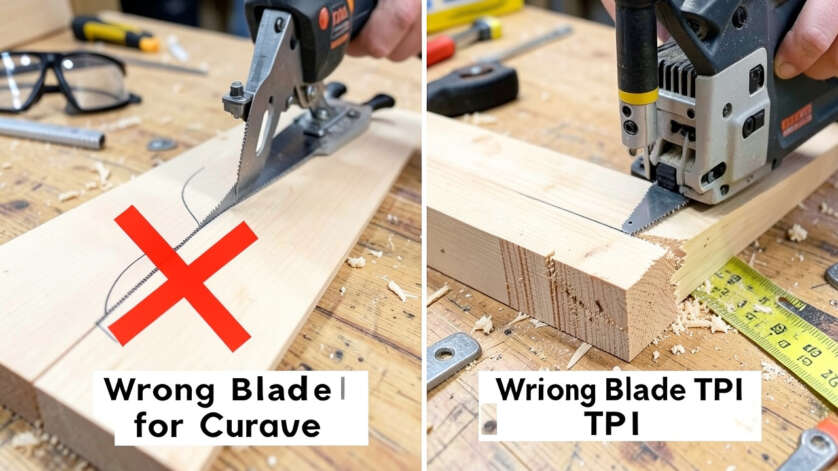
- Using the wrong blade orientation: Always install the blade with teeth facing forward. Cutting on the reverse stroke causes chipping and poor control.
- Not using orbital action for wood: Orbital action increases cutting speed and reduces heat buildup. Turn it off for metal or delicate materials to get cleaner cuts.
- Forcing the saw through the material: Pushing too hard causes blade deflection and motor strain. Let the saw do the work.
- Cutting without a base plate: Never operate a jigsaw without the shoe properly contacting the workpiece. This causes dangerous kickback and poor cuts.
Reciprocating Saw Mistakes
- Using a dull blade: A dull blade generates excessive heat and requires more force, increasing the risk of kickback.
- Not securing the workpiece: Clamp down loose materials before cutting. Unsecured pieces can spin or fall.
- Cutting at the wrong angle: Keep the shoe flush against the workpiece to control the cut depth and direction.
- Ignoring the blade release mechanism: Fumbling with blade changes wastes time and increases the risk of cuts.
Warning: Never use a reciprocating saw one-handed. The torque can cause the tool to twist unpredictably and injure your wrist or arm.
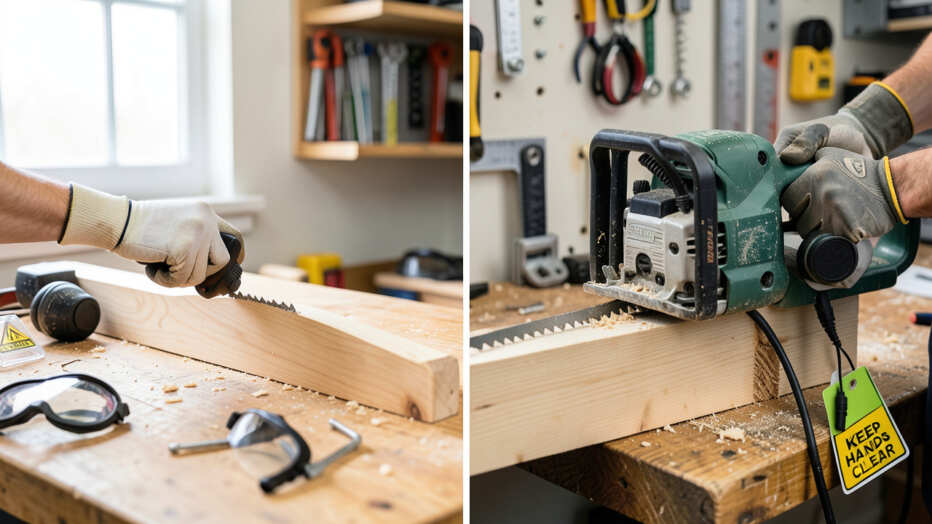
Safety Tips for Operating Jigsaws and Reciprocating Saws
Both saws require proper safety precautions. A reciprocating saw can kick back violently if it binds. A jigsaw can snap a blade if used incorrectly.
Follow these safety tips to protect yourself.
Essential Safety Steps
- Wear proper PPE: Safety glasses or a face shield, hearing protection, and heavy-duty work gloves are mandatory. Use a dust mask for wood cutting.
- Check the workpiece for hidden hazards: Ensure no nails, screws, or staples are in the cut line unless you are using a demolition blade.
- Secure the material: Clamp the workpiece firmly to a workbench or sawhorse. Never hold the material with your free hand.
- Maintain a firm grip: Hold the saw with both hands if possible. For reciprocating saws, use the auxiliary handle for better control.
- Disconnect power for blade changes: Remove the battery or unplug the tool before installing or removing blades.
The U.S. Consumer Product Safety Commission reports that over 30,000 emergency room visits annually involve power saws. Taking an extra minute to set up properly reduces your risk of injury significantly.
Important: Always unplug or remove the battery before cleaning your saw. Built-up sawdust can jam the blade mechanism and create a fire hazard.
Frequently Asked Questions
Can a jigsaw cut thicker than a reciprocating saw?
No, a reciprocating saw can cut much thicker materials. Jigsaws are limited by blade length and motor power, typically cutting materials up to 2 inches thick. Reciprocating saws with a 12-inch blade can cut through 6 to 8 inches of wood or even thick tree trunks.
What is the primary difference between a jigsaw and a reciprocating saw?
The primary difference is the intended application. A jigsaw is designed for precision cutting of curves and intricate shapes. A reciprocating saw is designed for aggressive, rough cutting and demolition.
The blade motion is also different: jigsaws cut vertically, reciprocating saws cut horizontally.
Can I use a jigsaw blade in a reciprocating saw?
No, you cannot interchange blades between a jigsaw and a reciprocating saw. Jigsaw blades have T-shank or U-shank mounts, while reciprocating saws use a universal shank that is thicker and longer. The locking mechanisms are also completely different.
What materials can a reciprocating saw cut?
Reciprocating saws cut wood, lumber, drywall, metal studs, cast iron pipes, PVC, copper, aluminum, and even tree limbs. Using the correct blade for each material is essential. Bi-metal blades handle metal and wood, while carbide-tipped blades cut through abrasive materials like cement board.
Which saw is better for cutting curves in wood?
The jigsaw is significantly better for cutting curves. Its narrow blade can cut tight radius curves and intricate patterns with high accuracy. Reciprocating saws are not designed for curved cuts and will produce very rough, inaccurate results if used for that purpose.
Final Thoughts
Choosing between a jigsaw and a reciprocating saw comes down to the nature of your work. The differences between a jigsaw and reciprocating saw are clear: jigsaws deliver precision and versatility for detailed projects, while reciprocating saws provide the raw power needed for demolition and heavy cutting.
Assess your typical tasks honestly. If you build cabinets, furniture, or craft projects, invest in a quality jigsaw. If you tackle renovations, demolition, or landscaping, a reciprocating saw is your essential partner.
For serious workshops, owning both tools ensures you are prepared for any cutting challenge.