
Six common mistakes—ignoring shade, incorrect panel angle, dirty panels, outdated equipment, lack of monitoring, and wrong inverter choice—directly reduce solar panel efficiency. Avoiding these errors can improve real-world energy output by ensuring panels capture maximum sunlight and operate reliably. Proper installation, regular cleaning, equipment upgrades, and performance monitoring are essential for maintaining high solar efficiency.
Thinking about solar panels for your home? That’s great! But sometimes, folks new to solar run into a few common issues that can stop their panels from working as well as they could.
These 6 Mistakes That Reduce Solar Efficiency can be a bit tricky to spot at first. Don’t worry, though! We’ll go through them one by one with simple steps to help you get the most power from your sunny investment.
What we’ll cover next will help you avoid these common pitfalls.
Key Takeaways
- You will learn how shade impacts solar panel performance.
- We will explain why panel angle and direction matter greatly.
- You will discover the importance of keeping panels clean.
- The post will cover how old or damaged components affect output.
- You will find out why monitoring your system is key.
- We will discuss how inverter choices play a role.
Why Solar Panels Don’t Always Work Their Best
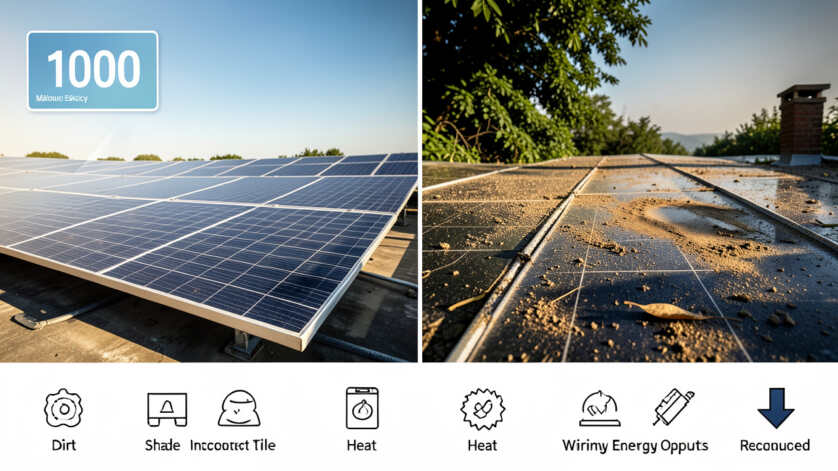
Solar panels turn sunlight into electricity. It seems pretty straightforward, right? But like any technology, there are things that can make them work less efficiently.
If your roof orientation is not ideal, ask about ground-mounted racks that can be positioned for optimal sunlight.
Regularly inspect your solar panels for new shade sources or debris to catch inefficiencies early.
For beginners, it’s easy to miss these small details that can add up. This can lead to less power and higher bills than you expected. Knowing about these common problems helps you fix them or avoid them from the start.
The Top 6 Mistakes That Reduce Solar Efficiency
Mistake 1: Ignoring Shade and Obstructions
This is a big one. Even a little bit of shade can make a solar panel work much harder, or not at all. Think of a tree that grows over time, or a new shed built nearby.
These can cast shadows on your panels at different times of the day or year.
Why does shade hurt so much? Solar panels are often wired together in a way that if one panel is shaded, it can slow down the others. It’s like one slow car holding up traffic on a highway.
For panels that use microinverters or optimizers, this effect is less, but shade still reduces the power from the shaded panel.
What to do:
- Look at your roof throughout the day and year. Are there trees that might grow taller?
- Consider trimming trees that are already causing shade.
- Think about where new buildings or structures might go.
- If you’re getting a new system, ask your installer about shade analysis. They can use special tools to see how shade will affect your panels.
- Choose a panel setup that is less affected by shade, like using power optimizers or microinverters.
Mistake 2: Incorrect Panel Angle and Direction
Solar panels love the sun, but they need to face the right way and be tilted at the right angle to catch the most rays. In the Northern Hemisphere, panels generally work best when facing south. In the Southern Hemisphere, they should face north.
The angle, or tilt, is also super important. It needs to match how the sun moves across the sky during the year. A panel tilted perfectly for summer might not catch as much sun in winter when the sun is lower.
What to do:
- Most installers will set the angle based on your location’s latitude.
- Talk to your installer about whether adjusting the tilt seasonally is an option for you. Some systems allow this.
- Make sure your installer checks for obstructions that might block the sun from reaching your panels at certain angles.
- If your roof doesn’t face the ideal direction, ask about options like mounting panels on a ground rack that can be positioned better.
Mistake 3: Dirty Panels
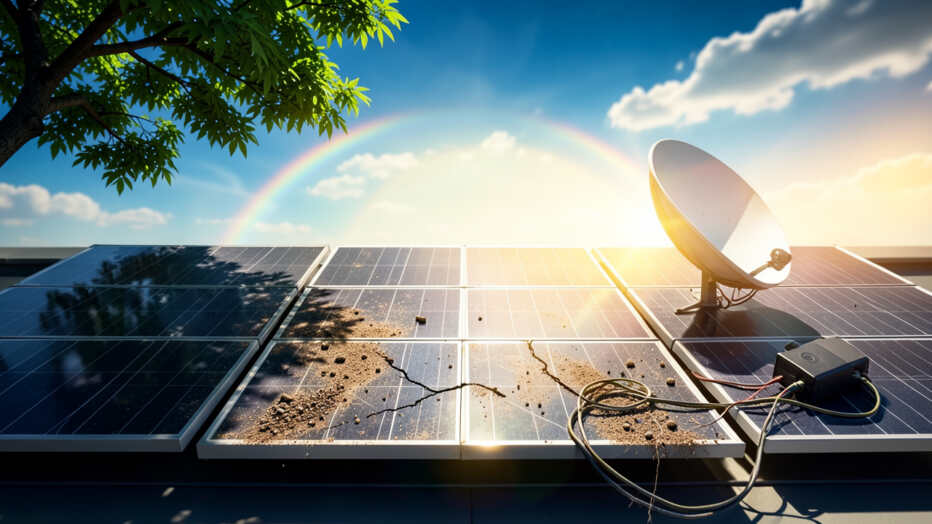
Over time, dust, dirt, leaves, and bird droppings can build up on your solar panels. This grime acts like a blanket, blocking sunlight from reaching the solar cells. Even a thin layer of dirt can significantly reduce how much electricity your panels produce.
Think about it: if the glass is dirty, less light gets through. It’s the same for your solar panels. Rain can wash some dirt away, but it often isn’t enough, especially in dry areas or places with lots of trees.
What to do:
- Clean your panels regularly, usually once or twice a year.
- Use a soft brush or squeegee with plain water. Avoid harsh chemicals or abrasive cleaners that could scratch the glass.
- If your panels are hard to reach, consider hiring a professional cleaning service. Safety first!
- Check your panels after heavy storms or periods of dry, dusty weather.
Mistake 4: Outdated or Damaged Equipment
Solar panel systems have several parts that work together. This includes the panels themselves, the inverter (which changes the electricity from DC to AC), wiring, and mounting hardware. If any of these parts are old, damaged, or not working right, the whole system’s efficiency can drop.
Panels can degrade slightly over time. Inverters have a lifespan and can become less efficient as they age. Worn-out wiring can cause power loss.
Damaged panels from hail or strong winds also won’t perform as well.
What to do:
- When you get a system, choose panels and inverters from reputable brands known for quality and long warranties.
- Keep an eye on your system’s performance over the years. A noticeable drop in power might mean something needs checking.
- Have your system inspected periodically by a professional, especially if it’s been a few years.
- If you are buying a used system, get a thorough inspection of all components.
Mistake 5: Not Monitoring System Performance
You wouldn’t drive a car without checking the gas gauge or engine lights, would you? The same applies to your solar power system. Not watching how much power your panels are making is a common mistake that can hide problems.
Most modern solar systems come with monitoring software or an app. This lets you see how much energy you’re producing in real-time and over time. If you don’t use this tool, you might not realize your system’s output is dropping until your electricity bill goes up significantly.
What to do:
- Make sure your installer sets up your system’s monitoring.
- Check your monitoring app or software regularly, maybe once a week.
- Compare your system’s output to what it was previously. Look for sudden drops or a steady decline.
- If you see something unusual, contact your installer or a solar technician to investigate.
Mistake 6: Wrong Inverter Choice or Setup
The inverter is a key component. It takes the direct current (DC) electricity from your panels and turns it into the alternating current (AC) electricity your home uses. There are different types of inverters, and choosing the wrong one, or having one that isn’t set up correctly, can hurt efficiency.
String inverters are common and cost-effective, but they can be affected by shade on even one panel. Microinverters or power optimizers, installed on each panel, often lead to better overall performance, especially if you have shading issues or panels facing different directions.
What to do:
- Discuss inverter options with your installer.
- If you have shading, ask about microinverters or power optimizers.
- Ensure the inverter you choose is correctly sized for your solar array.
- Check that the inverter is installed in a cool, dry, and accessible place. Overheating can reduce its efficiency and lifespan.
Frequently Asked Questions
Question: How often should I clean my solar panels?
Answer: You should aim to clean your solar panels once or twice a year. More often might be needed if you live in a dusty area or have a lot of trees nearby. Rain helps, but it’s often not enough.
Question: Can I clean my solar panels myself?
Answer: Yes, you can clean them yourself if you can reach them safely. Use plain water and a soft brush or squeegee. Avoid harsh cleaners.
If they are hard to reach, it’s safer to hire a professional.
Question: What happens if one solar panel is shaded?
Answer: If one panel is shaded, it can reduce the power output of other panels connected to it in a traditional string inverter system. Systems with microinverters or power optimizers handle shade much better.
Question: How do I know if my solar inverter is working correctly?
Answer: Most solar systems have monitoring software or an app. You can check this regularly to see your system’s energy production. A sudden drop or consistent low output might indicate an inverter issue.
Question: Does the direction my roof faces really matter for solar panels?
Answer: Yes, it matters a lot. In the Northern Hemisphere, south-facing roofs are best for capturing the most sunlight throughout the day. In the Southern Hemisphere, north-facing roofs are ideal.
Final Thoughts
Keeping your solar panels working at their best is easier than you might think. By watching out for shade, making sure panels face the right way, and keeping them clean, you’ll get more power. Checking your equipment and using your system’s monitoring tool are also smart steps.
Avoiding these common issues means your solar investment will pay off better. You’ve got this!